
Car auctions used to have very little middle ground. At one end of the scale were the headline-grabbing events hosted by the big auction houses, where the world’s most valuable cars changed hands for telephone-number prices. At the other was the slightly seedy world where you rubbed shoulders with grotty backstreet car dealers who’d pick up an old nail to dress up for their tightly-packed forecourt.
Today though auctions cover the whole spectrum of the automotive market. The high-class record-setters and Dodgy Derek’s Mangy Motors still exist, but in between the auction space is covered by everything from popular online sites like eBay through dedicated classic car internet auctions, to brick-and-mortar sites sending hundreds of cars through each month, to the big events hosted by traditional auctioneers at car shows and concours.
The auction scene has exploded since the pandemic in particular, with that initial flurry of online bidding seeming to raise the interest in automotive auctions as a whole, and now the big players are among some of the first places many of us check when searching for a classic car. So what do you need to know?
Where to find a car

In simple terms you can split this into two options: a physical auction, or an online one. You don’t need to actually be there in person at a physical auction but the auction itself, and likely most of the cars going through it, will be at a venue, either in a dedicated auction space or at an event such as a car show or a concours.
An online auction meanwhile is hosted by a website and while some physical auctions may have online bidding, generally speaking an online auction site will simply host auctions for single vehicles at different times, and connect the winning buyer to the seller when the auction is over.
Popular physical auctioneers that regularly handle classic cars include large international firms like RM Sotheby’s, Gooding Christie’s, Mecum, Bonhams, Artcurial, Aguttes and Broad Arrow, while in the UK the likes of Brightwells, Mathewsons, Anglia Car Auctions, Historics, and Manor Park Classics are popular places to find classic vehicles.
Several of the above run online auctions too, while other popular online platforms include Bring a Trailer (which started out simply finding interesting cars online but has since become a powerhouse, moving over a billion dollars in sales every year), Collecting Cars, The Market (previously owned by Bonhams), Car & Classic, Pistonheads, and of course, you can still buy cars on the online auction platform eBay too, though it isn’t dedicated to classics like most of the others.
How does an auction work?

Auction sales involve bidding on a car – essentially, submitting the highest price you’re prepared to pay for it – while others do the same. Whoever offers the most money (the ‘hammer price’, for the traditional process of the auctioneer banging down their gavel at the highest bid) wins, committing to pay the amount they bid plus any auction fees or premiums (which are usually a percentage of the winning bid, sometimes with a minimum cap), after which the car is theirs.
In a physical auction, whether you’re there in person or placing bids via phone (via a broker) or online, or on an online timed auction, this can be quite a dynamic process, with bids flying in from all corners. There’s quite a lot of pressure too, from having to decide on the spot whether you’re prepared to offer a little more if bidding ends up a little more than what you were originally expecting to pay.
In extreme cases this can manifest itself in a bidding war, with two or three bidders desperate for the vehicle all sending prices far higher than another group might have done on another day. When you hear about auctioned vehicles hitting all-time records, it’s invariably been caused by a handful of particularly enthusiastic bidders wrapped up in the moment.
Most online auctions are a little less exciting but also a little less stressful, as they tend to run for a week or more and you can usually set a maximum bid and then get on with your day. A computer will automatically place bids for you up to your maximum limit, though there is of course the option to go back and set a higher bid if you receive an alert that you’ve been outbid. The system of paying a fee or premium at the end is usually pretty similar, though some will draw in buyers with promises of low fees (and draw in sellers by minimising or removing listing fees, sometimes making the buyer cover this too).
Reserves and estimates
While a bidding war might push the sale price of some vehicles into the stratosphere, the flip side to auctions is that a sale won’t always go through, generally because a vehicle doesn’t meet reserve.
The reserve price is a minimum amount that bidding must pass before the sale is guaranteed – usually to protect the seller, ensuring that an unenthusiastic response to a vehicle for sale (which might simply be down to conditions on the day and those in the room) doesn’t sell for well under market value. Several factors determine the reserve price, but effectively it’s the least the seller is willing to accept, while the auctioneer usually exerts some influence based on what they think is realistic for a vehicle.
Once bidding passes the reserve price in an auction, effectively everyone is given the green light – the car will sell, and it’s then down to how far the bidding goes. If bidding is hovering just below the reserve price, the auction house or website might check with the seller to see if they’re willing to drop or remove the reserve, either because they’re willing to take a lower amount, or as a way to spur interest. It’s not unusual that the buzz generated by a lower reserve spurs bidding past the original reserve price.
And a reserve isn’t obligatory either: ‘no reserve’ auctions are popular, drawing in buyers with the potential of a bargain – though as with a lowered reserve, a no-reserve auction is just as likely to sell for a higher price if enough people are interested.
The estimate is what it sounds like: an estimate of what the auctioneer expects a vehicle to sell for, between a lower and an upper limit. Many cars will sell somewhere between these figures, but as it’s effectively an educated guess, it’s not unusual for cars to sell below or above these numbers either.
Classic car auction tips
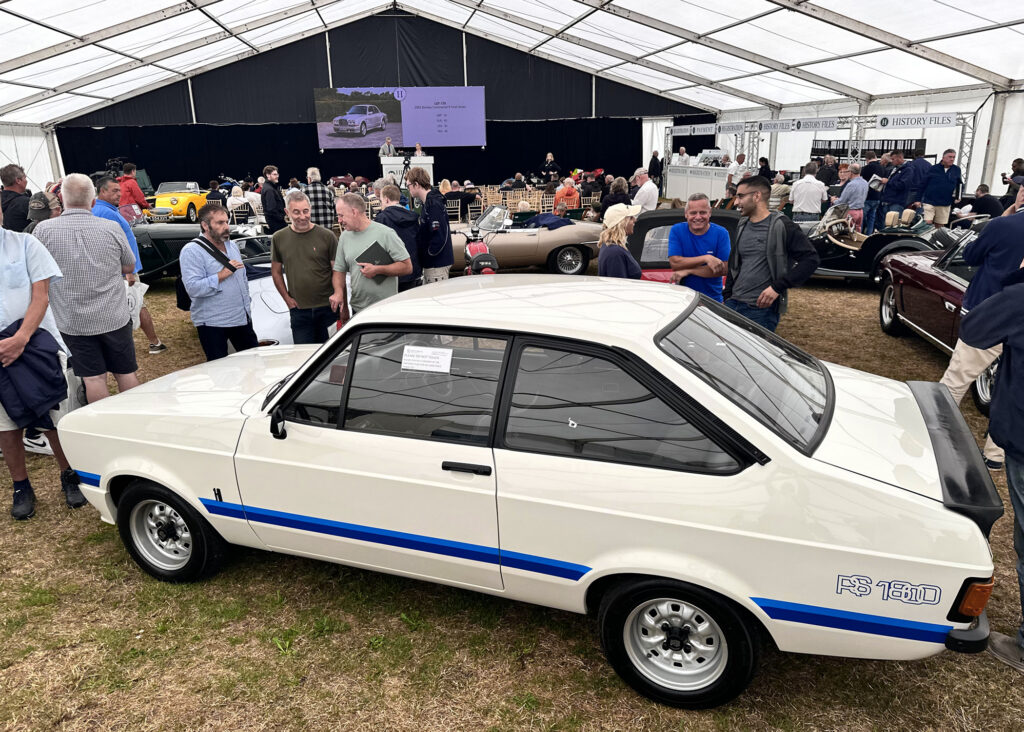
As you’ll have inferred from the above, it’s easy to let your enthusiasm for a car, or for an auction itself, get the better of you, so if there’s one piece of advice to heed it’s to go into any auction with the same level head and eye for detail you would for any normal car purchase, or indeed the purchase of anything expensive.
Auctions don’t always present the ideal opportunity to fully investigate what you’re interested in before you bid, but in-person auctions will often let you walk around vehicles beforehand (and at more prestigious events, a car’s provenance may speak for itself), while on a long-running online auction, there may be the opportunity to contact the seller and inspect the car before placing your bid. In either case, most auctions now have enormous photo repositories of each vehicle, and some will record videos of a car running, so buyers have never been so well-informed.
Likewise, don’t get carried away with the bidding process itself. Set yourself an upper limit that you’re prepared to pay, and stick to it. If you win, you’ve entered a contract to buy, so there’s no going back (or at least, no going back without financial penalty). You also need to make sure you’ve got a way to bring the vehicle home if you win it. With an old-school physical auction you might be able to take it away that day, if you’ve got insurance and have completed all the paperwork, but if it’s something a little more high-brow then you may need to contact a transportation company. Similar goes for an online auction; you may choose to collect the car yourself, or have it transported, a few days after winning.
And bear in mind any additional costs, such as import duty and VAT if you’re buying at auction elsewhere in the world and importing, and the buyer’s fee, which you’ll pay on top of the hammer price at almost any auction. Occasionally, a vehicle will be in the country of the auction on temporary documents, meaning it will be liable for tax and import fees – but the catalogue description and auctioneer should clearly point this out before bidding commences.