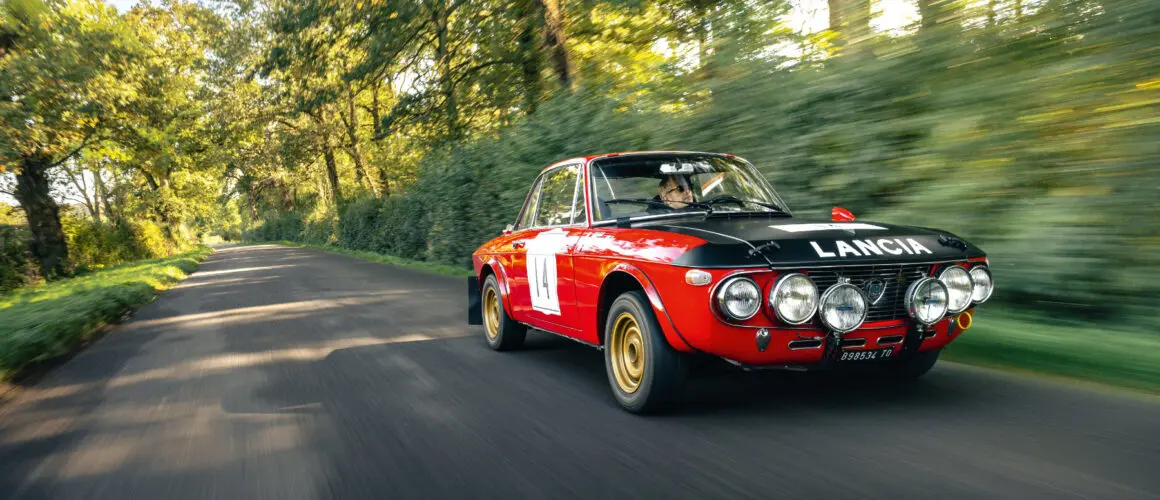
With the benefit of hindsight, this was a bad idea. After becoming separated from the photographer’s car, and with hopes fading of being reunited short of applying the handbrake and twirling the tiller, salvation appears. In something of a navigational quandary, and desperate to find somewhere to spin the car around, I find the entrance to a big country pile provides welcome relief. It is only while performing a 27-point turn that the wedding party further down the drive becomes apparent. The bride and groom are having their photographs taken and heads turn in unison. Sorry, nothing to see here! Oh, and good luck!
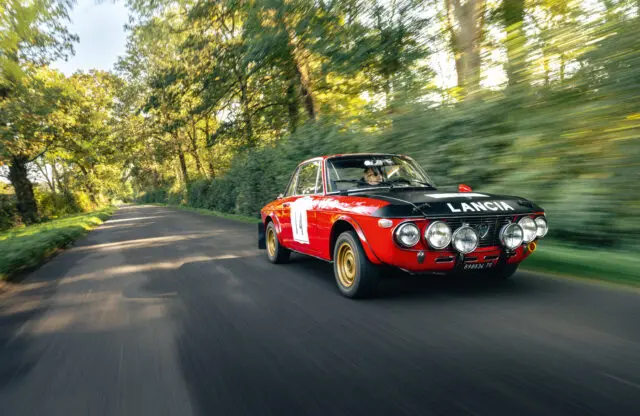
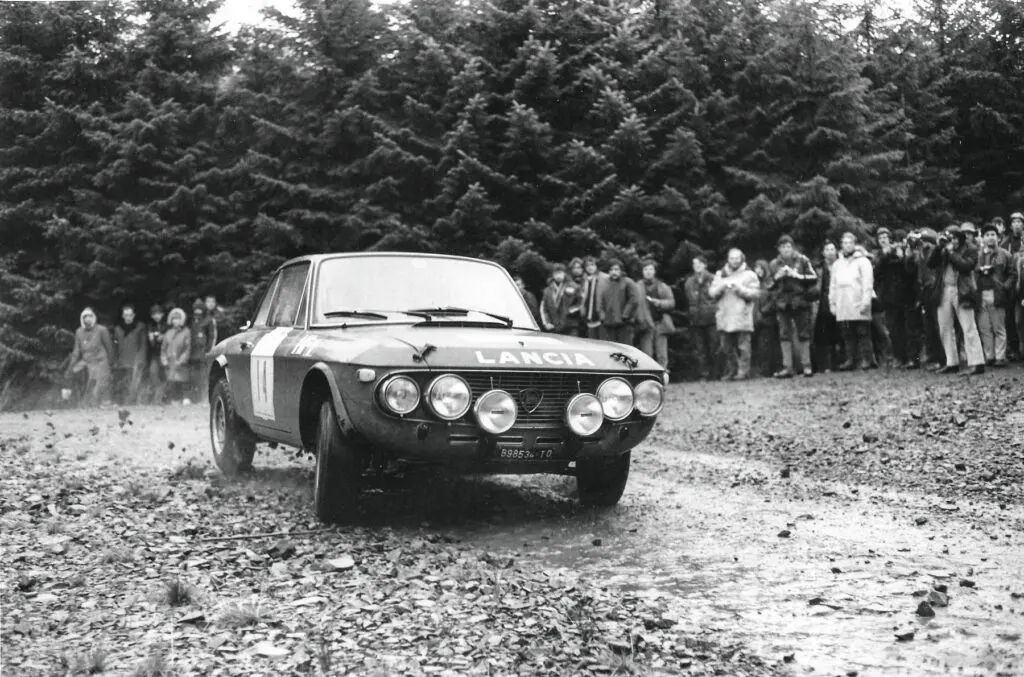
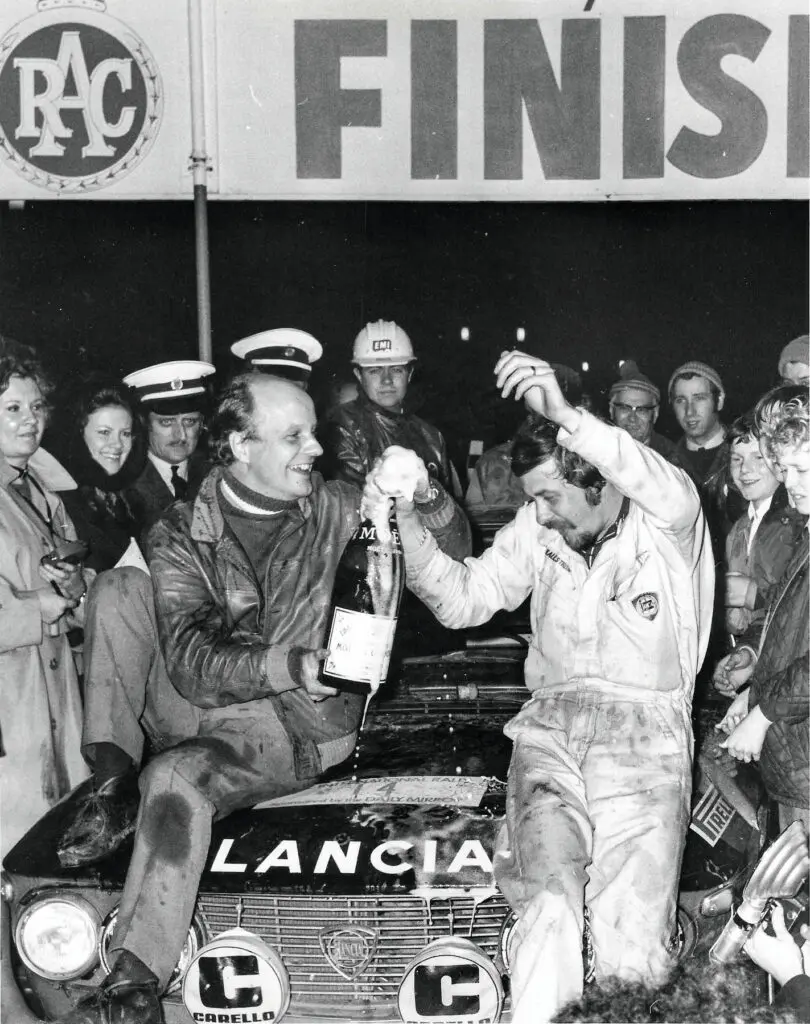
At the point of its fullest fury, this ex-works Lancia Fulvia has the quality of a sonic boom. It will rattle windows three or four miles away; maybe further depending on wind conditions. Even while cruising, conversations are conducted at high volume and with emphatic gestures. Gunnar Häggbom must have talked himself hoarse as he read pace notes to Harry Källström on the RAC Rally in November 1970, this being the car that won outright against expectations. It marked the denouement for chassis 1411 as a frontline weapon, if not quite the end of its career.
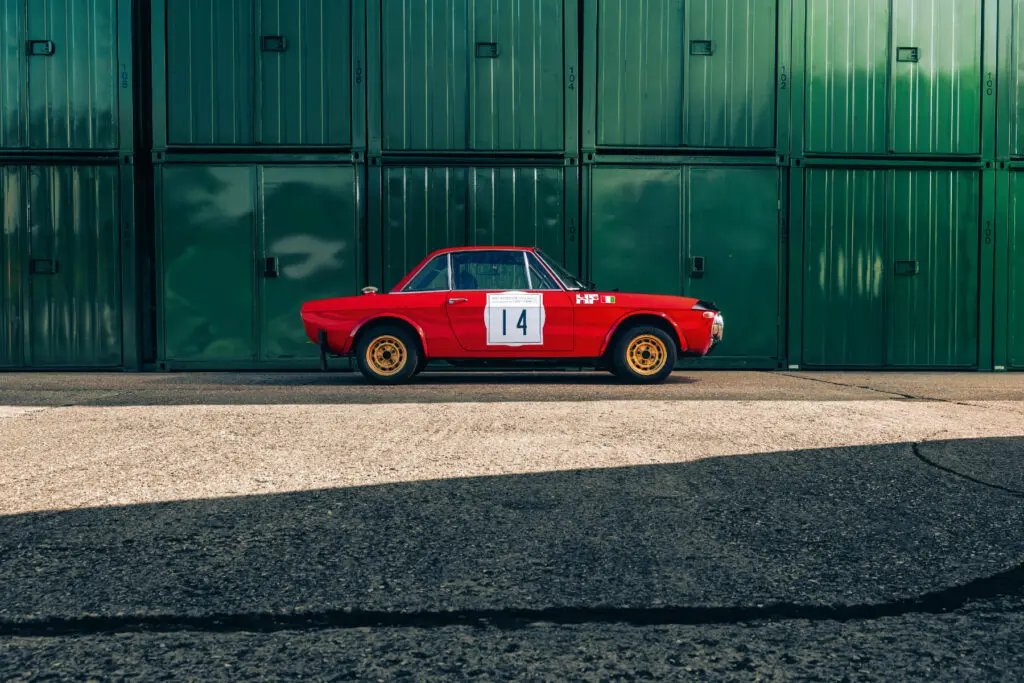
It is worth recalling that, while there had been prior rallying successes, not least Louis Chiron and Ciro Basadonna’s Monte Carlo Rally victory in 1954, Lancia didn’t establish itself as a powerhouse until the end of the following decade. Cesare Fiorio, son of the firm’s PR chief Sandro Fiorio, established the Hi-Fi Club in 1963, which subsequently acquired semi-works status and morphed into HF Squadra Corse. The Fulvia Coupé’s unveiling at the Turin motor show in November 1965 coincided with the Tour de Corse, and a 1216cc car was fielded for Leo Cella and Sergio Gamerana. It came home in eighth place.
Two years later the Fulvia won this event outright, along with the Spanish Rally. In November 1968, the svelte coupé received a displacement hike to 1584cc via the ‘Tipo 540’ version of the narrow-angle twin-cam V4. According to the factory figures, competition-spec cars packing the ‘Variante 1016’ unit produced 158bhp at 7200rpm, the car pictured here being among their number. However, the Fulvia in this spec wasn’t homologated until the autumn of 1969, though this didn’t prevent cars being fielded on the Monte Carlo Rally at the start of the year. New regulations allowed prototypes to compete in the Rallye Mediterraneo, which ran concurrently. Källström and Häggbom emerged victorious aboard their Fulvia Coupé 1.6 HF.
The works team then descended on the Nürburgring for the Marathon de La Route, which was born of the old Liège-Rome-Liège Rally. This gruelling event comprised 84 hours of the historic venue, the circuit comprising the Nordschleife and the Sudschleife to form a 20-mile lap. Again entered as a prototype, the 1.6 HF of Källström, Sergio Barbasio and Tony Fall completed 322 tours of ‘The Green Hell’ to claim outright honours.
‘Our’ car made its competition debut on Rally Sweden in February 1970, Källström and Häggbom running second until they were forced to retire in the closing stages after the diff failed. The car’s next outing was the Targa Florio in May, Sandro Munari and Claudio Maglioli bagging a class win. It’s worth recalling that they finished ninth on the road, ahead of an Alfa Romeo Tipo 33/3, a couple of Ferrari 206S Spiders and a factory Porsche 908. A month later, Barbasio and Mario Manucci placed second on the Rally Alpi Orientalle behind the Fulvia of Amilcare Ballestrieri and the future Lancia team principal, Danielle Audetto.
According to Reparto Corse Lancia by Lancia’s former sporting director, Gianni Tonti, the car was damaged shortly thereafter, most likely during testing. He recorded in his notes that a new body arrived from the Chivasso factory on 02 July 1970 and it was subsequently modified to Group 4 spec. The re-shelled Fulvia then participated in the Gran Premio di Mugello, Raffaele ‘Lele’ Pinto winning his class, before Källström and Häggbom drove it to fourth place on the 1000 Minutes Rally in October of that year.
Then came the big one. The Swedish duo had won the 1969 RAC Rally for Lancia, albeit only after Porsche’s dominant run ended abruptly. The chances of them repeating the feat appeared slim halfway through the 1970 event. Lancia endured a torrid time early on, with Sandro Munari and Tony Nash cartwheeling into retirement. At the halfway point, and amid plummeting temperatures, more than half the field had been eliminated and the Saab of Stig Blomqvist and Bo Reinicke held sway. With 2½ days still left to run, the remaining Fulvias headed to Wales with seemingly little chance of claiming the spoils.
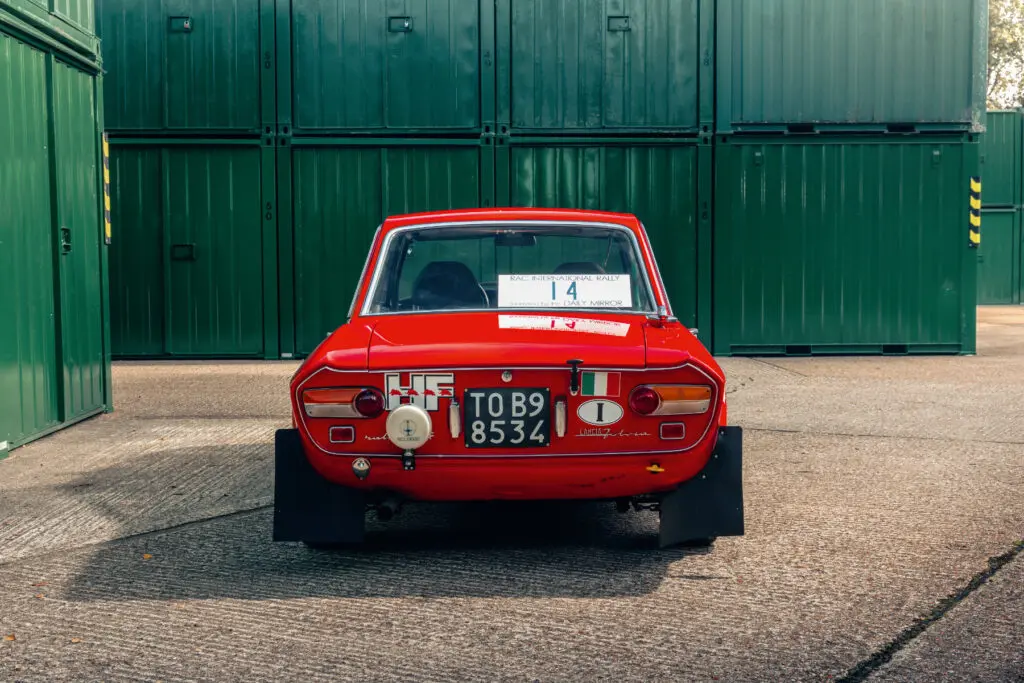
It was at this juncture that the service van broke down, as did the team manager’s car. They were stuck in Blackpool. To make matters worse, the engine in ‘our’ car ran its bearings following a catastrophic oil leak. Then the gearbox in the third works entry of Simo Lampinen and John Davenport failed (their car had previously blown a head gasket). Somehow, amid the chaos, some mechanics managed to make it to the service halt at Machynlleth, where they swapped the bearings between engines, which ensured the demise of the Lampinen/Davenport car on the following stage. All hopes of glory rested solely on Källström and Häggbom.
Then matters took a turn for the legendary. The single remaining Fulvia was an hour behind and it was 100 miles to the next time control. Källström, known affectionately as ‘Sputnik’ on account of how much time he spent airborne, drove a blinder, the previous year’s European Rally Champion defying the odds as well as gravity to arrive with barely 30 seconds to spare. And then, having seemingly achieved the impossible, he was obliged to take avoiding action after a lorry reversed into his path. In doing so, he hit a bank and damaged the car. Häggbom then extricated himself before sprinting to the control to check in.
If this wasn’t remarkable enough, the car was then manhandled into the service area, where two mechanics replaced the steering box, driveshafts, and more besides. They did so in the pouring rain. To cut a long story short by missing out more tales of derring-do, the heroic Scandinavians went the distance. They completed 82 stages, covering 2300 miles across five days including transits to win by 2½ minutes. It was a bravura performance, and ‘1411’ was retired from works participation thereafter. It subsequently earned its keep in hillclimbing.
As for the Fulvia in all its various flavours, it continued to shine into 1971 when Lancia claimed six rounds of the European Rally Championship. A year later, Munari and Mario Manucci won the 1972 Monte Carlo Rally, with Lancia clinching the International Championship for Manufacturers title. The little coupé was still in the hunt as late as 1974, by which time Lancia dovetailed a mixed programme with the Fulvia and the Stratos. One of the highpoints was third place on the Safari Rally for Munari and Manucci aboard their 1.6 HF, which proved the naysayers wrong. The Fulvia was tough. It had staying power in this, the most arduous event on the calendar.
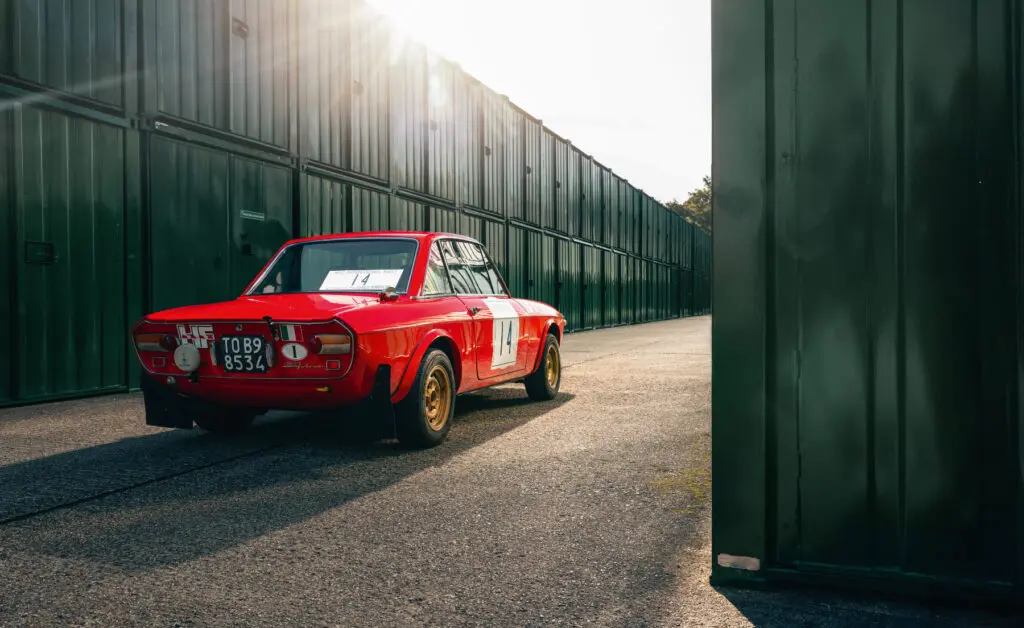
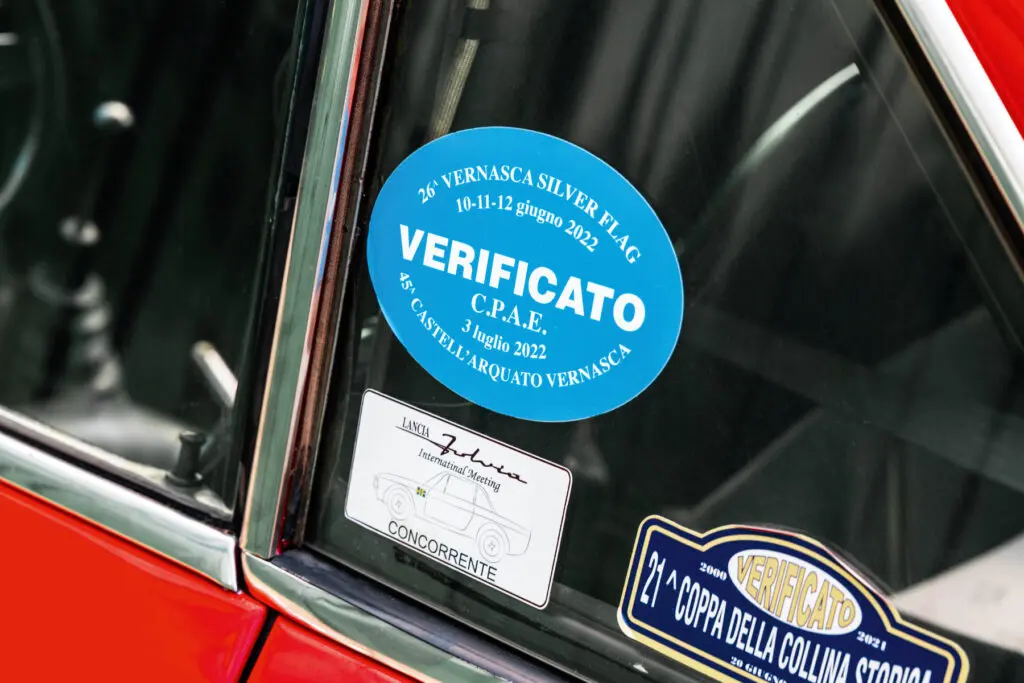
Which brings us to today and a backdrop of leafy Hampshire. This old warhorse wears its years well, having been one of the stars of a large collection of Lancias in Italy since 1985. The base HF was known colloquially as Fanalone in period (literal translation is ‘big headlight’), and here there are two purposeful-looking spotlamps, no bumpers and wheelarch extensions to cover the 13in Campagnolo wheels. If anything, it appears under-equipped in this later regard, but then it hasn’t been touched since an appearance at the 2024 Vernasca Silver Flag hillclimb. The period-correct RAC Rally-era items haven’t been substituted.
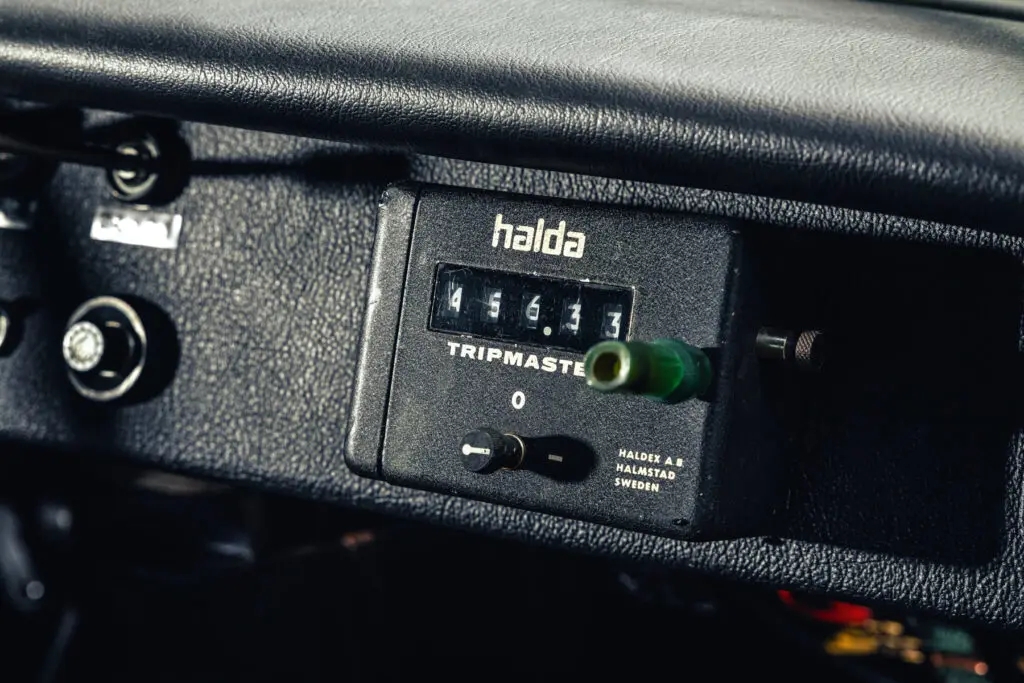
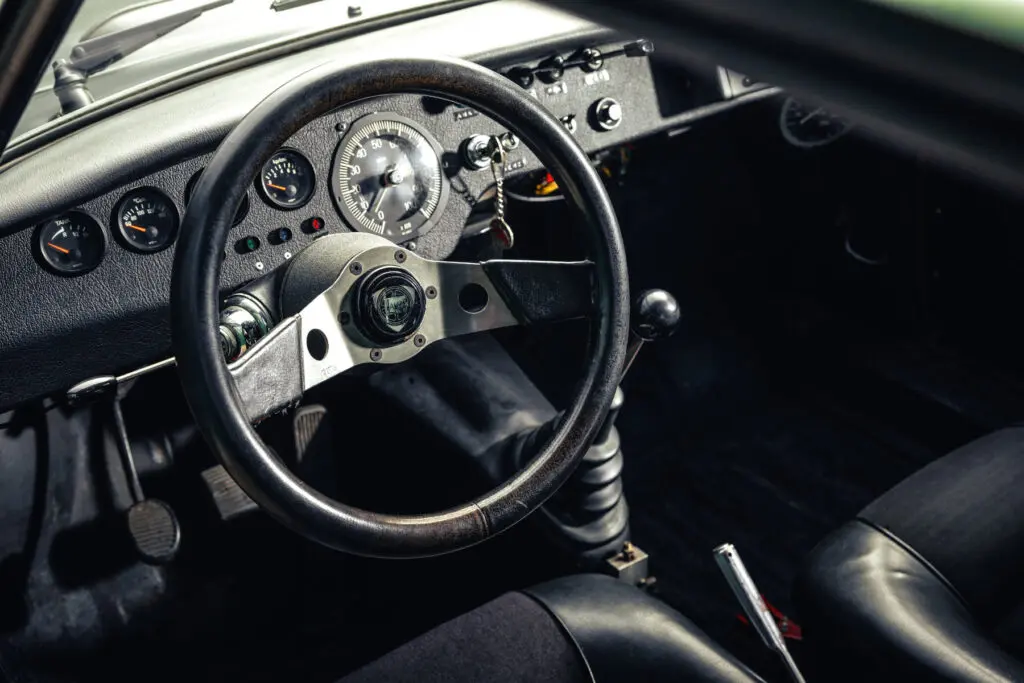
Inside it is stark, as is to be expected, though not as cramped as you might imagine, despite the intrusive roll-cage. True to form, the sizeable Veglia rev-counter dominates the small cluster of gauges (there is no redline as such, only an arrow pointing to where one should be). The speedo, meanwhile, is positioned down by the co-driver’s right shin, and a Halda Tripmaster is sited where you might expect to find a glovebox lid. It’s all very no-nonsense in here, right down to the harnesses and the double-width middle pedal (in place to aid left-foot braking).
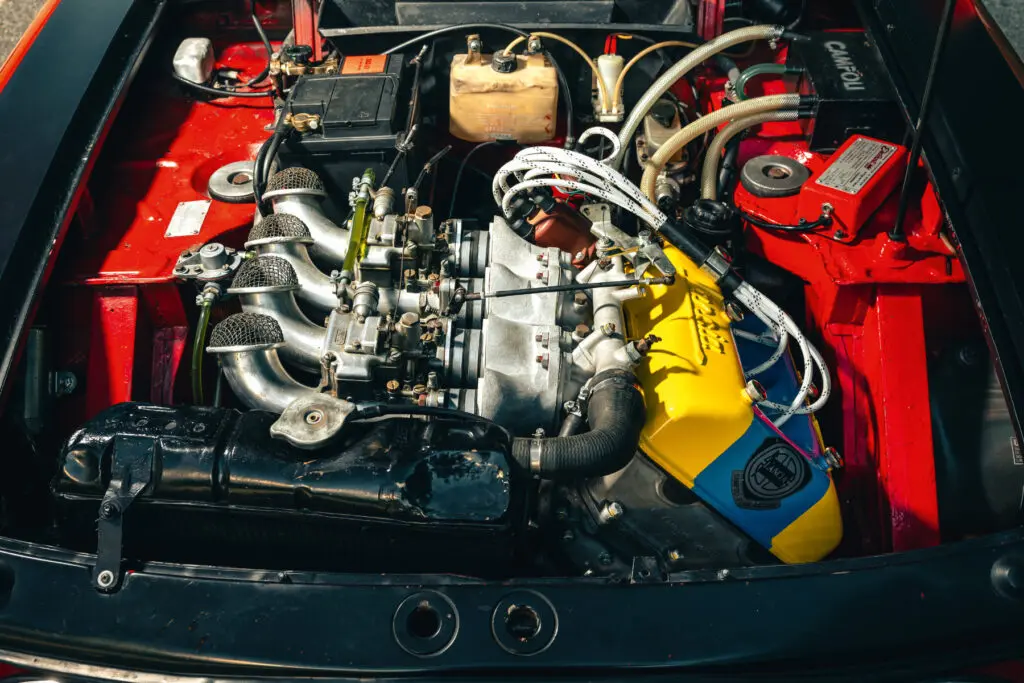
Fire up and the 1.6-litre V4 sounds implausibly potent. And thus begins a sledgehammer assault on the senses, the enormous 48mm Dell’Orto carbs popping and gobbling before the Fulvia settles down to something vaguely approximate to tickover. Passers-by stare in an appraising manner, and you almost feel like apologising. Almost. It certainly raises the adrenaline quotient and we haven’t even left the garage forecourt yet. Clutch in, move the gearlever across to the left and down to find the dog-leg first, pile on some revs and the Fulvia bolts off the line and into traffic.
The Lancia isn’t well-suited to a rush-hour car conga and it doesn’t shrink from letting you know that it isn’t happy. However, once free of hectoring commuters and into open countryside it’s away. And how. It gets to 7000rpm in an instant (instructions were ‘not to exceed’ that) and sets your soul spinning. The gearing feels short, as befits a hillclimber, and acceleration is immediate but then it weighs only 900kg, or thereabouts. What really impresses is how there are no flat-spots, the V4 here having been rebuilt by Ezio Campoli of Scuderia Tricolore. The Roman is something of a tuning wizard in Lancia and Abarth circles.
Hold it in first gear and it will whizz up to 45mph, second to 60mph and perhaps a bit more, by which time you won’t be able to hear. The five-speed transmission offers a sweet change, even though it’s all too easy to go from first to fourth to begin with. There’s barely any movement across the gate; it epitomises the rifle bolt cliché, and double de-clutching on the way up and down the ‘box ushers in more commotion. Cars & Car Conversions tested a rally Fulvia in period, and commented: ‘The gearchange demands strong-arm karate tactics to get results, but it rewards all the effort amply.’ It does, too, although the steering with its five turns lock-to-lock is meatier than you might imagine.
At low-ish speeds, the Fulvia tramlines appreciably, but you simply drive through it. With familiarity comes confidence. The Lancia feels incredibly agile, the steering meting out accurate feedback for all its relative heft. What is telling is that this doesn’t feel like a front-wheel-drive car, let alone one that is more than 50 years old. There is no plough-on understeer; if anything, the back is likely to go first. That said, the car’s limits are a lot higher than can be properly explored in the Stockbroker Belt without your fun leading to a prison sentence.
This is such a sweet car, and non-threatening once you have become accustomed to its foibles. It thrives on being spanked. It also serves as a kinetic monument in the history of rallying. This car matters not so much for what it did – which was a lot – but more for what it represents. The Fulvia served as the jumping-off point for a period of dominance for Lancia that lasted for decades. The marque still tops the list for most constructors’ titles despite it having departed top-flight motorsport in 1993. Without the Fulvia, there would have been no Stratos, no 037, no Delta S4 and no Delta Integrale. It may be small but the Fulvia has always cast a long shadow.
1969 Works Lancia Fulvia specifications
| Engine | 1584cc DOHC V4, twin 48mm Dell’Orto carburettors |
| Power | 158bhp @ 7200rpm |
| Torque | 144lb ft @ 4500rpm |
| Transmission | Five-speed close-ratio manual, rear-wheel drive |
| Steering | Worm and sector |
| Suspension | Front: unequal-length double wishbones, coil springs, telescopic dampers. Rear: live axle, semi-elliptic leaf springs, telescopic dampers, Panhard rod |
| Brakes | Discs |
| Weight | 900kg |
| Top speed | 125mph |