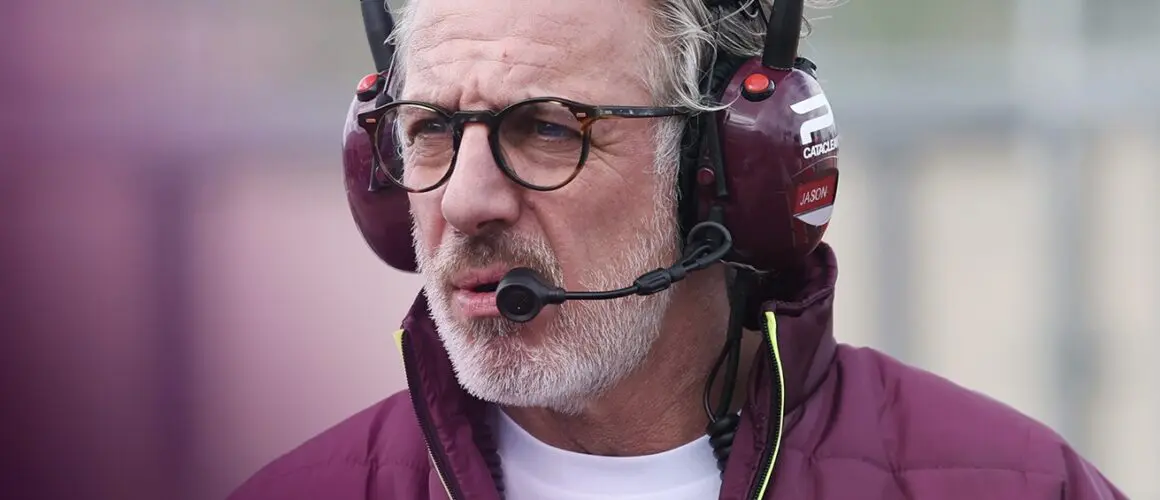
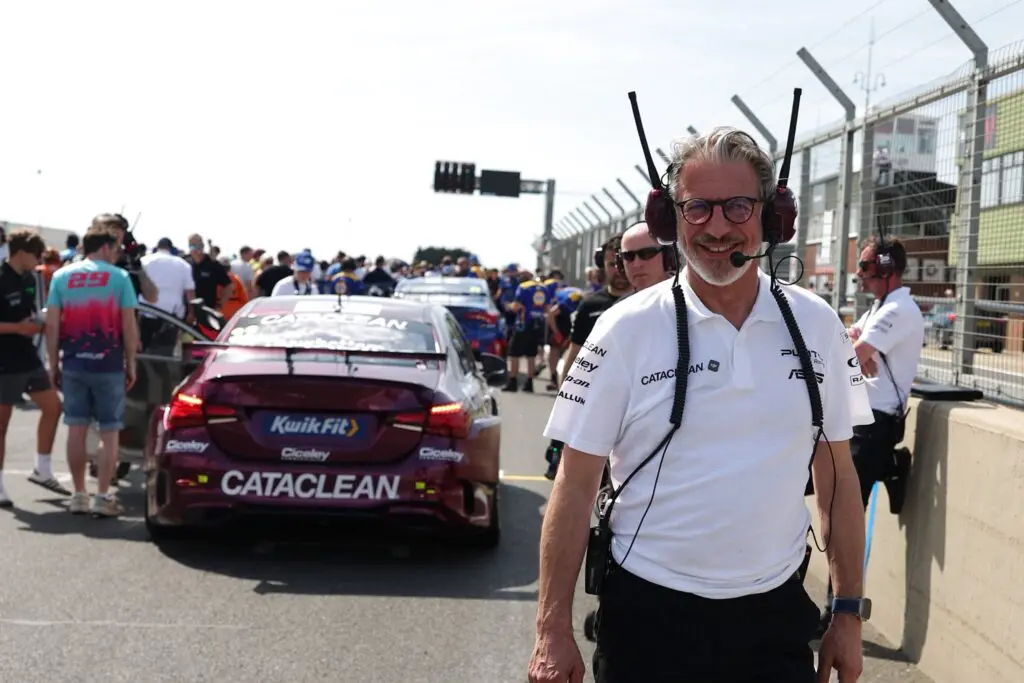
The gaggle of journalists all look up from their laptops when Jason Plato enters the Brands Hatch media centre. It’s a natural reflex for a paddock that has spent 30 years writing about him as a driver, and who now, against all odds, finds himself running the newest team in the British Touring Car Championship.
Donning jeans and a purple Plato Racing gilet, he’s visibly energetic, carrying the enthusiastic demeanour of a newcomer rather than a two-time champion four years removed from the cockpit. Few could have predicted Plato’s transition from buccaneering driver to team owner – least of all Plato himself. Even at the twilight of his BTCC career, the idea of team ownership was unthinkable. ‘I would rather eat my own shit,’ he tells me.
The long road to team ownership began back in 1997, when Plato burst into the BTCC. Overlooked for a seat in the Williams Renault team, he turned up at the team’s factory uninvited and talked Sir Frank Williams into a shootout for the drive. After winning it, Plato took pole position in his first three races and finished third in the championship as a rookie.
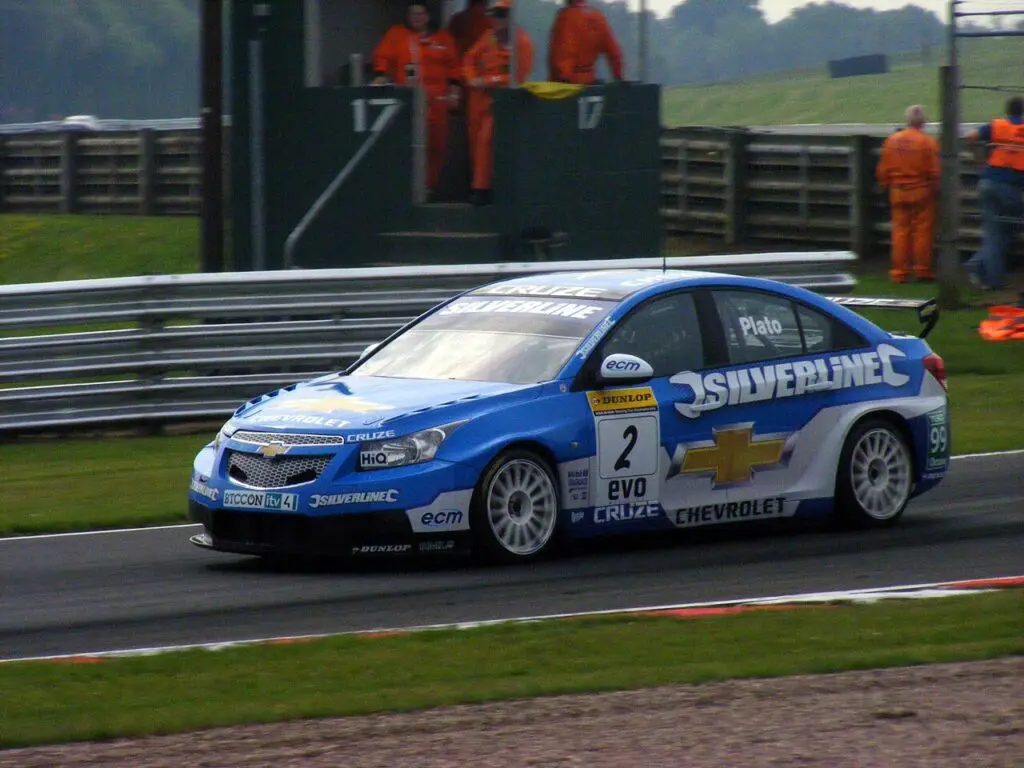
What followed was one of the most storied and controversial careers in BTCC history. Plato secured titles for Vauxhall and Chevrolet in 2001 and 2010 and claimed the outright record for race wins with 97. Yet, like many elite sportsmen, Plato’s biggest challenge arrived once he’d retired, when he had to wrangle with the loss of identity and purpose that followed so long in the heat of competition.
‘Emotion was the enemy,’ he says candidly. ‘I pushed it away and I became really great at it. Almost subconsciously, I wouldn’t allow it in.’ To win as relentlessly as he did, he taught himself to bury his emotions – to the point where even the victories lost their impact. ‘As a driver, you’re selfish. You’re in a race car, and even though it’s a team game, from a driver’s perspective, it isn’t,’ he reflects. ‘I’d enjoy it if I had a decent lead over the final two laps. But as soon as you cross the line, it’s on to the next. You never really enjoy the moment.’
The emotional reckoning came not from the racing but from its sudden absence. Within weeks of his final race at the end of 2022, Plato’s life unravelled on several fronts at once. ‘In a six-week period Fifth Gear pulled the plug, so that was a loss of income, a lot of my investments went tits up and my marriage ended,’ he says.
‘My mental health crisis is pretty well documented. I completely underestimated the effect that retirement – a choice I had made – would have on me,’ he admits. ‘In my racing career there were brick walls every week of every year, so I thought I was pretty resilient.’ Instead, he found himself spiralling, ashamed that, on his watch, his life had gone into a tailspin. He didn’t leave the house for six months.
The turning point arrived at a black-tie dinner to commemorate Motor Sport magazine’s centenary in London, which he reluctantly attended. That evening, he bumped into legendary F1 technical director Ross Brawn – a member of what Plato calls ‘The Inner Circle’, a group of friends who used to socialise together over video call during the pandemic. ‘He basically dropped everything and rushed over,’ Plato remembers. ‘We had a big hug, and he just wanted to find out how I was.’
After learning how bleak things had become, Brawn resolved to help, suggesting Plato take advantage of his presenting skills by telling his story as a keynote speaker. Brawn put him in touch with speaking coach Mike Kelly, who spent a lot of time with the Brawn GP team. The two set about building a talk in four parts – the racing career, the television years, the collapse that followed, and finally the life he was rebuilding. ‘He became my therapist, in a way,’ Plato says.
The third part was the most important of all. It was here that Plato delivered the ‘bang’, as he puts it. ‘I tried to kill myself twice,’ he says, with unflinching honesty. The final part of the talk, he explains, is about climbing back out. And in the crafting of it, over six months, the shame evaporated. He came to embrace that third part as simply another arc of his story.
‘It’s a bit like motorsport,’ Plato says. ‘You prep, you get on stage, you deliver. And when it’s done, it’s done. You get instant gratification when you’ve done a good job – and it’s quite lucrative.’ Having found the closest thing to the feeling of driving, Plato threw himself into it, and as his confidence returned, his competitive instinct began to bubble away in the background.

What eventually drew him back to motorsport, however, was RML’s take on the Ferrari 250 GT SWB. The Wellingborough-based firm that had built Plato’s 2010 title-winning Chevrolet had built its V12-powered Short Wheelbase – a £1.3m, carbon-bodied tribute to the classic Ferrari – and Plato asked for a go. ‘You know that Short Wheelbase you’ve done – can I have it for a weekend?’ he recalls asking. ‘Of course you can.’
Plato’s RML visit was loaded with history. His relationship with the firm ended on a fractious note after his title-winning season, and the fallout played out publicly. But with plenty of water now under the bridge, any wariness dissolved when he walked back into the building where the most competitive years of his driving career had played out. He won his 2010 title from Bay 4 in the RML headquarters, and signed the SEAT deal there that returned him to the grid in 2004.
The chance RML visit set Plato thinking about team ownership, and by the following summer, Plato Racing had signed a lease on Unit 2, a building on RML’s Wellingborough site. RML was then commissioned to design and build a pair of Mercedes-AMG A35 saloons for the BTCC. ‘If you’re going to get wet, you might as well go swimming,’ Plato says with a smile.
Plato courted controversy for much of his driving career, and his transition into team ownership was no different. Rival BTCC teams were displeased that RML – the supplier of spec subframe, suspension and steering parts – was now building entire cars for Plato’s team. Plato, however, was unperturbed.
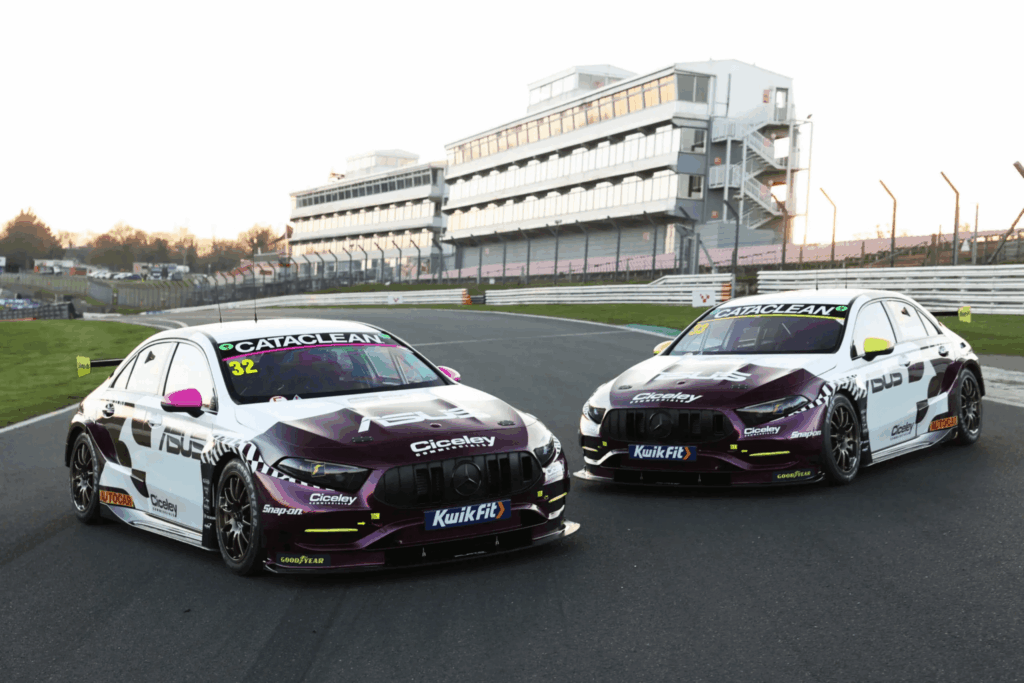
‘It’s bollocks,’ he says defiantly. ‘We invited [BTCC technical director] Sam Riches to come and choose our subframes. RML put a little sticker on our bumper because they were proud of what they’d done, and we got told to remove it because the other teams kicked off. I mean, give me a break. But that’s just the way it is. It’s great!’ he says impishly.
While RML handled the technical side, the team’s identity was built from scratch. Plato wanted something edgy and professional that reflected his buccaneering instincts as a driver. ‘We’re here to disrupt,’ he says. ‘I like to be a bit of a Dick Dastardly character. Years ago I used to enjoy landing at the circuit in a helicopter just to piss people off. I like to be a rebel.’
That identity is stamped on the purple, Ian Callum-designed livery the cars wear. The colour was Plato’s idea. ‘I couldn’t think of anyone using it other than Silk Cut Jaguar, and they’re long gone,’ he says. He brought in Mark McClintock, a designer he’d worked with since his Williams days, to build the brand around it – telling him to study the whole grid and find where the gaps were. ‘I want us to be edgy, a bit of swagger, a bit naughty,’ Plato says. ‘I never wanted to be a homogenised driver. I want to be me. I’m a bit of a rebel.’
When Plato opened the team’s first bank account in August 2025, there wasn’t a nut or a bolt to its name. Eight months later, two fully designed and liveried Mercedes rolled out at Donington Park for the opening round of the 2026 BTCC season. Fittingly, Donington was the very circuit where Plato’s own BTCC career had begun in 1997.
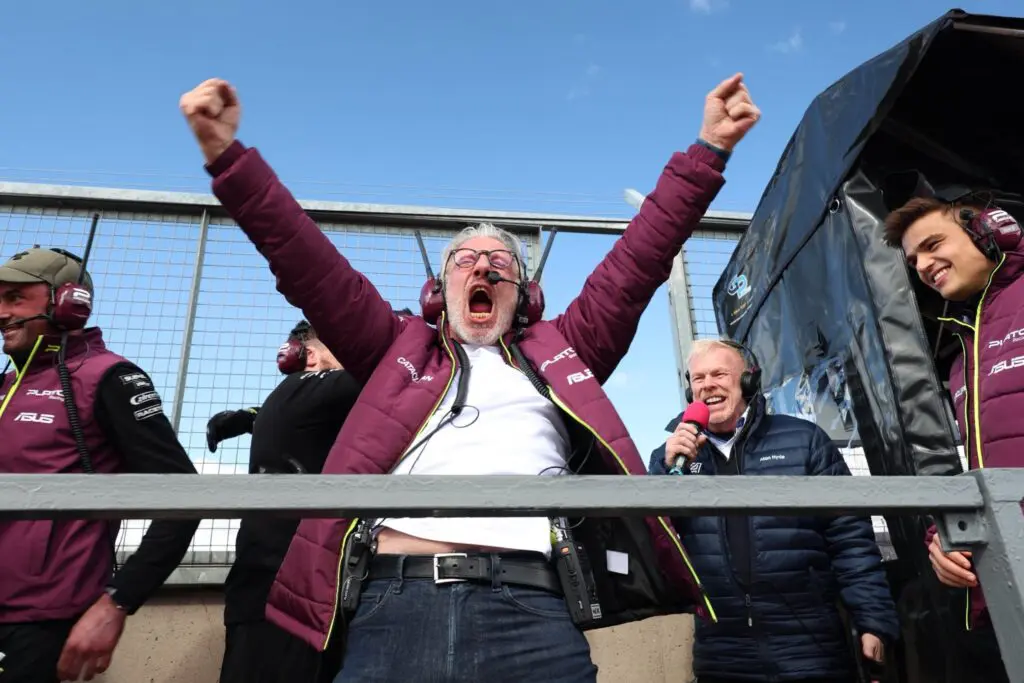
‘I enjoyed myself at Donington on Saturday more than I’ve ever enjoyed myself at a racing circuit before,’ he says. ‘That joy lasted for quite some time actually – I still feel it now. A lot of grown men had tears in their eyes.’
But as enjoyable as the experience from the pit wall was, Plato – who has over 600 starts to his name – admits it felt a little strange not to be sitting in the cockpit. ‘On Saturday morning I found myself automatically going into my pre-race routine. There’s all these little triggers. When we went to the first shakedown I remember seeing Dan getting into the car and thinking, “When can I have a go?” But my competitiveness is now channelled through the team, and that’s a different feeling.’
When asked what he would be satisfied with by the close of the season, the answer is that of a prototypical racing driver: ‘The goal is to win,’ he says. ‘It’s the way I’m wired. We’re not here to come second – we’re going for the win and we will go for it until the bitter end.’
It’s an emphatic answer from a team owner who never envisaged owning a team. But it shows how far Plato has come since his darkest days. The competitiveness that defined his driving career is clearly as fierce as ever, but it’s no longer eating him alive.
If you have been affected by any of the issues in this article, the Samaritans can be contacted free, 24 hours a day, on 116 123, or by email at [email protected].