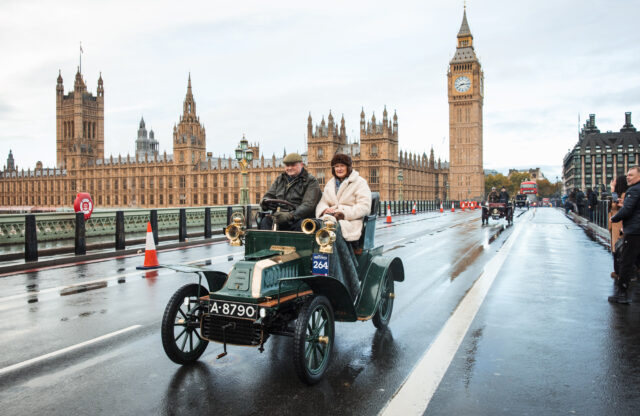
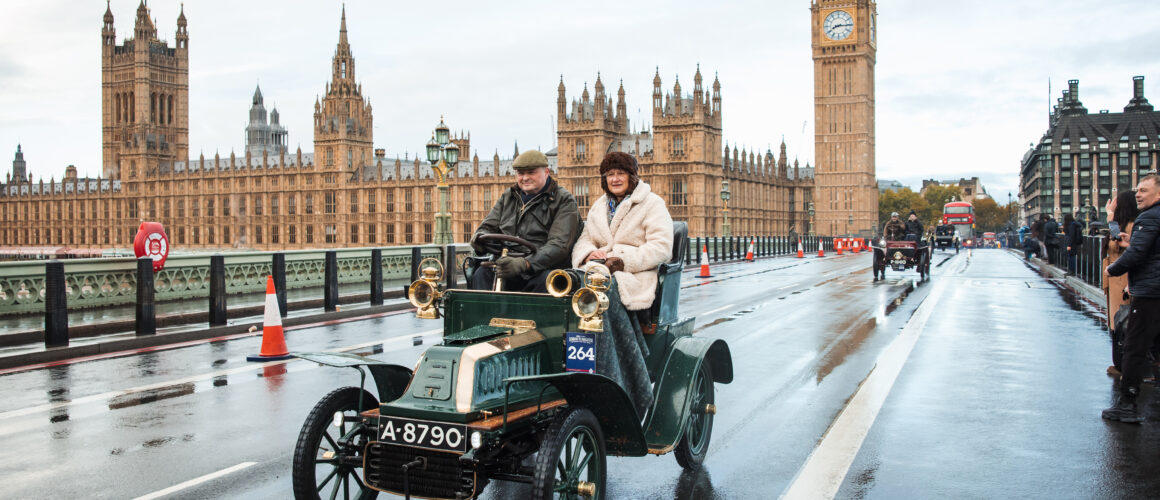
As dawn broke over a damp Hyde Park on Sunday 2 November, 384 pre-1905 vehicles assembled for the 129th running of the 2025 RM Sotheby’s London to Brighton Veteran Car Run – a moving celebration of the dawn of motoring. By the afternoon, as the skies cleared and the sun broke through, 340 cars had made it to Brighton, cheered all the way by tens of thousands of spectators.
This year’s Run paid special tribute to the 125th anniversary of the 1900 1000 Mile Trial, the ambitious 22-day journey that first introduced the motor car to Britain’s towns and villages. The traditional pre-dawn tearing up of the red flag was performed by racing driver Alex Brundle and journalist Charlotte Vowden, marking both that anniversary and the symbolic end of the 19th-century restrictions that had once limited motorists to walking pace. The pair then led the field away from Hyde Park in the 1899 Wolseley 3.5hp Voiturette known as OWL – the only surviving participant from the original 1000 Mile Trial and now part of the British Motor Museum collection.
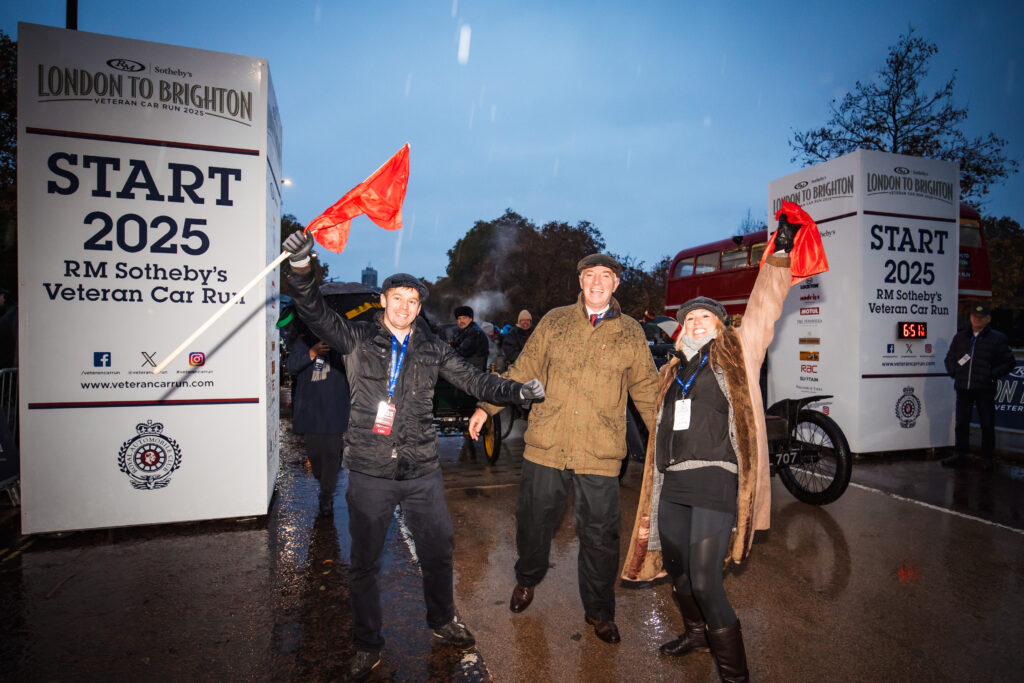
At exactly 7:00am, with the rain easing and the sun rising over Wellington Arch, the first of the pre-1905 ‘horseless carriages’ was flagged away by Duncan Wiltshire, chairman of the Royal Automobile Club, which has organised the Run since 1930. The cavalcade of early motor cars, steamers and tricycles wound its way past Buckingham Palace and along the Embankment before crossing the Thames and heading south towards Croydon.
Among the earliest starters was the distinctive Salvesen Steam Car – part locomotive, part road vehicle – complete with a stoker feeding its coal furnace. Mercedes-Benz Heritage also took part, previewing its 2026 centenary of Daimler and Benz’s merger with a 1901 Benz Spider and 1904 Mercedes-Simplex, the former successfully completing the route. From there followed an extraordinary variety of machines representing the first decade of motoring: some with steering wheels, others with tillers; some powered by petrol, others by steam or even early batteries.
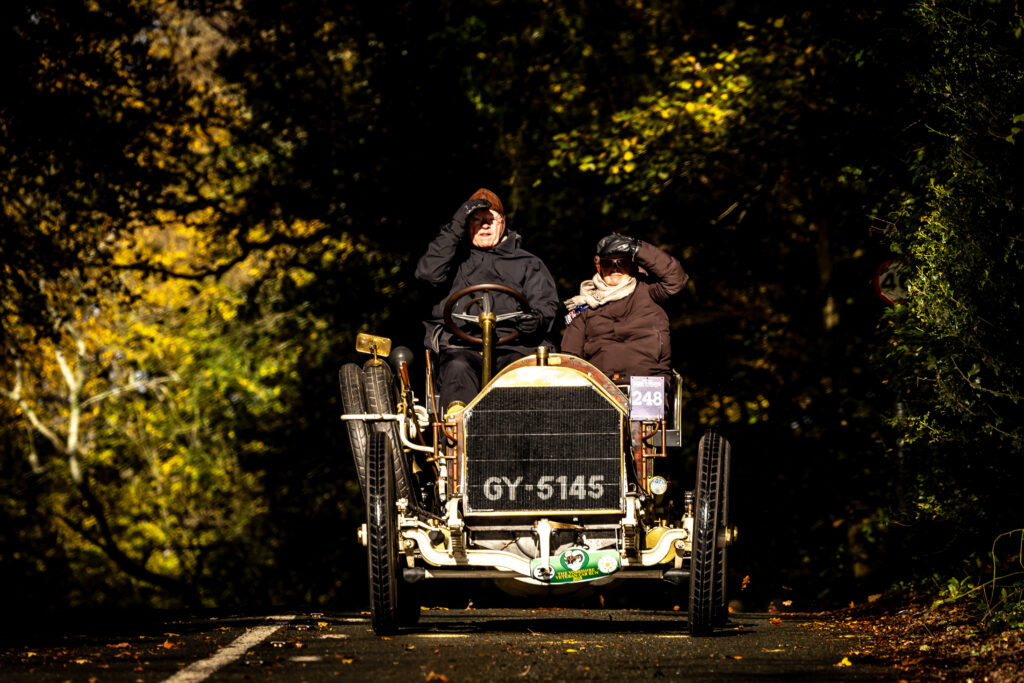
The event again proved global in scope, attracting entrants from 26 countries including the US, Australia, Japan, France, Germany and Italy. More than 100 marques were represented, with De Dion Bouton fielding the largest number of cars – more than 50 in total. Reflecting the spirit of innovation that defined the veteran era, several cars ran on sustainable fuels, including SUSTAIN e-fuel and an experimental eCoal made from olives, coffee and molasses.
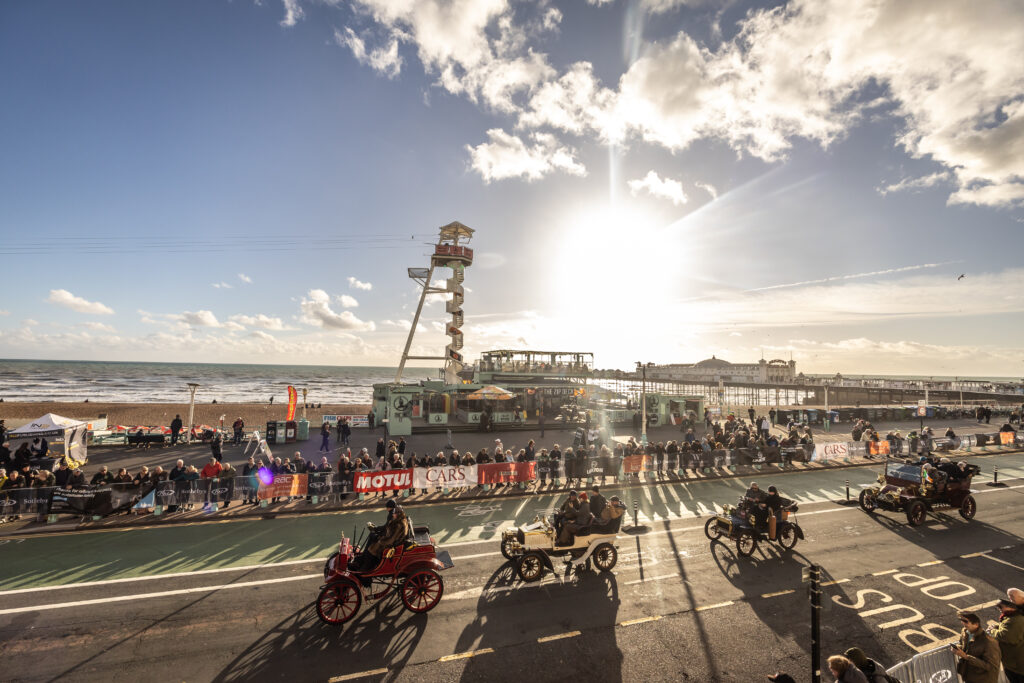
By the time the cavalcade reached the Sussex coast, the weather had improved dramatically. Under bright sunshine, hundreds of finishers arrived at Brighton’s Madeira Drive to receive their medals, the first being the No.46 Renaux tricycle, a former Paris-St Malo racer, which reached the seafront in just under four hours.
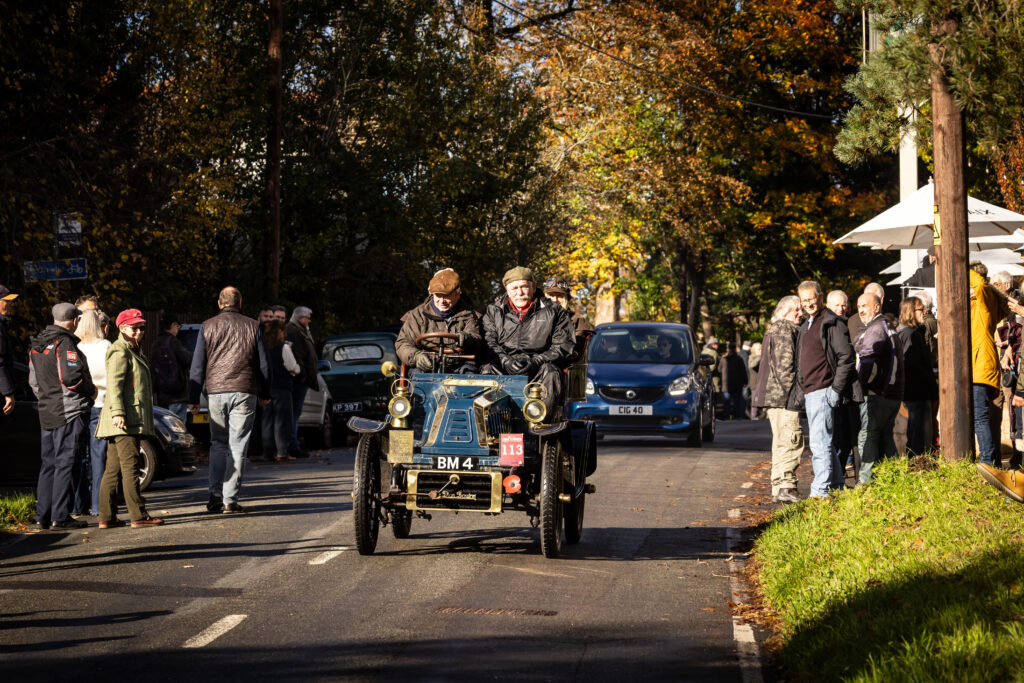
Among the finishers was Duncan Wiltshire, who drove a 1901 Mors from the Royal Automobile Club’s collection. ‘The turnout from spectators was mighty impressive – some of the biggest crowds I’ve ever seen once the sun came out,’ he said. ‘You also have to marvel at the organisation. This is an incredibly complex event, seamlessly overseen by hundreds of volunteer marshals who ensure the smooth and safe passage of these extraordinary vehicles. It’s a wonderful way to celebrate the 125th anniversary of the 1000 Mile Trial.’
Alex Brundle, completing his first Veteran Car Run at the tiller of OWL, was equally enthusiastic. ‘It was such a joy and an incredible experience – I didn’t know much about the event before, but now I’ve completely fallen in love with it. To lead the field from Hyde Park in such a milestone year was amazing. Being in one of the oldest cars was a real challenge, but that only added to the fun – and the crowds along the route were just fantastic.’
The Run again provided a fitting conclusion to the Royal Automobile Club’s London Motor Week, which featured a packed programme of motoring events including the St James’s Motoring Spectacle on Pall Mall.