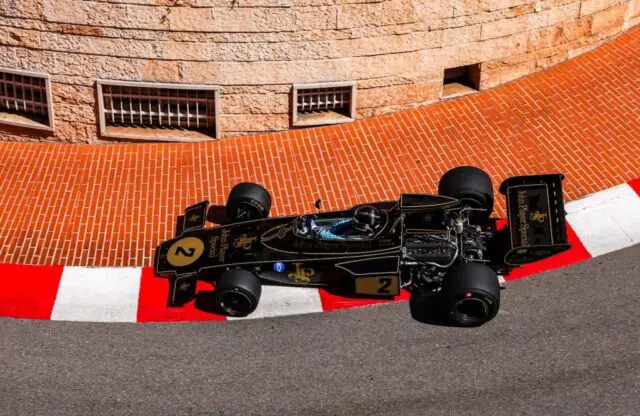
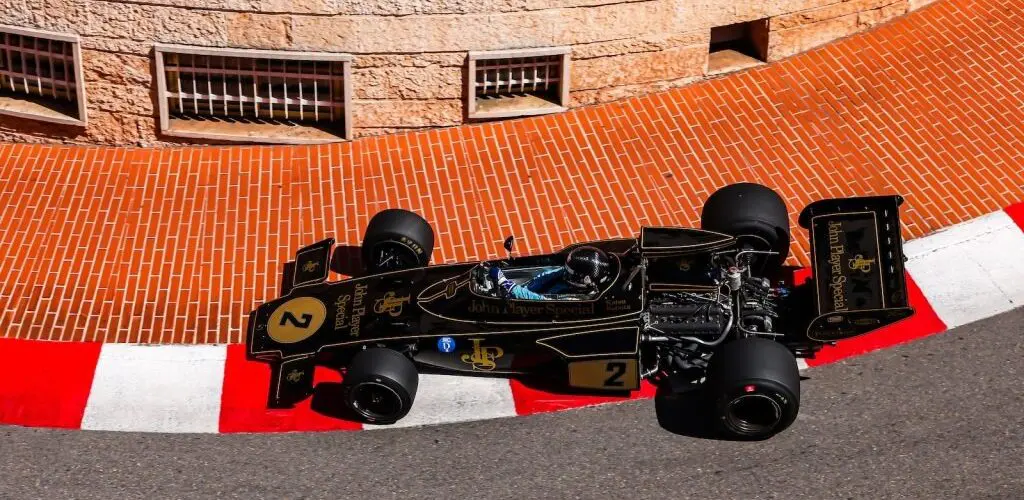
The Grand Prix de Monaco Historique returned to the streets of Monte Carlo on 24-26 April, hosting eight races across seven decades of Formula 1 history.
This year marked the 15th edition of the historic F1 extravaganza, and saw everything from pre-war pioneers to the turbocharged missiles of the 1980s race wheel-to-wheel around the iconic Monaco Grand Prix circuit. Significantly, 2026 was the first time 1980s cars have featured at the event, following a change to FIA regulations.
With 205 cars on the entry list, this year’s edition saw 12 Ferraris compete across the various categories, 50 years after Niki Lauda drove his 312T to victory on the streets of Monaco during his legendary 1976 campaign. Complementing the competition cars was the inaugural Cavallino Classic Monaco, a concours d’élégance dedicated exclusively to Ferrari Formula 1 cars from the 1950s through to the 2000s, launched to mark the Cavallino Classic’s 35th anniversary and 75 years since the Scuderia’s first F1 victory. Maranello machinery from the 1990s and 2000s also took to the circuit in two dedicated parades across the weekend.
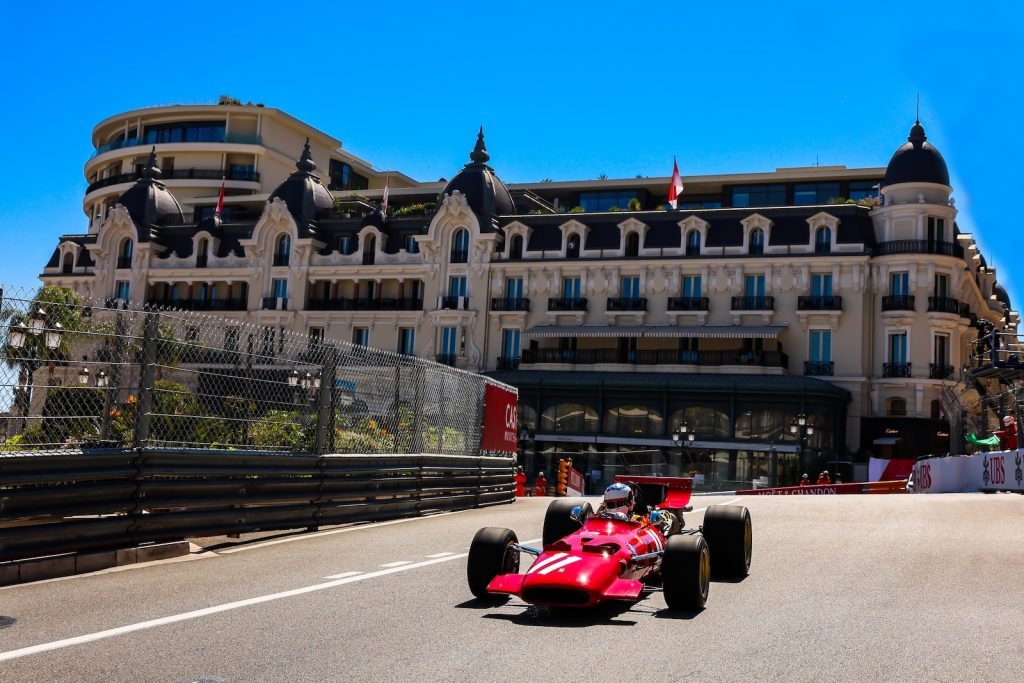
In a case of déjà vu, a Ferrari 312 once again made headlines for the wrong reasons. Jean Alesi had been entered in Series D at the wheel of a 1969 Ferrari 312, but on Friday lost control under braking at the Nouvelle Chicane, spinning nose-first into the inside barrier. Mechanics repaired the car overnight, but Alesi was unable to take the start on Sunday.
It was the latest chapter in a curious Monaco Historique saga involving the Ferrari 312s. In 2021, Alesi had been taken out of the lead by Marco Werner’s Lotus while driving a 312B3, and in 2022 it was Charles Leclerc who binned Niki Lauda’s 312B at Rascasse due to brake failure.
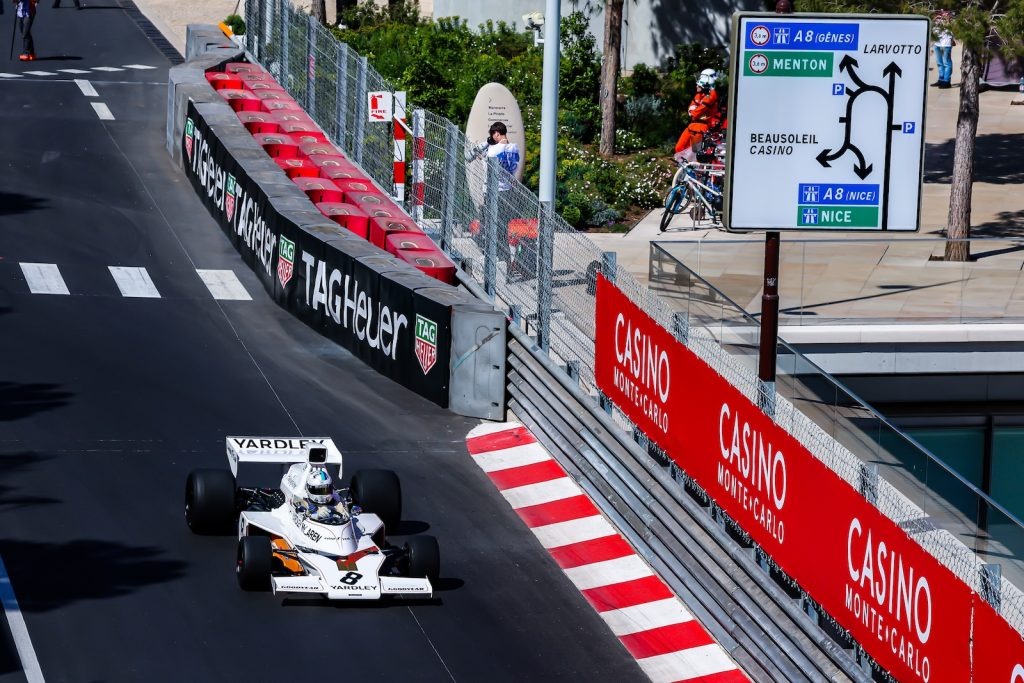
Away from the Ferrari drama, the déjà vu continued with the dominant performance of British driver Stuart Hall. In parallel to 2022, Hall secured three pole positions in Saturday qualifying, converting two into victories. His first came in the Series E race for 1973-76 cars at the wheel of a McLaren M23, a predecessor of the model James Hunt drove during his famous 1976 world championship campaign, and the other in the Series G contest for 1981-85 turbo-era machines in a March 821.
Another Briton, Michael Lyons, was similarly impressive and also claimed a brace of first place finishes. An experienced hand at historic racing, Lyons led from the front in Series D for 1966-72 cars in his Surtees TS9, before doing it again in Series F for 1977-80 machinery at the wheel of his Hesketh 308E.
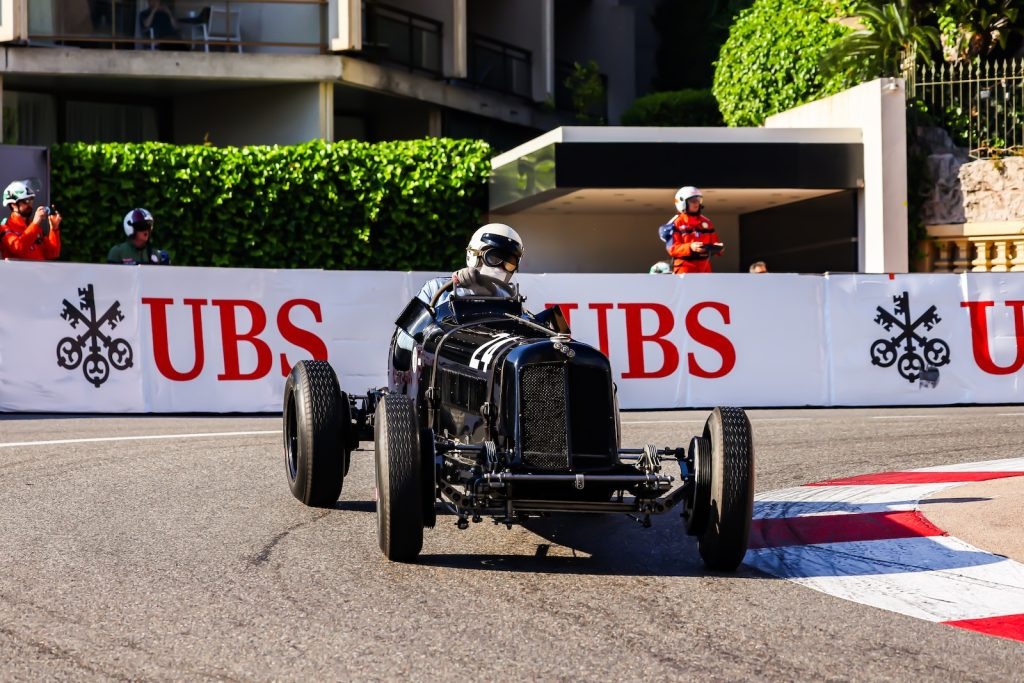
The oldest and slowest cars of the weekend were responsible for creating some of its most dramatic moments. In Series A1 for pre-war cars, Richard Bradley looked sure to take the win in his Maserati 4CL after retaking the lead with a brilliant move at Massenet. Fate, however, had other ideas, and Bradley’s car came to a halt on the final corner of the final lap, handing a surprise victory to the Frazer-Nash Monoplace of Patrick Blakeney-Edwards. Mark Shaw and his Scarab F1 took a commanding victory in the Series A2 contest for post-war front-engined machines.
In the Series B race for 1961-65 cars, Joseph Colasacco claimed a win for Ferrari after piloting his 1512 to the chequered flag ahead of Mark Shaw and Stuart Hall, who added podium finishes to their own race victories in other categories.
Away from the competition, Prince Albert II marked the 100th anniversary of the Bugatti Type 41 Royale by driving one around the Monaco circuit. Former Ferrari driver and six-time Le Mans winner Jacky Ickx led the Cavallino Classic parade in a Ferrari 312, while double world champion Fernando Alonso was also spotted in the paddock. Hollywood actor Bradley Cooper also made a trackside appearance.
The 16th Grand Prix de Monaco Historique will take place in 2028, following the event’s return to biennial scheduling in 2024. For more information, click here.