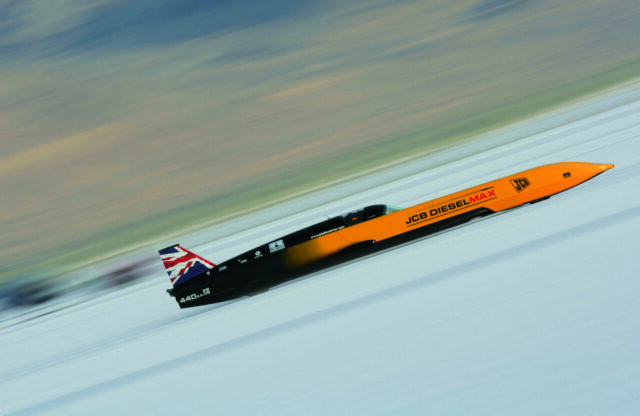
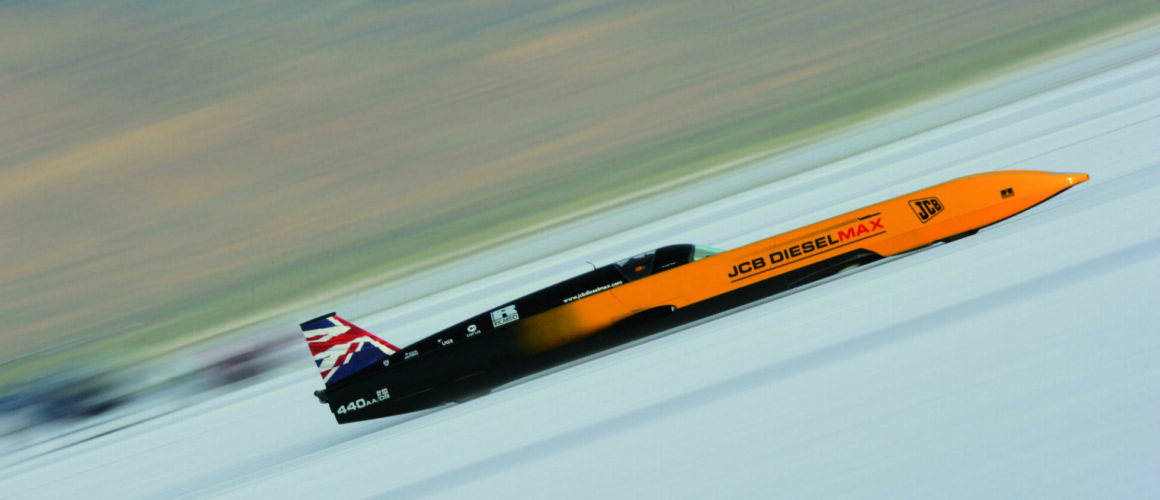
The mission could have been lifted from a Boy’s Own comic. Take two JCB digger engines, retune them and bolt them into a bespoke streamliner; hire the fastest man on Earth and decamp to the famous Bonneville Salt Flats in Utah, USA; insert the man into the car and ask him to drive at more than 300mph; establish a new land speed record for a diesel-engined vehicle; return home for a celebratory drink; sell more diggers.
This feature first appeared in Octane issue 41.
‘Most of the people in the company probably thought I was barking mad,’ says the JCB chairman, Sir Anthony Bamford, ‘but I grew up celebrating British land speed record breakers and I thought it would be a good way to publicise our diesel engines.’ Bamford’s determination, and a hefty chunk of his personal wealth, was enough to see a madcap idea turned into a thrilling reality.
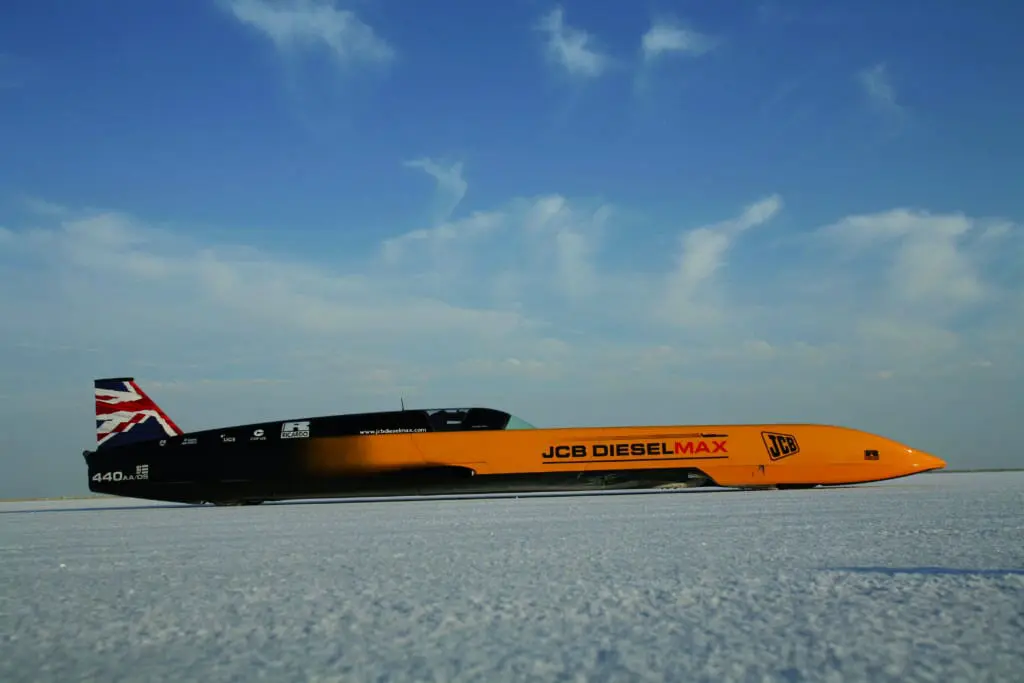
Before us on the Bonneville Salt is the JCB Dieselmax streamliner, which has just achieved an average speed of 328.767mph in the hands of wing commander Andy Green, OBE. This is more than enough to smash the existing record of 235.756mph, set by Virgil W Snyder in the Thermo King Streamliner back in 1973.
For the jubilant team, clad in garish yellow shirts, this moment marks the end of an extraordinary adventure that has lasted 18 months. Chairman Bamford first suggested an attempt on the record back in 1994, but JCB’s engineering director Dr Tim Leverton really did think he was crazy.
‘I didn’t take the suggestion seriously until Sir Anthony told me he’d invited Sir Richard Noble for a meeting,’ he recalls. Noble, the driving force behind the Thrust project that took Green to 763mph in 1997, set a target of 350mph for the diesel car and in January 2005 the Dieselmax team was born.
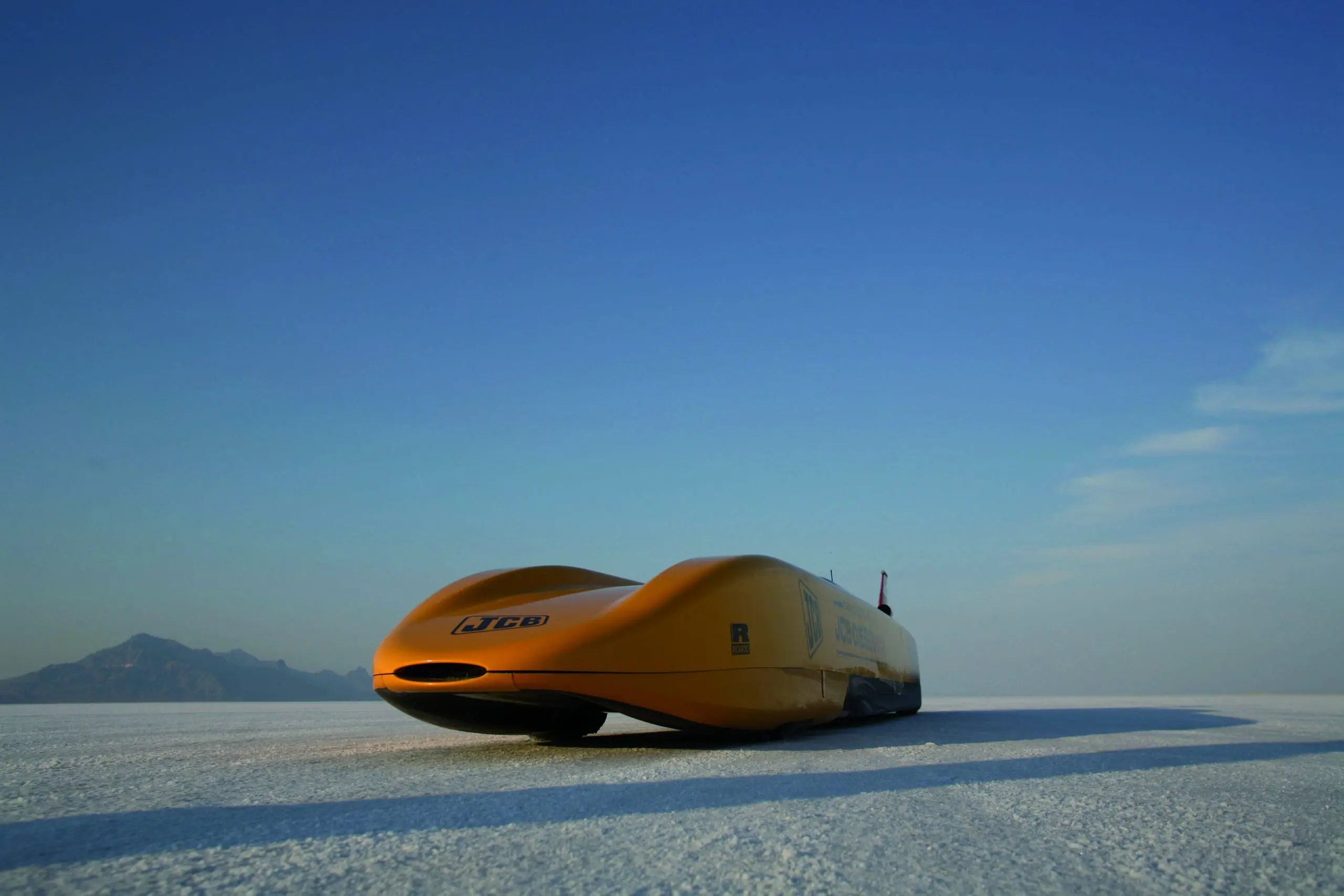
Bamford insisted that the car should be powered by an engine that was still recognisable as a JCB. This was a tough ask. The JCB444 turbodiesel weighs 540kg and was developed by the engineering consultants Ricardo to propel heavy plant machinery at 30mph. If you were building a land speed engine, you wouldn’t start from here.
• JCB Hydromax eyes-up the hydrogen Land Speed Record in 2026
JCB returned to Ricardo and asked for a 550 percent increase in power. ‘The head, block, bed plate and camshaft are all production parts,’ says Ricardo’s Ian Penny, ‘but the rest of the engine has been heavily redesigned.’ The capacity was increased to 5.0 litres, while a new turbo raised the boost pressure to almost six bar.
The target output of 750bhp was achieved, but studies showed that if the car was to reach 300mph, JCB would need to harness the output of two engines, working in tandem. The first would sit in front of the driver and feed the front wheels, while the second would reside in the rear and power the back wheels, giving de facto four-wheel drive. Trick electronics would unite the gearboxes, which would be controlled by an F1-style paddle shift.
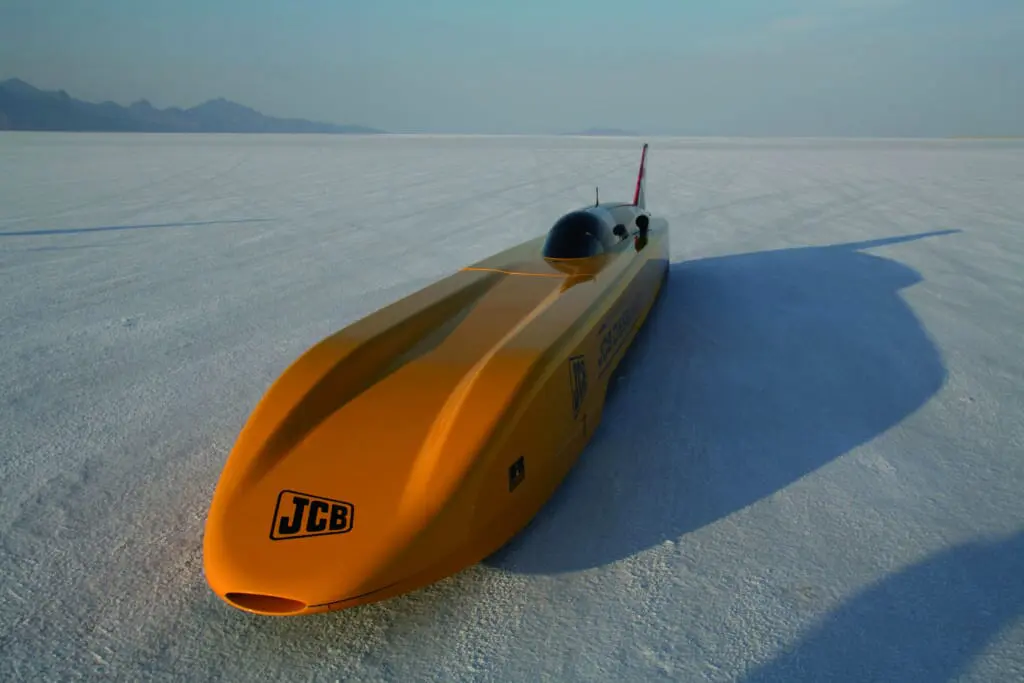
The task of clothing the tubular steel chassis fell to Ron Ayers. The 74-year-old made his name designing missiles before he became the chief aerodynamicist for the Thrust SSC jet car.
‘In Thrust we had the equivalent of 100,000 horsepower, which is about as much two Royal Navy frigates,’ says Ayers. ‘Back then, it was all about controlling the power, but here the challenge is to make the most of it. Andy has to drive just below the point where he loses traction, so the stability and the feel of the car have to be just right. This is a totally different challenge to Thrust but it’s just as interesting.’
No wind tunnel in the world is capable of simulating the effects of a streamliner travelling at 300mph, so Ayers relied totally on computational fluid dynamics (CFD).
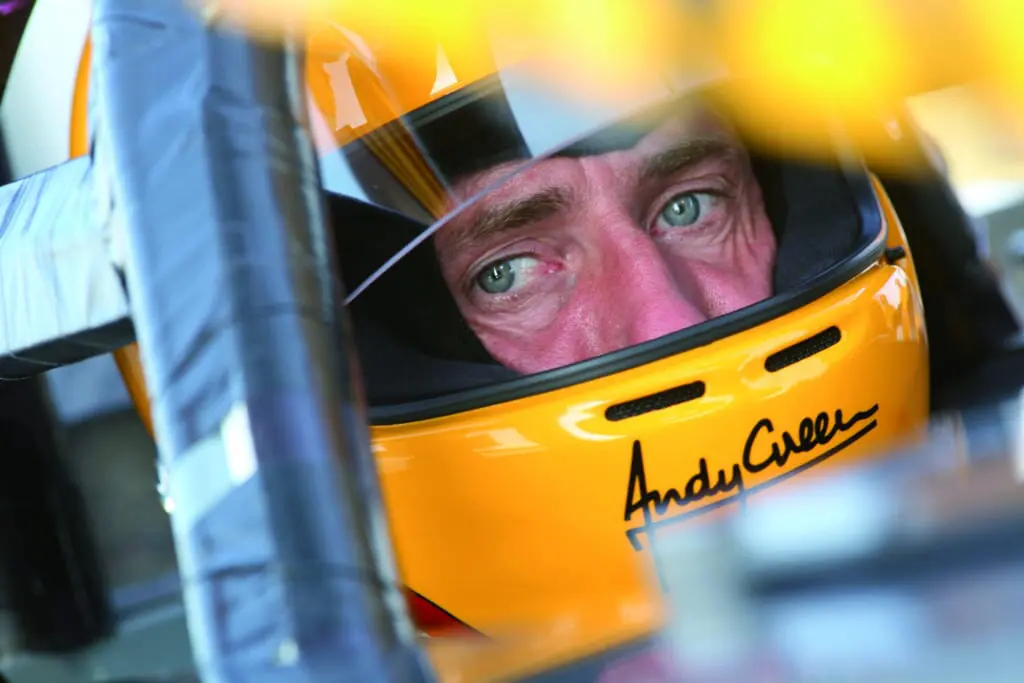
With Ayers and Noble on board, it was no surprise that Andy Green was offered the drive. It was Green who famously applied opposite lock at 650mph in Thrust SSC.
‘It’s important not to be emotive about record breaking,’ he says. ‘Only five people have been killed record breaking, and at least three of them knew they were taking a big risk.’ He compares the JCB attempt with the time he spent running a detachment in Afghanistan. ‘The military does this sort of thing everyday,’ he says. ‘The only difference here is that we’re not being shot at.’
By the beginning of this year, JCB appeared to have all the key ingredients in place. The engine was coming along nicely, the ‘fastest man on earth’ was dusting off his helmet, and they had plenty of money – it’s estimated that JCB spent £10 million on Dieselmax, compared with the £2.5 million Noble spent on Thrust.
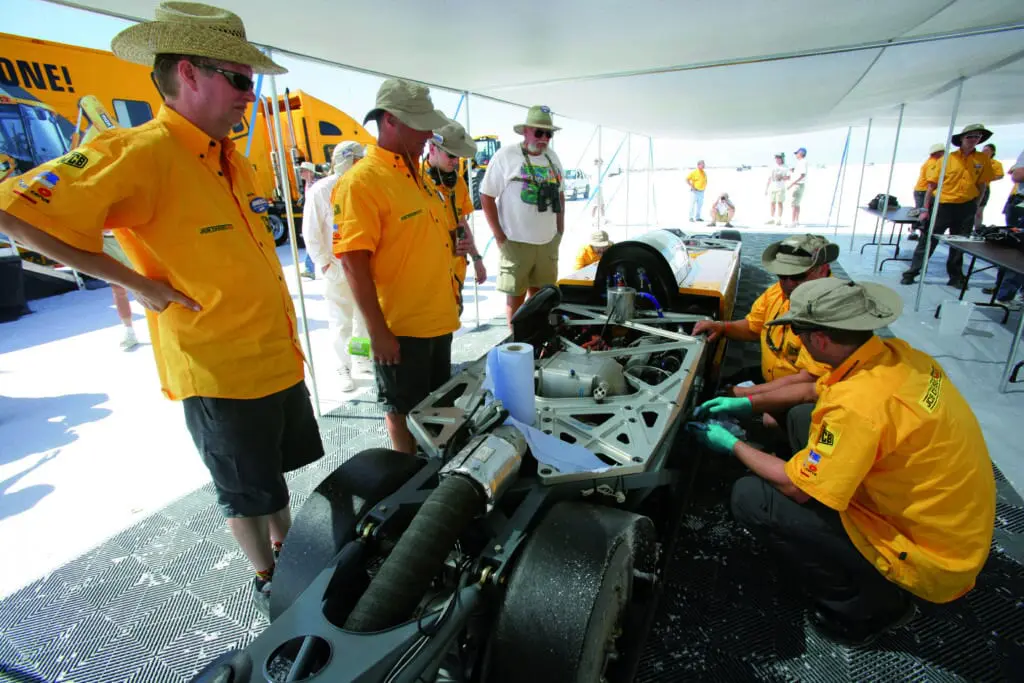
But for all their hard work, the project was still threatened by a crucial factor beyond their control. ‘The sport is being strangled because nobody is willing to make tyres capable of running at very high speeds,’ says Leverton. ‘All the manufacturers are conditioned by a commercial reality [a limited market] and the fear of litigation if something goes wrong. The tyres have been the critical aspect throughout the project.’
The Goodyear tyres used on the Dieselmax were officially rated to no more than 300mph. Anxious to go faster, JCB even hired the NASA rig used for testing Space Shuttle tyres. These tests showed that the Goodyears would be safe up to 350mph, but not much more.
‘Some private individuals are willing to run big risks on old tyres,’ says Green. ‘But that’s not possible for a big corporation like JCB.’
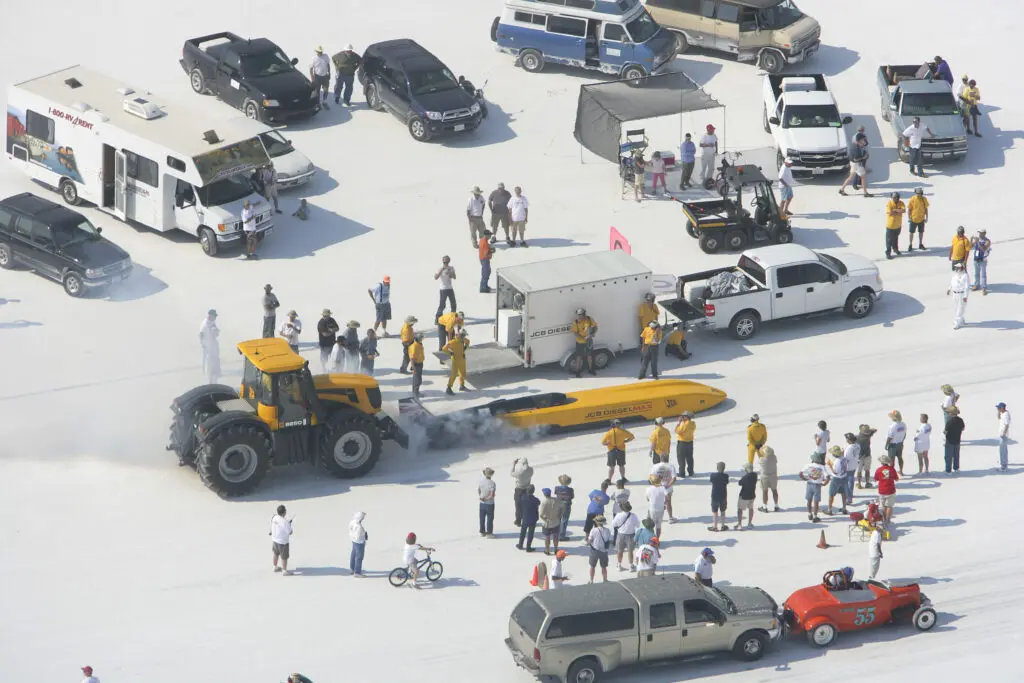
The team has been analysing the tyres after each run and Leverton is confident that 350mph should be possible. This is why, 24 hours after their successful record run, the JCB team returns to the Salt in an attempt to raise the record beyond 350mph. They are determined to run at first light, when the cooler air will benefit performance, and so, at a little after 6.30am, I make my way to the start line.
Bags of ice – critical for engine cooling – are loaded into the carbonfibre nose. In its naked form, the Dieselmax looks even more impressive than it does fully clothed. Rarely has so much technology been so elegantly packaged. Green is already here in his bright yellow race suit and, after a final check of the course, he’s given the signal.
A JCB tractor – itself tuned for the occasion – attaches itself to the rear of the car. Its job is to push start the car up to 30mph, at which point Green will nail the throttle. I move to the ‘flying mile’ – halfway down the 11-mile course – and moments later a tiny yellow projectile flashes across the horizon. There is a crackle on the radio and an instantaneous round of applause – Green has averaged 363mph.
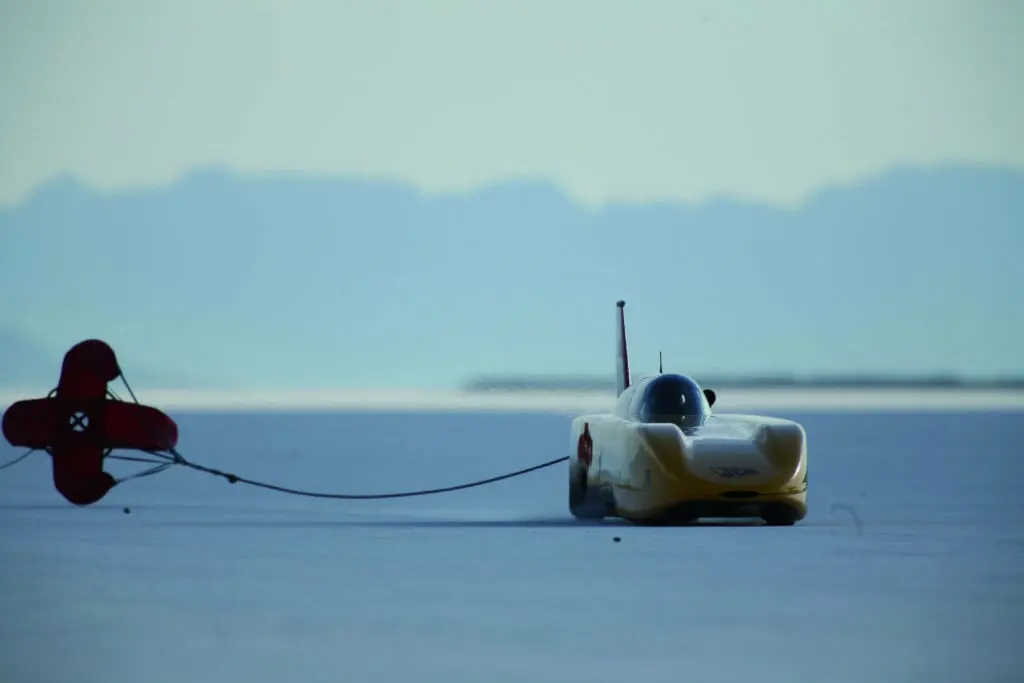
The team now has an hour to turn the car around for the return run. No more than 45 minutes later the support crew make their way to the finish and wait for Green. This time, the turbo boost gremlins, which hampered the car during testing, return and Green has to drag the brakes in a bid to engage the rear-engine turbo. Finally it springs to life and the driver yells ‘Come on car! Come on car!’ as it sprints past 300mph.
He finishes the run believing they’ve missed out on the magic 350mph. It takes a couple of minutes for the Bonneville timekeeper to radio through the result. The Dieselmax has averaged 350.052mph and the relief is palpable. ‘We’ve achieved our maximum aspiration,’ says Green. ‘I am so, so pleased.’
Later in the day, Green offers a startling admission. The team had only been using 1300bhp and he’d never been required to select top gear. ‘The car showed no signs of slowing down,’ he says; ‘it just keeps pulling and pulling.’ Talk inevitably turns to the what-ifs and maybes. With the appropriate tyres, could the Dieselmax top 400mph? ‘Purely as an untechnical estimate from the driver, I’d say it was possible,’ reckons Green. The ultimate wheel-driven record of 458.440mph may be a bridge too far, though.
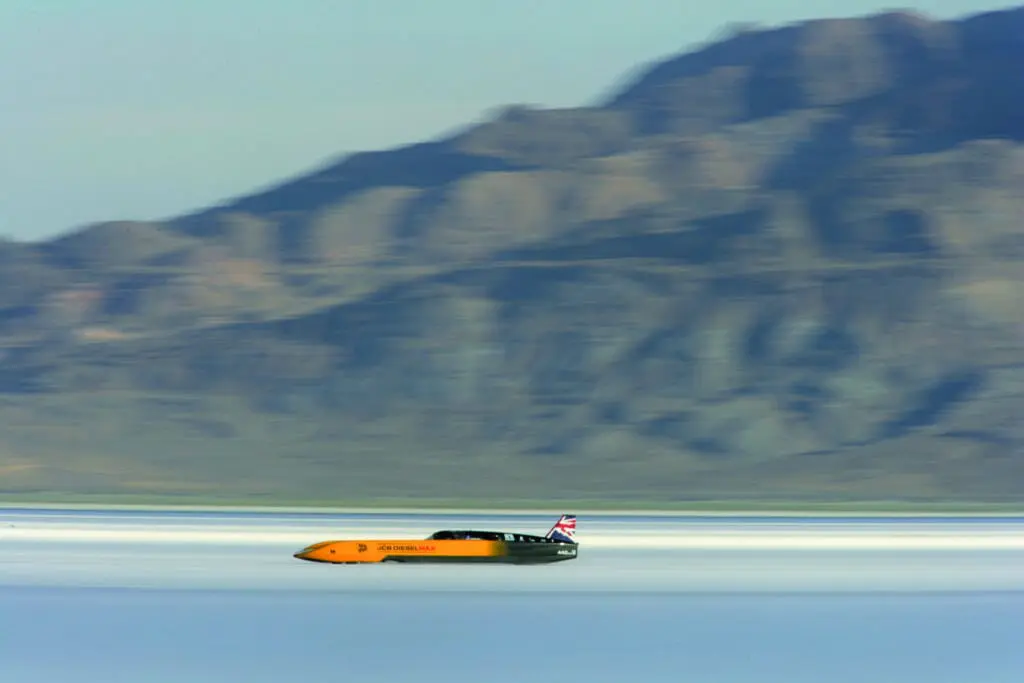
Whatever the future holds for the Dieselmax – Bamford is non-committal – there can be no doubting the validity of the achievement. The quest for 300mph might have begun as a marketing wheeze, but it turned into an epic adventure.