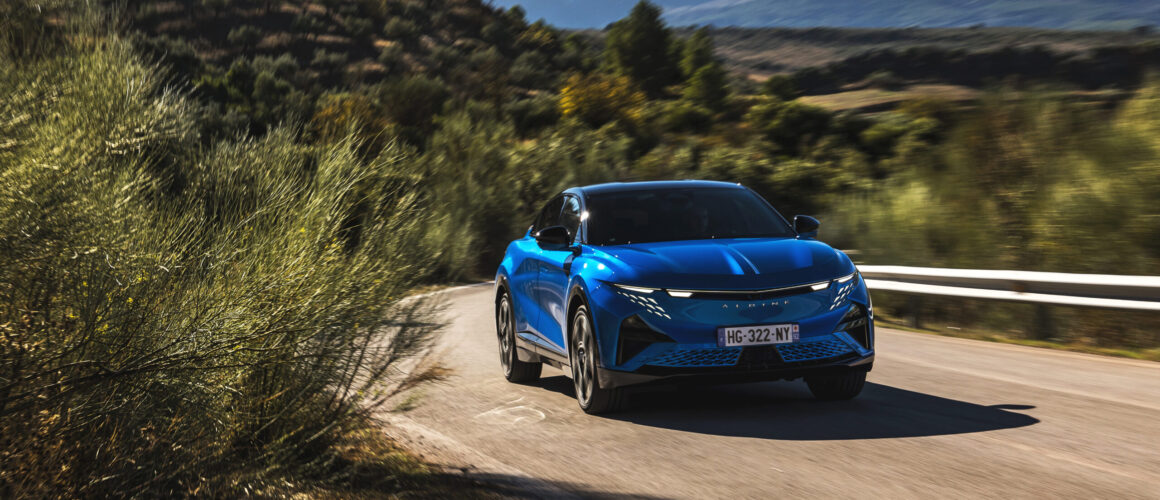
How do you make a full-sized, 2.1 tonne electric car feel like an Alpine? As a dyed-in-the-wool French car fan, I have always felt that Renault’s recent Alpine rebirth – starting with the launch of the stunning A110 in 2017 – was about the best that any car enthusiast could hope for. Here was a sports car that prioritised hitting its 1100kg target weight above out-and-out performance, wowed with a supple road-biased chassis and very much carved its own path rather than trying to beat Porsche at its own game.
Arguably, it is one of the greatest cars launched in the past two decades, which has (perhaps annoyingly) set the bar exceptionally high for a company that is now looking to expand into new more mainstream territory. With the compact A290 launched earlier this year already proving to be quite a hit, and now the A390, the company – at least when the final petrol-powered A110 is built next year – will soon be offering a fully electric range. It’s understandable a concern for those of us that cherish the feeling of lightness, especially as so few EVs have managed to achieve it.
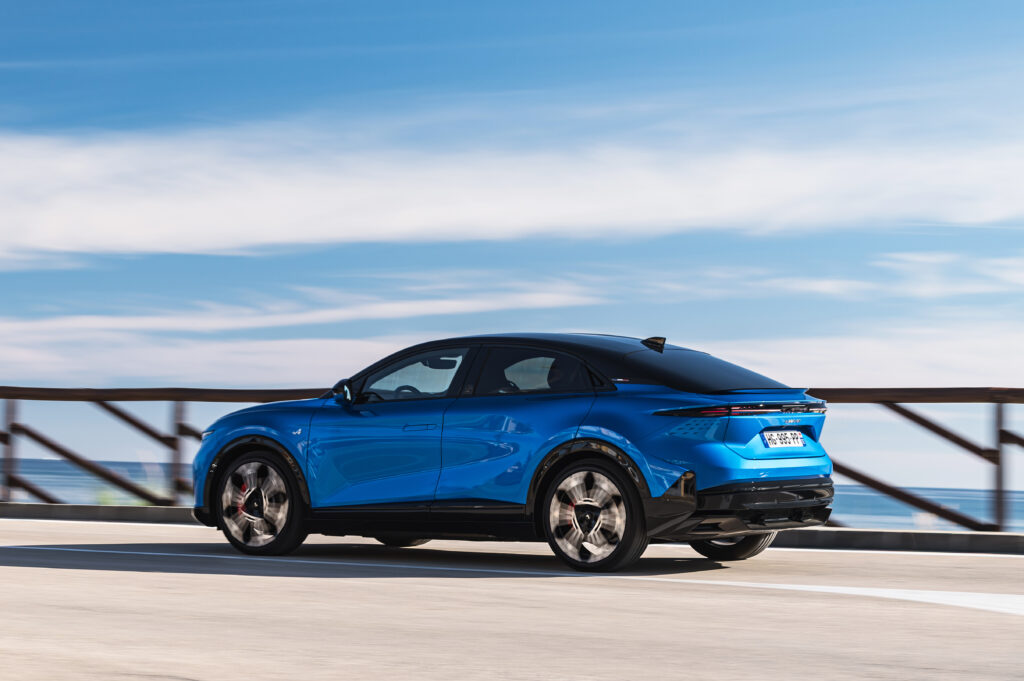
Based on existing Renault architecture, namely the AmpR Medium platform that also underpins the Scenic, the A390 gets a new three-motor setup – which brings with it proper torque vectoring at the rear end – as well as a revised suspension setup complete with lightweight arms, hydraulic bump stops and a faster steering rack. That triple motor arrangement is bespoke to the Alpine, and is quite different to anything else currently in this class. Being able to properly distribute torque independently to each rear wheel is what has allowed the chassis engineers to give the A390 that agility and feeling of being light on its feet. While rivals were benchmarked, the team was keen to highlight that the main goal was to make the balance feel as close to the A110 as possible.
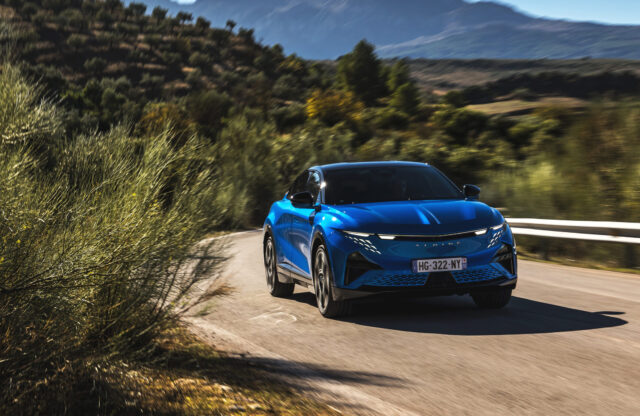
They’re keen to point out that it’s not an SUV or crossover either, rather Alpine categorises it as a sport fastback. I personally think the styling works quite well, and it’s one that seems to get better the more time you spend looking at it thanks to some interesting and quite subtle detailing, especially the relatively low rear roofline that emulates the A110’s. It’s also impressively slippery, but the most interesting bit of aero is the pair of bonnet vents – not only interesting to look at but they actually channel air to improve the airflow over the car.]
Two versions will be offered, both using the same 89kwh high-density battery pack: the 395bhp GT as tested here, and a slightly more powerful 463bhp GTS version. Headline figures for the GT are a 4.8second 0-62mph time and a 345-mile range on the smaller 20-inch wheels – although on these 21-inch-wheels it’s closer to 315. Top speed of the GT is 124mph, with the GTS reaching 137mph. Our test car is wearing the larger optional 21-inch wheels, wrapped in a set of Michelin Pilot Sport 4S tyres that have been developed specifically to work with this car.
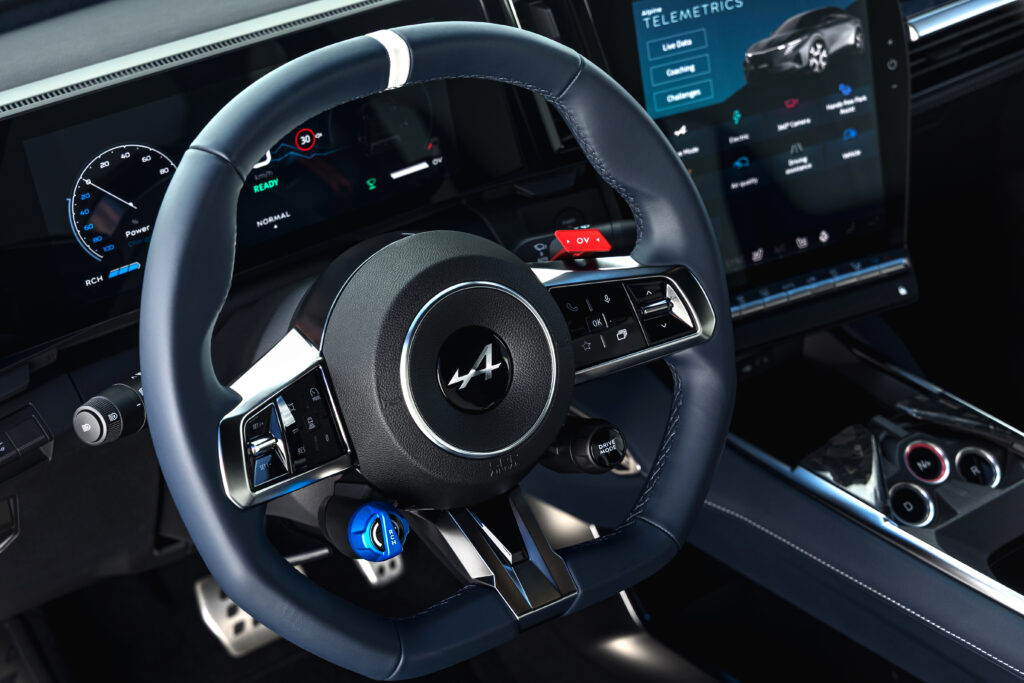
The first thing you notice when getting in is the neat steering wheel, which is shared with the smaller A290. There are no paddles, but you do get a useful rotary switch to control the regenerative braking, as well as a bright red ‘OV’ button. Like its smaller brother, this gives you a burst of extra power when pressed – although the output is the same as using the kickdown switch at the bottom of the throttle pedal. Kind of pointless, but as the Alpine communications team put it, ‘it’s just for fun’. The dashboard is made up of a main screen for the driver, as well as a secondary panel in the centre of the dash to access the car’s infotainment, with a small row of buttons along the bottom for the basic heater controls. First impressions are that the leather, Alcantara, carbonfibre and aluminum trim all looks and feels of a premium quality. Rear seat passengers might feel a little enclosed, but there’s actually plenty of room.

A car in this class, going up against the likes of the electric Porsche Macan has to deliver a lot – but most of all it must be fun to drive. The steering is super sharp, but lacks the nervousness that you might expect. The A390 does without adjustable dampers, and the again the fabulous ride and body control that it achieves is yet another thing that does really make it feel like an Alpine. It controls its weight superbly, and actually gives you the feeling of driving in something smaller and lighter than it actually is. While the three main driving modes – Normal, sport and track, as well as a customisable Personal setting – do subtly alter the dynamics and feel, with track mode allowing the least traction control intervention, you really don’t feel the need to continuously switch between them.
Leave it in Sport or even Track, and it’s a car that actually flows beautifully. The harder you push, the more impressive it gets, and while the ‘OV’ button on the steering wheel is a bit of a gimmick, I’ll admit it is actually quite fun under the right circumstances. If your definition of fun is kicking the tail out and smoking the rear tyres then you’re out of luck. It’s far from the hooligan that the Ioniq 5 N is, but heading up into the mountains, it’s easy to see that Alpine has really nailed the way this car actually feels – and it’s the cohesive nature of the drivetrain and chassis that actually leaves me most impressed. It gives the impression of a car you would enjoy driving for years to come, rather than simply becoming bored once the novelty of squirting it down a straight road wears off.
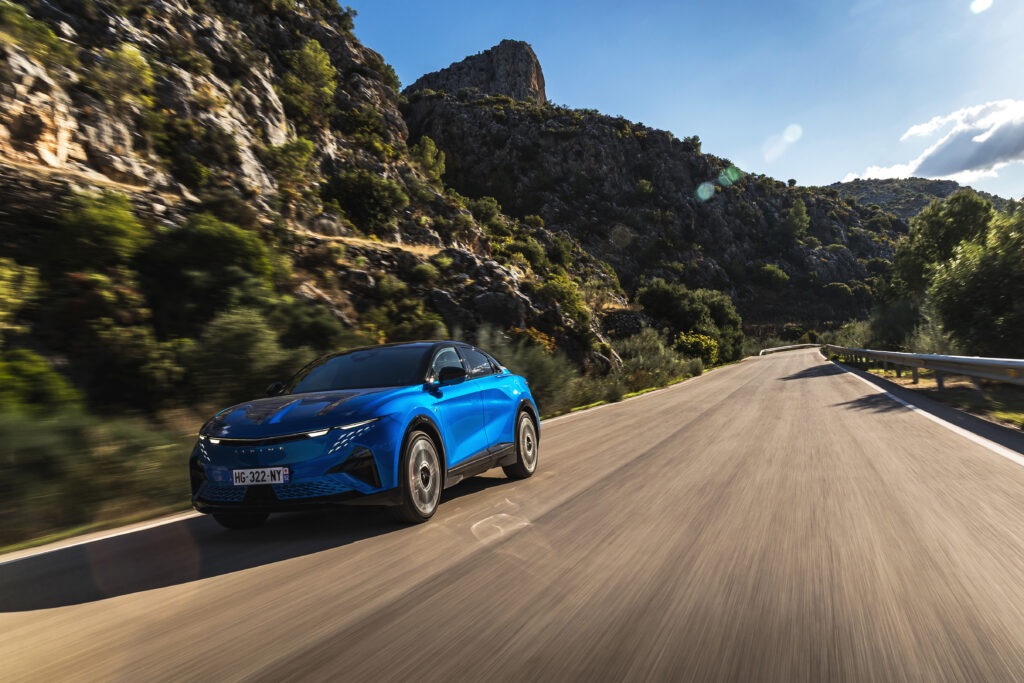
The reality is that a car like the A390 could never match the brilliance of the low-volume production A110 – not least due to the fact that it is a much bigger heavier car with a very different use case. What Alpine has attempted to do, however, is to inject some of the A110’s magic into it, and after a few hours behind the wheel, I’m pleased to report that they have succeeded. A lot of work has been done to keep the weight down, and while 2.1 tonnes doesn’t sound light, it is around 100kg less than the Ioniq 5 N and 200kg less than the new electric Porsche Macan. The drivetrain and chassis however has been beautifully dialled in to disguise the weight, and the result is a performance EV that actually feels natural, agile and well balanced.