All Elans are equal, but some are more equal than others. Heck, with the rare beast we have here you could distil it even further to ‘All 26Rs are equal, but some 26Rs are more equal than others.’ Probably best to start at the beginning…
It’s 1962 and Lotus launches a road car, a follow-up to the groundbreaking blind alley that was the glassfibre monocoque Elite. This new one is cutesy in the extreme, designed not by Lotus’s financier-cum-skier-cum-draughtsman Peter Kirwan-Taylor but by South African engineer and Mr-Workmate-to-be Ron Hickman.
The car epitomises Lotus philosophy in plastic, taking basic ingredients from Ford and Triumph (except Maserati air horns!), adding its own spices, and scoring Michelin stars for pep and handling. At its core, literally, is a simple, lightweight 18SWG folded steel backbone chassis, reputedly devised to test the Rotoflex couplings that Colin Chapman was so suspicious of – but also to give incredibly smooth power take-up. Until they judder or snap.
Outriggers and side-impact protection? They are for wimps. That power? Initially 1500cc (1499cc) for 20-odd cars, then 1600cc (though 1558cc in reality), it came from a Ford Kent five-bearing 116E lump with an intricate Lotus twin-cam alloy head (designed by Harry Mundy of BRM and Coventry Climax) on top that doesn’t like overheating. It was fed by Weber 40s, though later you could end up with Dell’Ortos or Strombergs.
In Blue Oval guise that workhorse engine was good for anything between 39 and 111bhp from anything between 996cc and 1599cc. For its Type 26, Lotus would come in just under the top at 105bhp – but in a car that weighed only 640kg… or less. The engine drove through the snappy Ford Classic four-speed ’box, which was a real ruby in the dust and as good as anything much pricier. It had disc brakes all round, the rears inboard. The steering was by ‘just’ a Triumph rack and pinion, but was close to psychic.
The result was a pretty, supple, softly sprung road car that was as sharp as a knife yet as forgiving as Jesus, which also rode like a GT and attacked corners like a single-seater. Pure motoring alchemy. The perfectly balanced sports car. Naturally, there immediately followed a clamour for a more hardened competition version and so was born the 26R in 1964. As Chapman, who was steadfast that the basic Type 26 was nothing but a road car, said: ‘In the second year we thought, well, if these people insist on racing them then we’d better get down to some proper development.’
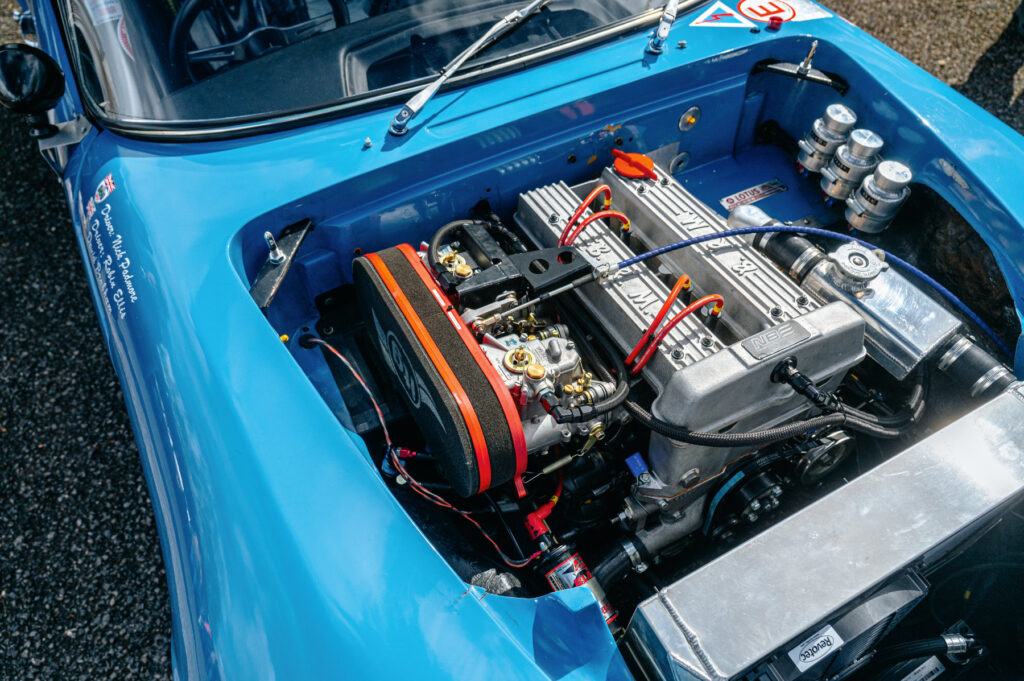
So they did, largely taking their cues from the racing Elans that Ian Walker Racing and Graham Warner (of The Chequered Flag) had already developed. This meant lightening the body, eventually getting rid of the Rotoflexes, uprating the wishbones, adding dual-circuit brakes with twin master cylinders, fatter anti-roll bars, lightweight calipers, magnesium wheels, Bendix pump and a sprinkling of magic dust from Cosworth (later BRM) tuning that took output to 140–160bhp by boring it out to 1594cc.
Overall, the 26R was just a bit extra: everything was stiffer, bigger, thicker, lighter, faster. And more expensive – at £1645 in component form or £1720 assembled, the 26R cost nearly an E-type. Even so, such was the appetite from the racing world that about 100 were built by the factory: just over 50 Series 1s and just under 50 Series 2s. They cleaned up.
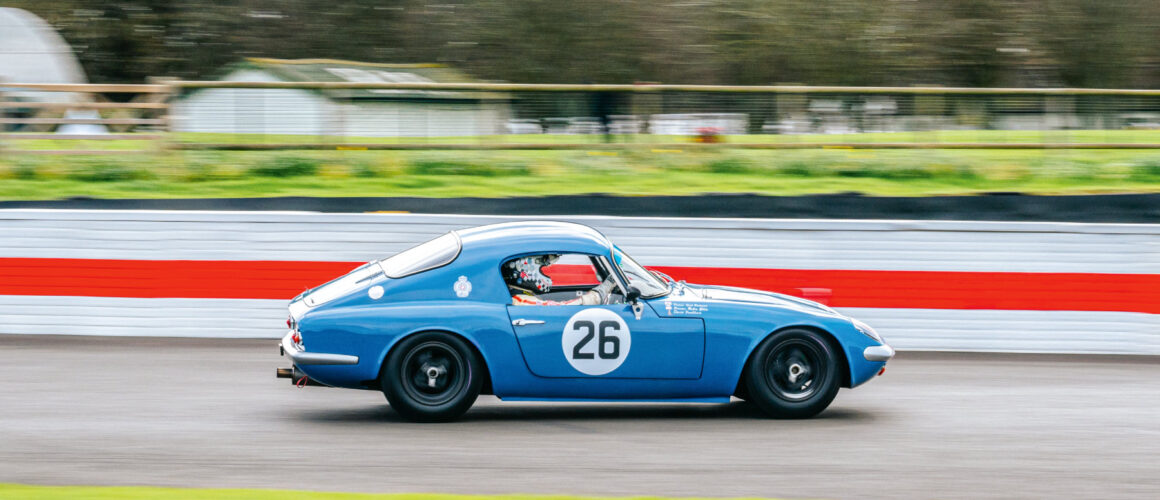
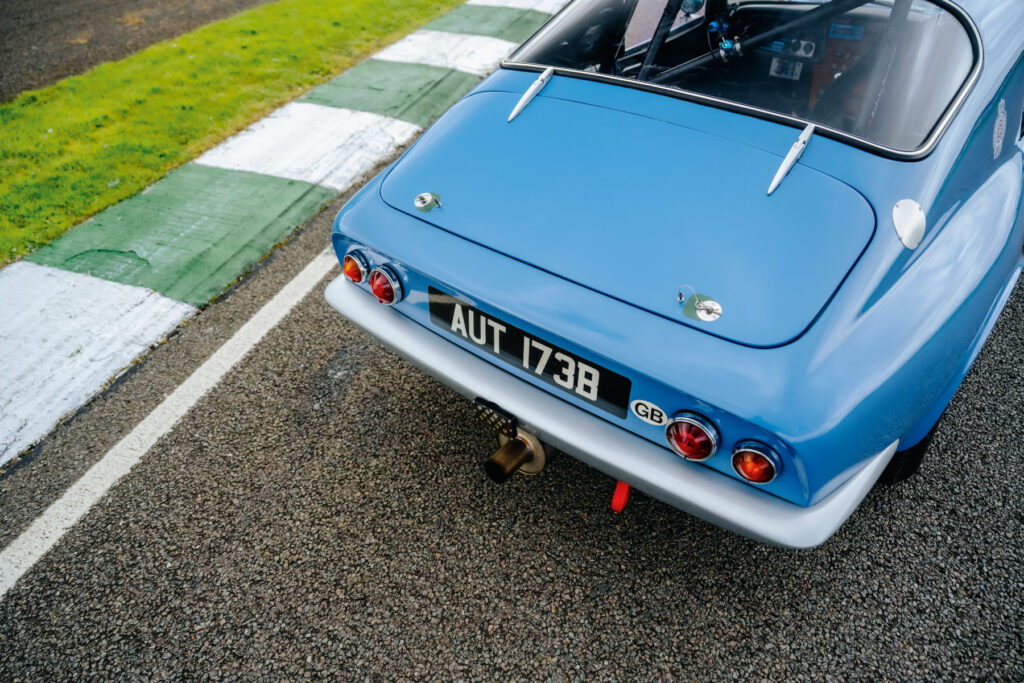
So what next? Racer Barry Wood, whose Surbiton Motors was in the very heart of the UK’s A3 motor corridor, fitted a handful of Elans with a sleek aluminium fastback roof that was attached directly to the glassfibre bodywork and improved aerodynamics. Wood had mocked-up the prototype in balsa on his own car (39 PG) at home in his garage, then the work was carried out by the nearby Shapecraft of Tolworth, later in Leatherhead – a company more associated with the aviation industry and eventually absorbed by Robert Jankel’s Panther.
Wood displayed one at the 1964 Racing Car Show, where Peter Sellers snapped it up for Britt Ekland. He advertised his ‘Lotus Elan GT Conversion’ as early as November 1963 – cost including standard Elan was £1250, conversion was £170, the promise was an extra 5–8mph – and it’s thought that he did as many as 20, though it might have been as few as ten.
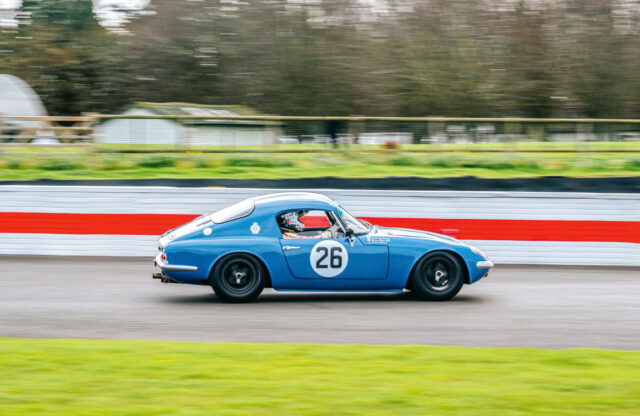
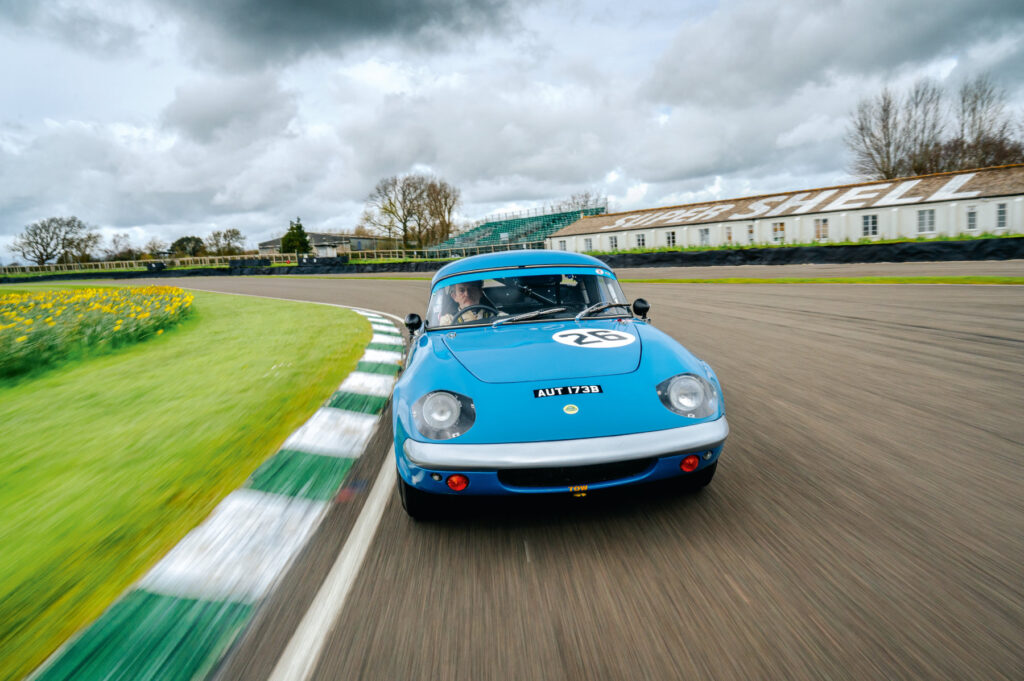
Three of these conversions were on genuine 26Rs: his own racer RFP 696B, Les Arnold’s BPE 230B, and this car, AUT 173B, which has an impeccable history. The first owner was Dick Crosfield, who finished second on aggregate in the 1965 Autosport Championship in it with six wins (with John Harris), after having the engine rebuilt by BRM. He advertised it the next season, initially for £1950, then £1600, and its next owner was Jackie Bond-Smith of the First Ladies International Racing Team (FLIRT).
It next went via Trevor Howard at The Chequered Flag to Jim Jones, who is thought to have died young. Then Len Bridge, previously linked to Chris Lawrence and Lawrencetune, bought it for £800 in 1975, having been put onto it by Gerry Marshall and John Wingfield. He restored it over two years and then campaigned it until 1985. Lotus racing guru Tony Thompson, Robert Causo and more owners followed before historic racer Mark Midgley bought it from Swiss-based Mike Humphreys in 2016.
Richard Solomons had it briefly after that, when it tested 175bhp at 7500rpm on the dyno following a rebuild, and in 2020 it found its current owner. Bristol-born architect Robin Ellis owned and ran a 100-person design and build company for A-listers in London, sorting out their subterranean ballrooms and squash courts. He also ran some interesting cars such as a Jensen FF and Mercedes-Benz 300 SEL 6.3, but his youthful love of a more selfish type of motoring was rekindled by a Lotus Elise and a Porsche 993 RS he used for track-days.
Almost inevitably he started racing, at first with the Caterham Academy in 2007, graduating to a Lotus Elite (which he still has and had timed at 138.4mph on the Mulsanne Straight), and then a twin-cam Elva MkVII, Lotus VI, a Ford Falcon and a ‘normal’ Elan. He’s a Goodwood regular but has also piloted a 911 and MGB at Spa.
In fact, he had already driven this car at Goodwood when it was owned by Richard Solomons, before seeing it for sale on the Duncan Hamilton Rofgo stand at Olympia in 2020. After chatting with Simon Drabble, much man-maths and a clear-out of his Porsche and Elan later, he became the umpteenth owner of AUT 173B.
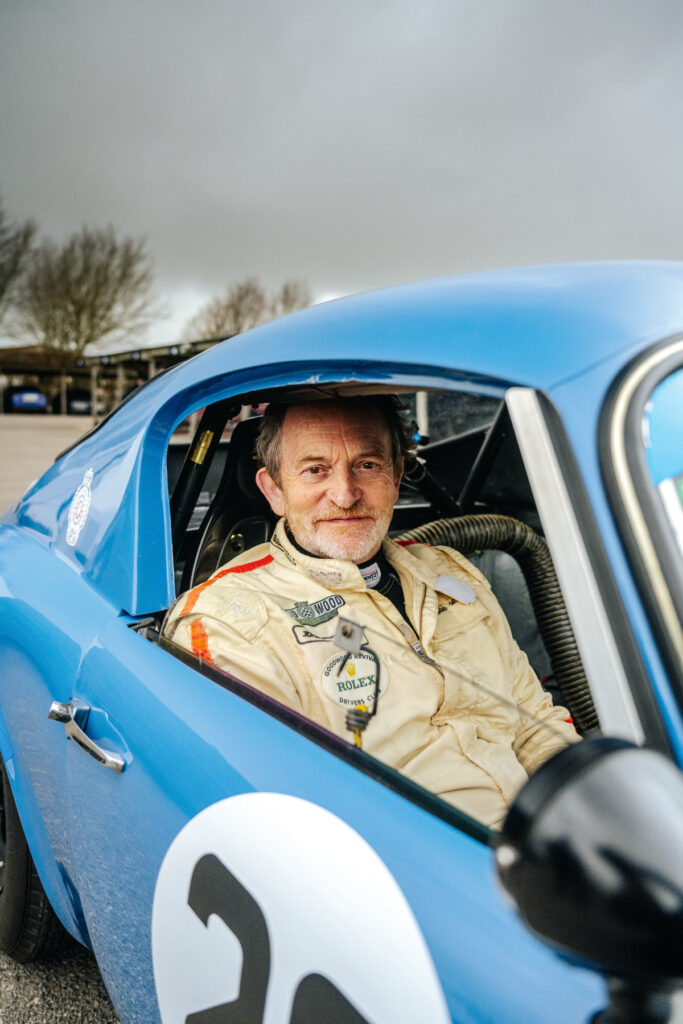
‘I bought it in February 2020 and we immediately went into lockdown. It was a very compressed season, but it did run in Goodwood’s SpeedWeek, probably the only Elan ever to run in the TT and certainly the only four-cylinder car on that grid.
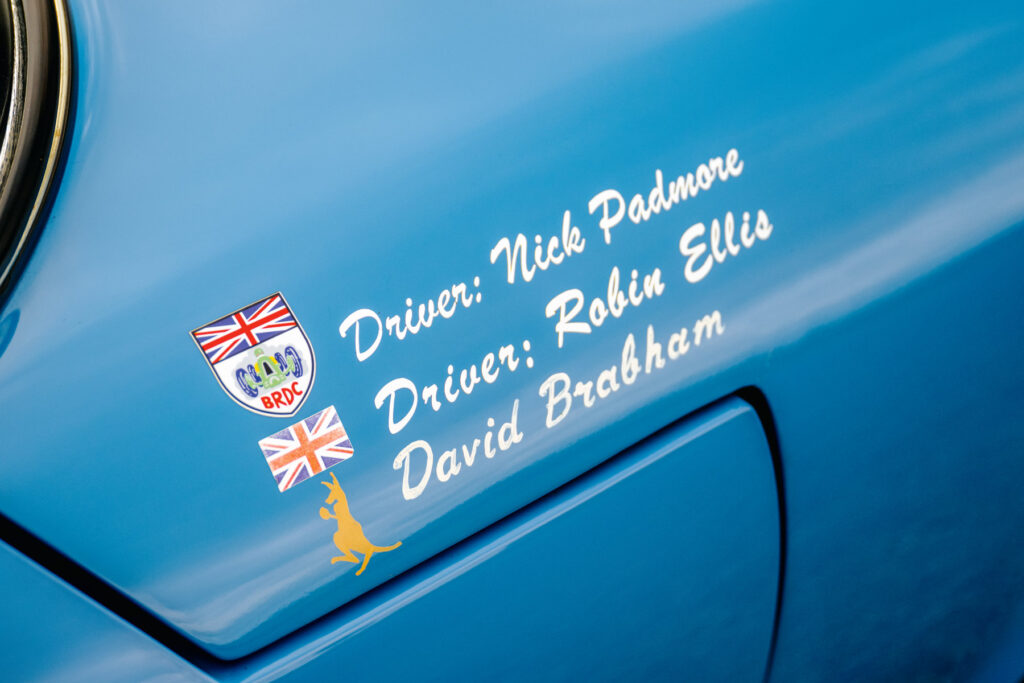
‘I was sharing with David Brabham and we came 17th, which was a very respectable result when we were such minnows in a sea of big, powerful fishes.
‘The car itself wasn’t sorted geometry-wise at that point and it didn’t drive like it does now. Andy Wolfe has now been right through the car, crack-tested everything, tweaked it in the way that he likes to tweak Elans and produced a delightful, benign car that is fast and looks after you very well.
‘It’s very predictable, almost never scary even when you do things that should be.
‘I have spun it once, at Mugello, but it maintains the famous compliant ride of an Elan. It seems to be on your side most of the time. Compared to my previous Elan, it’s clearly both more powerful and more settled, and inspires a lot more confidence in every area.’
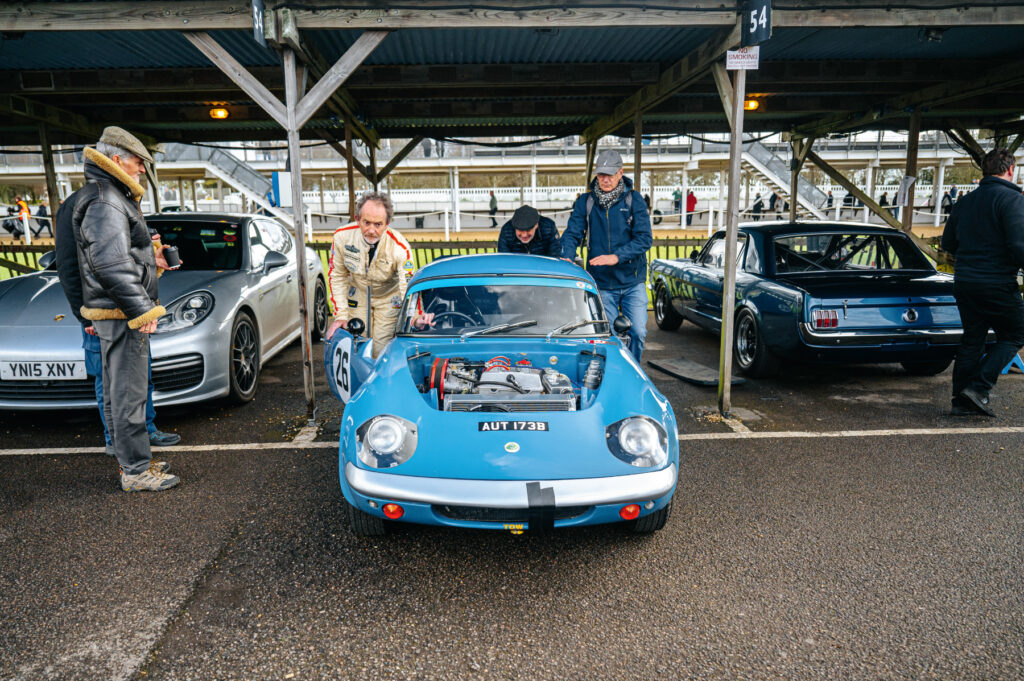
The results back up such confidence. Fine showings at Goodwood and elsewhere have been plentiful, but the crowning glory to date was a maiden win in the Italian Modena Cento Ore with historic hotshoe and Racelogic founder and MD Julian Thomas in October 2023. This top-table event was contested over four days, competing on four of Italy’s most famous circuits, featuring nine special stages and covering a total distance of 959km. It is not a rally for the faint of heart.
‘We wanted to do it because we just thought it would be fun to do a road-race event together. Then at the end of the first day we discovered that we were second overall to Phillip Walker (who’d won it five times, I think) and Miles Griffiths, who had just won at Spa in the GT40, and we thought: “Oh dear, we might have to get serious about this.”
‘At the end of Day 2 we were in the lead and managed to hold onto it to the end.
‘We treated it seriously, but not with the expectation of winning anything. All the fun we were planning to have went out of the window as soon as that became a prospect. I was full of trepidation on the last day, when it was only there for us to lose.
‘We had three road stages and two tracks to tackle and only a 20-second lead to defend. There was no margin for error at all on those last few stages.’
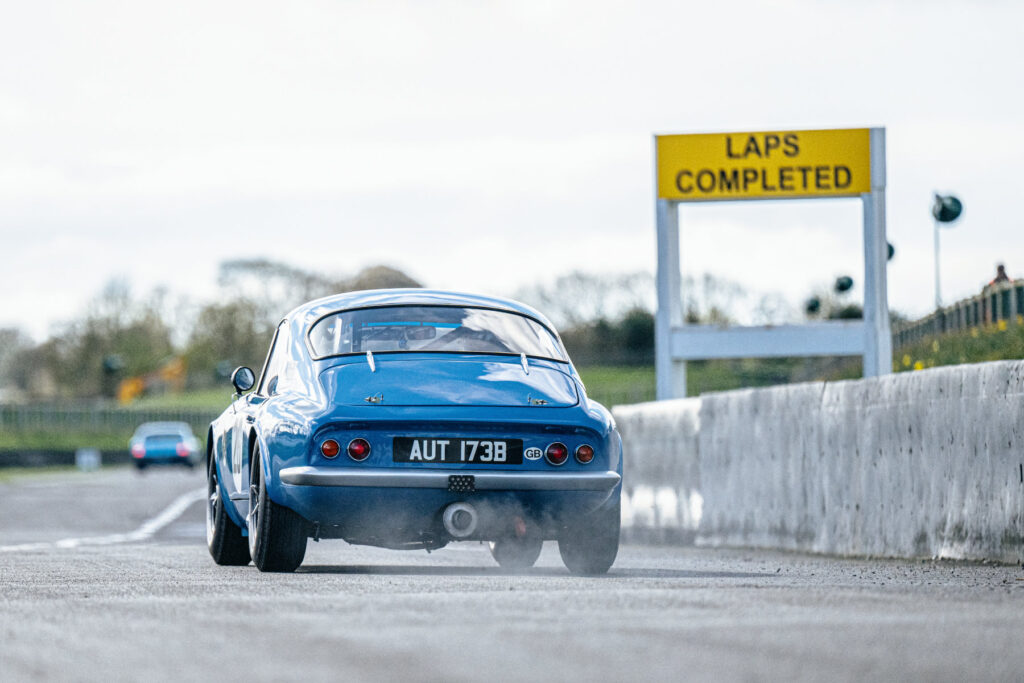
And that was the last time Robin had sat in the car until our photoshoot at Goodwood, where he was preparing for the Members’ Meeting.
For full disclosure, an administrative issue that was of neither Robin’s nor Goodwood’s making kept me out of the car on the day and, as a devoted Elan fan, I was distraught. Even though I have driven other 26Rs, even though I have driven the Ian Walker Racing Goldbug at Goodwood.
Truth be told, any big differences over a 26R that I would be able to share with you would be Andy Wolfe’s doing – he’s said to have teased 185bhp out of one of these engines – rather than Barry Wood’s, and without a direct full-speed comparison with a stock 26R, no-one could tell you exactly how much difference that aerodynamic lightweight ally roof makes. Still gutted, mind.
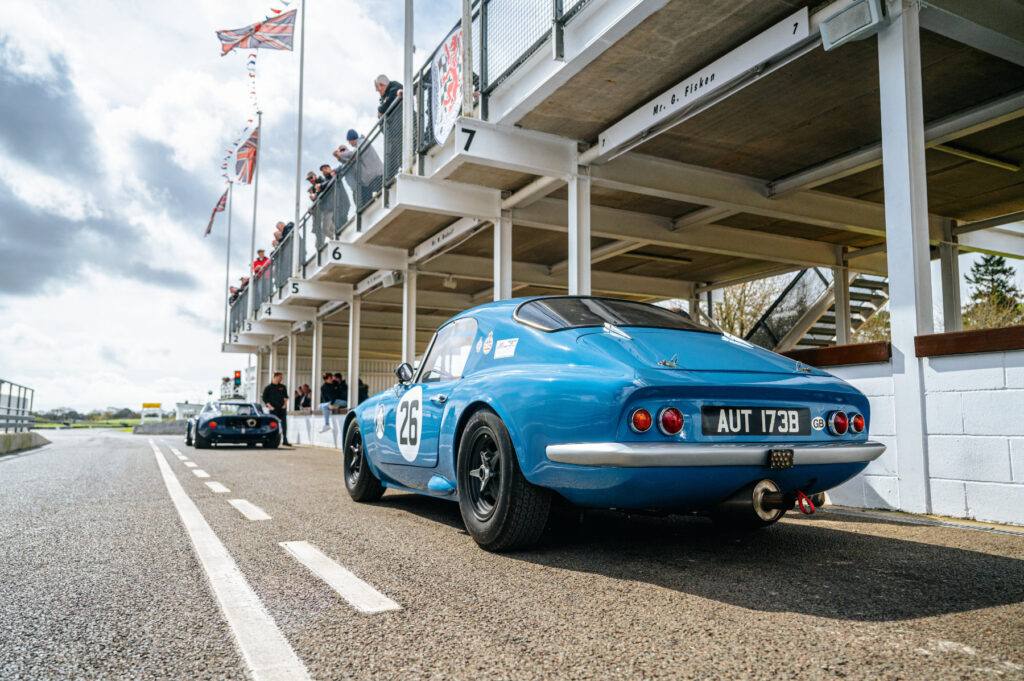
What I can tell you from the three genuine 26Rs that I have driven is that it’s going to be hard work in comparison to Robin’s Elite, which is a fingertips and tiptoes car, but there isn’t much else on four wheels and four cylinders that is going to make a 26R seem like something you have to wrestle.
There’s continual steering adjustment, but it feels very natural, an extension of the driver rather than a separate entity that you are reacting to. For a racing car, it is incredibly benign right up to the limit and even then it’s predictable and doesn’t give you a jump-scare. You drive almost on intuition; it’s a car that encourages you to drive fast rather than goading you into it.
As Robin concluded on that Goodwood test day, beaming to be back in the Shapecraft again: ‘It’s such a special little car on all fronts, it looks fabulous and it now goes extremely well and it is a delight to drive. The more you get to know it, the more it gives back to you. It’s a virtuous spiral of driving pleasure.’
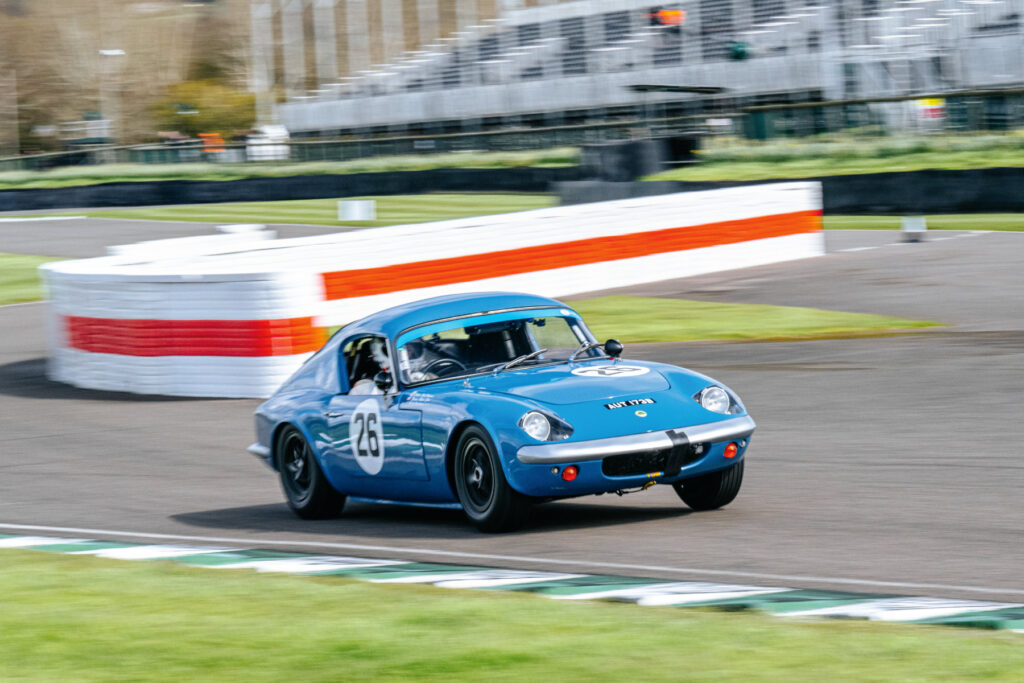
Since Octane’s day with Robin and the Shapecraft, the good results have kept coming. He was victorious again with Julian Thomas in the GT & Sports Car Cup’s outing in Sicily in May, and started on the third row and finished seventh in Equipe Classic Racing’s Lotus 26R 60th anniversary race at Silverstone in June – 33 Elans, 28 of which were said to be 26Rs.
AUT 173B’s already fat history file just keeps piling on the pounds. Unlike the beautiful little Lotus itself, with its shopping-car-derived engine yet supercar power-to-weight ratio.
1964 Lotus Elan 26R (BRM) specifications
Engine 1594cc DOHC four-cylinder, two Weber 45 DCOE carburettors Power 150bhp-plus @ 6500rpm Torque 125lb ft @ 5000rpm Transmission Close-ratio four-speed Ford manual, rear-wheel drive Steering Rack and pinion Suspension Front: double wishbones, coil springs, telescopic dampers, anti-roll bar. Rear: lower wishbones, Chapman struts, coil springs Brakes Discs, inboard at rear Weight 600kg Top speed 126mph 0-60mph 5.5sec