The ongoing struggle for supremacy between supercharging and turbocharging stretches back nearly 100 years. When one route to increased performance has taken a technological step forward, the other has then superseded it just a few years later. Sometimes it’s seemed as though car makers have woken up one morning and decided, after a gap of years, simply to start making the other option because the, er, wind has changed.
Generally, though, it is the turbo-supercharger (to give it its full name) that has become the ubiquitous fitment in the latter days of the internal combustion engine. The supercharger’s key advantage is its instant response from being driven directly by the crankshaft, which has been eroded by increasingly sophisticated technology for exhaust-driven compressors. In return, the flaw of the supercharger – its parasitic nature on the efficiency and power of the engine – looks increasingly undesirable.
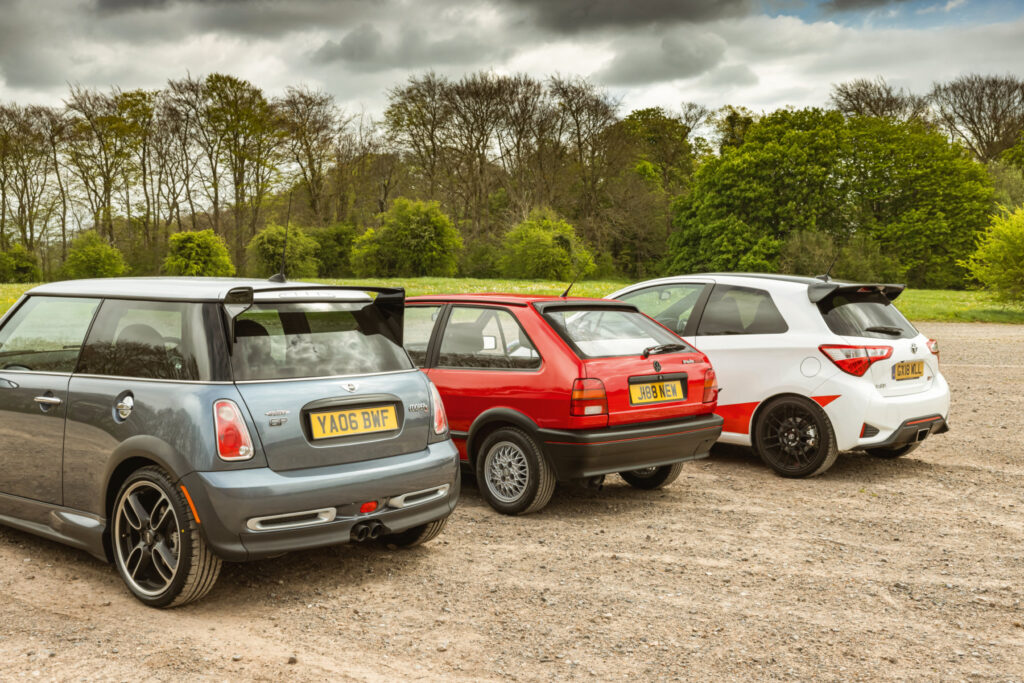
In the case of the hot hatch, the charms of the supercharger have usually given best to traditional tuning of naturally aspirated engines, or the fitment of a turbo. Just occasionally, though, there are outliers – like the trio we have here.

We begin in the 1980s. Sure, supercharging a Mini Cooper in the 1960s was not unheard of, but never as a production car, and there have been other oddities such as Nissan’s home-market-only K10 (Micra) March Super Turbo, which used both. However, if we consider the Golf GTI Mk1 as the originator of the hot hatchback breed, it was not until the following decade, with the craze in full swing, that Volkswagen began to introduce its fascinating G-Lader technology.
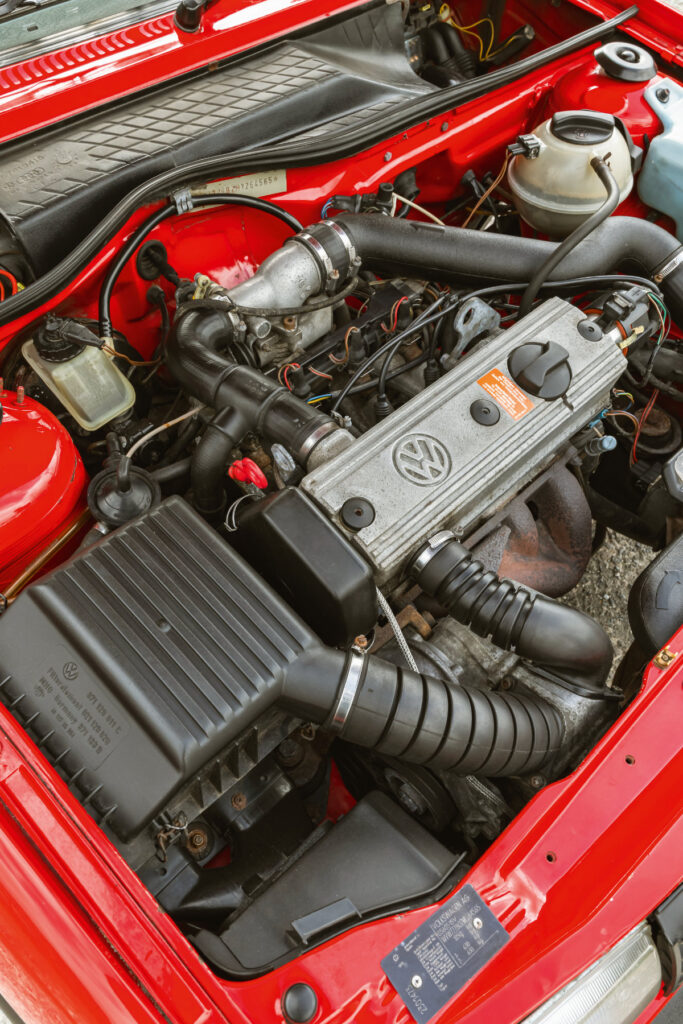
The G-Lader was so named because of the shape of the twin parallel spiral channels that compress the air from the outer inlet to the central outlet; within this double spiral is another spiral mounted on an eccentric shaft. With every rotation, the air is forced from the outer open channel to the inner, with two pulses per rotation, or four overall, given that it’s double-sided. The idea was originally patented in 1905 by Leon Creux as a rotary steam engine pump.
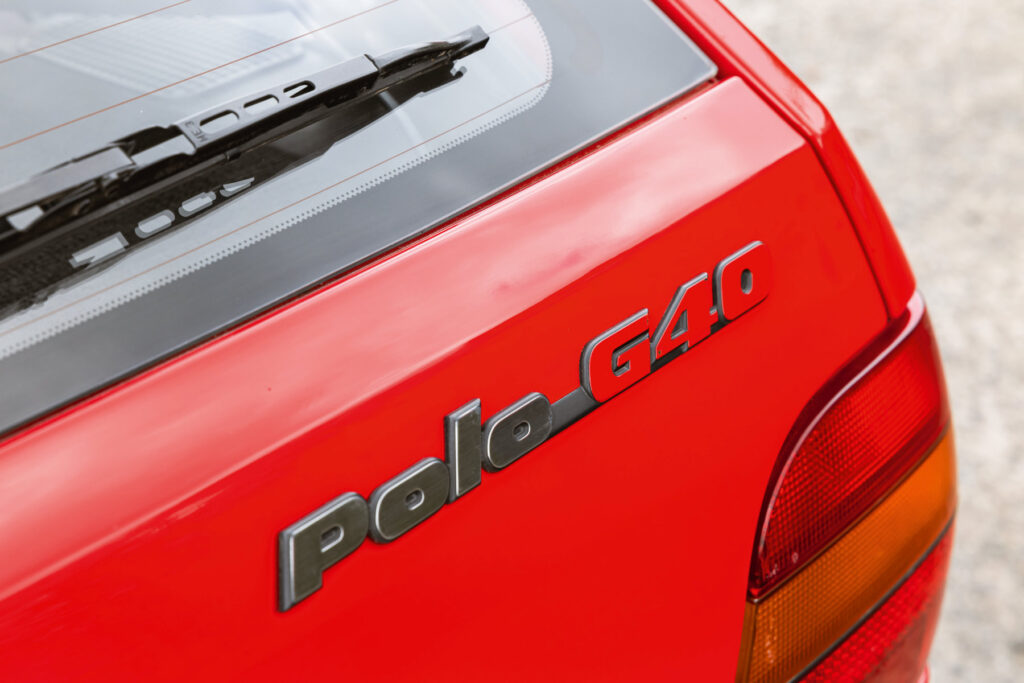
A warm GT version of the Polo Mk2 – with 75bhp! – was already available in the early 1980s as a little brother to the Golf GTI. Then, at the 1985 Frankfurt motor show, Volkswagen unveiled a Polo GT G40, with a G-Lader supercharger boosting the output of its 1272cc, eight-valve four to 115bhp. Finally, at the beginning of 1987, 500 of them were built, all left-hand drive.
In late 1990 the Polo 2F (known as the Mk3 in the UK) appeared, with fuel injection and a catalytic converter, and in May 1991 the G40 arrived in the UK as a right-hand-drive model in the regular range. With 113bhp from the intercooled, cat-equipped 1.3-litre G-Lader engine, the G40 also featured lower, stiffer suspension, a rear anti-roll bar, vented front disc brakes and (tiny!) 13×5.5in BBS wheels shod with 175/60 tyres.
Those most characteristic period extras, the bee-sting aerial and red wraparound bumper trim line, are also present and correct. Around 500 G40s came to the UK, priced at £11,568, although by 1994 they were available for under ten grand, an admission perhaps that with stiff competition they were hardly flying out of the showrooms. It should also be noted, however, that by this point theft, extortionate insurance premiums and changing fashions had put a sizable dent in the once-ebullient hot hatch market.
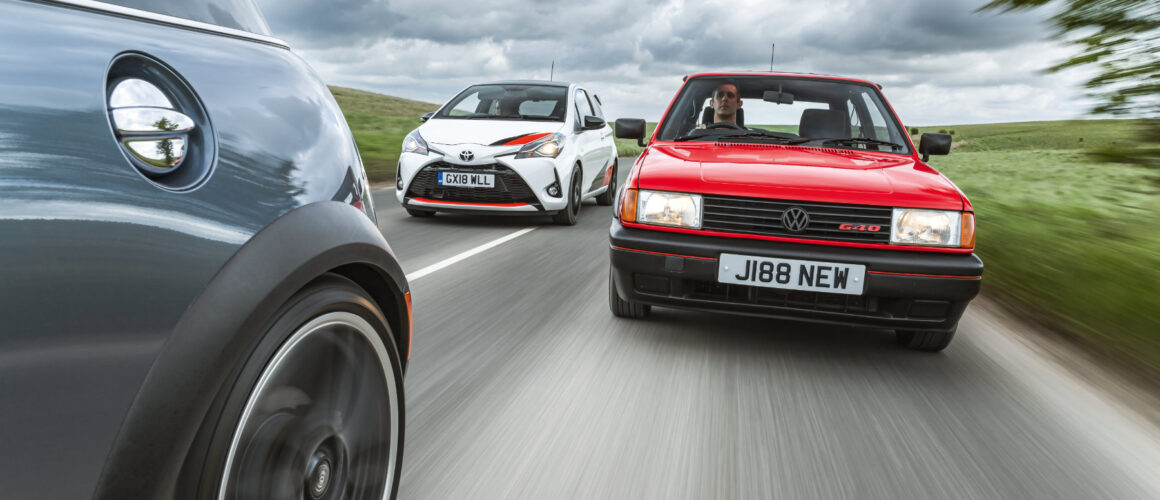
It’s a real pleasure to have Doug Pettit’s G40 here for our photoshoot, partly because I simply can’t recall the last time I saw one. It’s delightfully underplayed, too, in the way that Volkswagen was the absolute master in the 1980s and ’90s. Not for the little G40 the extravagant aerodynamic devices and Nürburgring lap times of the later hot hatches here; you’d have to know your cars to spot one, and that impression is amplified on the inside, which looks dour and Germanic rather than overtly playful.
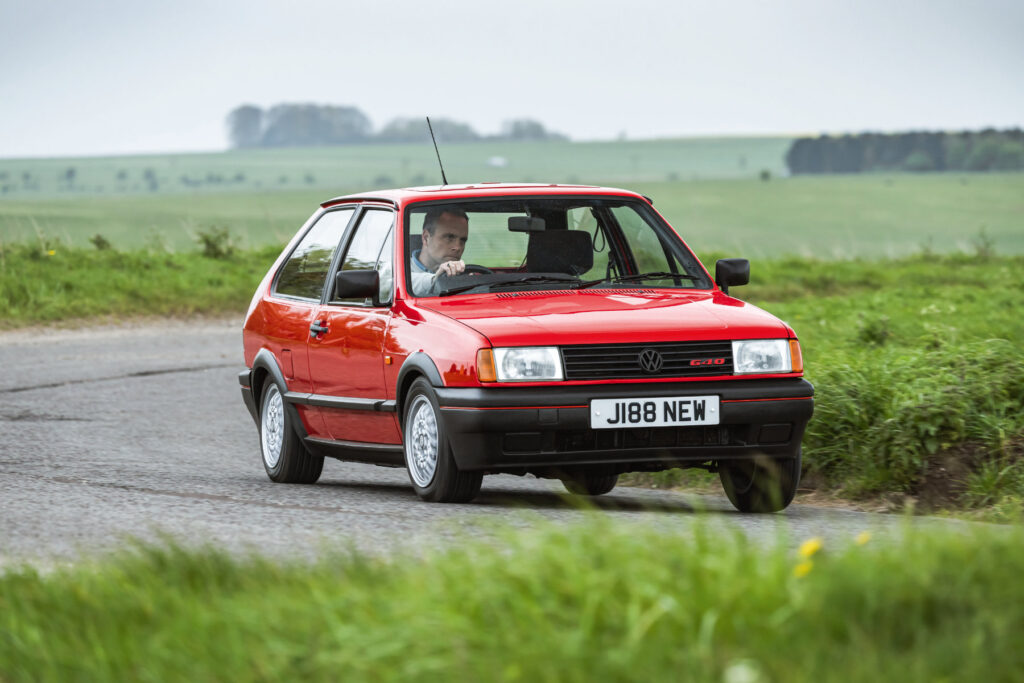
The G-Lader provides 0.8 bar of boost, which is enough to propel the Polo from rest to 60mph in 8.1sec. That’s a competitive time for the era, and quite spectacular given the engine’s displacement; it also places it somewhere between the Peugeot 205 GTI twins (8.7sec for the 1.6, 7.8sec for the 1.9), and between the larger Golf GTIs in 8v and 16v form (8.3sec and 7.5sec, respectively).
The engine dominates the Polo G40 experience. Sure, that’s partly because some other aspects of it are a little underwhelming, but thanks to 111lb ft and a kerbweight around 830kg, the G40 really knows how to get a move on. Its plump supply of mid-range torque has the ability to shove the little car forwards effortlessly, as if scooped by the hand of a giant. Speed is accrued in amusing fashion; you’d need to rev the valvetrain off a 1.6-litre 205 GTI to stand any chance of keeping up with the boosted Polo.
That said, you may have a few issues when it comes to the corners, especially when compared with the French car, because this is where the G40 is less convincing. First, the brakes raise both eyebrows and blood pressure at their reluctance to slow the rampaging Polo, with a dead zone at the top of the pedal before the merest semblance of retardation, and even then there’s just another inch or so of nothing to set the heart racing.
It steers OK, but it doesn’t feel agile and up for a good time in the way of a 205 or a Renault 5 GT Turbo. The G40 is a more mellow, less frenetic character, instead preferring to be settled comfortably into a corner and then to use its torque to pull strongly out and onto the next straight. In spite of these drawbacks, there’s something really beguiling about it. I love the strangely overscale growl when it’s on boost, the clean lines of its body, and the sheer rarity factor.
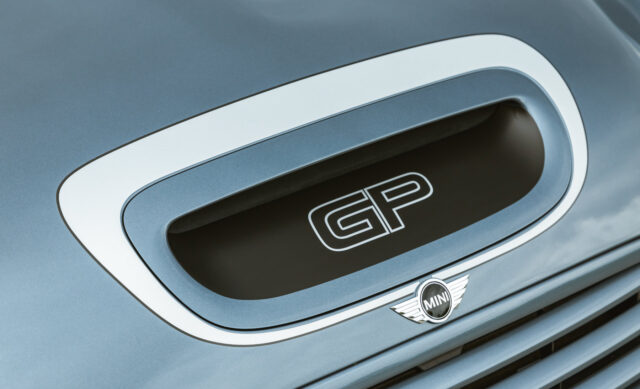
BMW was in no mood to hide such extensive work, and equipped the GP with a new front splitter, side sills and a carbonfibre rear wing. All were painted Thunder Grey with their build number on the roof. Final construction was carried out by Bertone in Italy and, of the 2000 made, only 459 came to the UK at a cost of £22,000 each.
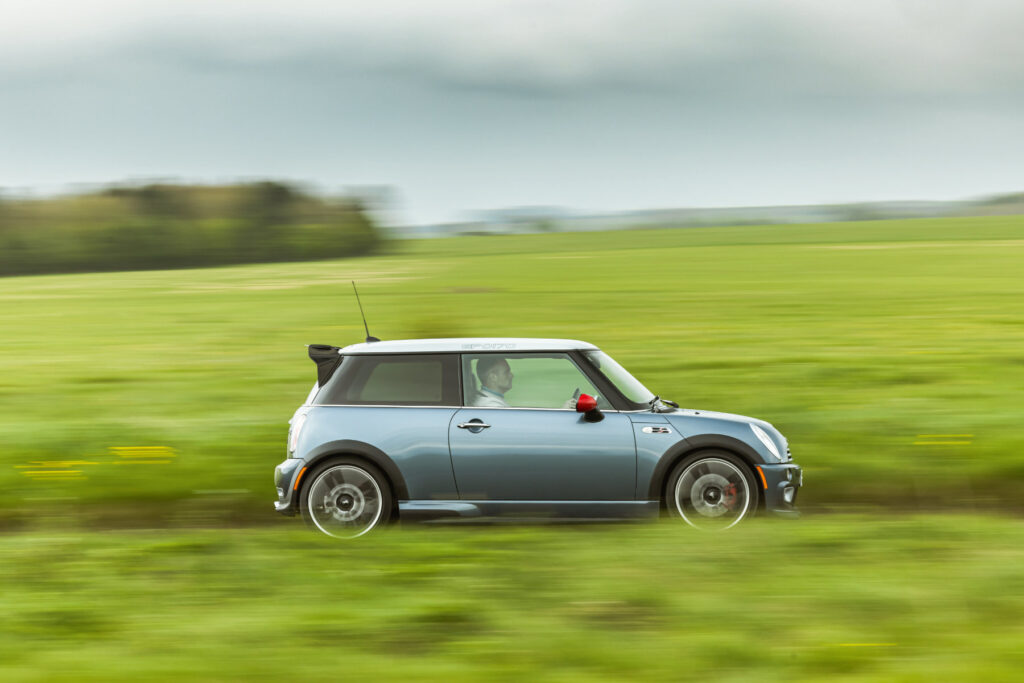
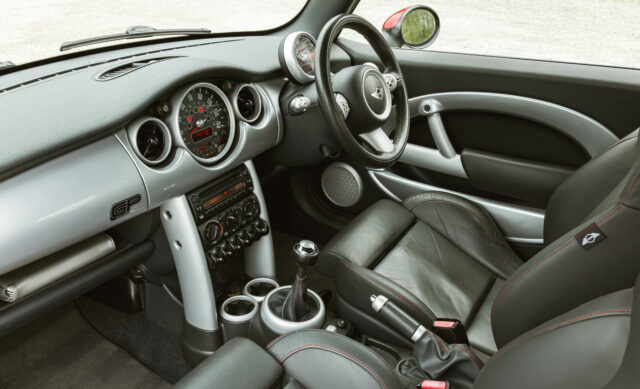
This example is a veteran of BMW UK’s press department and remains on its heritage fleet. Even 18 years since its introduction it still bristles with intent, like a cross between a training shoe and a Touring Car racer: cute yet ferocious. The generation that followed was turbocharged, and so much less frantic.
The driving experience is equally dramatic: the GP is one of those cars that states its game unequivocally within the first few yards. The ride is firm, the steering direct, and the engine whines and snarls furiously. To drive it slowly is nigh-on impossible, and the faster you go, the better it gets. Turn-in is so direct, and while the ride is choppy at low speeds, it offers superb body control when you’re really going for it. The supercharger, in terms of both aural drama and power delivery, galvanises the whole experience into something more dramatic than it would otherwise be.
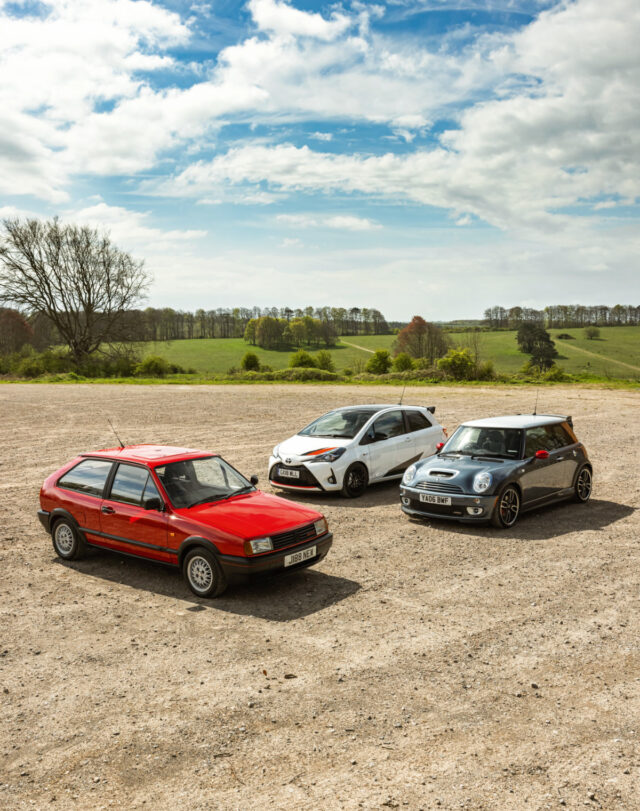
Which brings us to the most recent of our trio, Toyota GB heritage fleet’s 2018 Yaris GRMN. It’s the rarest: 100 landed on UK shores of 600 built in total, 400 going to Europe. A few onlookers mistake it for the much more recent GR Yaris (itself an instant classic); others imagine it’s an aftermarket tuned previous-gen Yaris. Amazing how time can relegate a car to the fringes of motoring history.
The Yaris GRMN is significant for being the car Akio Toyoda himself tasked his engineers with creating to establish the GR brand in Europe as a provider of authentic, capable enthusiast cars. Under the leadership of chief technical director Stijn Peeters, that’s exactly what Toyota’s European engineering centre created in only two years and from the most unlikely of starting points.
The first problem to overcome was under the bonnet, where the incumbent range of small four-cylinder engines most definitely were not up to the task. The solution was to drop in Toyota’s 2ZR engine, perhaps best known from the Lotus Elise SC: a high-revving, supercharged, 1.8-litre four-cylinder screamer. The 2ZR brought 209bhp in its final calibrated form, plus 185lb ft at 4800rpm.
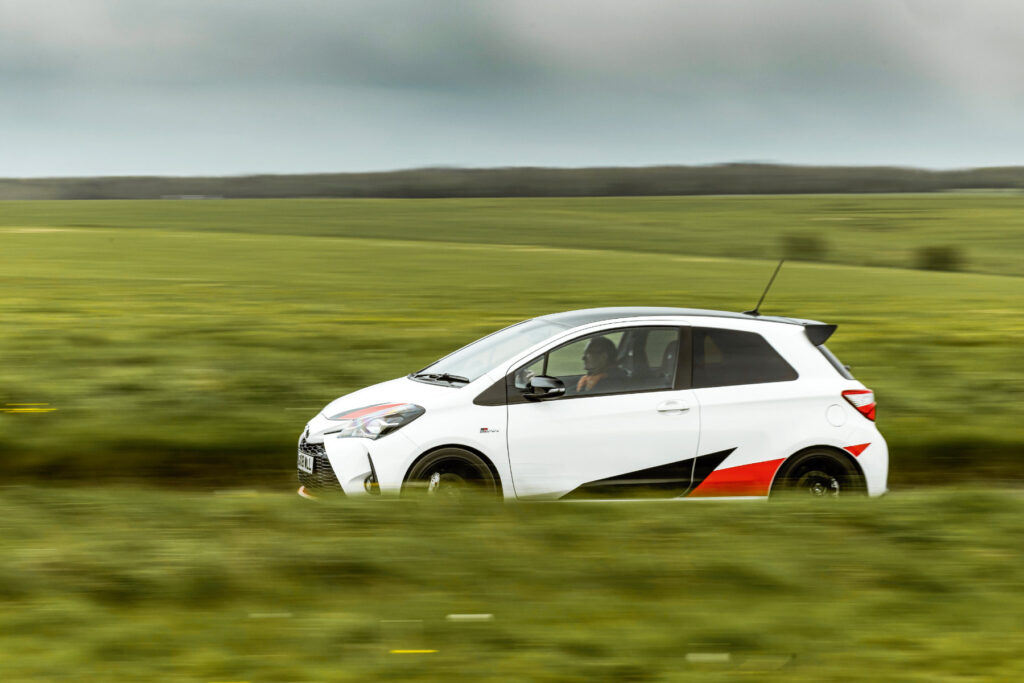
The Yaris GRMN would sprint from rest to 60mph in 6.4sec (achieved in third, hence with two shifts on the way), and top speed was limited to 143mph – the idea of going much faster in a Yaris does feel a bit uncomfortable.
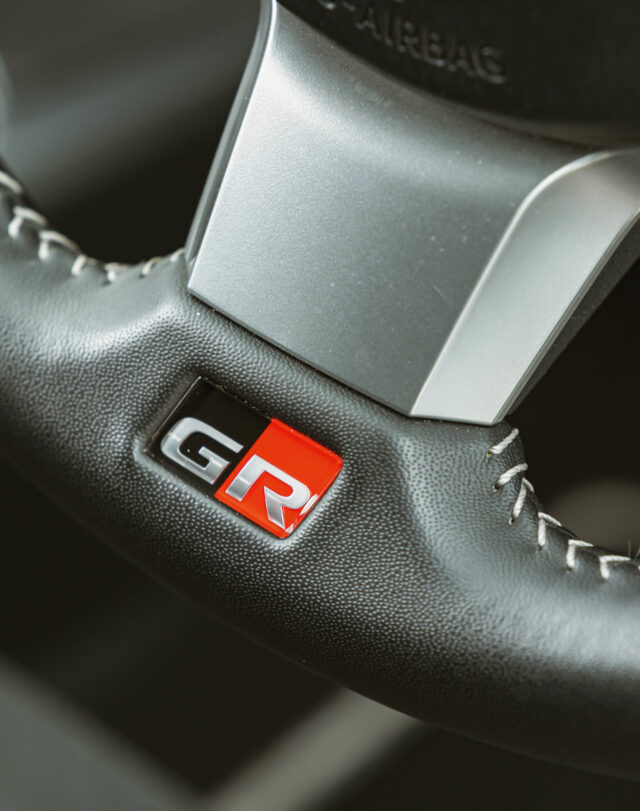
From that point, Peeters and his team set about refining what they could and leaving alone what they couldn’t. There wasn’t the money or time to change the old Yaris’s poor driving position, but they fitted great seats and the wheel from the GT86 sports coupé to make the most of it. The body was hardly designed with performance in mind, but a front strut brace was combined with a much stronger front subframe and four additional mounting points for a dramatic increase in torsional rigidity.
Naturally the suspension was re-developed, too, complete with Sachs dampers, while the 17in forged BBS wheels were fitted with 205/45 Bridgestone Potenza tyres. A limited-slip differential contained the engine’s output effectively and, while the front discs are only 275mm across, there’s a bespoke four-pot caliper to grab each of them. Visually, much of the punch is provided by the graphics, although there’s a roof spoiler and a bigger, centre-exit exhaust. The exhaust caused a major headache, as the Yaris’s floorpan obviously wasn’t designed with that in mind.
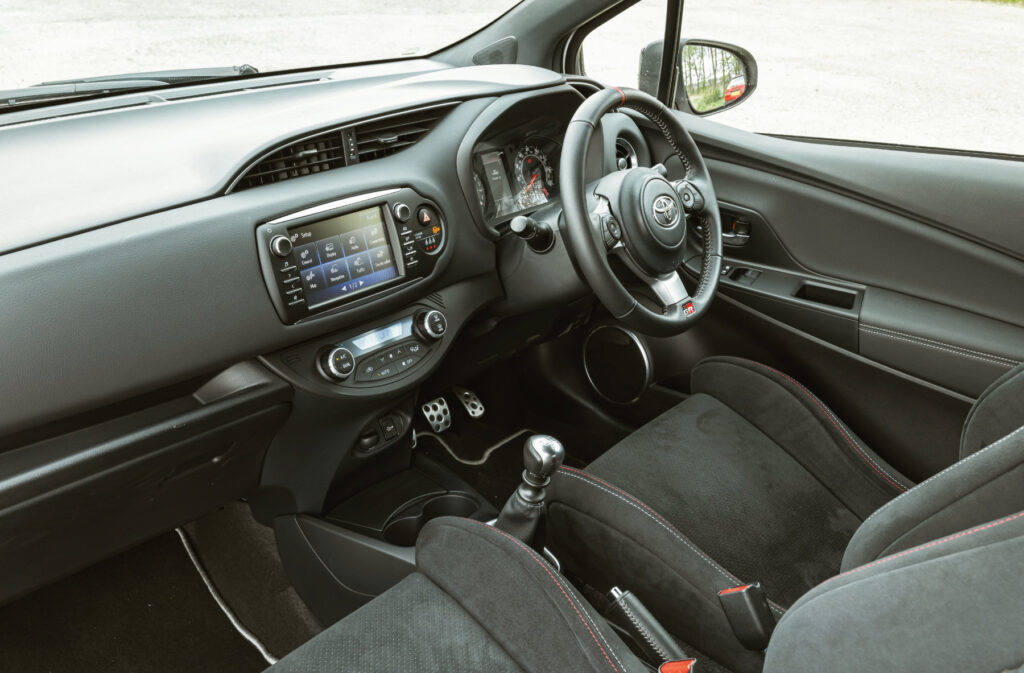
And what of the name itself? Tellingly, if somewhat amusingly, it stands for ‘Gazoo Racing Meister of Nürburgring’, a title that has since been truncated to ‘GR’ for the four-wheel-drive super-hatch that took the UK performance car market by storm in 2020, and which has recently been facelifted and relaunched.
The Yaris GRMN is one of the most surprising performance cars of recent years. In an era of ‘sensible’ turbocharged engines, with their flat torque curves providing near-instant everyday performance but little in the way of high-rev thrills, throttle response and quite frankly, excitement, the Yaris is a breath of fresh air.
It’s a hot hatch that reminds you what once made the breed so special: it’s not perfect, and it’s based on humble stock, but I guarantee that every time you start the engine and drive off you’ll have a smile on your face. The 2ZR just wants you to thrash it at every opportunity and, while it needs some revs to get going, as long as you’re working in the mid-range and upwards, the performance is really strong. It sounds so good, too, although the prototypes that selected media were allowed to drive sounded even better: there’s a carbuncle of an exhaust silencer poking out from beneath the rear valance of production versions that robs a lot of the noise. At idle, those early cars had an exhaust note straight from Rally 2.
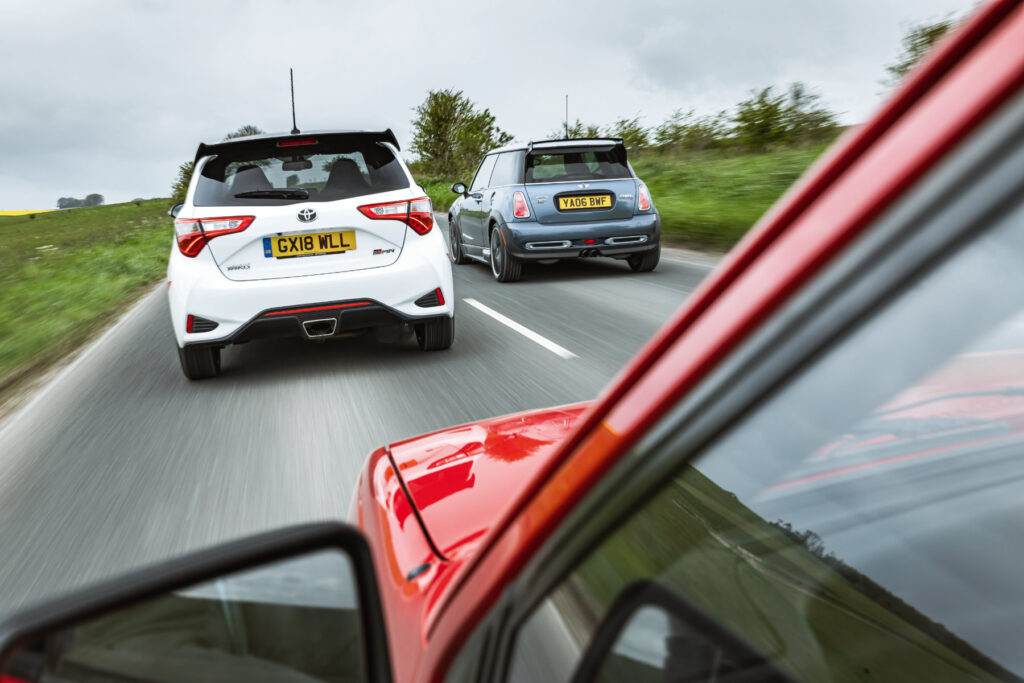
No matter: miraculously, the Yaris doesn’t disappoint in the corners, either. Sure, the steering can feel a little artificial around the dead-ahead, and you sense a little more roll than you might have expected, a feeling exacerbated by the high seating position, yet the Yaris really digs in and grips hard and can be flung along a road. It’s the quickest car here, albeit the newest one, and on poorly surfaced lanes near Salisbury Plain it doesn’t get as upset over bumps and holes as the Mini GP does.
It was pricey when it was launched at the beginning of 2018, at £26,295, but it sold out. I reckon those 100 UK buyers got a very special little car.
‘Special’ is a word that applies to all of our trio in their own way, from the leftfield G40 to the road-racer Mini GP and the unlikely performance hero that is the Yaris. And, while all three are much more than just their engines, it’s the supercharged nature of those powerplants that contributes so much to their air of exotica.
As for turbocharging, well, it just wouldn’t have been the same.