Despite McLaren’s domination, the 75th Formula 1 season has been the most compelling of the ground-effect era, with three drivers still in contention as the championship reaches its finale in Abu Dhabi. It marks the first time since 2010 that more than two drivers have arrived at the final round with a shot at the title.
The decider gets underway on 7 December 2025, and to whet your appetite we’ve revisited some of the most dramatic season finales from years past.
1958 Morocco
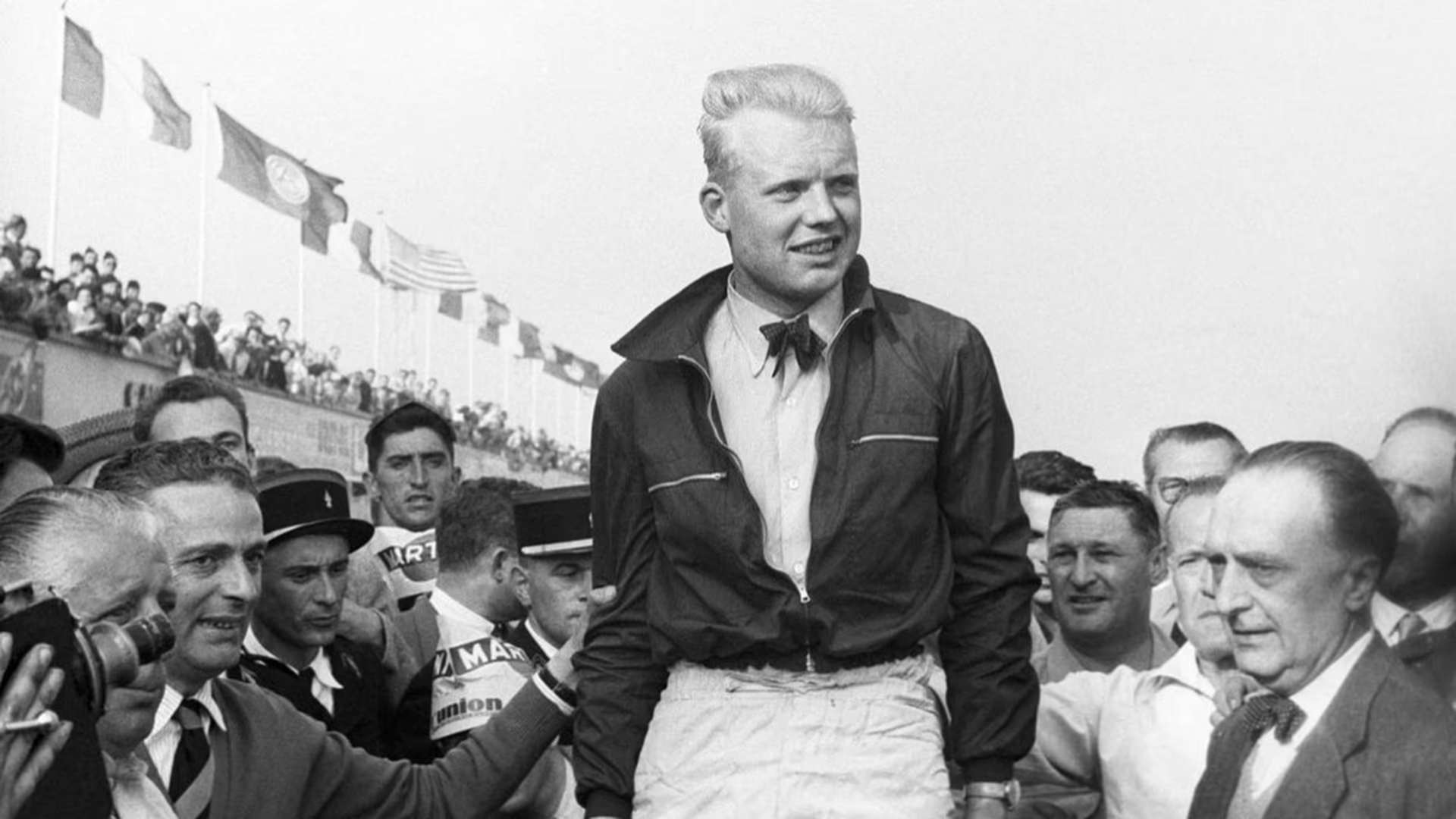
Like so many early Formula 1 seasons, 1958 was defined by loss. Four drivers were killed that year, including at the season-ending Moroccan Grand Prix. That final tragedy also shaped the title fight, as Stirling Moss lost the Championship to Mike Hawthorn by a single point.
Hawthorn arrived at the season finale with 40 points to Moss’s 32, meaning Moss needed to win and hope his rival finished third or lower. Vanwall attempted to use its two other cars – driven by Tony Brooks and Stuart Lewis-Evans to deny Hawthorn the second place he needed. This, however, was in vain as both Moss’s teammates retired with engine failures. Tragically, Lewis-Evans died from burns inflicted after his Vanwall’s engine blew. Hawthorn brought his Ferrari home in second place and won the Driver’s title while Moss took a pyrrhic victory.
The great irony of 1958 was that Moss’s own sportsmanship denied him the Championship. At round nine in Portugal, Hawthorn was penalised for restarting his stalled Ferrari against the direction of traffic. Moss testified in Hawthorn’s defence, pointing out that his compatriot restarted the car on the pavement rather than the circuit. Thanks to Moss, the penalty was overturned, restoring six crucial points to Hawthorn’s tally.
1964 Mexico
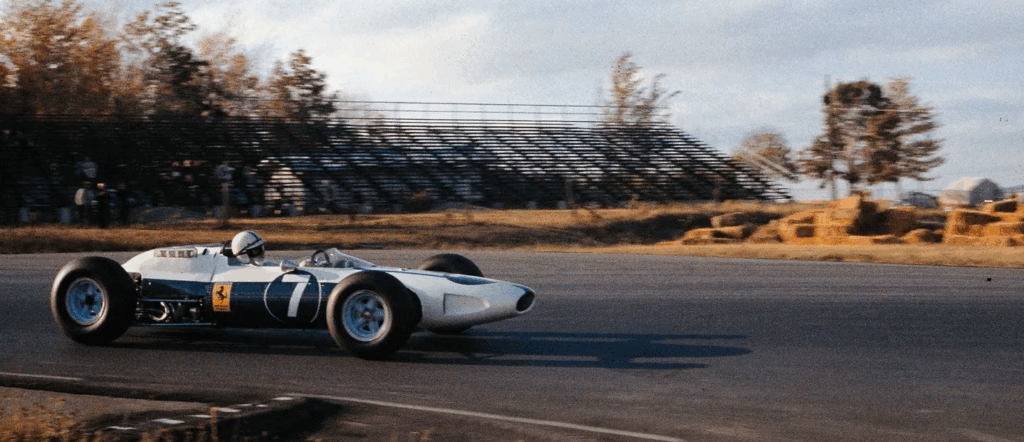
The climax of the 1964 season saw three British drivers – Graham Hill, Jim Clark and John Surtees – representing BRM, Lotus and Ferrari – duel for the title.
Hill’s shot at the Championship was the first to unravel, when the Ferrari of Lorenzo Bandini collided with the rear of his BRM, inflicting terminal damage to his exhaust system. With Hill eliminated, the leading Clark would take the crown if Surtees crossed the line below P2.
As the race neared its conclusion, it seemed certain that Jim Clark would seal the title. The Scot led comfortably, with Dan Gurney’s Brabham in second and Lorenzo Bandini third. Agonisingly, however, Clark’s Lotus succumbed to an oil leak on the penultimate lap, handing the lead to Gurney and promoting Bandini to P2 and John Surtees to the final podium position.
Realising the opportunity, the Ferrari pitwall frantically signalled Bandini to surrender second place to Surtees, giving the latter the two points he needed to edge Hill in the title race.
1976 Fuji
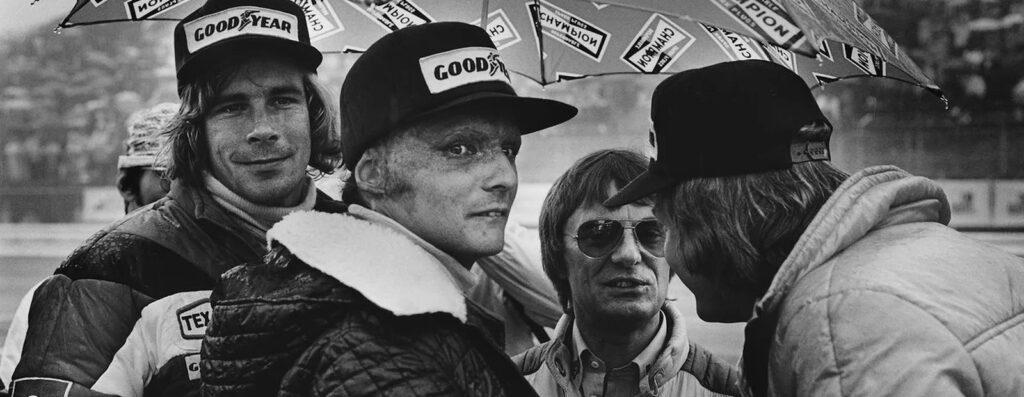
1976 is perhaps the most famous season in F1’s 75-year history, thanks to the legendary duel between McLaren’s gregarious playboy James Hunt and Ferrari’s tenacious World Champion Niki Lauda.
Since immortalised in the 2013 Hollywood film Rush, the 1976 title battle was characterised by tragedy, courageousness and resilience, when Lauda suffered a near-fatal accident at the Nurburgring, where his car careened off the circuit and burst into flames. Trapped in the inferno, Lauda was read his last rites but miraculously survived – albeit with life-changing injuries. Even more remarkably, Lauda valiantly returned to the cockpit for the Italian Grand Prix just six rounds later in a bid to defend his Championship title from Hunt.
Both men arrived at the season finale at Fuji with a chance of becoming World Champion. The Grand Prix unfolded in torrential rain and heavy spray, causing Lauda to voluntarily withdraw after two laps on safety grounds. Hunt, who had started from pole position, needed third place to secure the title. A late pitstop for a puncture saw the Briton tumble down the order, but he determinedly charged back through the field to recover to third, claiming the title by a single point.
1986 Adelaide
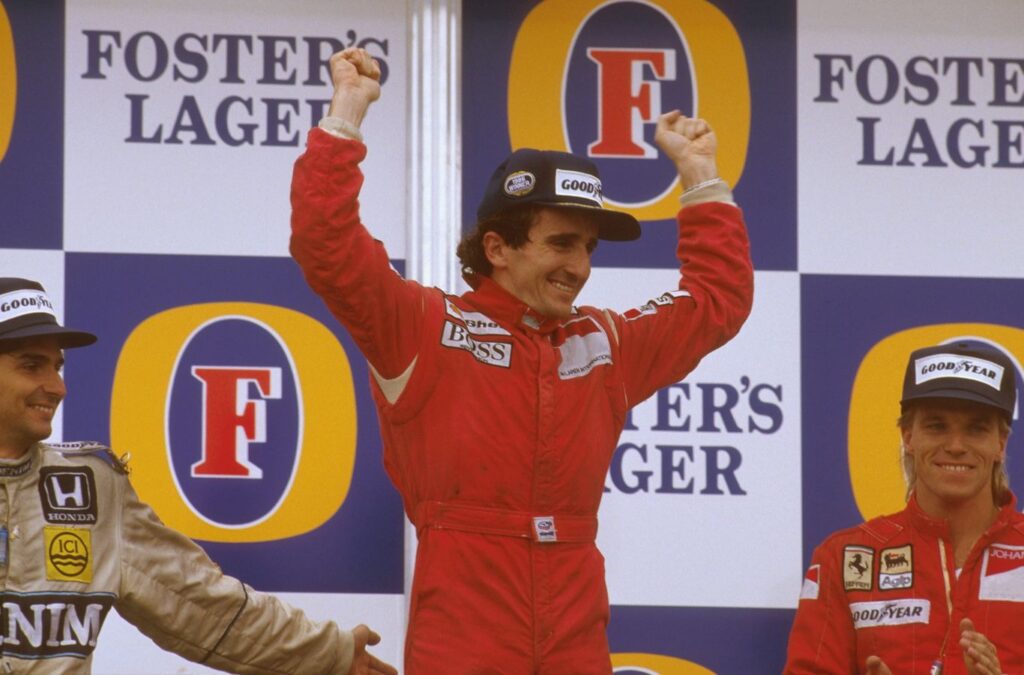
The 1986 title decider in Adelaide promised to see Nigel Mansell become the first Briton since James Hunt to be crowned World Champion. The mustachioed Mansell arrived at the Australian finale as the Championship favourite, following a season-long intra-team bout with Williams teammate Nelson Piquet. The ding-dong battle between Mansell and Piquet did, however, leave the door ajar for the McLaren of reigning World Champion Alain Prost.
What followed became one of the most dramatic twists in Grand Prix history. Halfway through the race, Mansell’s right-rear tyre exploded at high speed on the Brabham Straight – and with it went his chance at the title. To avoid the same fate, Piquet was forced into an unscheduled pitstop, leaving the calculating Prost to take advantage.
Prost went on to win the Grand Prix and the World Championship, becoming the first driver in 25 years to clinch back-to-back titles.
1994 Adelaide
Until Abu Dhabi 2021, many regarded the 1994 showdown between Benetton’s Michael Schumacher and Williams’ Damon Hill as the most controversial title decider in Formula 1 history.
Schumacher and Hill arrived in Adelaide separated by a single point after a season overshadowed by the tragic deaths of Roland Ratzenberger and Ayrton Senna at Imola. Schumacher controlled the early stages of the race before an uncharacteristic error sent him into the wall at Brewery Bend. As he limped back onto the circuit, second-placed Hill saw his chance.
What followed has been debated ever since. As Hill dived for the inside, Schumacher turned in, and the ensuing collision eliminated both men on the spot, handing the German his first World Championship in highly contentious circumstances.
The incident ignited a fractious rivalry and stood as the benchmark for controversial title deciders until events in Abu Dhabi almost three decades later.
2007 Brazil
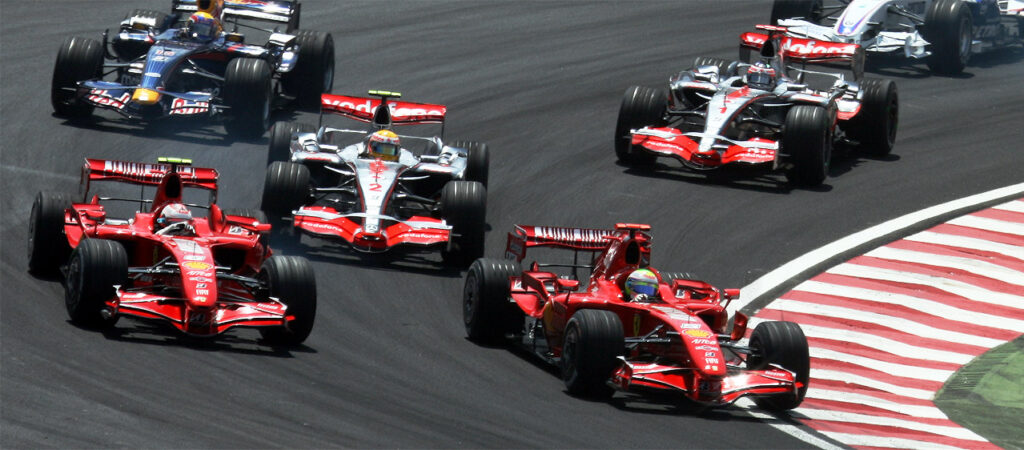
The season-long battle between Ferrari and McLaren in 2007 is remembered as one of the most controversial and dramatic years in F1 history. Both teams were equally matched as the season got underway, but McLaren managed to fumble both the Constructors’ and Drivers’ titles after becoming embroiled in the ‘Spygate Scandal’ and mismanaging the relationship between star driver Fernando Alonso and rookie prodigy Lewis Hamilton.
While Spygate saw McLaren expelled from the Constructors’ Championship – and hit with a record $100m fine – Hamilton and Alonso still arrived at the final round in Brazil leading the Drivers’ standings. Kimi Räikkönen, eight points behind Hamilton and seven behind Alonso, remained the outsider.
What followed was a tense race that saw Hamilton tumble down the order thanks to an early transmission glitch, while the Ferraris of Räikkönen and Massa led the race in P1 and P2, followed by Alonso. Despite Hamilton’s best efforts, he could only recover to seventh. Championship outsider Räikkönen crossed the line as World Champion by a single point in one of the unlikeliest turnarounds in the sport’s history.
2008 Brazil
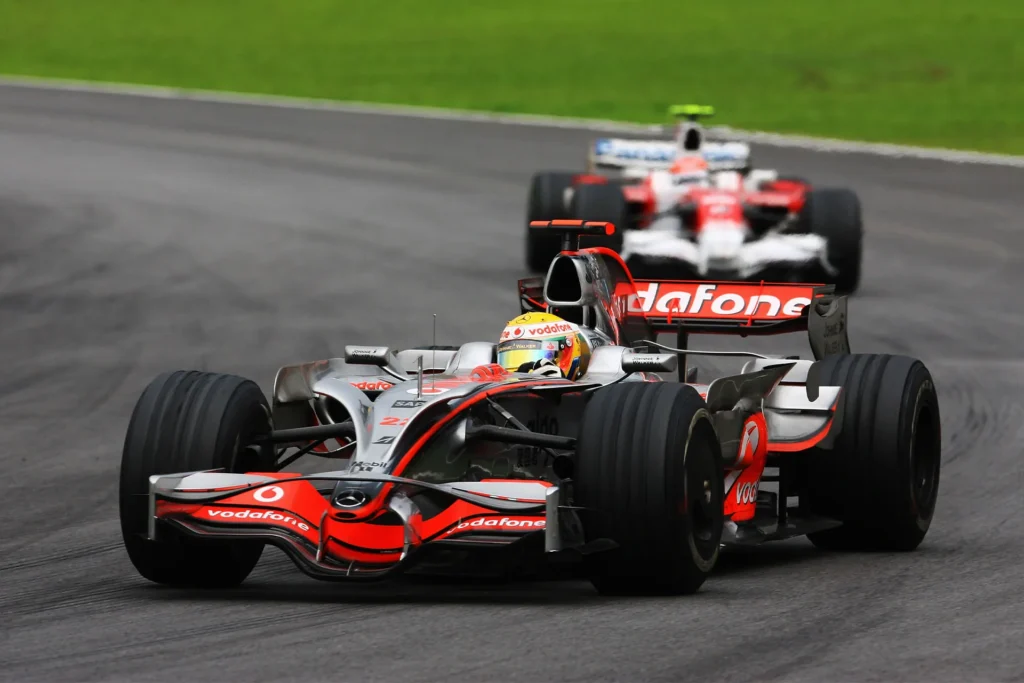
After coming agonisingly close in his rookie season, McLaren’s Lewis Hamilton sought to make amends in 2008 and win his first World Championship title against the Ferrari of Felipe Massa on his home turf.
The rain-affected race produced one of the most thrilling title deciders of all time. For Hamilton, the circumstances were uncannily similar to the year before: if Massa won, he needed at least fifth place to secure the Championship.
Massa did everything required, dominating the race and crossing the line as provisional World Champion. Hamilton, however, slipped to sixth late on when Sebastian Vettel overtook him in the worsening conditions. As the Brazilian crowd and Ferrari garage celebrated, Hamilton passed the fifth place Toyota of Timo Glock on the final corner of the final lap to snatch away the title.
2010 Abu Dhabi
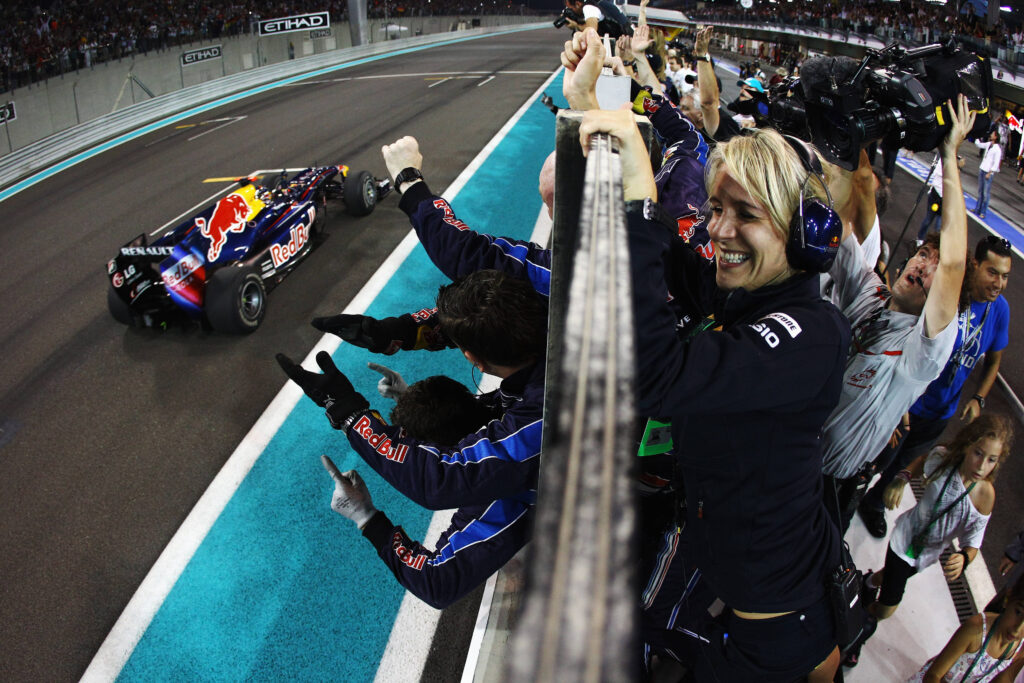
2010 was the first and only time that four drivers arrived at the final round with a chance of winning the World Championship. Ferrari’s Fernando Alonso led the standings, followed by Red Bull teammates Mark Webber and Sebastian Vettel, with McLaren’s Lewis Hamilton the outside contender.
In the end, strategy decided the Championship outcome. An early Safety Car led Webber to pit after brushing the wall, and Ferrari reacted by stopping Alonso to cover him. The call proved disastrous. Both rejoined behind the Renault of Vitaly Petrov, whose straight-line speed and composure kept Alonso pinned behind him for the remainder of the race.
Vettel, running a longer opening stint and free of traffic, controlled the Grand Prix once the leaders cycled through their pit stops. His cool-headed drive was enough to secure victory – and with it his first World Championship.
For Alonso and Ferrari, trapped behind Petrov for 40 agonising laps, it became one of Formula 1’s most infamous strategic misjudgements.
2021 Abu Dhabi
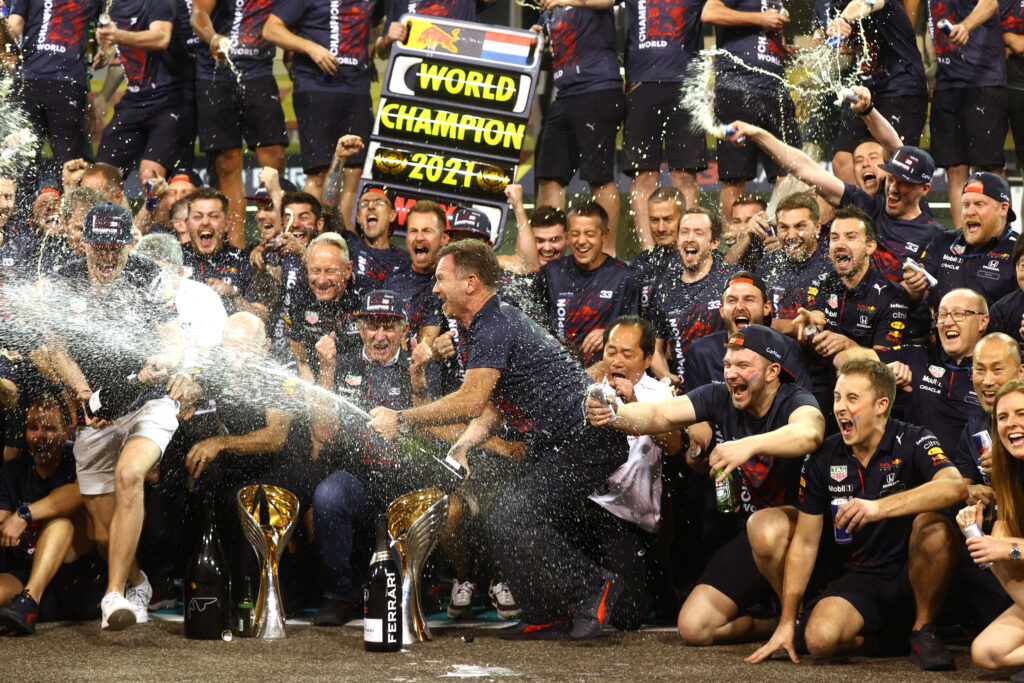
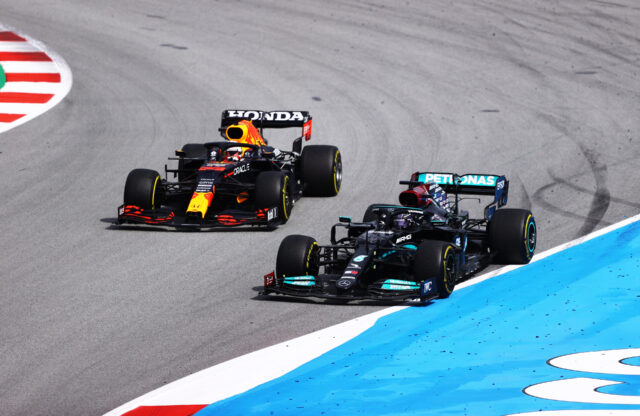
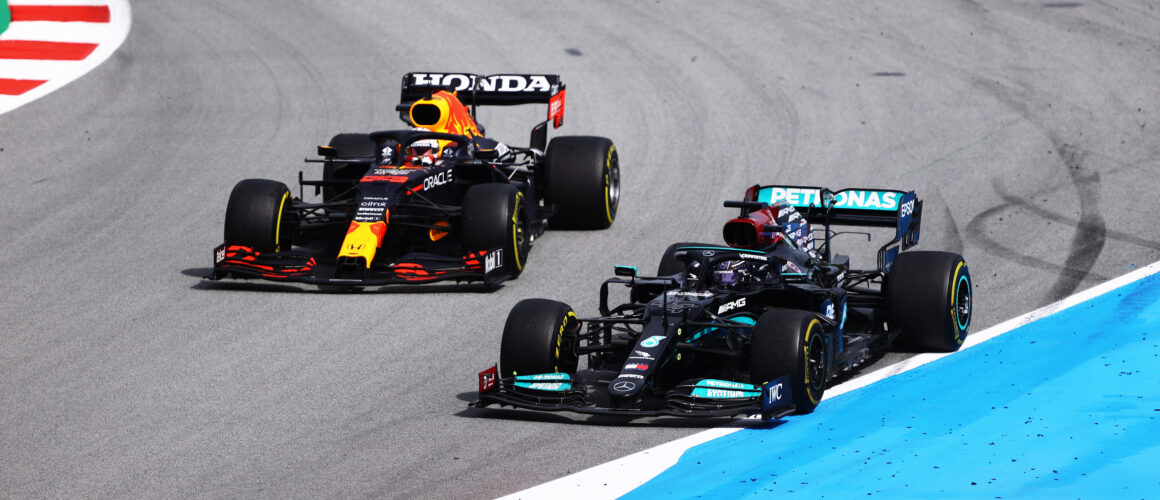
2021 was one of the most tumultuous seasons the sport has ever seen, with Mercedes’ Lewis Hamilton and Red Bull’s Max Verstappen locked in an intense and often controversial duel for the Drivers’ crown. Tantalisingly, the duo headed into the final round level on points, but it was advantage Hamilton after a late-season surge in form.
Despite a controversial first-lap incident with Verstappen on the opening lap, Hamilton controlled the race from the start and looked assured to seal a record-breaking eighth World Championship as the Grand Prix neared its conclusion.
That all changed when Nicholas Latifi’s Williams struck the barrier, triggering a Safety Car with just five laps remaining. Race Control – led by Michael Masi – then broke protocol by instructing only the lapped cars between race leader Hamilton and second-placed Verstappen to unlap themselves, effectively engineering a one-lap shootout. Verstappen had stopped for fresh soft tyres under the Safety Car; Hamilton, on worn hards, stayed out to retain track position.
On the final lap, Hamilton was powerless to resist Verstappen’s attack, and the Dutchman swept past to claim victory and his first World Championship.
In the aftermath, the FIA acknowledged “human error” in the handling of the restart, and Masi was subsequently removed from his role as race director.
Abu Dhabi 2025
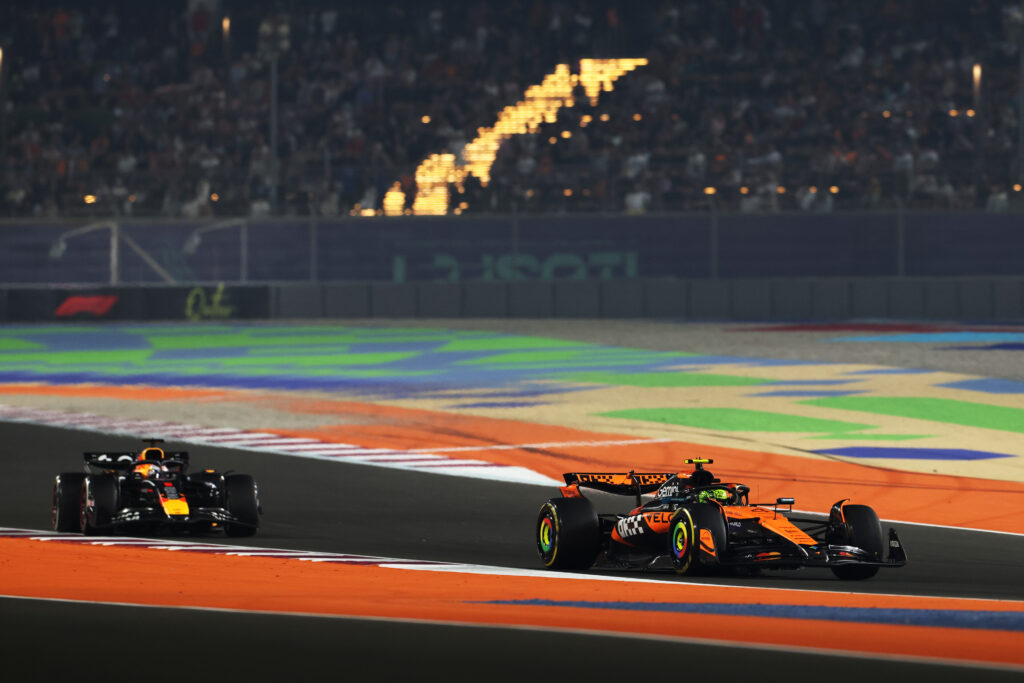
McLaren has been the dominant force of 2025, wrapping up the Constructors’ Championship in round 18 at Singapore and winning more races than any other team. It therefore seemed inevitable that the Drivers’ title would also return to Woking, yet a series of late-season blunders combined with the metronomic consistency of Max Verstappen to deliver a three-way title duel in the upcoming season finale at Yas Marina.
The door was left open for Verstappen in Las Vegas, where Verstappen was handed victory thanks to a double McLaren disqualification due to excessive plank wear. This error was compounded just one week later in Qatar where, bafflingly, McLaren was the only team not to pit its two drivers under the Safety Car on lap seven. This strategic misstep handed Verstappen yet another race victory and the Dutchman heads to the season finale just 12 points behind title favourite Norris.
McLaren can at least take solace in the fact that Norris needs only a top-three finish to become World Champion. Pisatri, now third in the standings, would need Norris to finish sixth or lower if he secures race victory to win the title. For Verstappen, the clearest route to the title is to win the race and hope Norris finishes off the podium.
It promises to be a mouthwatering conclusion to the final year of the current ruleset, before new powertrain and aerodynamic regulations arrive in 2026.