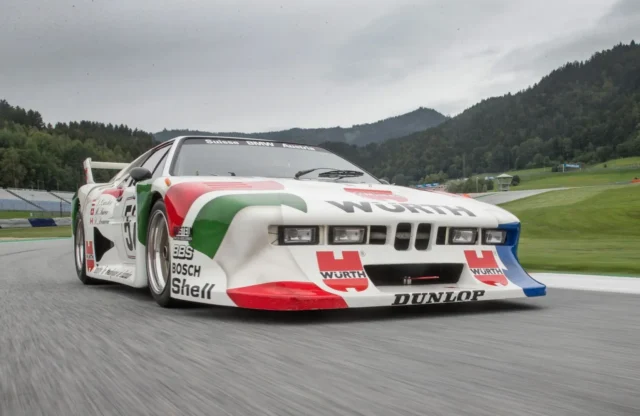
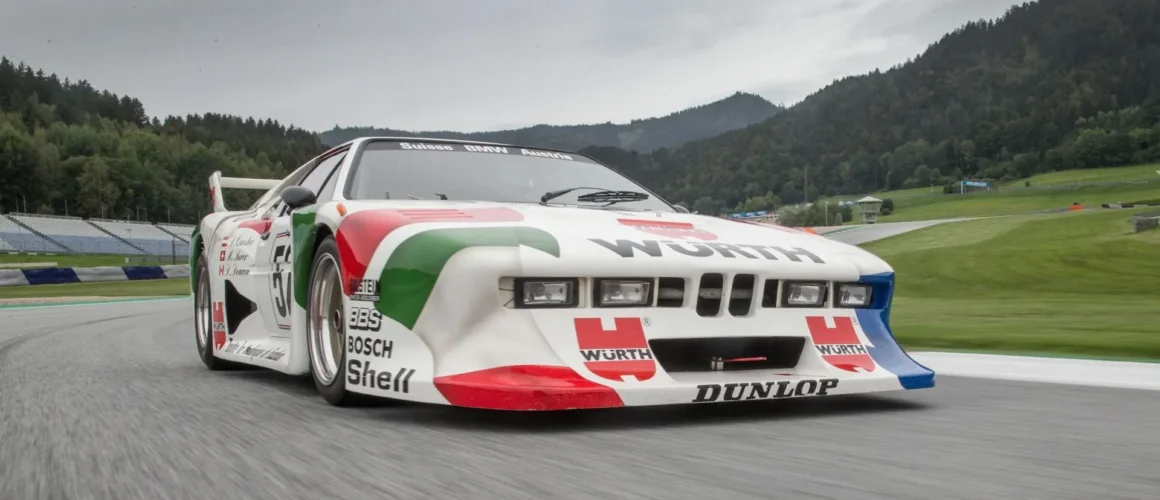
The sole surviving BMW M1 built for FIA Group 5 endurance racing will cross the block in Broad Arrow’s Concorso d’Eleganza Villa d’Este sale on 16-17 May 2026, carrying a pre-sale estimate of €1m-1.2m. Chassis 81.M1R.01 was one of just two examples ever made by Sauber Motorsport in 1980-81. The sister car, 81.M1R.02, was destroyed in a racing accident during the 1981 World Endurance Championship season.
Group 5 was an FIA competition category that went through several iterations between 1966 and 1982. In its final and most extreme form, introduced in 1976, it became the Special Production Car category – a liberal silhouette formula in which engineers were required only to retain the bonnet, doors and roof of the donor car, leaving everything else open to interpretation.
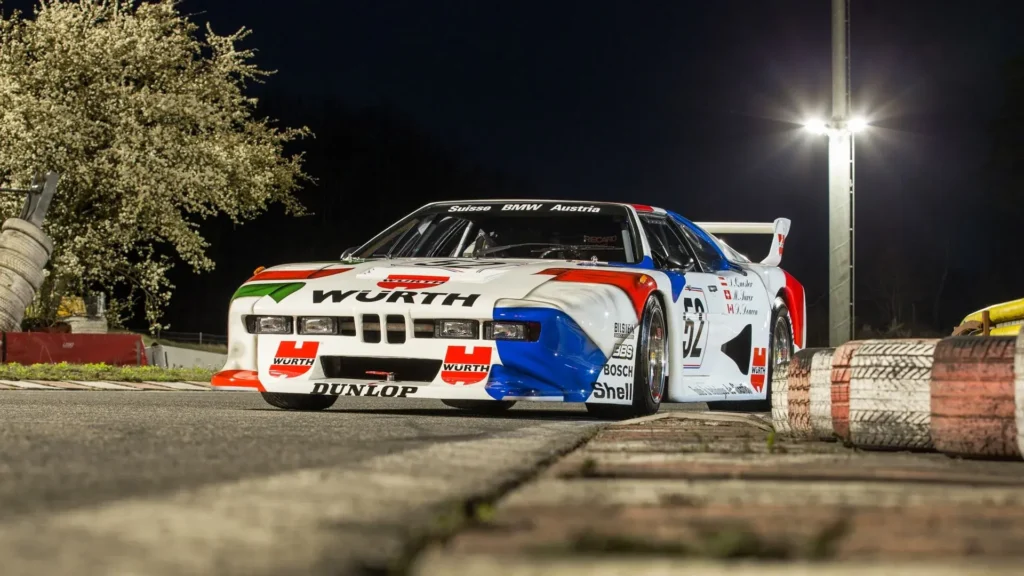
No one exploited the formula more ruthlessly than Porsche, whose 935 dominated the Special Production Car category from its introduction. It was against that car that BMW had originally conceived the M1 as a mid-engined homologation special. Production delays meant BMW’s Group 5 challenger arrived later than planned, however, and by 1981 the category had just one more year to run before Group C swept it away. Sauber, already BMW’s closest endurance racing partner – and a team that would later join forces with BMW in Formula 1 – built the only two purpose-made Group 5 M1s from scratch, with the World Endurance Championship as their target.
Built over the winter of 1980-81, the two Sauber M1s were a dramatic departure from the Procar racers that preceded them. Underpinned by a tubular spaceframe chassis weighing just 100kg – less than half that of the Procar equivalent – and clothed in carbonfibre bodywork that shed a further 150kg, they were substantially lighter than any other competition-spec M1. Power came from a 3.5-litre M88/1 naturally aspirated inline-six developing around 460bhp. The engineering process was meticulously documented, and the file accompanying the car includes period hand-drawn schematics detailing every component, among them a summary page listing every tube required for the chassis.
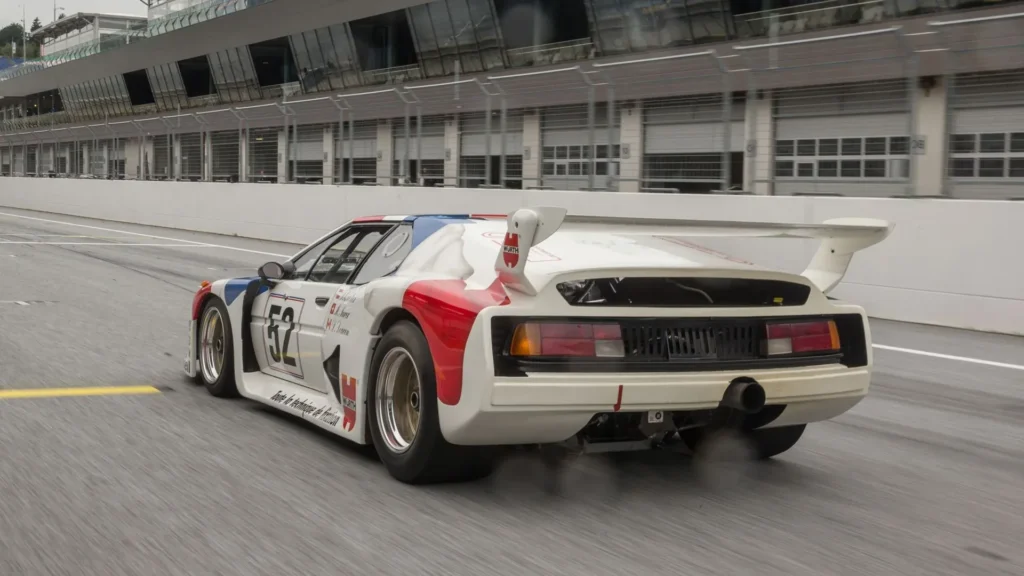
Chassis 81.M1R.01 made its first competitive outing at the 1981 Nürburgring 1000km with Marc Surer and Dieter Quester at the wheel. It ran as high as third before retiring with an exhaust problem. The sister car, driven by Hans-Joachim Stuck and reigning Formula 1 world champion Nelson Piquet, took outright victory, proving the platform’s potency. That optimism, however, would prove short-lived.
Three weeks later, both cars lined up on the grid for the 1981 24 Hours of Le Mans. Driven by Surer, Quester and David Deacon, chassis 81.M1R.01 qualified tenth overall and reached close to 205mph on the Mulsanne Straight. The car retired in the 20th hour after covering 207 laps and more than 1700 miles, undone by a sequence of clutch, brake and engine failures. The sister car also retired, in the sixth hour, after a collision. At the following WEC round, it was lost for good when Stuck suffered a huge accident that reduced 81.M1R.02 to a smouldering wreck.
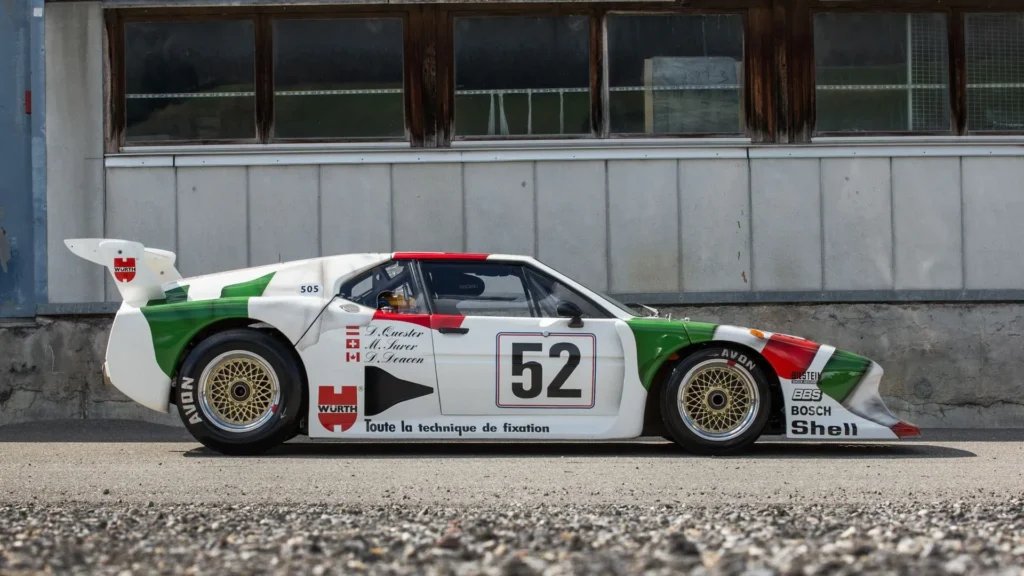
Chassis 81.M1R.01 continued racing through the 1981 season before taking victory in a Swiss Championship round at Dijon in April 1982 with rally and endurance racer Enzo Calderari at the wheel. Calderari had taken ownership earlier that year and campaigned the car across a full WEC season – the last before Group C rendered Group 5 obsolete.
The car was then acquired by Swiss rally driver Jürg Bächi in 1985, who raced it until 1988 before selling it to Maximilian Conover, a BMW North America parts importer. Conover sold it on to Finnish owner Jukka Mäkelä in 1989, who had the engine fully overhauled by Randlinger Motorenbau in Germany – an invoice for the work remains in the history file. Then, in 1991, Peter Sauber reacquired the very car he had built a decade earlier and kept it in the Sauber Museum for the next 23 years.
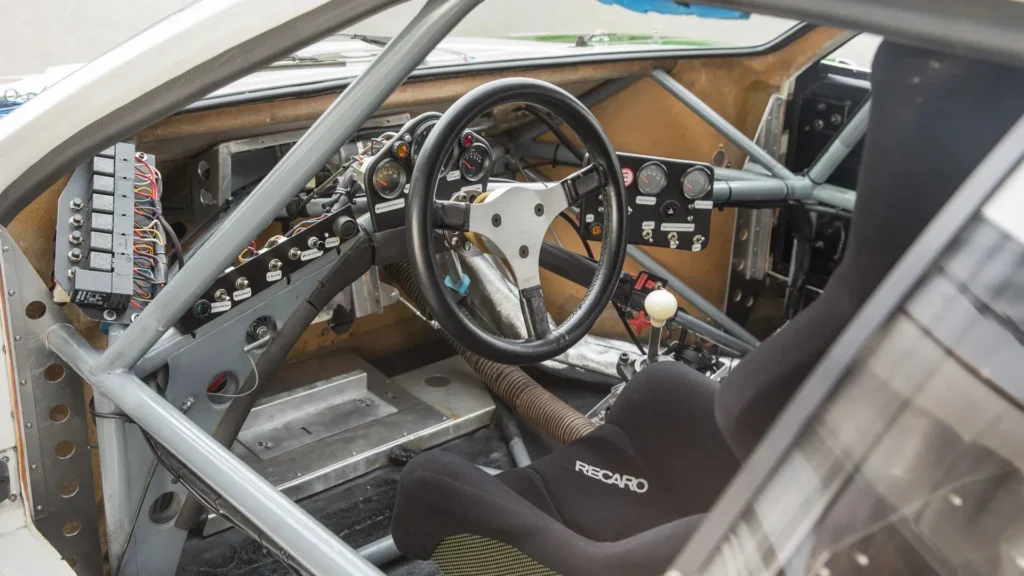
Peter Sauber sold the M1 to its current owner in 2014, who commissioned a €209,000 restoration that returned the car to its 1981 Le Mans specification. The project was overseen by Peter Wiederkehr, one of the original Sauber mechanics who had worked on the car in period. A 1980 BMW 635CSi engine block was fitted for running use alongside the original inline-six, which is included in the sale. Following a trouble-free shakedown at Mugello, the car completed more serious testing at the Red Bull Ring and has been driven on circuit twice a year since.
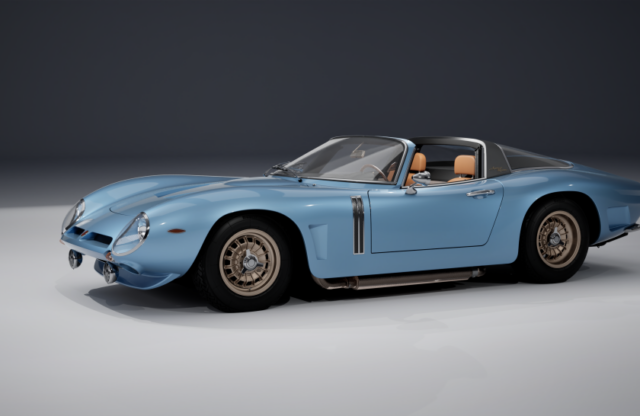
Other highlights of Broad Arrow’s Villa d’Este sale include a Classiche-certified 1990 Ferrari F40 (est. €2.3m-2.5m), a 2023 Ferrari Daytona SP3 (est. €6.5m-8.5m), a 1975 Lancia Stratos HF Stradale in Group 4 specification (est. €600,000-800,000) and a 1968 Bizzarrini 5300 GT Strada (est. €900,000-1.2m). View the full catalogue here.