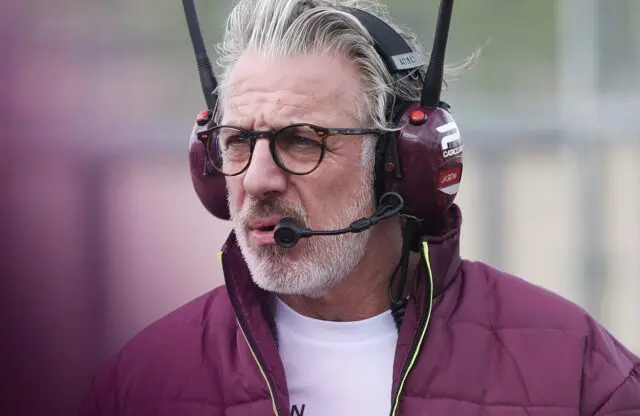
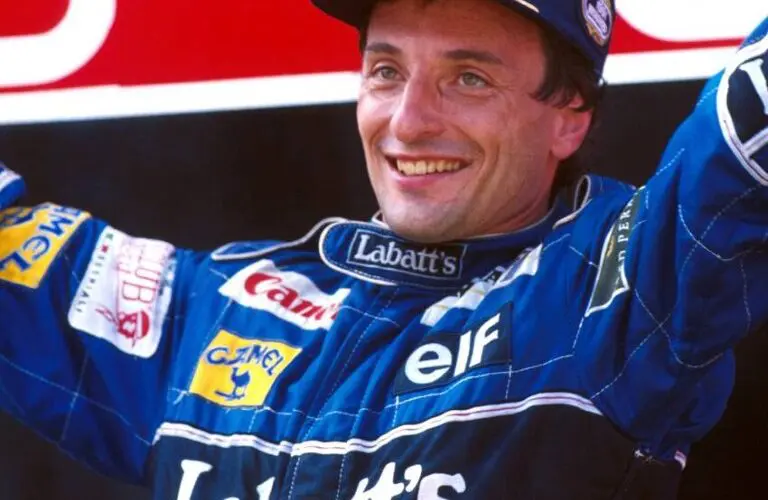
The scowl would be visible from space. A superfan (more likely an eBay shitehawk) starts delving into his third carrier bag full of goodies during the signing session, wilfully oblivious to the huge line of people behind him as well as the rictus grin of the F1 ace in front of him. Riccardo Patrese, dapper to a T but slightly hunched of shoulders in demeanour to give the impression of permashrugging, dutifully presses on with the signing and leaves it to the organisers to remove the offending ‘fan’. Eventually, somewhere towards the bottom of bag four, our barnacle is spirited away and Patrese instantly becomes more sanguine, shrugging (or not, who can tell?) insouciently when asked if he was that bothered by the incident: ‘Only because he was stopping other people having the same opportunity. I don’t know if he was a real fan, and I don’t really care; if he sells something and makes a bit of money, fine. It’s still a compliment. What’s really interesting is…’
This feature first appeared in Octane 275.
And with that, from race number and livery alone, Patrese reels off the most intricate detail of every single model, picture and book he has just signed, identifying every car and race, his times and placings and every incident, small or large, in paddock, pitlane or on track. It is an astonishing, encyclopaedic display of knowledge that can be only partially explained by the fact that he has recently researched and written his autobiography.
‘It came about when I realised my new wife [of 17 years!] didn’t know anything about my former life because I retired from F1 in 1993,’ the 72-year-old says with a mischievous smile. ‘So I started to tell her my stories about funny things, bad things, too, and she said I should write a book, so starting in early 2024 I did, with a very good Italian journalist called Giorgio Terruzzi.’
Currently available only in Italian, the book – F1 Backstage, ISBN 978-8817189699 – came out amid a whirl of interviews that catapulted Patrese back into the spotlight, though nowhere near as much as the 2008 YouTube video when he drove that terrified second wife, Francesca, around Jerez in a Honda Civic Type R. To anyone who has seen it, her screams of ‘Riccardo!’ – oddly redolent of Anita Ekberg screaming ‘Marcello!’ in La Dolce Vita but with fewer fountains – can never be forgotten. And a lot of people have seen it, scores of millions.
According to Patrese it was not a PR set-up: ‘Rubens Barrichello was about to beat my record for most Grand Prix starts at Monza the next week. Honda, with Jenson Button and Rubens driving, organised a handover gesture and gave me a short test at Jerez in the current F1 car. That morning I did a track drive with an engineer while a camera recorded us discussing gears and lines. Later, with some free time, I took my wife for a lap to show her the circuit… and to scare her a little, I admit; that’s romantic, no? I forgot the camera was even there, let alone on. Honda’s PR saw the footage and loved it. They asked to put it on YouTube. I didn’t know at all what was this YouTube – I’m really very poor on these things even now – so thought maybe a hundred people would see it and said “yes, yes, no problem”.’
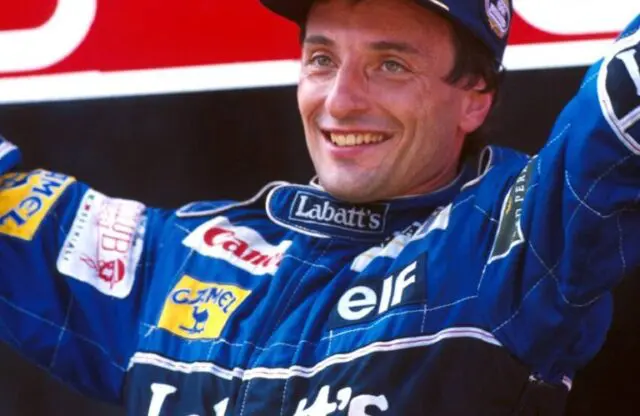
He insists that it would amuse him if that was what he ended up being best remembered for, but there is a steeliness in his voice as he does so, a timbre of bona fide F1 star rather than wannabe social media star counting his clicks. A man who raced alongside Schumacher and famously kept Senna honest, a man who agonisingly finished runner-up in the drivers’ championship (1992, to Mansell) and came third twice (1989 and 1991).
Born in Padua, Italy, in 1954, Patrese excelled not just at karting as a youngster, but also swimming and skiing, though four wheels soon won his favour: ‘My much older brother had a kart in the early ’60s, when karting arrived from America. I first drove it at six or seven, but couldn’t race officially until 12, so I practised for years, then immediately competed against adults and was competitive. I made the national team; back then you had to be selected to go to European and World Championships. We twice won the European team title; Eddie Cheever was a team-mate.’ We’ll come back to Cheever, a lot.
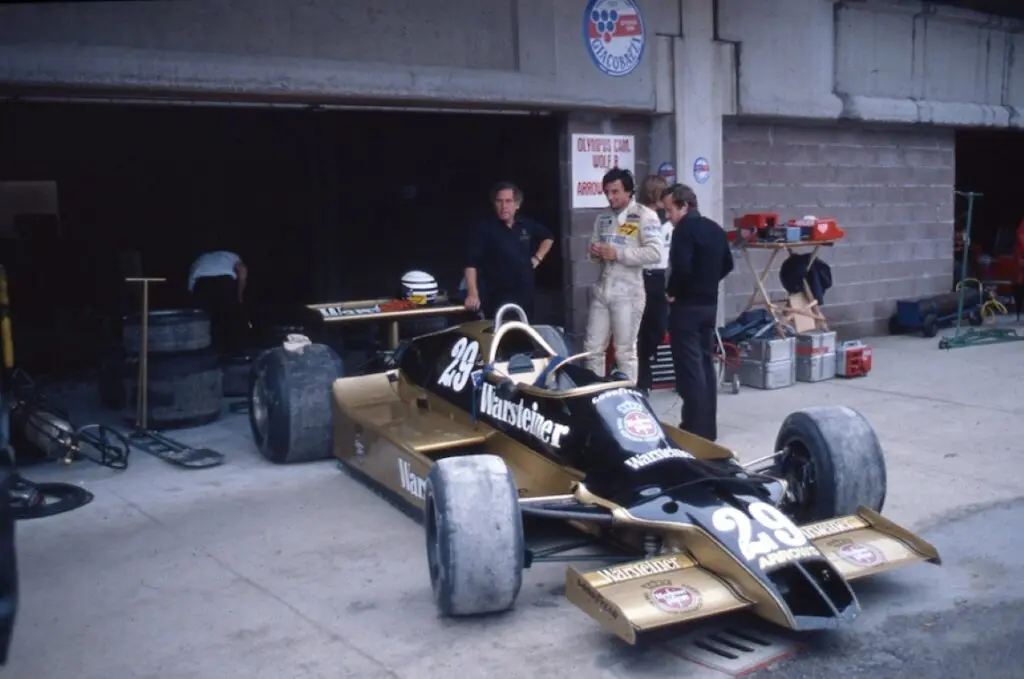
From there rapidly came Formula Italia, then 3, 2… 1!
Patrese scored points in his first season with Shadow in 1977, but spurning Williams and following Jackie Oliver and Franco Ambrosio to Arrows for 1978 really started to bear fruit, though also threatened to stunt his career with some drivers lobbying against the youngster as too reckless. That came to a head with the first-corner crash at Monza that resulted in the death of Ronnie Peterson and sent Patrese’s chief critic James Hunt on a successful mission to have Patrese excluded from the next GP at Watkins Glen. The ban was later deemed illegal, but was followed by Hunt’s lifelong crusade against Patrese despite him being cleared of any wrongdoing. It still rankles.
‘No, I will never forgive James Hunt for the stupid way he was to me. Monza was a racing accident triggered by Ronnie Peterson’s poor start; the footage shows I was already ahead at the touch point and could not influence the accident. I never spoke badly of James, who was also directly involved in that crash, let’s not forget, but he repeatedly rubbished me on TV. Murray Walker even apologised to me privately for what was being said in the commentary box.
‘One day, I went to Bernie’s motorhome to talk to him and James was there, and I said, “OK, sorry, I come back later”. And Bernie said “No, no, no, come in. James, I think it’s time you apologised to Riccardo for the past.” But Hunt just said “No, I won’t apologise, I don’t care about him.” So I said “forget it” and left.
‘Maybe he was blaming me so he didn’t have to blame himself, but if we have to blame somebody, let’s blame the hospital that I think did the mistake in the way of looking after Ronnie; like with Mark Donohue, I think it was the medical treatment that was the problem.’
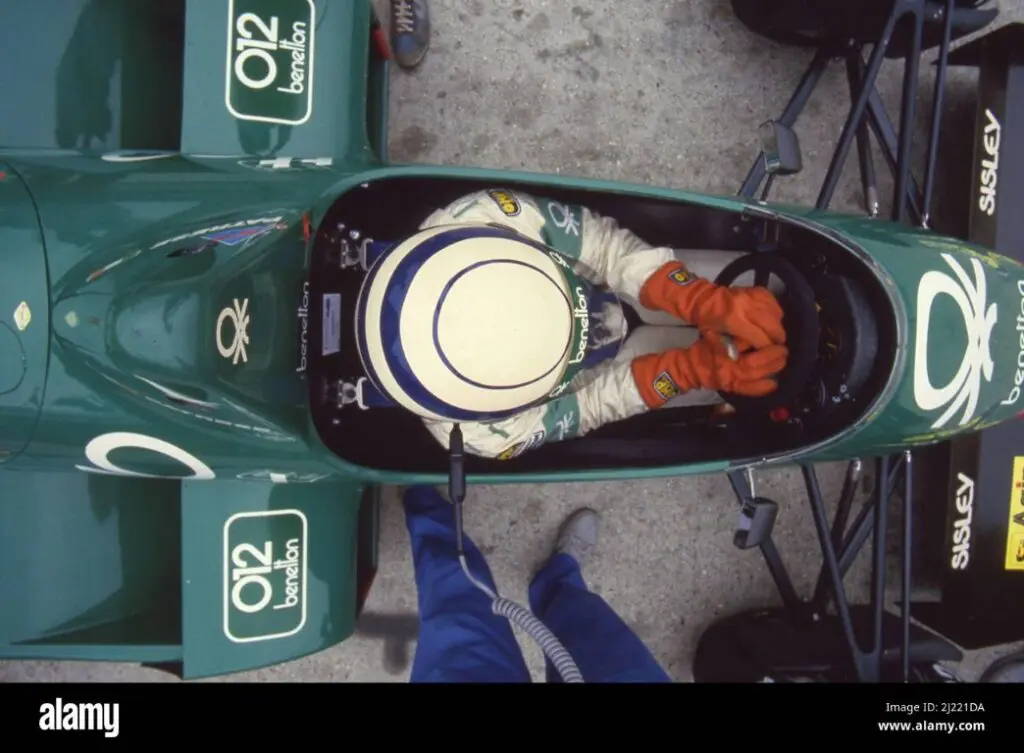
Though it might have, the incident did not entirely derail Patrese’s career, and the first of two stints at Brabham gave him his first win, at Monaco in 1982. However, the Brabham years were interspersed with a couple of disastrous seasons with Alfa Romeo (well, it supplied the engine), shared with Eddie Cheever, something that remains a disappointment to this day: ‘They were my career low-point because hopes were so high and all Italians, including myself, wanted the team to do well. In ’85 I scored no points. In Formula 1 a season like that can end your career. Bernie gave me another chance at Brabham for ’86-87, and I’m grateful for that.’
Even so, just as many considered his career to be on the wane, Patrese instead forged ahead to his golden years, when an injury to Mansell landed him a one-off drive for Williams in 1987. Five full seasons with the then-Didcot manufacturer yielded all his top three drivers’ championship finishes.
As he says: ‘I was always quick. In ’92 Nigel was quicker; the car suited him better. In ’91 I was often quicker. Late in my career I needed a car that felt right beneath me. Younger drivers don’t care if the car is imperfect, they just drive around it. It’s similar to Hamilton now: he has won everything, and unless the car is truly competitive he may appear less sharp. Give him a winning Ferrari, for example, and he’d still be capable of winning.’
Patrese’s F1 career was rounded off in a single fruitless season with Benetton that left him in the record books as the sport’s longest-serving driver to date, but with a very sour taste in his mouth after a season-long spat with team boss Flavio Briatore.
‘He didn’t respect me at all and was saying to all the press that it was time I had to go to pension, because if a young boy like Schumacher was quicker than I was then it was time to retire. He could have just said nice things about Schumacher, but he chose to say bad things about me.
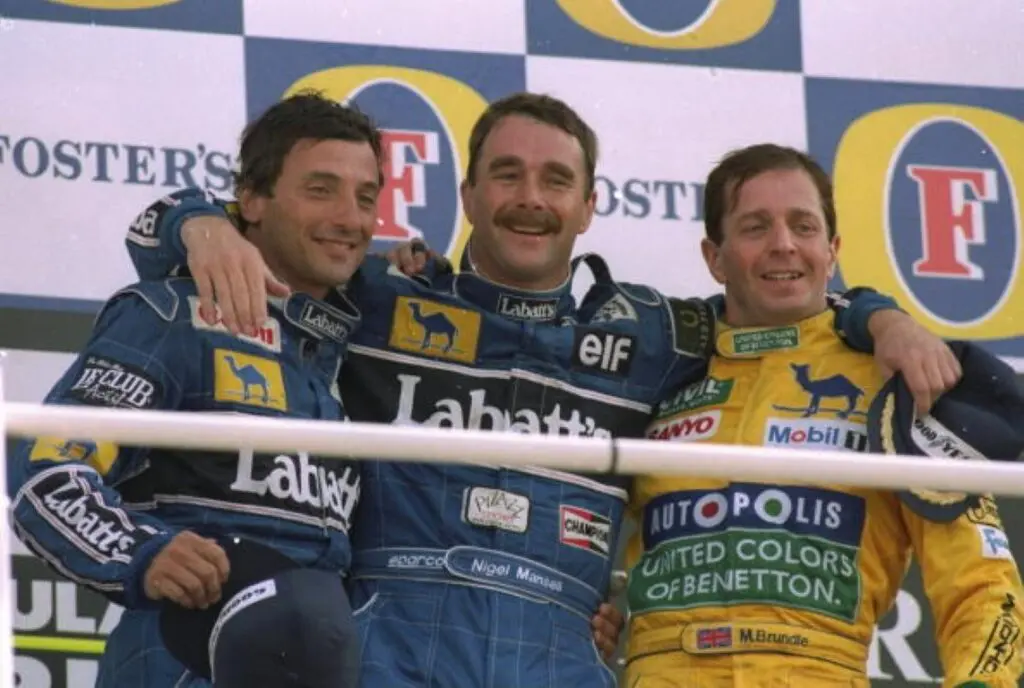
‘After all, Alessandro Benetton had asked me to be there, invited me to help build the team and develop the car and I think I did that job well. And in the championship Schumacher finished fourth and I finished fifth, not that he won it and I was last. I smiled that I was so terrible yet replacing me wasn’t so easy; they ended up using three different drivers the next season!’
It was a relatively muted exit for a driver who had never been far from controversy, such as when he brake-tested rookie Julian Bailey in 1988, yet many forget that Patrese had also demonstrated exemplary teamwork as an obedient number two – notably in France – when Mansell was charging for the 1992 championship.
Reflecting on his favourite moments of that career now, he says: ‘Arrows felt like my home team. Alan Rees, especially, helped me grow and was a mentor. We were unlucky not to win at least one Grand Prix.
‘But mainly I just feel privileged not to die. Many of the worst moments were terrifying testing accidents that no one saw because no photographers are at tests. Parts broke; cars were fragile. Elio de Angelis’s fatal testing crash when we were at Brabham is a reminder of how dangerous it can be.’
Naturally, there had been a parallel career in endurance racing – ‘I loved it; it’s a completely different sport’ – in which he led Lancia’s campaign under Cesare Fiorio and was team-mates with (you guessed it) Eddie Cheever, but since 1993 Patrese has been pretty efficient at staying away from the track: a couple of Masters races, Le Mans 1997 with Nissan, the 2018 Spa 24 Hours, a DTM test… plus, of course, a very gratifying test of the Williams FW18 in 1996 in which he visibly shocked everyone present with his pace. Still got it!
Instead he focused on his hobbies and raising his five children. One of those hobbies is model railways – he is one of the foremost Märklin collectors, with ‘cabinets full of trains’ – and the other was showjumping, in which Francesca, his daughters and himself have all competed at very high, even international level.
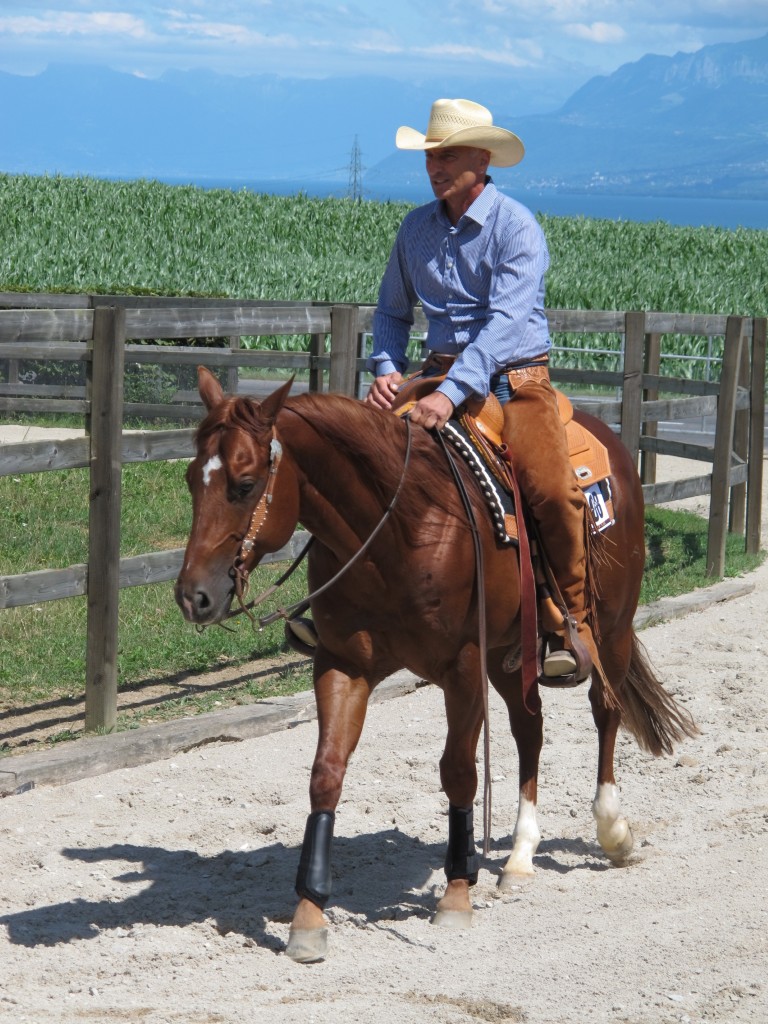
As has his son Lorenzo, who, like his father, had a career choice to make and, just like his father, picked cars. ‘Horses were our family passion; Francesca rides and we had stables at home. So Lorenzo was seven years old, he started to do showjumping – competing at European level – and I was thanking God he’s not going to be a racing driver. Then, around 11, he asked to try karting after discovering my old career on his phone. I said no, but Francesca said “You should give him a chance.”
‘He reached world-level finals, has since raced a Ferrari 296 in GTs and I hope he can build a future there. I never drove for Ferrari, so that would be special.’ Patrese Senior did come very close, signing a letter of intent to drive for ‘Mr Ferrari’ in 1979, but in the end the Scuderia retained Villeneuve after his win in Mexico. Lorenzo did also race in the Spa 24 Hours with Eddie III, son of Riccardo’s former karting, endurance racing and Alfa Romeo compadre Eddie Cheever, though, which feels serendipitous.
How ambitious is Patrese for 20-year-old Lorenzo, whose rapid rise through teenage ranks was rudely interrupted by Covid?
‘Obviously I want him to reach as high a level as he can, but F1 is not what it was. Compared with 30-40 years ago, it lacks character. There are too many rules, too much politics, and drivers are constrained by what they can say. Social media magnifies everything; one mistake and you’re destroyed instantly.
‘That said, the American ownership has done very well financially. Grands Prix are now big social events; the race is sometimes just one part of the show, like NASCAR. It works particularly well in the US, but the drivers just don’t seem to be enjoying it in the way they did 20 years ago. They are much more robotic.’
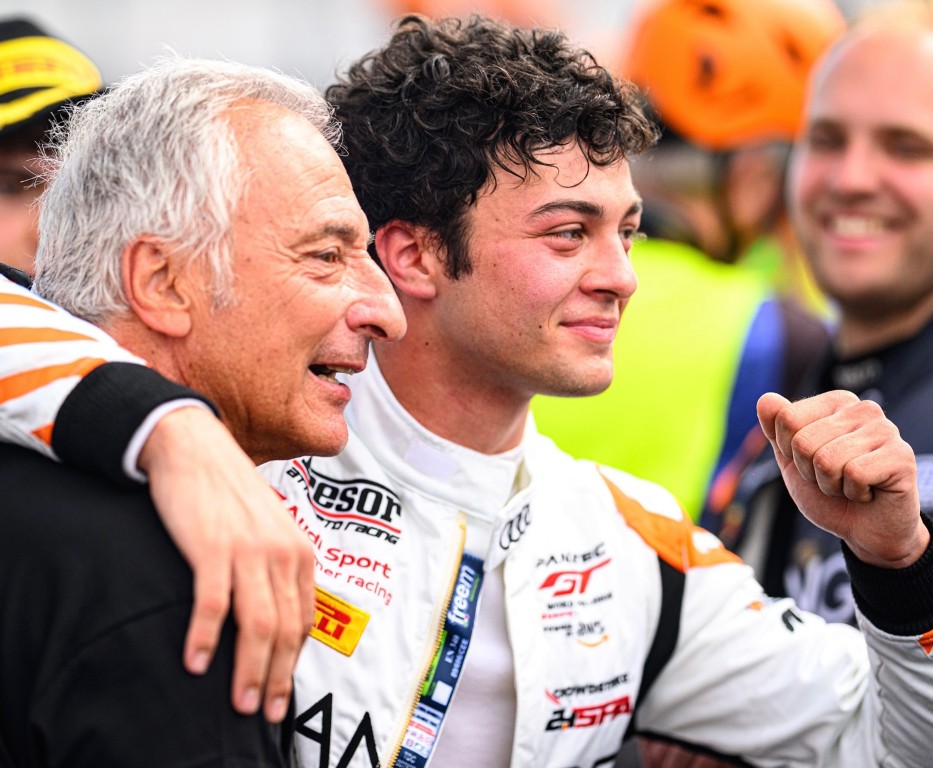
Suddenly the show-organisers are tapping their watches; Patrese has more signing to do and our time is very nearly up. My final question was going to be about Hunt, in case Patrese upped and left at the mere mention of the name, but seeing as that was dealt with amicably early in the interview, I instead revive an old chestnut. It’s nothing new to ask a racing driver what their greatest drive was, but for them to respond with a single qualifying lap is pretty unusual, especially when they have 256 GPs, six wins and 37 podium finishes to their name.
‘Qualifying at Imola in 1991 was my best ever lap because, from a driving perspective, it just felt perfect, even though Ayrton was quicker. The most satisfying by a long way, though, was in ’91, when Nigel Mansell was ill. I got just one lap in his car, which was set up for him, and put it on pole. Patrick Head knew I drove better when I was a little angry, so he gave me some stick, as you English say, and it worked. I proved a very large point to everyone that day.’
No more character analysis necessary.