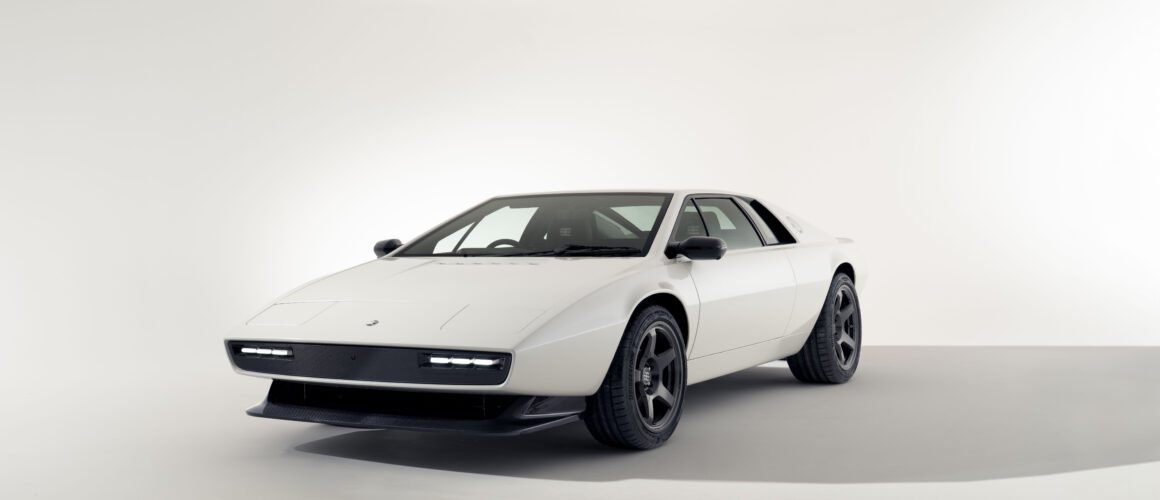
Chelmsford-based engineering firm Encor has unveiled its first car, the Series 1, as a tribute to the iconic Lotus Esprit, 50 years after Colin Chapman’s marque unveiled the sports car at the 1975 Paris Motor Show.
While the Series 1 can loosely be characterised as a restomod, the donor car is a later Series 4 Esprit V8, rather than the early Giugiaro-designed model upon which it pays homage.
According to chief designer and former Lotus man Daniel Durrant, the Series 4 was chosen for as it’s a stronger and more advanced version of the original Esprit’s backbone chassis.
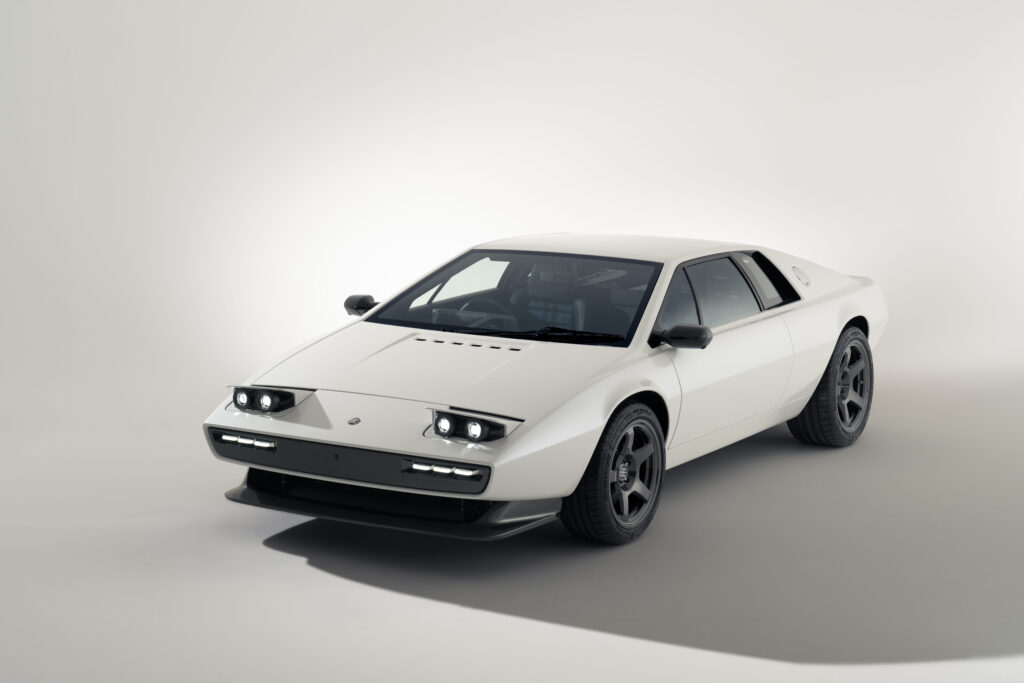
The chassis is clothed in carbonfibre bodywork that adds more strength and rigidity than was afforded by the fibreglass that formed the original’s wedgy silhouette.
‘To touch a shape like this is a huge responsibility,’ said Durrant of the design. ‘Every line we’ve refined, every decision we’ve made, is about honouring the original’s intent while letting the car perform, feel and function the way its silhouette always promised.’
Unlike in the 1970s, the shape was created with the use of advanced Computer Aided Design. The team began by scanning the original Esprit, before refining its shape with modern design tools. Encor says its objective was to create ‘tighter highlights, cleaner transitions, greater precision and material honesty.’
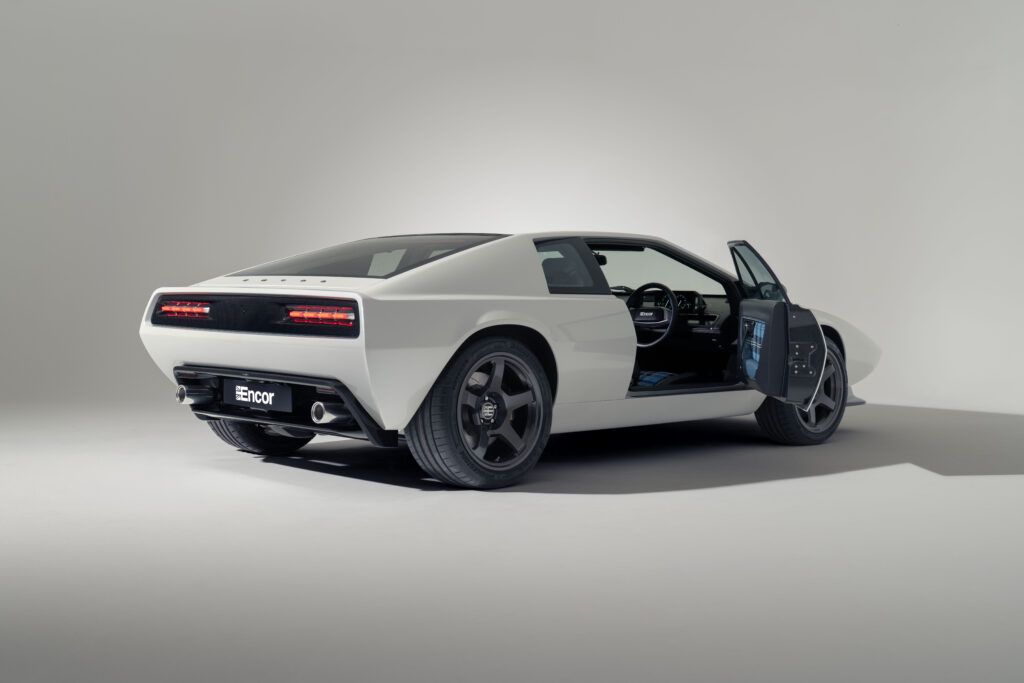
While the bodywork is certainly redolent of Giugiaro’s 1970s design – particularly at the front end – what’s underneath is far more potent and contemporary than the 2.0-litre Type 907 four-cylinder engine that sent 160bhp to the original’s rear axle.
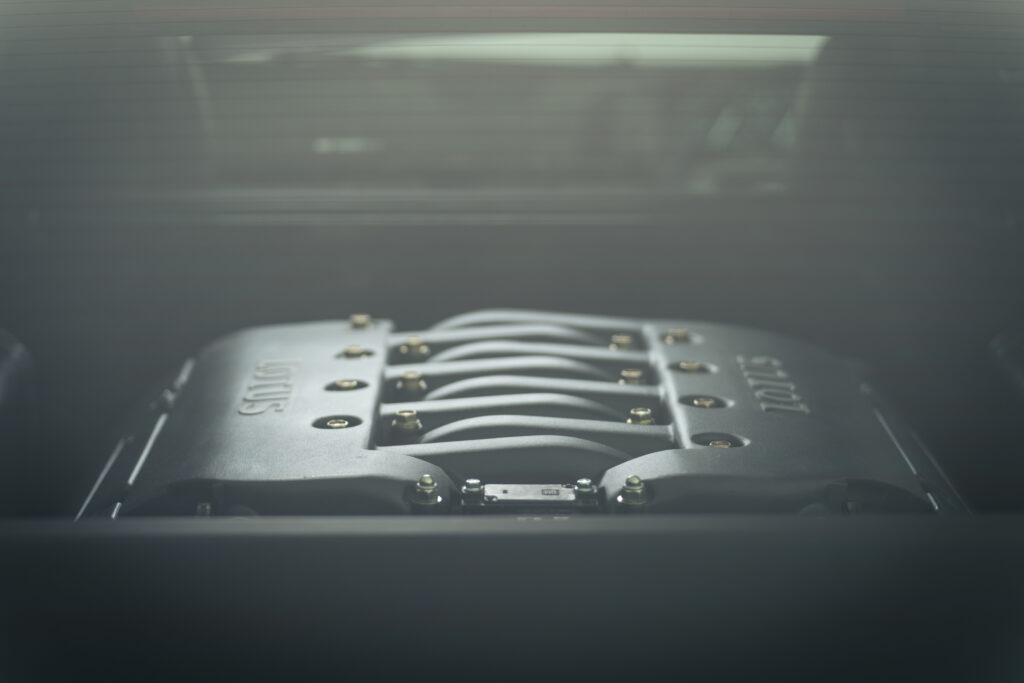
That’s not to say the powerplant doesn’t retain some Lotus DNA; mounted in the middle is a Type 918 3.5-litre twin-turbocharged flatplane V8 lifted from a Series 4 car. Thanks to new pistons, turbochargers and injectors, power has increased by 50bhp to 400bhp – more than double the original Esprit. Torque is impressive too, with a peak output of 350 lb ft.
This potent engine is mated to an original five-speed manual transmission re-engineered by Encor in partnership with Quaife. The powertrain is complemented by a kerbweight of just 1200kg (wet), giving the Series 1 a power-to-weight ratio of 333bhp per tonne – the same as a 2020 Audi R8. This translates to 0-60mph in 4.0 seconds and a top speed of 175mph.
Encor has brought the handling up to date with upgraded suspension components, as well as new anti-roll bars and beefier AP Racing brakes. To preserve the car’s character, Encor opted to retain the original hydraulically assisted power steering system.
‘Lightness and tactility guide every decision,’ Encor technical director Mike Dickison asserted. ‘The Series 1 drives with the purity you imagine from an analogue supercar, yet with a depth of capability the original platform could only dream of. It’s a transformation carried out with complete respect for its DNA.’
That philosophy of improvement without compromising the original’s best qualities continues inside the cabin. Esprit aficionados will recognise the sloped dashboard, wraparound instrument binnacle and tartan accents, all present and correct – albeit sympathetically refreshed for a modern audience.
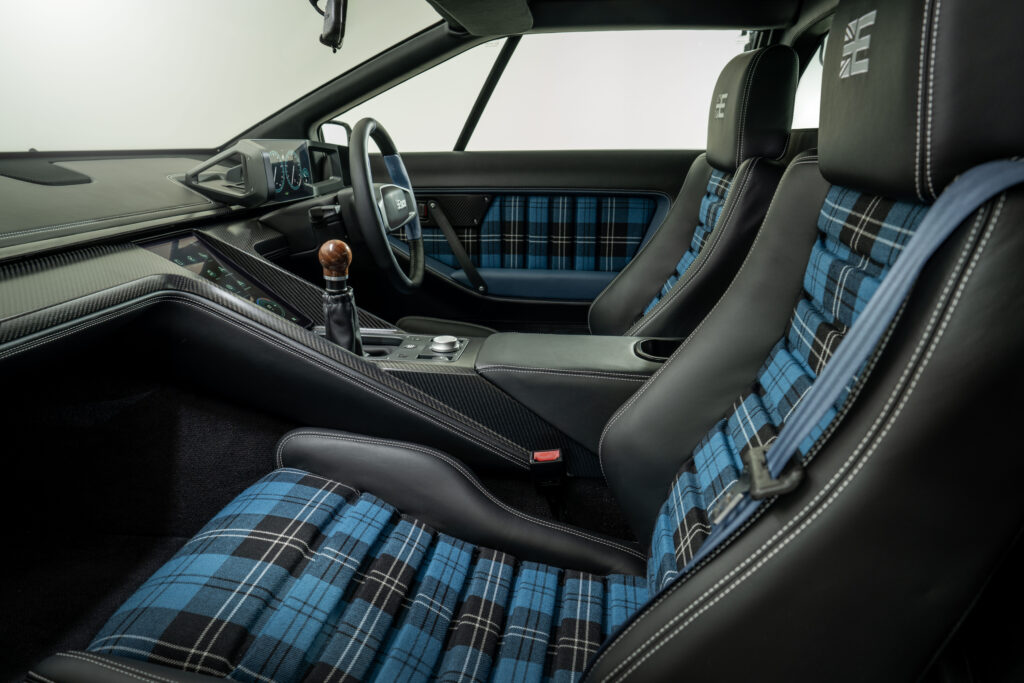
The most obvious update is the floating instrument cluster, machined from a single piece of billet aluminium and wrapped around a digital multifunction display. Essential controls sit within the carbonfibre ‘T’ set into the dashboard, while the seats have been reupholstered and subtly reshaped to preserve the original ergonomics while offering greater lateral support. Modern conveniences – from climate control to infotainment and camera systems – are integrated as discreetly as possible, ensuring the analogue ambience remains intact.
‘This car is analogue at heart,’ explained co-founder and former Lotus Advanced Performance director Simon Lane. ‘We wanted to avoid the modern tendency toward gadgetry, therefore the technology exists to enhance the experience, not dominate it.’
Encor Series 1 production is said to be limited to just 50 individually commissioned examples globally. Prices begin at £430,000 (excluding taxes, options and the donor car) and deliveries will commence in 2026.
More information here.