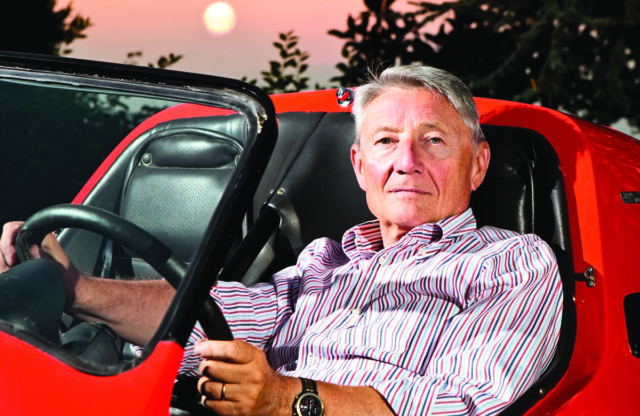
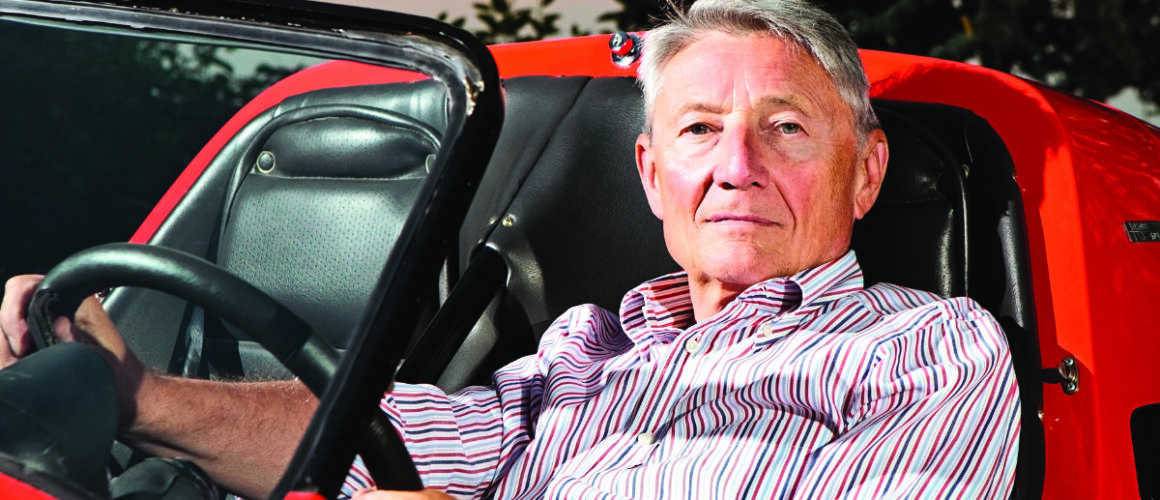
Ercole Spada, one of Italy’s most prolific and inventive post-war car designers, died aged 88 on 3 August 2025. Best known for his work with Zagato in the 1960s – penning the Aston Martin DB4 GT Zagato, Alfa Romeo SZ, TZ and Junior Z – his career spanned included stints with Ghia and BMW.
Born in Busto Arsizio in 1937, Spada trained as an industrial engineer before joining Zagato in 1960. During his time at Ghia, which was owned by Ford, e created the GT70 concept. During his time at BMW he was involved in the creation of the E34 5-series and E32 7-series. He returned to Italy to lead design at I.DE.A Institute, penning the Fiat Tipo, Lancia Dedra and Alfa Romeo 155 among others.
Spada returned to Zagato in the 1990s and later founded Spadaconcept with his son Paolo. His legacy, shaped by both hand-crafted coachbuilt specials and mass-production models. Back in the 2011, Octane interviewed Spada for during a trip to Villa d’Este, which is reproduced below.
Ercole Spada interview, conducted in 2011
When first we meet, legendary designer Ercole Spada appears genuinely baffled by the attention. More than 50 years have passed since the Aston Martin DB4GT Zagato was launched, a car he penned when barely out of his teens, and one of these style icons just happens to be nearby as we make for a shady spot at the Concorso d’Eleganza Villa d’Este in Italy. Even closer is the latest collaboration between the profoundly British marque and the Milanese design house, the V12 Zagato. When asked to comment on the new strain, there’s a contemplative pause, a look of playful incredulity and the implicit suggestion that we might want to change the subject.
Spada metes out his words carefully but it pays to listen. In a career that has lasted half a century, he has shaped umpteen blue-chip classics but his name is rarely uttered with such reverence as, say, Giorgetto Giugiaro’s or Marcello Gandini’s. Not that he appears remotely bothered by this; quite the opposite, in fact.
‘It is satisfying that people get enjoyment from cars I designed, and I understand that some are now worth a lot of money, but I have no interest in the spotlight. When I was designing cars for Zagato, I never thought of how they would be considered in 20, 30 or even 50 years’ time. When people say how much they like the DB4GTZ I am flattered but, really, it was done very quickly.’
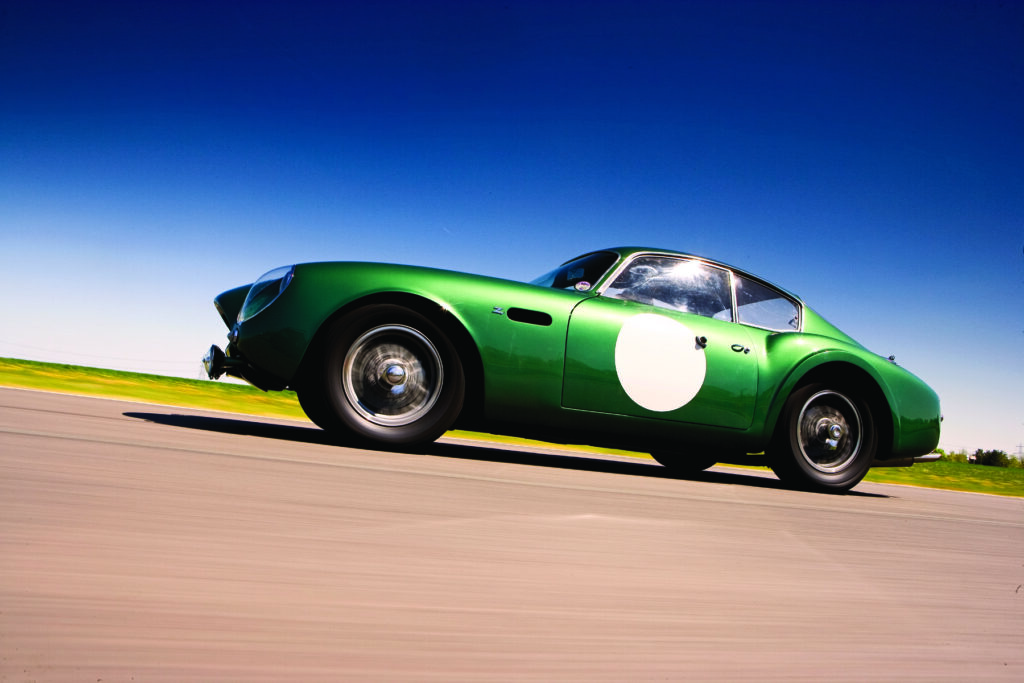
‘After I had completed my technical studies, I joined Zagato in 1960. I was asked if I could do full-scale drawings and I said “yes” when I had never done one in my life! I learned quickly, though. Zagato in that period was very busy. There was no design department as such. This was the age of cars being made by craftsmen, and quickly – about as quickly as you could sketch something. Zagato was still in the old factory, which had been bombed by the British during World War Two, and Ugo Zagato, who had founded the business, may have been old but he would be there before anyone else in the morning. He still influenced how things were done.’
Even so, Spada found a mentor and foil in second-generation studio head Elio Zagato. And by the time the Aston DB4GTZ broke cover at the 1960 Earls Court Motor Show, they had already rustled up the glorious Alfa Romeo Giulietta SZ ‘Coda Tronca’.
‘Elio was a successful racing driver and very particular about how a Zagato car should look,’ says Spada. ‘At that time, a lot of coachbuilders were copying the Americans with the use of chrome and so on. Elio didn’t want any of that; he didn’t like ornamentation. For him, cars had to be light and aerodynamic and we spent many hours on the autostrada testing just how streamlined our cars were. The Coda Tronca was a big step forward over the round-tail SZ and won its first race. That led to the TZ – Tubolare Zagato – Alfa Romeos, although the TZ1 actually started out as an Abarth project.’
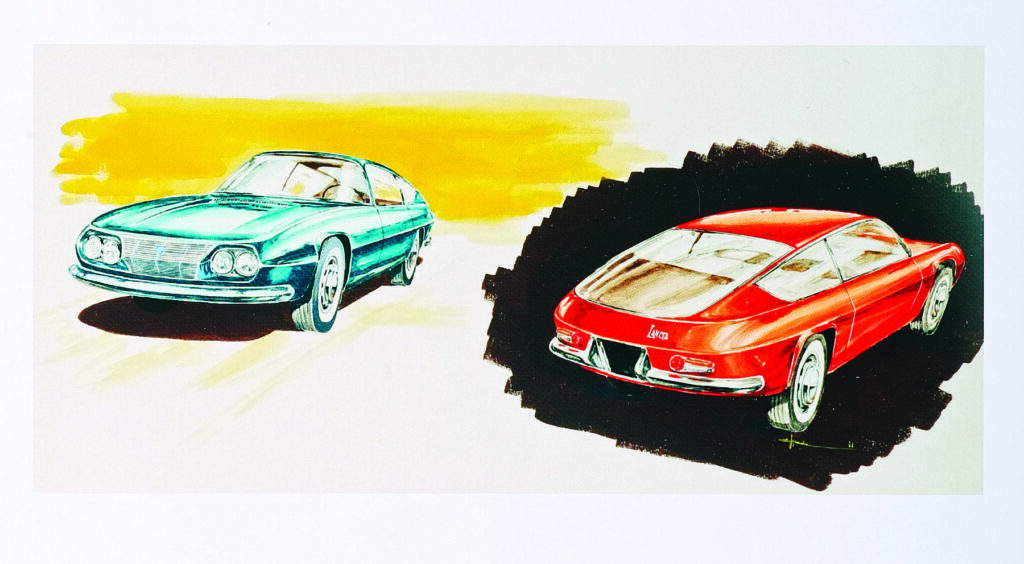
The ’60s saw Zagato at its creative peak but it was also the decade during which newfangled build practices chafed against traditional construction methods. While there would be many penny-number production runs and one-off confections, Zagato ultimately chased volume and moved over to steel pressings with the Spada-styled Lancia Fulvia Sport Zagato. This move would have far-reaching consequences for the firm in the hardscrabble ’70s, as manufacturers gradually brought niche products in-house.
However, Spada had by then departed for the bright lights of the Ford Motor Company.
‘I can remember thinking that this was the big time! It was nice to be with a large international company, and I worked on various projects for European and American vehicles, but in 1976 I got involved with Audi, which didn’t work out. I didn’t like the way I was treated by the head of design and moved on very quickly. I was delighted to move to BMW and Bavaria. My years there were wonderful. I enjoyed having the freedom that comes with working in a large studio. BMW had previously gone to Bertone but now design was being done internally and a few of the cars I did went into production [the E32 7-series and E34 5-series].’
A return to his homeland beckoned in 1983 after Spada was handpicked to run I.DE.A (Institute of Development in Automotive Engineering) in Turin, which ascended to prominence within the design community over the ensuing decade.
‘We were involved in a lot of projects for major manufacturers, including several Japanese firms such as Daihatsu, Nissan and Lexus. We also did a special Ferrari, which was sponsored by PPG, and a family of cars for Fiat.’
These emerged as the Fiat Tipo/Tempra, Alfa Romeo 155 and Lancia Dedra, all of which shared the same central structure.
‘It was a massive challenge and I think we did a good job despite so many restrictions.’
The ’90s, however, witnessed a surprise return to Zagato. Third-generation principal Andrea Zagato continued from where his father Elio left off and roped in Spada to design a new Lancia coupé, which ultimately came to nought. Manufacturing cars in large numbers was no longer on the radar, but the name still had some currency; there were enough wealthy patrons out there to keep the firm occupied as it set about fighting off insolvency.
Sugar-daddies such as Roberto Tonali, for instance, who commissioned a new one-off Ferrari based on a lightly pranged Testarossa. He wanted something unique; something that wasn’t Testarossa-shaped.
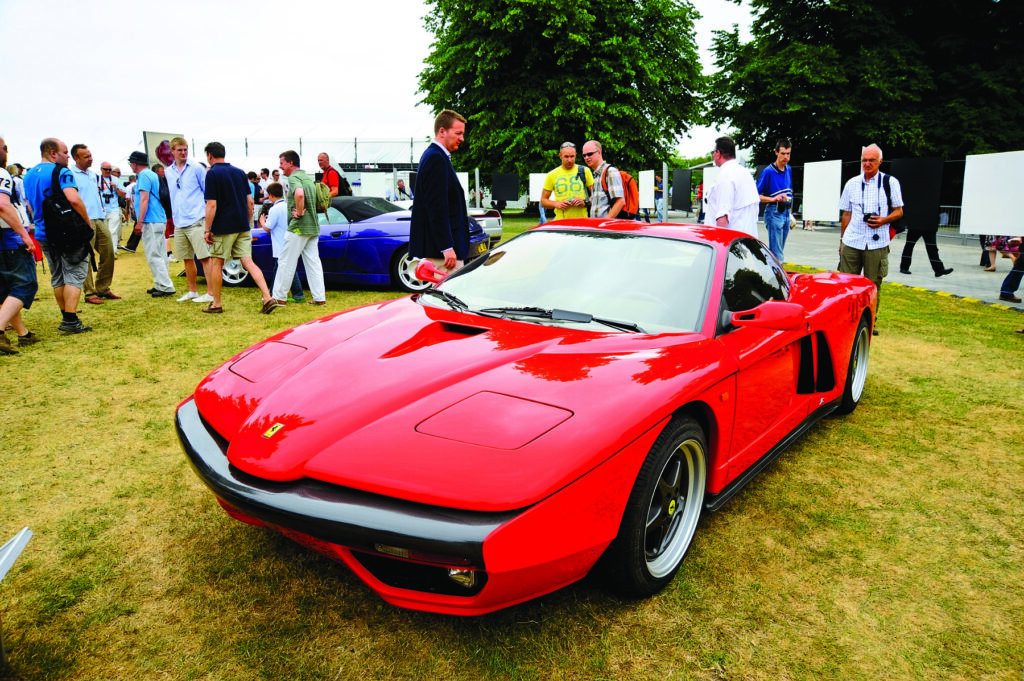
The wild FZ93 made its debut at the 1993 Geneva Motor Show and, as with so many of Spada’s earlier designs, it was immediately deemed controversial. This uniquely leftfield vision foretold many supercar styling trends – it’s just that not all of them belonged on the same car, according to some onlookers.
‘That was an interesting project,’ Spada smiles. ‘I knew it would surprise people but, to me, the Testarossa was too heavy-looking. I wanted to remove that sense of mass and, if you look at a lot of today’s supercars, I think you can see elements of the Zagato car. It didn’t matter to me that some people didn’t like it. If you try to design a car that pleases everyone, you will make a car that pleases no-one.’
Retirement beckoned, only for Spada to be talked into penning the car that gave him the greatest satisfaction and biggest disappointment of his career – the OSCA 2500GT Dromos.
‘That was commissioned by a Japanese businessman in 1997 and was a real clean-sheet-of-paper car. It had a Subaru flat-four engine and I did the styling, the packaging and the layout. Unfortunately, the money ran out in 1999 and that was that. I don’t have many regrets but I would have liked for the OSCA to have become a production car,’ he says.
Asked if there were any other projects that died prematurely, he ponders for a moment before adding:
‘I was sad that my design for the Ford GT70 didn’t go any further. That was just about the only car I did for Ford that was ever seen publicly, even though it was only a full-size model. I didn’t like the original GT70 very much, and I hoped that my design would go into production, but sadly there was no need for it within Ford.’
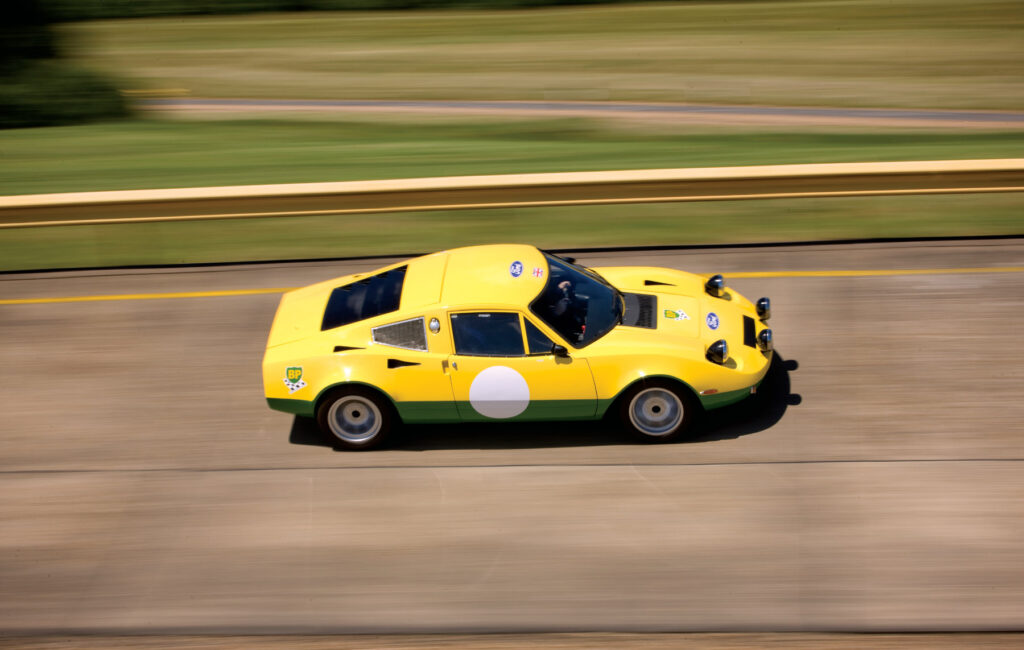
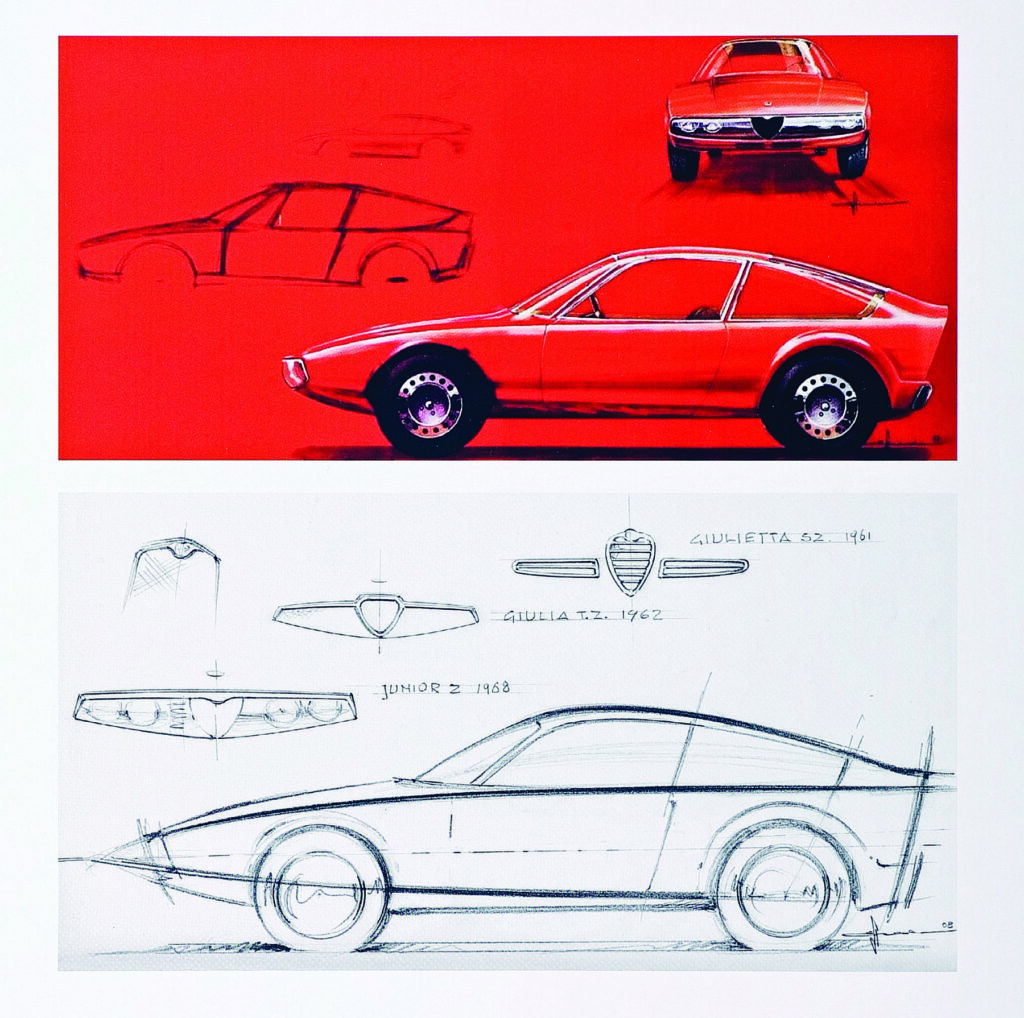
Winningly self-effacing, Spada seems impervious to praise. However, he does crack into a broad smile when mention is made of an Octane favourite, the 105-series Alfa Romeo Junior Zagato coupé.
‘I liked that car very much although, again, not everyone was very kind when it came out [in 1969]. To be honest, I didn’t much like the Bertone car from that time, which was too baroque. Our car was more radical-looking. I think it was quite influential: Honda admitted that it took inspiration from the Junior Zagato when it did the first CRX.’
Quiet self-belief and lack of pretension clearly run in the family, the instantly likeable Paolo Spada following in his father’s footsteps via his Spadaconcept concern. The difference is that Spada Sr never seriously entertained becoming a freelancer in period.
‘I never wanted to run my own studio. I did work for myself briefly between leaving Zagato and joining Ford, but having to go out and find work didn’t appeal. I helped Paolo form the business as I figured I could lend my expertise and experience. To be an independent designer these days is very difficult, so I am proud of how far he has come.’
He had a great role model.
Original interview by Richard Heseltine.