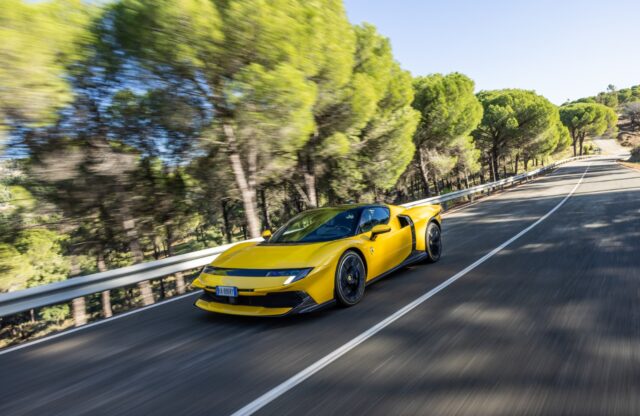
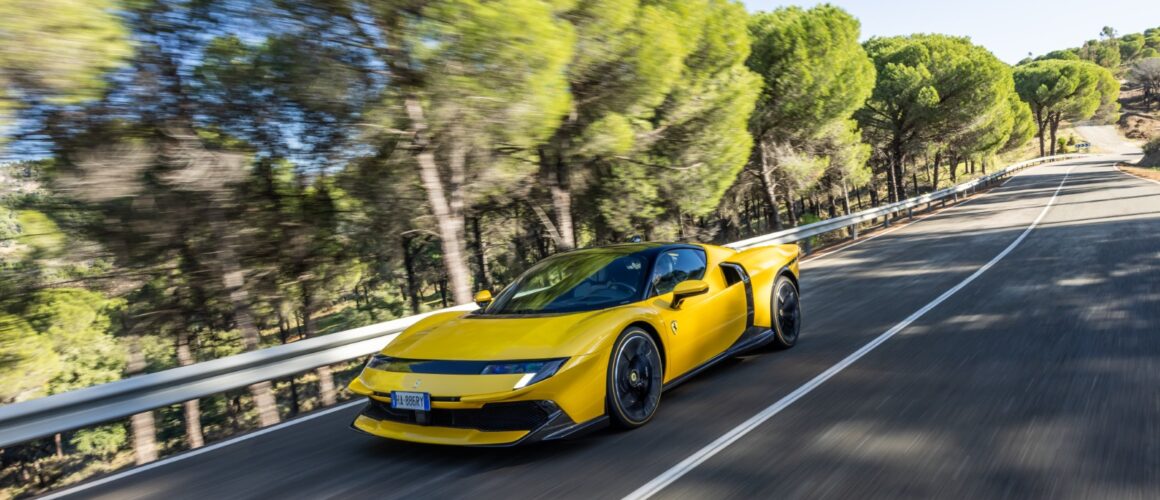
Octane was among the first in the world to drive Ferrari’s latest mid-engined supercar, the 849 Testarossa, sampling it on both road and track in southern Spain at the international media launch.
Publicly revealed in September 2025, the 849 Testarossa succeeds the SF90 as Ferrari’s flagship series-production model. The revival of the Testarossa nameplate – and Flavio Manzoni’s radical styling – has generated plenty of debate, but what truly matters is how the car drives.
Octane was welcomed to Monteblanco Circuit, 58 kilometres from Seville, at dawn, where six matching Giallo Triplo Strato-finished 849s sat outside the pit building, sat-navs primed for the winding roads of the test route. Meanwhile, another four cars – equipped with the optional Assetto Fiorano pack (£42,115) – were being readied for circuit driving.
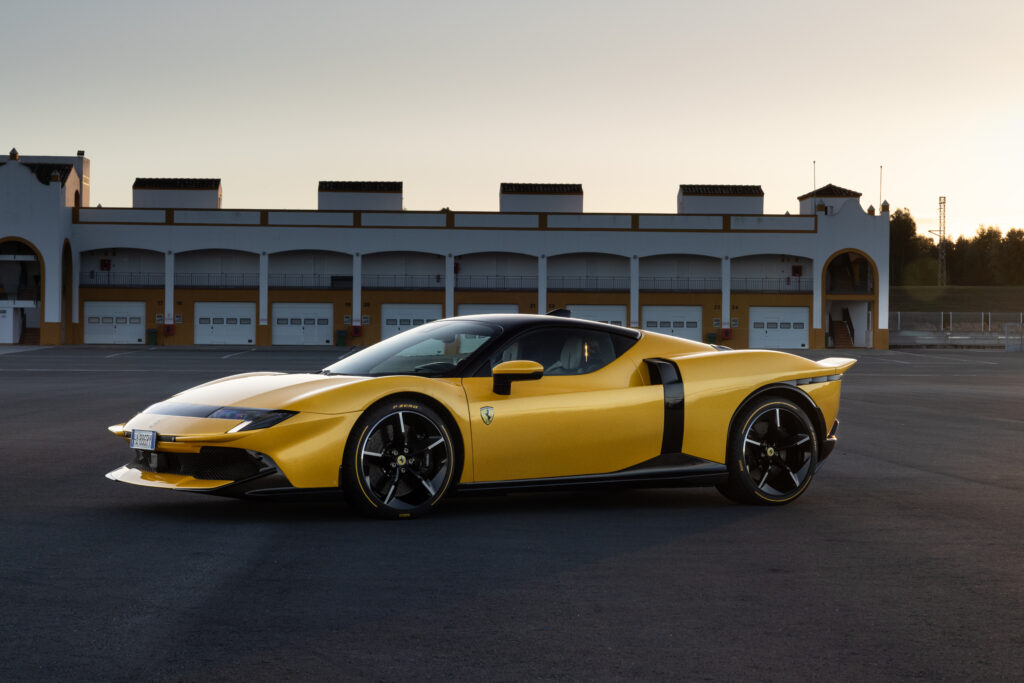
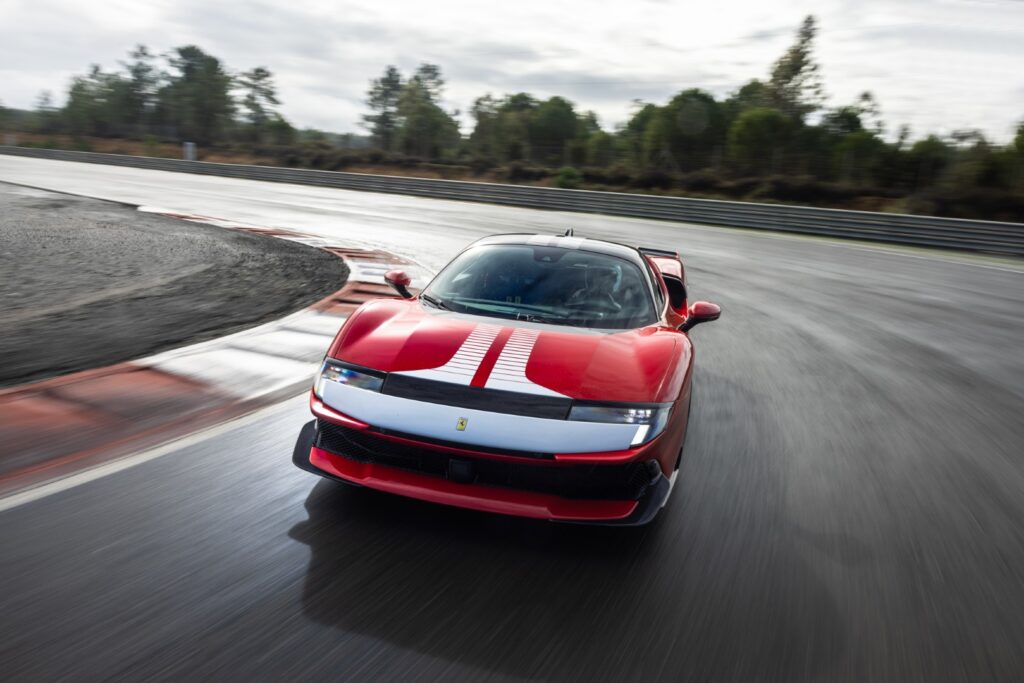
Ferrari’s lustrous yellow paintwork contrasts, with black stripes across the nose inspired by the pop-up headlights of the 1984 Testarossa. Rather than reviving the trademark side strakes of the 1980s, Ferrari uses a series of black graphic elements to define the side profile, where the subtly pinched bodywork is said to take cues from a lady’s corset.
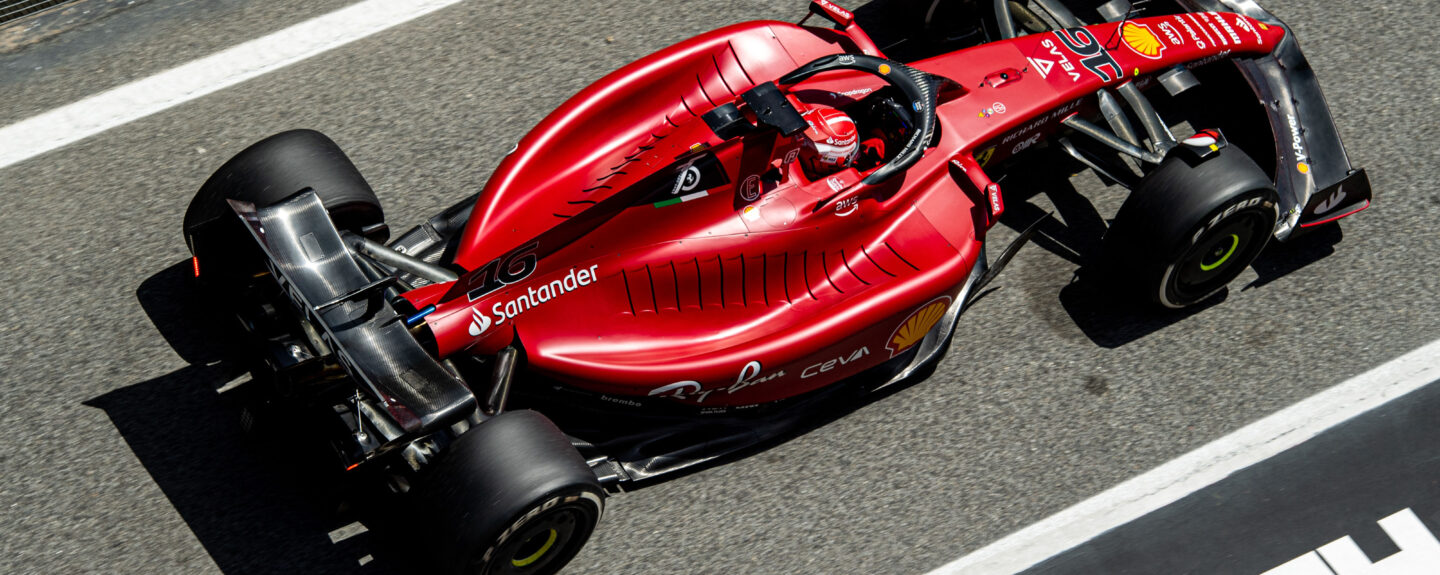
From the side, the surfacing appears deceptively clean, but from other angles it reveals a far more three-dimensional form, with door channels shaped to feed air to the side-mounted intercoolers. The door release is concealed within this sculpted channel which, seen from above, is subtly reminiscent of the ‘bird bath’ sidepods of Ferrari’s F1-75 Formula 1 car.
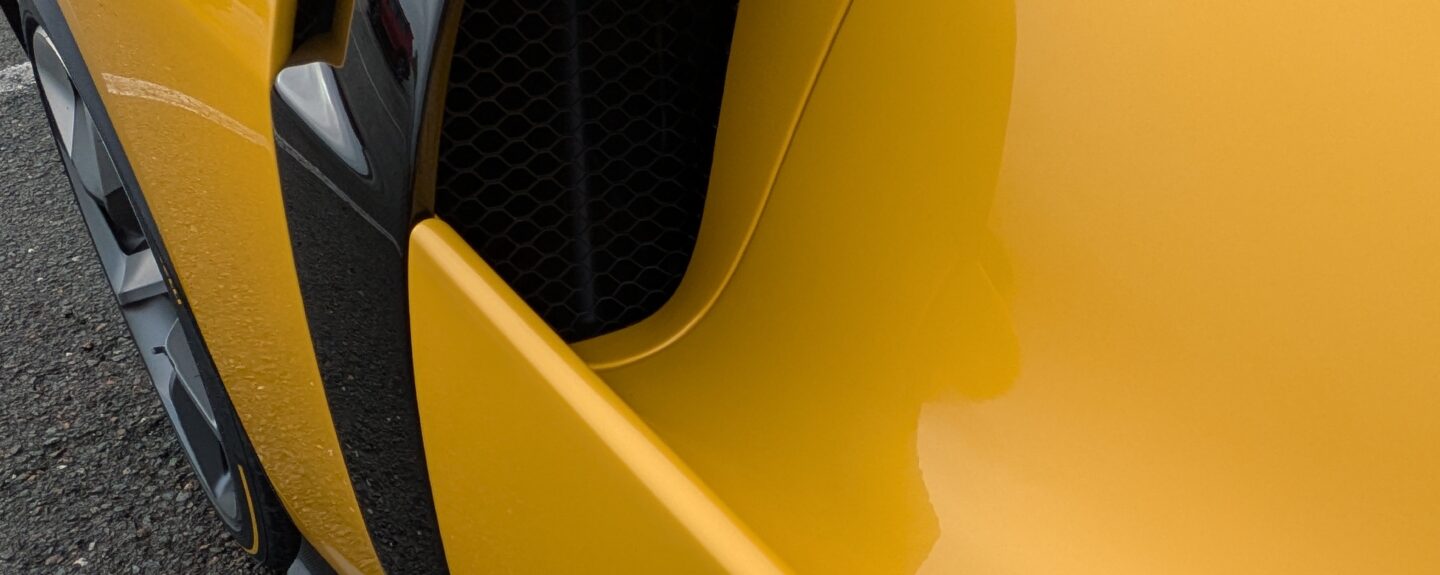
The rear end is dramatic from any angle, defined by a scalloped deck framed by swooping twin-tail spoilers that reference Ferrari’s 512S and 512M endurance racers. While not classically beautiful, Manzoni’s styling is more cohesive in the metal than it appeared in launch renders, and its aggression is reflected in the 849’s aerodynamic performance. Working alongside a flat underfloor with vortex generators feeding a large rear diffuser, the bodywork can generate up to 415kg of downforce at 155mph.
Climb inside, and you feel cocooned in the driver-focused cabin, which takes several design cues from the F80 hypercar. Chief among these is the ‘central sail’ – an Alcantara-trimmed carbonfibre pillar that divides each side of the cockpit. The much-welcomed return of physical buttons from the F80 has also made its way to this series-production model. The flat-bottomed steering wheel is now festooned with proper, tactile controls, a marked improvement over the maligned haptics of the SF90 Stradale, although haptic controls remain for the e-Manettino settings at the bottom of the wheel.
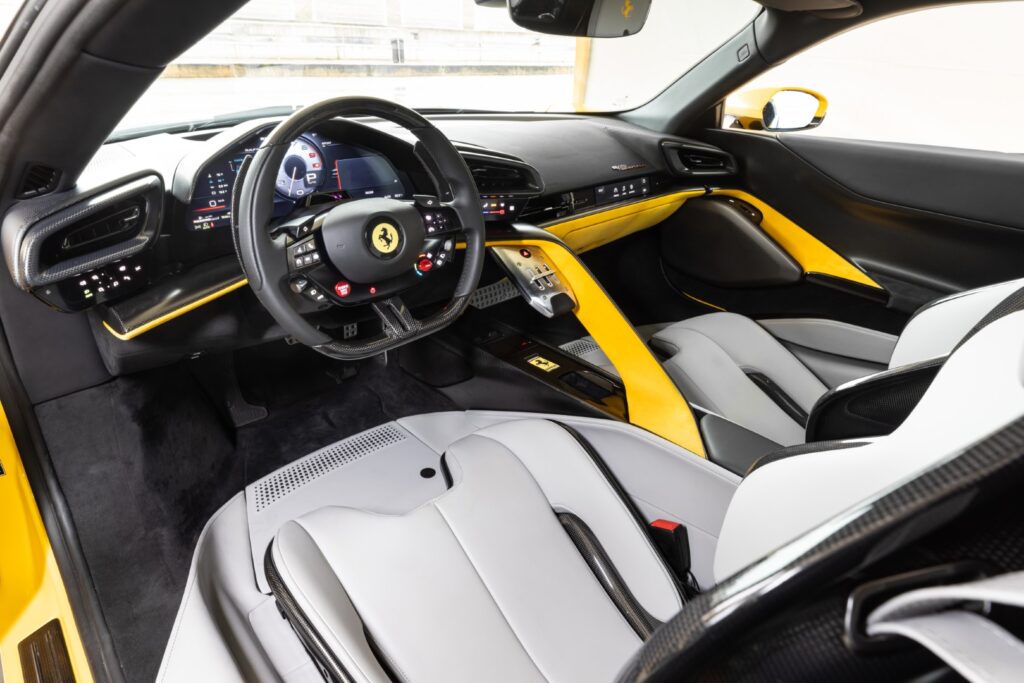
With the e-Manettino set to Hybrid mode, it feels slightly incongruous to be greeted by a computerised jingle rather than the bark of a flat-plane V8 when you jab the bright red “Engine Start” button for the first time. But that’s no bad thing – particularly if you wish to fire up the 849 at unsociable hours or creep through town with more subtlety than a bright yellow supercar typically affords.
Ferrari’s test route covers roughly 130km, threading through small Andalusian towns and over the region’s mountainous countryside roads, bookended by wide-open stretches of autovía. Ergonomically, the 849 Testarossa is a triumph, with a low, deeply set driving position that immediately feels right in a car of this type. The road-biased “comfort” seats remain supportive throughout the two-and-a-half-hour drive, yet still offer ample lateral support on the twistier sections. Pedal placement is spot on, and the steering wheel adjusts to exactly where you want it – chest-high and with plenty of bend in the elbows, in my case.
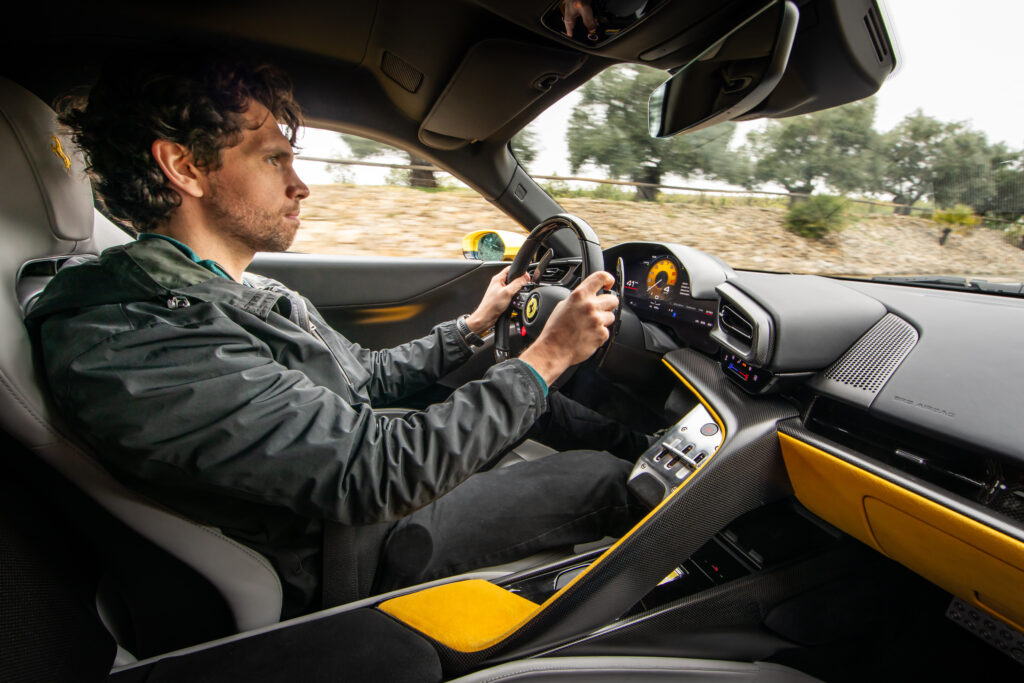
Excellent ergonomics are essential if you want to feel confident controlling a car with 1036bhp and 621lb ft of torque. With the e-Manettino set anywhere north of eDrive, the awesome level of performance makes itself known the moment you squeeze the throttle pedal. 0-62mph is dealt with in just 2.2 seconds. Keep your foot pinned for a shade over six ticks and you’ll be travelling at 124mph. Restraint is required should you wish to keep your licence.
The source of such speed is an evolution of the SF90 Stradale’s 986bhp 4.0-litre twin turbocharged V8 hybrid powertrain. Ferrari engineers have squeezed an extra 50bhp from the V8 by installing the largest turbochargers ever fitted to a series-production car. Mounted within the exhaust manifold, the turbos remain just as responsive as the smaller SF90 units thanks to low-friction ceramic bearings. Complementing the uprated turbos is a redesigned cylinder head, new camshafts, a lightened crankcase and a new engine block.
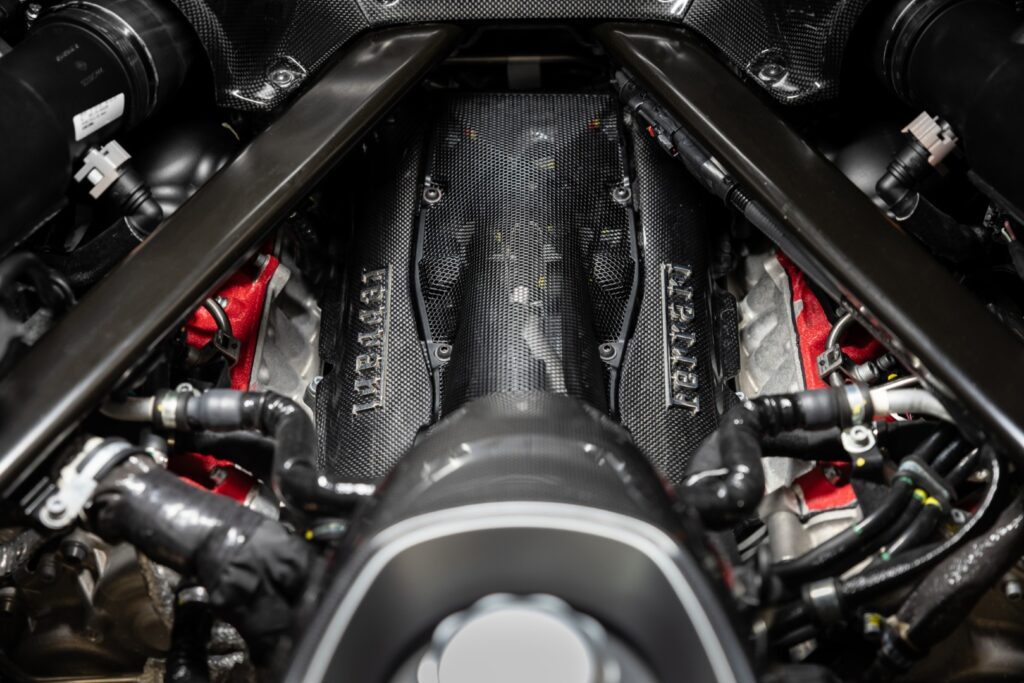
Aside from more efficient cooling, the electrical hardware is largely carried over from the SF90. Fed by a 7.4kWh battery pack, a pair of front-mounted radial-flux motors and a rear-mounted axial-flux unit work in harmony with the 819bhp V8, contributing a further 217bhp and smoothing out any hint of turbo lag.
At a more relaxed pace, the 849 is far more approachable than its numbers imply, especially in eDrive mode, where it behaves like an over-chassised 217bhp sports car until the batteries run flat and the V8 barks back into life. Threading a Ferrari along mountain roads in near silence, throttle pinned to the firewall, is as discordant as it is surprisingly enjoyable. Most owners, however, will likely keep the car in Performance mode, which leaves the V8 permanently running and delivers a sweet spot of throttle, transmission and chassis response for road use, without the track-biased sharpness of Qualify.
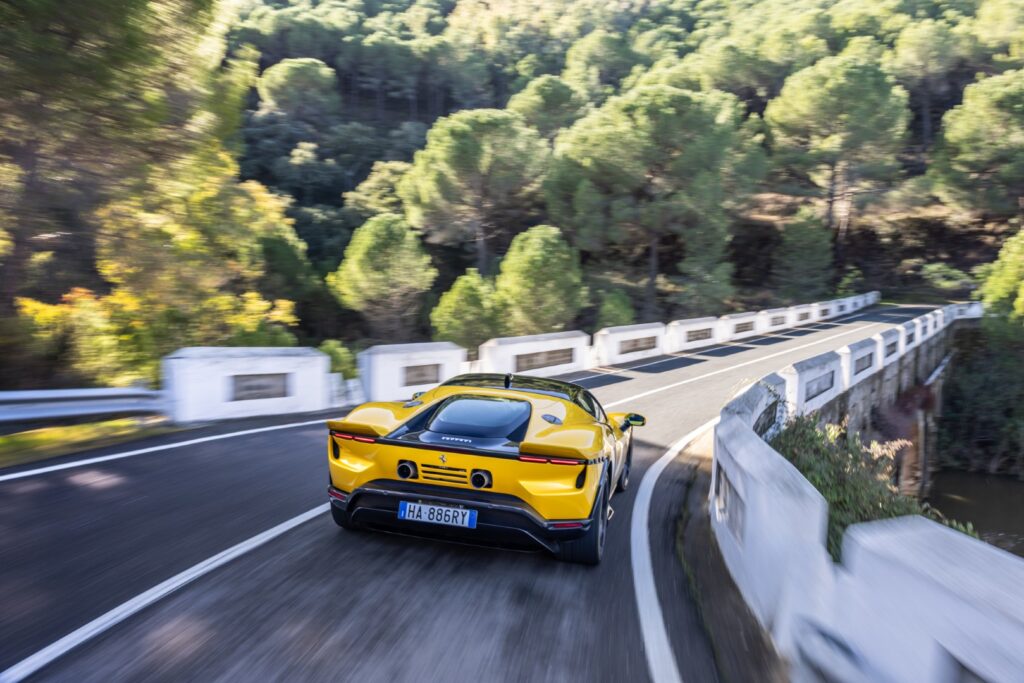
Whichever e-Manettino setting you choose, the 849 Testarossa delivers the scalpel-sharp electronically-assisted steering you’d expect from a modern Ferrari. In the racier settings, just a touch of lock is enough for the nose to dart into corners with enthusiasm. Despite the immediacy, the brilliance of Ferrari’s variable-ratio system means it doesn’t feel nervous or needlessly hyperactive. The only minor drawback is on the motorway, where the car sometimes follows tramlines in the Tarmac and can feel a little restless off-centre.
With this level of performance and steering response comes the need for some serious stopping power, and Ferrari has duly upgraded the carbon-ceramic brakes. Larger 410mm front discs and new 372mm rear discs and calipers are complemented by significantly improved cooling. What matters most from behind the wheel, however, is how natural the brakes feel. There’s no obvious transition between regenerative and hydraulic braking, and the pedal feel remains consistent whether you’re crawling through town or braking hard into a corner. Working in concert with the brakes is an active rear spoiler that doubles as an airbrake.
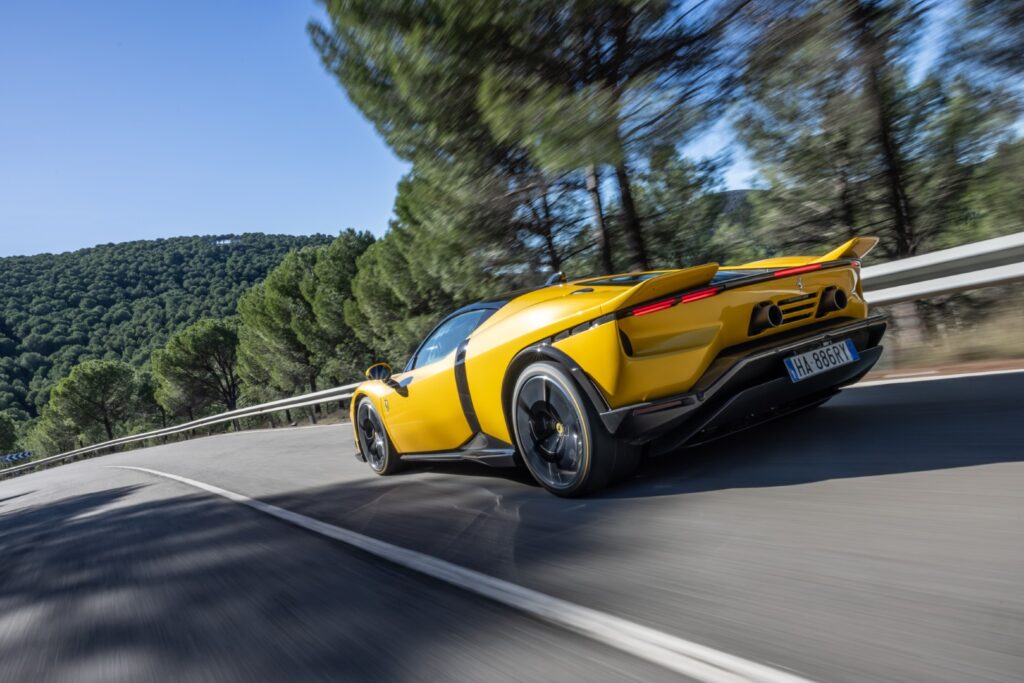
All 849 Testarossas use a double-wishbone front and multi-link rear suspension layout. Standard cars are fitted with adjustable Magneride dampers, which on the road feel well judged for fast driving, combining minimal body roll with a neutral balance and a level of compliance that is surprisingly supple – particularly with the Bumpy Road mode engaged.
Swapping into an Assetto Fiorano-equipped 849 at Monteblanco Circuit reveals an even sharper edge. AF cars are fitted with fixed-rate Multimatic dampers as standard, although Magneride can still be specified. Such cars also benefit from a more aggressive aero package, and revised engine, braking and chassis control calibrations. Up to 30kg is saved through carbon-shelled bucket seats with race harnesses, reduced sound insulation and a pared-back interior. Michelin Pilot Sport Cup 2s are the default tyre choice, with even stickier Cup 2 Rs available on request. While these changes might sound modest, Ferrari claims an Assetto Fiorano-equipped car can lap Fiorano in 1:17.5 – just two tenths slower than the extreme, limited-production SF90 XX.
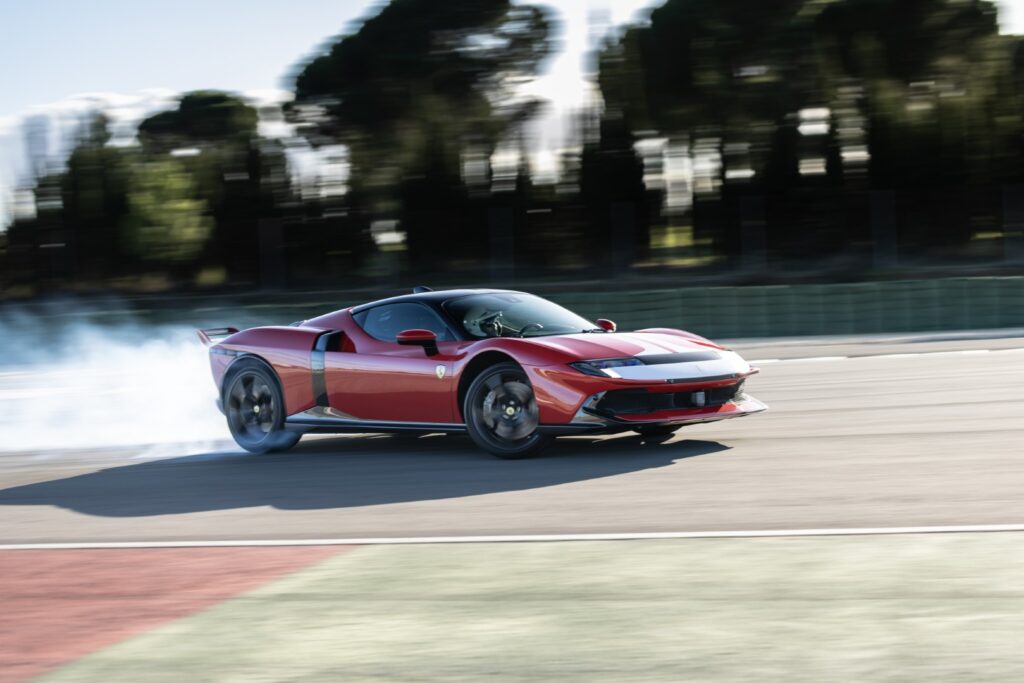
Put the controversy around the styling and the Testarossa name to one side and, after a full day in the driver’s seat, it’s clear Ferrari has refined the SF90 recipe into something with even more astonishing performance and a breadth of capability that feels remarkable for a 1000bhp-plus supercar. The more interesting, and perhaps more philosophical, question is where flagship supercars can realistically go from here – the 849’s eventual successor certainly doesn’t need more horsepower.
I’ll be delving deeper into the driving experience – and the weight of the Testarossa name – in Octane issue 274, available from 25 February, 2026.
Ferrari 849 Testarossa deliveries begin in Q2 of 2026, with prices starting from £407,617. For more information, click here.