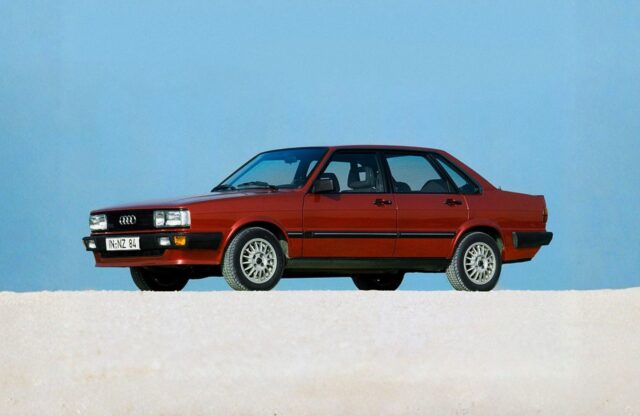
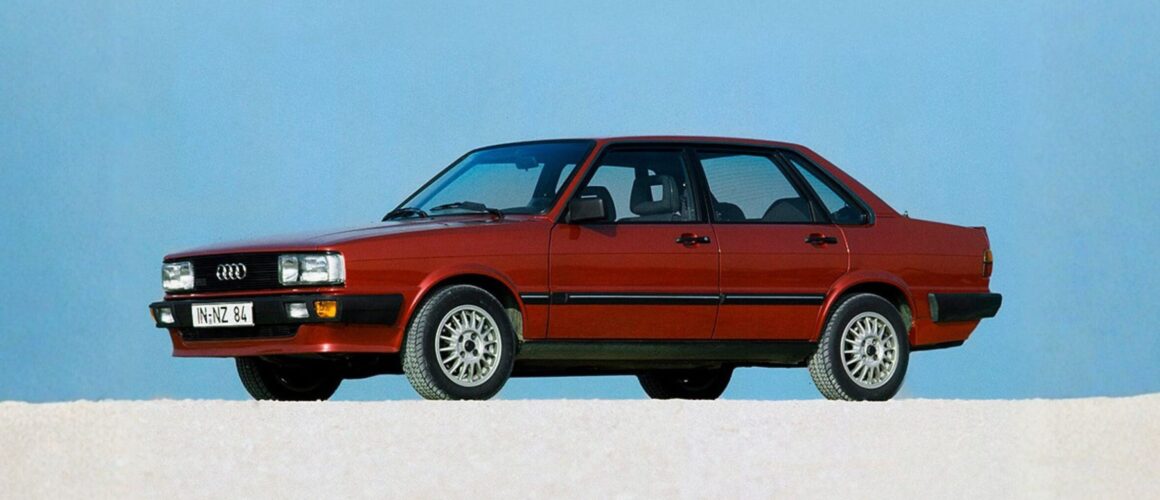
Today, Audi is one of the dominant forces in the premium car market, but rewind to the late 1970s and early 1980s and the company occupied a very different position. Audi was still something of an outsider in Britain, producing technically sophisticated, impeccably assembled saloons that were considerably rarer than their BMW and Mercedes-Benz rivals. The B2-generation Audi 80 and later 90 perfectly capture that transitional period, representing the moment Audi began building the reputation for engineering integrity and understated quality that would later define the marque.
Launched in 1978 as the replacement for the original B1-generation 80, the B2 arrived at a time when front-wheel-drive family saloons were becoming increasingly sophisticated. Audi had already established a reputation for advanced engineering within the Volkswagen Group, and the new 80 demonstrated this clearly. Crisp Giugiaro-influenced styling, excellent aerodynamics and impressive build quality helped it stand apart from many contemporaries, while the interior introduced the restrained, durable design language that would become an Audi hallmark.
Unlike many rivals from the period, the B2-generation 80 was engineered with longevity in mind. The bodyshell was robust by contemporary standards, the mechanical components were durable and the interiors proved capable of surviving enormous mileages with relatively little deterioration. As a result, these cars developed a loyal following among owners who valued substance over image. Ironically, however, that durability has contributed to their rarity today. Most were simply used up and discarded rather than preserved as future classics.
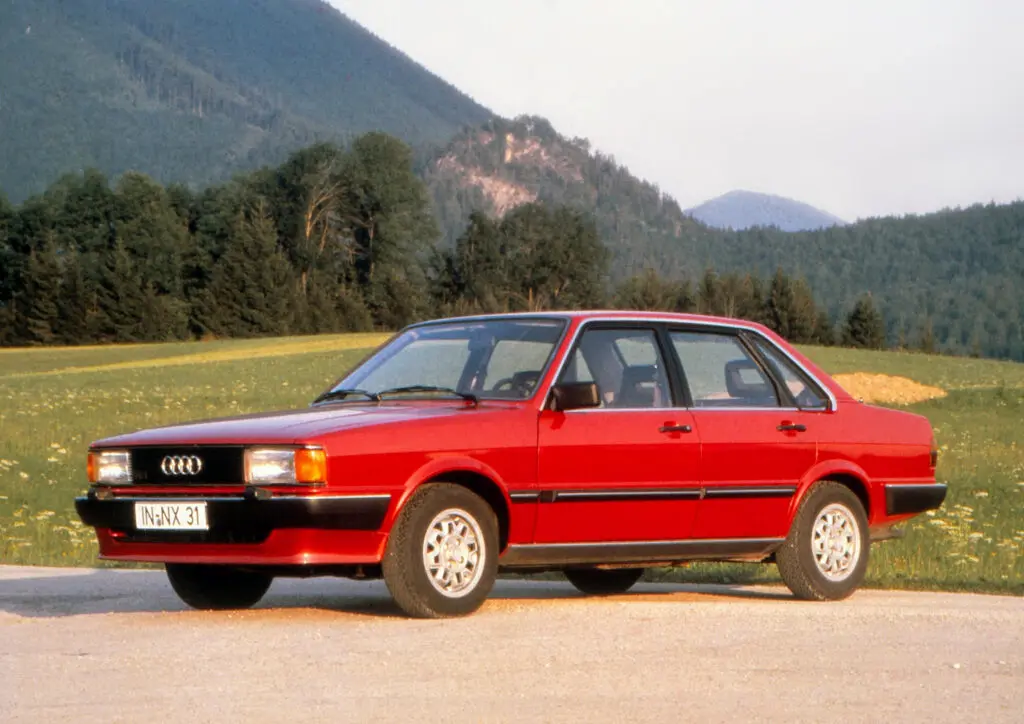
Early UK-market cars arrived with a choice of 1.6-litre four-cylinder engines in LS, GLS and GLE forms, all driving the front wheels. Audi gradually expanded the lineup during the early 1980s, introducing additional trim levels, five-speed gearboxes and more powerful engines as the model gained traction in the executive compact market.
Audi’s charismatic inline-five engine would become one of the defining features of the brand during the 1980s, offering a distinctive warbling soundtrack and smooth power delivery that helped separate the marque from its rivals. The range-topping 80 CD featured a 115bhp five-cylinder engine initially displacing 1921cc before increasing to 1994cc in 1983.
Alongside the saloon, Audi also introduced the handsome Coupé variant in 1981. Based on the same B2 platform, the Coupé combined elegant styling with the larger five-cylinder engines and helped further establish Audi’s increasingly sporting image. Today, surviving Coupés are generally easier to find than saloons, although strong demand means values have risen noticeably in recent years.
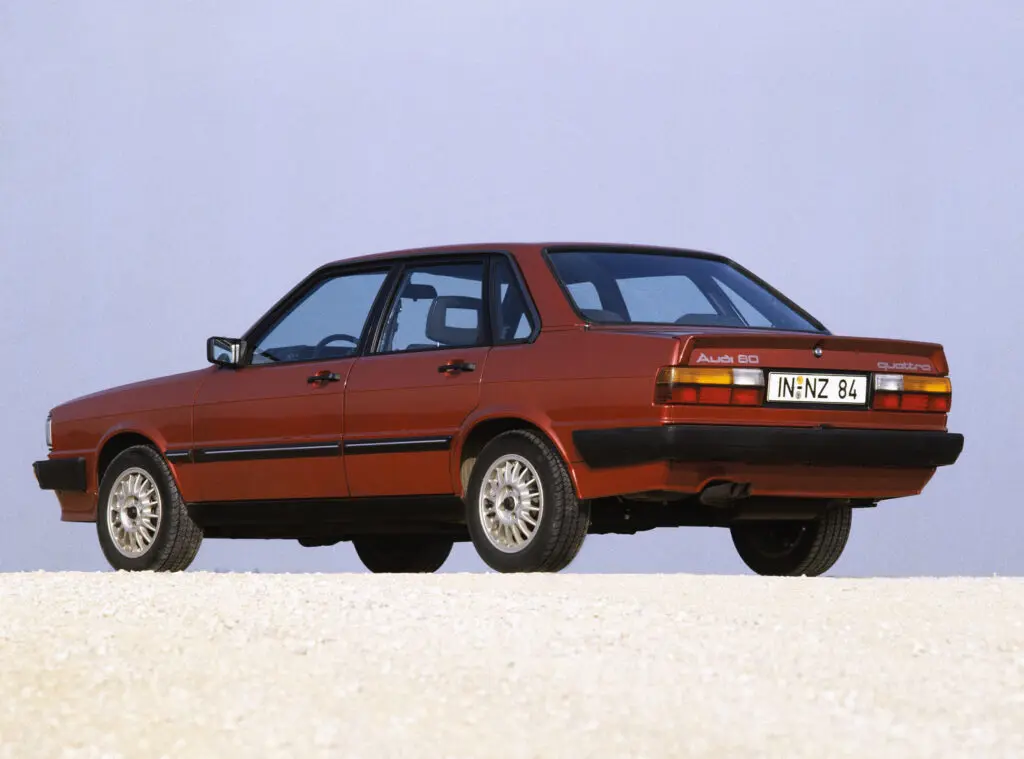
The defining development for many enthusiasts, however, was the introduction of quattro four-wheel drive. Originally pioneered in the legendary Ur-Quattro, Audi gradually expanded the system across its range during the early 1980s, including the B2-generation 80 and Coupé. While the standard front-wheel-drive cars remain enjoyable and practical classics, the quattro models possess considerably greater desirability thanks to their rarity, usability and direct link to Audi’s rallying success.
In 1984, Audi revised the range significantly, with the five-cylinder variants officially rebadged as the Audi 90. Visually, facelifted cars gained updated grilles, revised lighting and refreshed rear styling, while the quattro models continued to cement Audi’s reputation for all-weather performance.
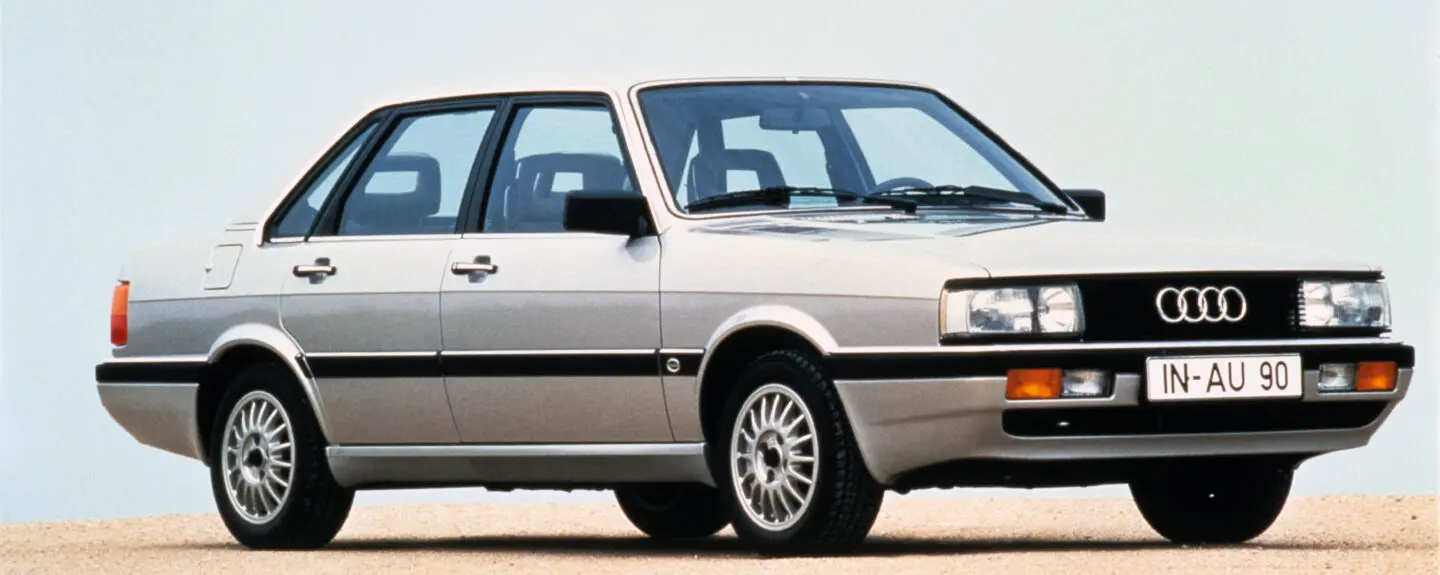
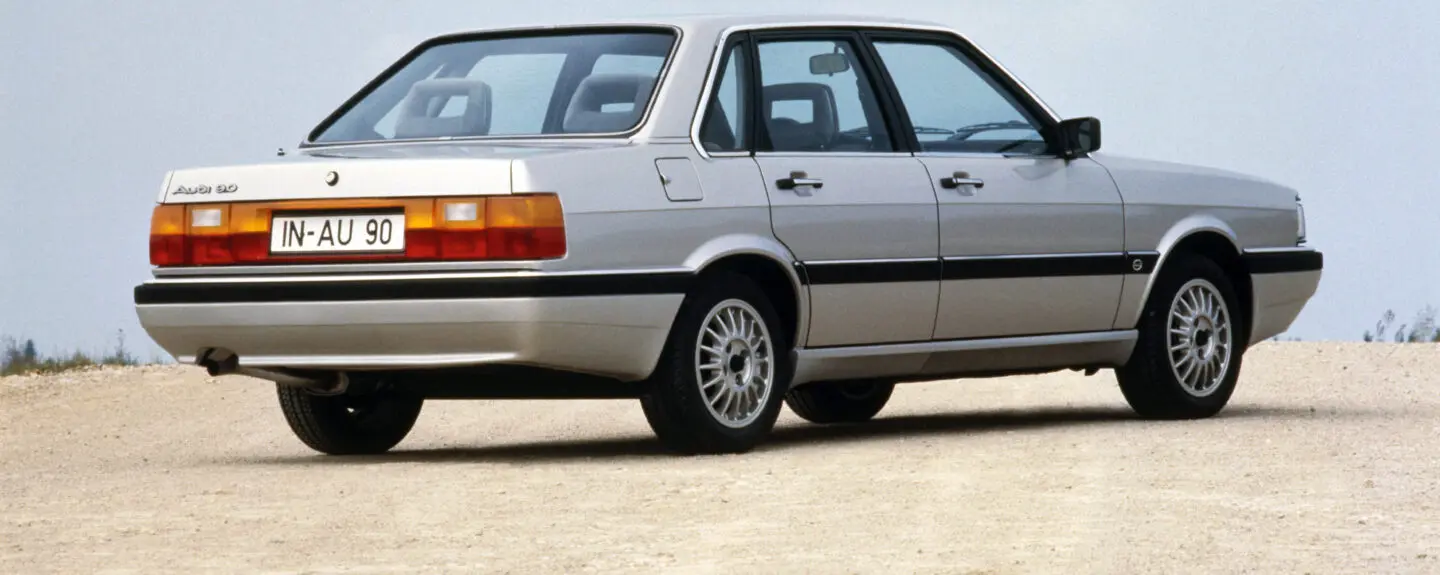
The biggest challenge today is simply finding one, as survivors are scarce – particularly in the UK – and Audi’s historic parts support for older models is not as comprehensive as that offered by Mercedes-Benz or BMW. Fortunately, many service components are shared with contemporary Volkswagen products such as the Golf and Passat, helping keep routine maintenance relatively straightforward.
For those willing to search patiently, the B2-generation Audi 80 and 90 offer something genuinely distinctive: understated engineering excellence wrapped in one of the most durable and usable classic saloon packages of the 1980s.
Common problems
• Although later Audis became famous for galvanised bodyshells, the B2-generation cars pre-date this development, so corrosion can be a significant issue. Pay particular attention to the sills, wheelarches, door bottoms, boot floor and front suspension strut towers.
• The 1.8-litre engine is generally robust, but higher-mileage examples can suffer worn valve guides, leading to increased oil consumption and smoke under acceleration or overrun.
• Oil pumps are considered a known weak point on the four-cylinder engines. Preventative replacement every 100,000 miles is advisable, as pump failure can rapidly lead to catastrophic engine damage.
• Timing belt replacement is critical. Unless there is clear documentary evidence showing a recent change within the past 25,000 miles, replacing the belt immediately is strongly recommended.
• Bosch fuel-injection systems are usually dependable provided servicing has been carried out properly and filters changed regularly. Poor maintenance can lead to rough running and inconsistent fuelling.
• Carburetted models can suffer troublesome automatic chokes, often causing jerky low-speed driving behaviour and excessive fuel consumption when operating incorrectly. Many have been fitted with an uprated Weber unit today.
• Second-gear synchromesh wear is relatively common, particularly on higher-mileage cars. Test the gearbox carefully from cold and look for baulking or resistance during quick shifts.
• Although Audi described the gearboxes as sealed-for-life units, oil leaks should never be ignored. Loss of lubricant can quickly damage fifth gear, often resulting in excessive transmission noise or the gearbox jumping out of gear.
• Replacement body and trim parts unique to the B2 can be difficult to source. Buying the best complete car possible is strongly advised.
What to pay
Values for the Audi 80 and 90 B2 range remain relatively accessible compared with many contemporary German performance cars. Clean, original examples are becoming noticeably harder to find, particularly in right-hand-drive form. Front-wheel-drive Audi 80 saloons can still occasionally be found from around £3000-£5000, but many now require substantial cosmetic or structural restoration. Better preserved cars with strong histories and original specification generally sit in the £6000-£10,000 range, particularly for desirable five-cylinder variants and well-optioned cars.
The posher models command a stronger premium, and well-kept Coupé GT and Audi 90 models now typically sit between £10,000 and £18,000 depending on condition, rarity and specification.