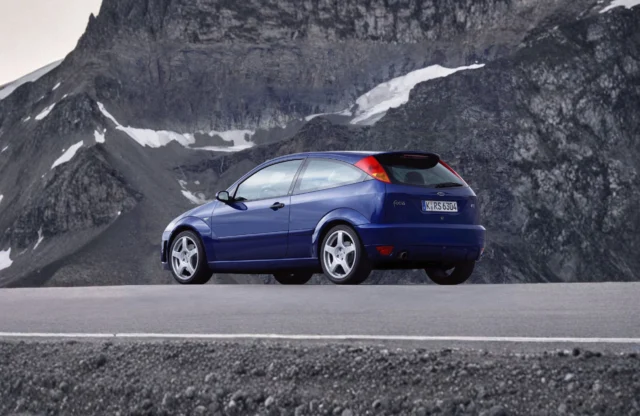
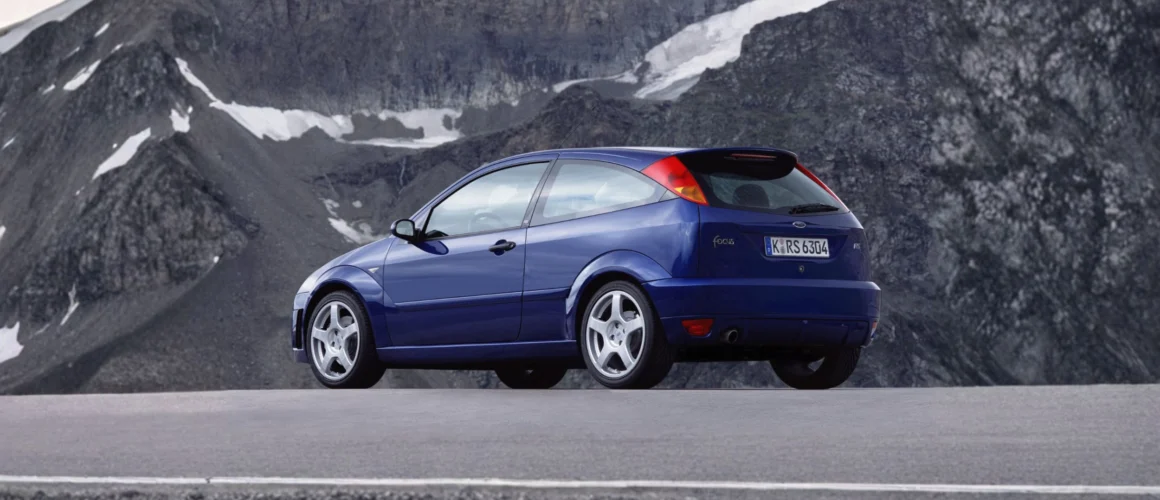
The Mk1 Ford Focus RS arrived in 2002 carrying considerable weight on its shoulders. Not only was it the first Rallye Sport-badged Ford since the Escort RS2000 bowed out in the late 1990s, it also had the unenviable task of taking on a new breed of Millennial hot hatches, not to mention the numerous and extremely popular Subaru Impreza WRX STi and Mitsubishi Lancer Evolution.
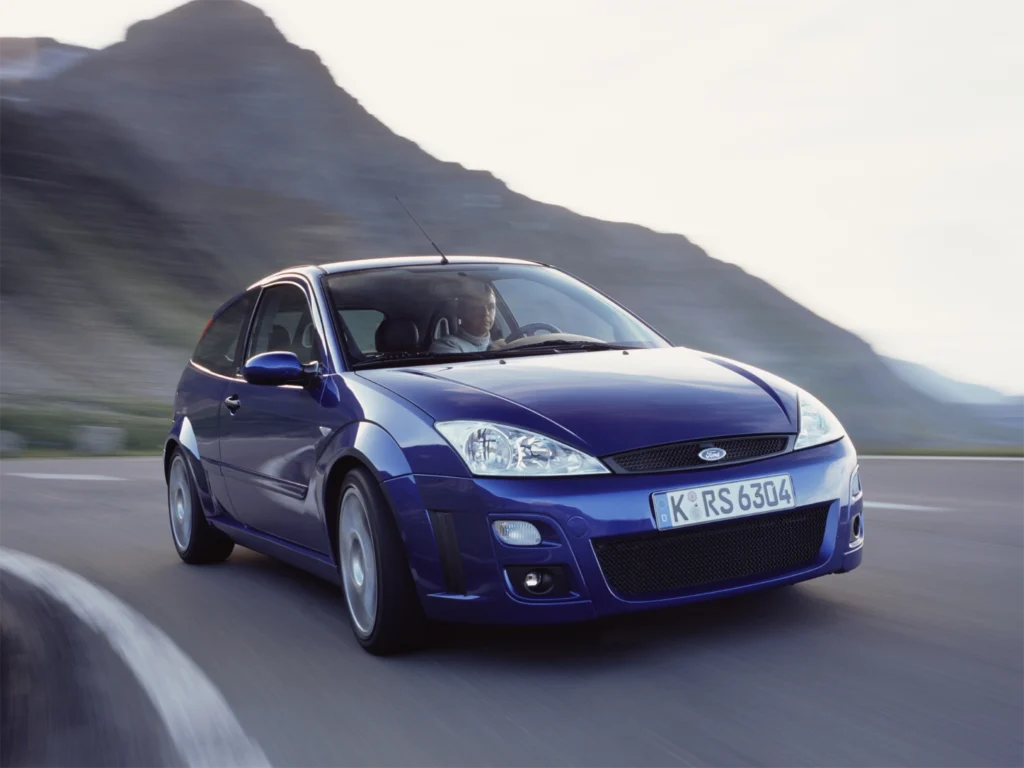
Inspiration drew heavily on the contemporary World Rally Championship Focus, with wider wheelarches and five-spoke OZ alloy wheels. Imperial Blue paintwork with a heavily reworked turbocharged version of Ford’s 2.0-litre Duratec engine. Producing 212bhp and 229lb ft of torque, it sent its power exclusively to the front wheels through a five-speed manual gearbox and a Quaife torque-biasing limited-slip differential. The result was a car famed for its extraordinary front-end grip, hyperactive steering and tendency to torque steer under hard acceleration – although some cars were reportedly much better than others.
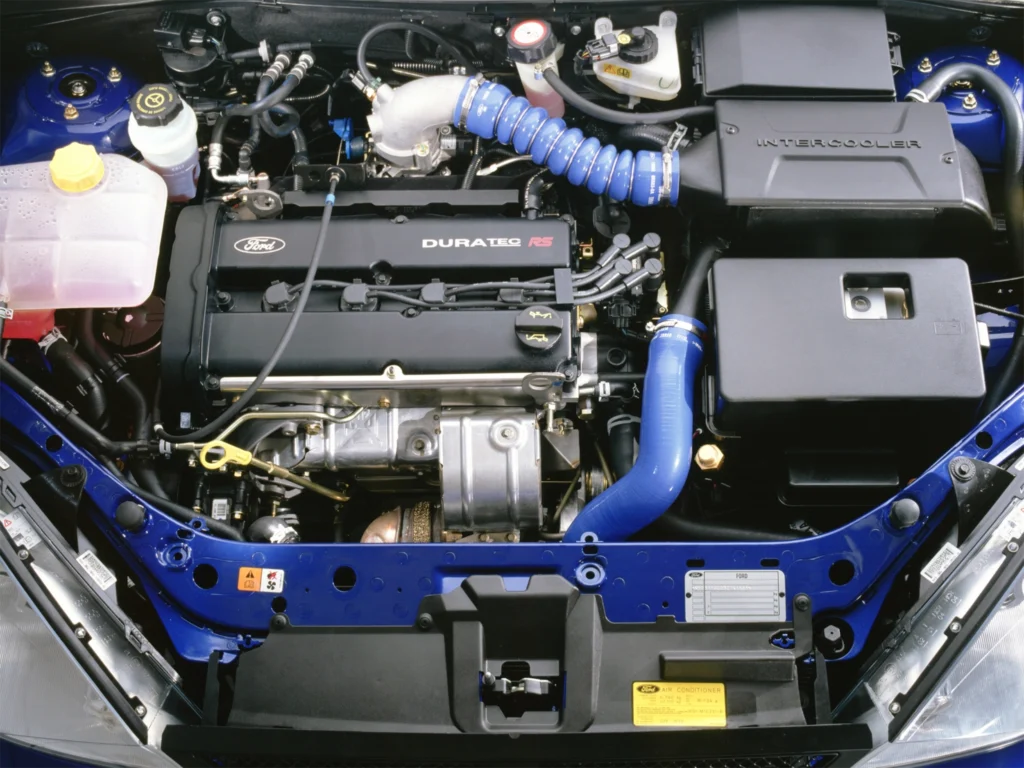
The turbocharged Duratec engine gained a revised cylinder head, uprated fuelling system, forged internals and a Garrett GT2560LS turbocharger paired with a chargecooler. Performance was strong for the period, with 0-60mph dispatched in 6.4 seconds and a top speed of 144mph.
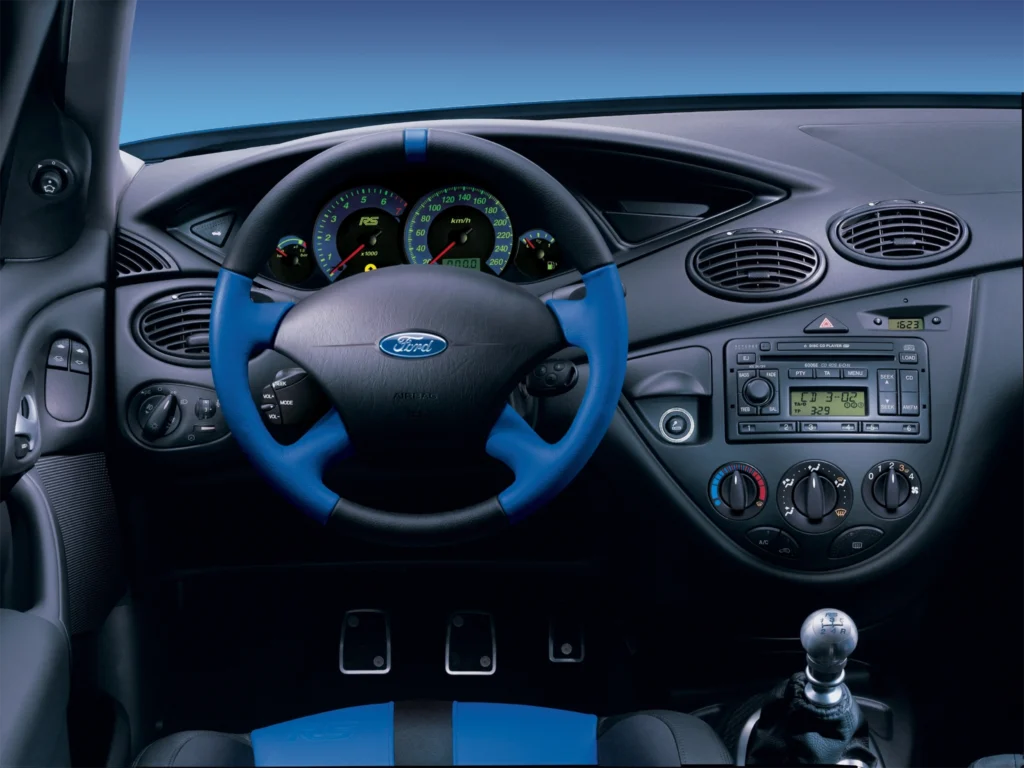
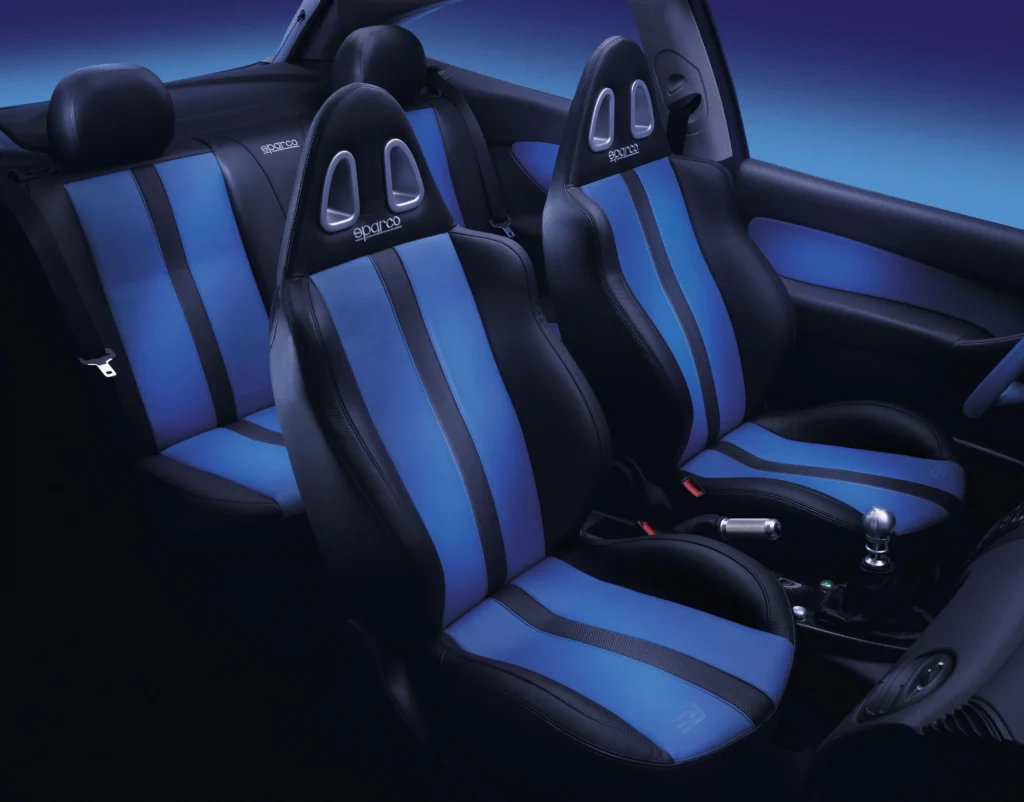
Production remained relatively limited, with just 4501 examples built between 2002 and late 2003. Every car left the factory finished in Imperial Blue with a black-and-blue leather and Alcantara interior. The RS received only minor revisions during its brief production run, with late 2003 ‘Phase 2’ cars getting updated engine management software to cure fuelling and cold-starting issues. However, Ford retrofitted these updates to earlier cars under recall, meaning the distinction is less important than overall maintenance history.
More significant is whether the car has remained close to factory specification, although that is not always easy to find. The robust nature of the Duratec engine and transmission made the Focus RS a favourite among tuners almost immediately. Simple upgrades such as ECU remaps and exhaust systems can raise output by 40-50bhp without significantly affecting reliability, but many cars progressed much further. Larger turbochargers, uprated intercoolers and heavily modified engines capable of 350-400bhp are not uncommon. While these can be entertaining, heavily modified cars are generally worth less than well-preserved standard examples and may have suffered harder use.
Common problems
• Earlier cars suffered fuelling and cold-starting issues, prompting a Ford recall and revised ECU mapping. Most surviving examples have since been remapped, so ensure any tuning work has been carried out by a reputable specialist with supporting documentation.
• Many RS-specific body panels are difficult and expensive to replace, particularly the unique front bumper, wider arches and exterior trim. Check carefully for accident damage, poor repairs or cracked mounting points.
• Mild modifications such as exhausts and ECU remaps are generally well tolerated by the Duratec engine, but heavily modified cars running larger turbos and very high outputs can suffer reduced long-term reliability.
• Watch for signs of turbocharger wear or failing oil seals. Blue smoke from the exhaust under acceleration or during overrun can indicate problems with the turbo.
• Suspension bushes and dampers can deteriorate with age, particularly on cars driven hard. Excessive looseness, knocking or instability during a test drive usually indicates worn suspension components requiring replacement.
• The Brembo four-pot braking system is generally strong and durable, although cars used regularly on track may require upgraded pads and fresh high-temperature brake fluid to maintain consistent performance.
• Check the chargecooler reservoir carefully to ensure coolant circulation is functioning correctly. Worn mounting bushes can allow the unit to vibrate excessively and may eventually lead to leaks or mounting damage.
• Rust can develop around the wheelarches, door mirrors and rear boot-handle area where the plastic trim meets the bodywork. Paint quality was never exceptional, so stone chips and minor scratches are common.
• The bonnet lining often separates with age, causing noticeable vibration at speed. Fortunately, this is a relatively simple fix involving removal and re-bonding of the affected trim material.
Ford Focus RS price guide and values
Values for the Mk1 Ford Focus RS have continued to strengthen as the model’s significance as an early modern performance Ford becomes more widely recognised. Its limited production run of 4501 examples – just 2147 officially supplied to the UK – has helped underpin demand, particularly for original, unmodified cars with strong histories.
Usable higher-mileage examples or cars with period modifications now generally start around the £16,000-£20,000 mark, although condition remains critical and restoration costs can quickly outweigh any initial saving. Well-kept cars with sensible mileage, comprehensive histories and minimal modification typically sit in the £22,000-£30,000 bracket in today’s market.
The strongest money is reserved for low-mileage, highly original examples. Collector-grade cars with exceptionally low mileage are now regularly advertised beyond £40,000, while delivery-mileage or effectively unused examples have pushed towards – and in some cases exceeded – £50,000 at auction.