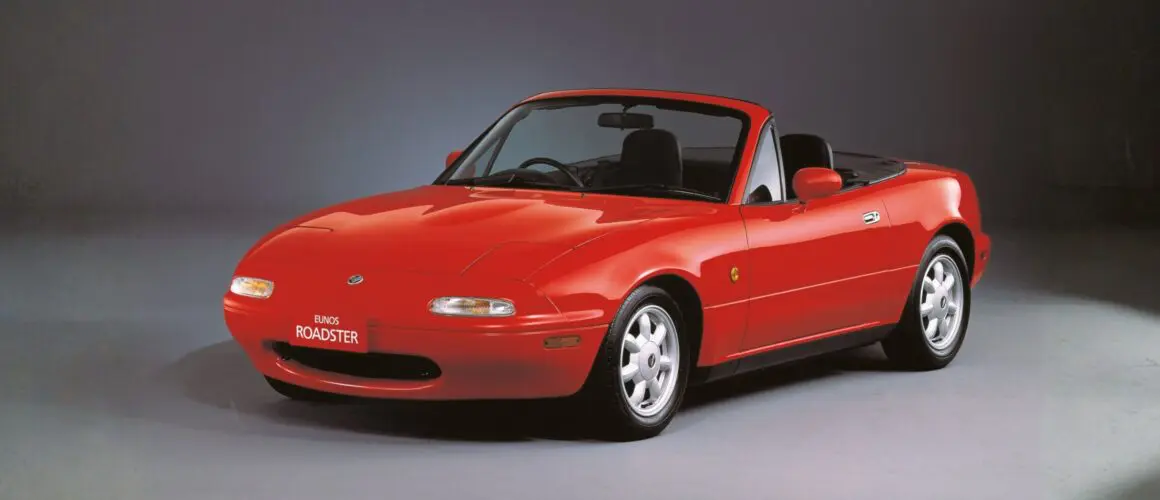
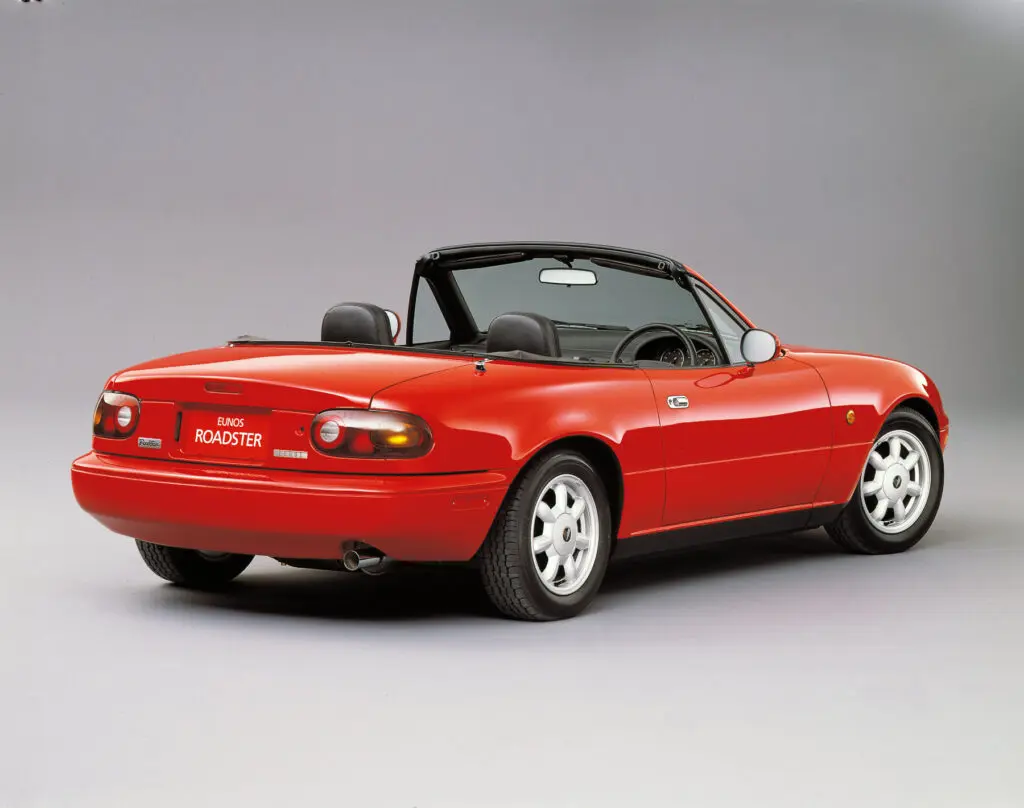
Few cars have done more to revive the classic British sports car formula than the Mazda MX-5. In fact, it’s difficult to imagine the modern roadster market existing without it. At a time when affordable open-top sports cars had virtually disappeared, Mazda took inspiration from the likes of the Lotus Elan, MGB and Triumph Spitfire and produced something that captured their spirit while eliminating many of their shortcomings. The result was one of the most successful sports cars of all time.
Launched in 1989 and arriving in the UK in 1990, the NA-generation MX-5 combined all the ingredients enthusiasts thought had disappeared forever: rear-wheel drive, a lightweight body, a slick manual gearbox and simple, uncomplicated engineering. More importantly, it delivered these attributes with Japanese reliability and build quality. The formula proved an instant success, helping to create a new market segment and inspiring rivals such as the MGF and Toyota MR2 Roadster.
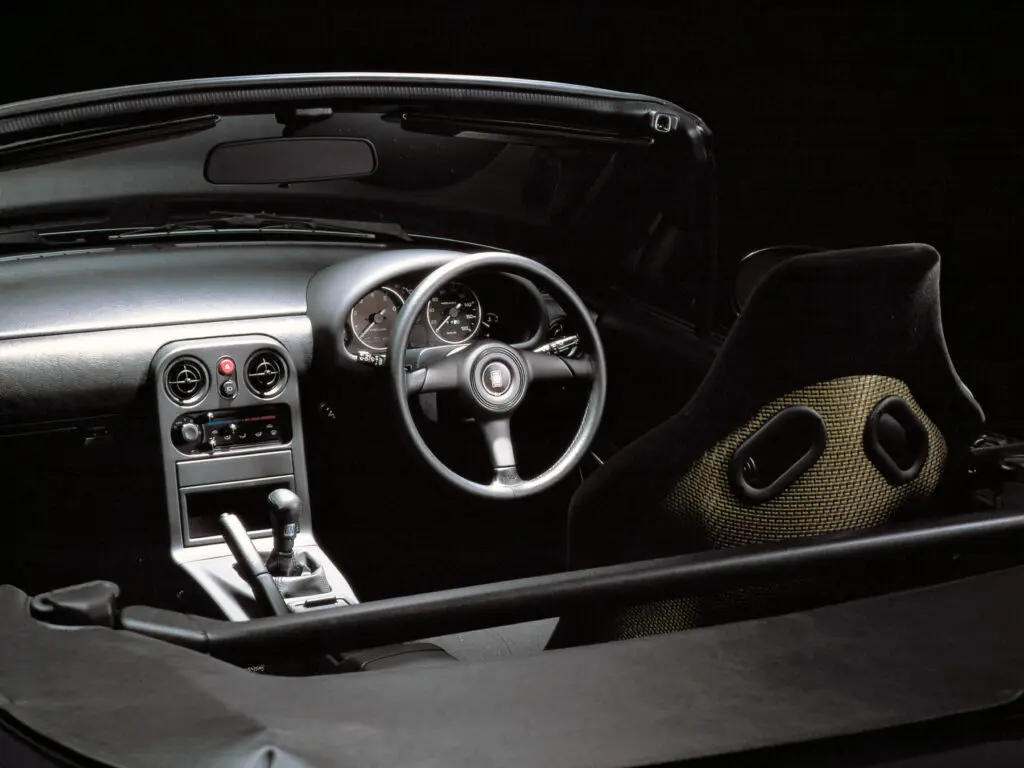
The genius of the Mk1 MX-5 lies not in outright performance, but in the way it engages its driver. Double-wishbone suspension at all four corners, near-perfect weight distribution and wonderfully communicative steering create a car that feels alive at virtually any speed. The gearshift is among the finest ever fitted to a production car, while the lightweight chassis rewards smooth, precise inputs. Even today, few sports cars offer such a satisfying driving experience for so little money.
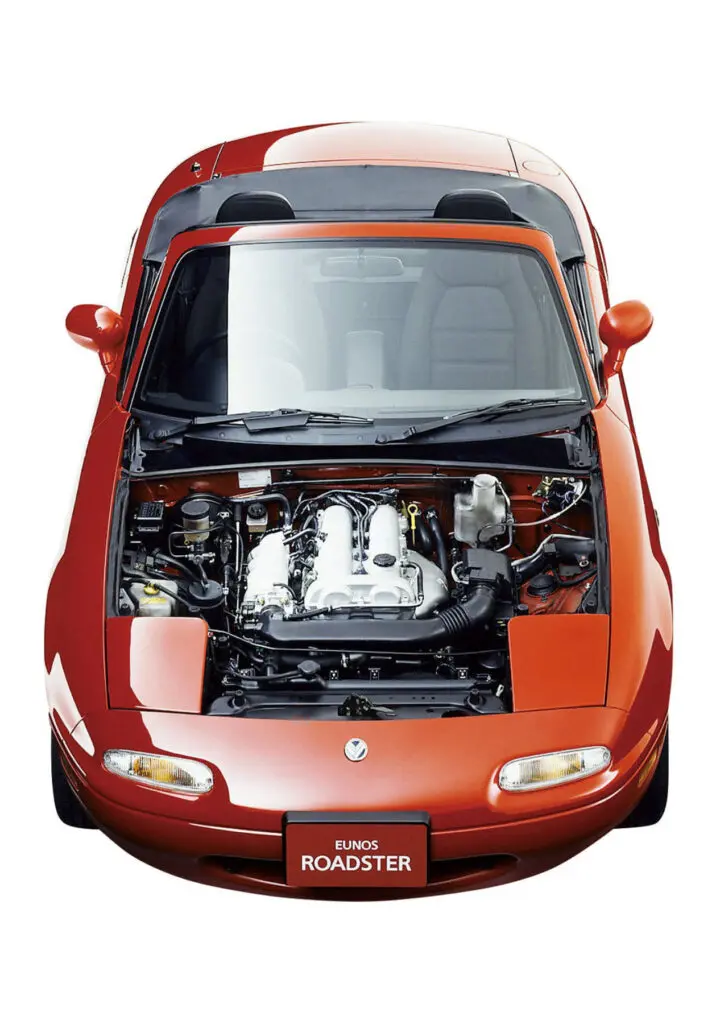
Early cars were powered by a 1598cc twin-cam four-cylinder producing 114bhp. In 1994 Mazda introduced a larger 1839cc version, offering more torque and around 128bhp. At the same time, the company later reintroduced a detuned 1.6-litre engine developing around 90bhp as an entry-level option. While the 1.8-litre offers stronger performance, many enthusiasts continue to favour the early 1.6 for its slightly sweeter balance and freer-revving character.
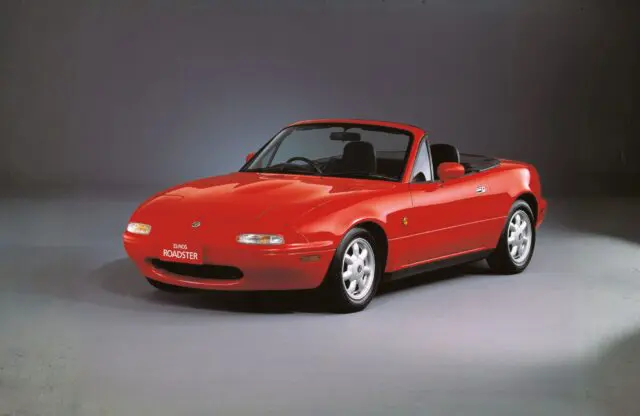
The model range expanded rapidly throughout production, with a bewildering array of special editions appearing in both the UK and Japan. Imported Japanese-market Eunos Roadsters remain common on the British market and often feature desirable equipment such as limited-slip differentials, air conditioning and automatic transmission options. Numerous UK special editions mirrored Japanese models, often adding unique paint colours, trim combinations and equipment packages.
One particularly desirable variant is the officially sanctioned BBR Turbo. Developed by Brodie Brittain Racing, the conversion boosted power to 150bhp and transformed performance while retaining factory backing. These cars remain highly sought-after today, particularly the rare Le Mans edition finished in the green-and-orange colours inspired by Mazda’s 787B Le Mans winner.
Choosing the right Mk1 largely comes down to condition rather than specification. Rust has become the model’s greatest enemy, and structural repairs can easily exceed the value of a mediocre example. A well-maintained, corrosion-free car with power steering is generally a far better proposition than a rarer model requiring extensive restoration. Get that right and the Mk1 MX-5 remains one of the most rewarding and affordable classics on the market today.
Common problems
Bodywork
• Rust is the single biggest issue facing any Mk1 MX-5. Despite galvanised panels, poor drainage design means corrosion is now widespread, particularly around the sills and rear wheelarches.
• Check that the hood drain tubes ahead of the rear wheels are clear. Blockages allow water to collect inside the sills, often leading to extensive structural corrosion.
• Inspect the rear sections of the sills carefully, along with the front wheelarches and windscreen surround. Evidence of previous welding is common and should be assessed carefully.
• Early cars can suffer corrosion in the door jambs where moisture becomes trapped beneath the original kick plates.
• Examine the bootlid for distortion caused by owners overloading the shallow luggage compartment and forcing the lid closed.
Engine
• The twin-cam four-cylinder engine is exceptionally durable and can comfortably exceed 200,000 miles when serviced correctly. A comprehensive service history is more important than mileage alone.
• Check all fluid levels and look for evidence of regular maintenance. Mazda recommended servicing every 9000 miles, although enthusiastic owners often reduced this to 6000-mile intervals.
• Hydraulic tappets can become noisy on start-up, particularly if oil changes have been neglected. Listen carefully for persistent top-end chatter.
• Coolant condition is important because of the alloy cylinder head. Poor maintenance can lead to internal corrosion and expensive repairs.
• Cambelts should be replaced every five years or 60,000 miles. Fortunately, the engine is non-interference, so a broken belt will not normally cause catastrophic damage.
• Early 1.6-litre cars can suffer wear in the crankshaft pulley woodruff key groove. Cars fitted with the later eight-slot pulley are generally considered the safer option.
• Water pumps on early cars can wear and develop knocking noises. Replacement is often carried out alongside cambelt renewal.
• Oil leaks around the cam-angle sensor O-ring are common but inexpensive to rectify.
Exhaust
• Check the catalytic converter is functioning correctly and inspect the system for corrosion, damage and poor-quality repairs.
• Loose heat shields frequently cause rattles from beneath the car and are usually straightforward to secure.
• Cars built during the mid-1990s can occasionally suffer cracking around the downpipe welds, causing exhaust blowing.
• BBR Turbo models often wear exhaust systems more quickly due to increased exhaust temperatures.
Transmission
• The five-speed gearbox is generally robust, but neglected linkage lubrication can make the shift feel stiff or obstructive.
• Pay particular attention to the change between second and third gears during a test drive.
Suspension and steering
• Suspension components are surprisingly durable and can last well beyond 100,000 miles, although many cars have been fitted with aftermarket upgrades.
• Worn bushes can significantly affect handling precision. A professional four-wheel alignment often transforms the way the car drives.
• Power steering is highly desirable. Non-assisted cars lack the immediacy and balance that helped define the MX-5’s reputation.
Electrics
• Electrical problems are uncommon, but ensure the pop-up headlamps operate correctly and smoothly.
• Electric window motors can fail with age. Replacement units are readily available.
• Imported Eunos models may feature air conditioning. Confirm correct operation, as older systems using R12 refrigerant can be expensive to repair and upgrade.
Interior and hood
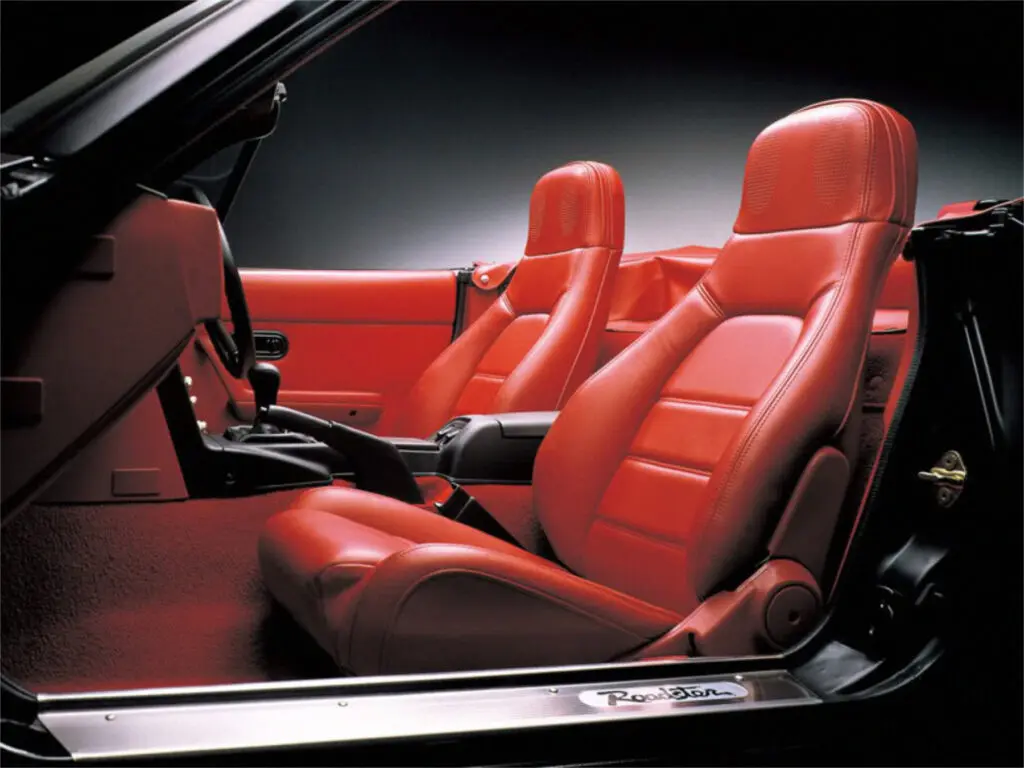
• Driver’s seat bolsters often show wear from repeated entry and exit, particularly on higher-mileage cars.
• Inspect the hood carefully for tears, wear, damaged zips and clouding or scratching of the rear screen.
• Vinyl replacement hoods are readily available, while mohair upgrades with glass rear windows are popular improvements.
• A replacement hood itself is not especially expensive, but fitting costs can add significantly to the overall bill.
What to pay?
The days of bargain Mk1 MX-5s are largely behind us. Project cars still appear occasionally from around £3000-£5000, but anything at this level is likely to require significant welding and restoration work. Even rough but complete examples have become increasingly sought after as the supply of rust-free cars continues to diminish.
Usable, roadworthy examples generally start at around £6000-£8000, although condition varies enormously and corrosion remains the key factor affecting value. Most well-maintained cars with solid bodywork, good histories and low mileage now sit comfortably in the £9000-£15,000 bracket, with particularly tidy examples commanding more.
Exceptional low-mileage cars, desirable special editions and well-documented performance variants can exceed £20,000. Early 1.6-litre cars are increasingly regarded as the most collectable standard models, while rare BBR Turbo conversions command a substantial premium when supported by provenance. Imported Eunos Roadsters can still represent good value thanks to their higher specification, but buyers should ensure maintenance records are comprehensive and check carefully for corrosion. As ever, the best advice remains simple: buy the soundest, rust-free example available rather than focusing solely on specification or rarity.
Specifications and dimensions (1.6)
| Engine | 1598cc four-cylinder |
| Power | 113bhp @ 6500rpm |
| Torque | 100lb ft @ 5500rpm |
| Transmission | Five-speed manual |
| Top speed | 117mph |
| 0–60mph | 8.5sec |
| Fuel consumption | 34.5mpg |
| Wheelbase | 2265mm |
| Length | 3950mm |
| Width | 1675mm |
| Height | 1225mm |
| Kerb weight | 970kg |