‘This vehicle project began with a very disappointing and humiliating event,’ says GR GT project manager Takashi Doi. Twenty years ago, Master Driver Morizo – Akio Toyoda – turned up at the Nürburgring 24 Hours in a used Altezza, while the European manufacturers fielded new, purpose-built racing machinery.
Toyoda and his fledgling Gazoo Racing team finished the gruelling race of attrition in 110th place. ‘It felt to him as though the other manufacturers were saying: “You can’t do it – you can’t run here.” The GR GT, GR GT3 and LFA Concept were born that day.’
Humiliation is an unusual theme on which to open the launch of a brand-defining halo car. But the candour speaks volumes of Toyoda’s competitiveness, and about why the GR sub-brand has become a port in a storm for enthusiasts, in a new-car landscape dominated by drab, heavy and joyless creations.
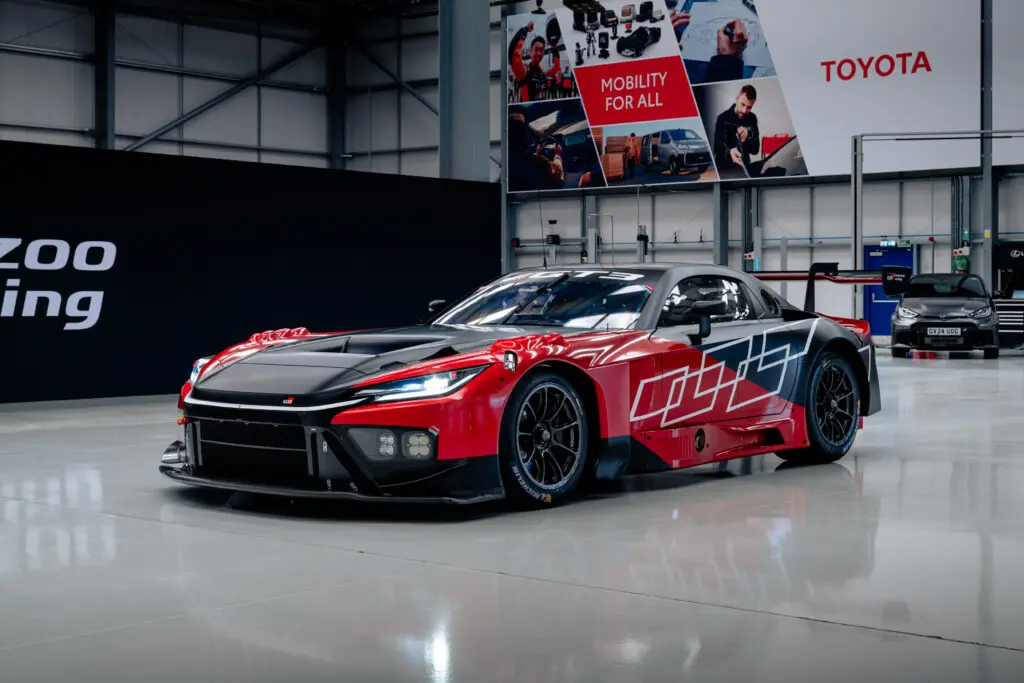
Twenty years, 11 Nürburgring class victories and five outright Le Mans wins later, I’m sitting in an immaculate, hangar-like room at Toyota’s UK media centre, the day before Toyota‘s sports car trinity appears at the Goodwood Festival of Speed. Members of the development team have been flown in from Japan and sit proudly in front of their latest creations.
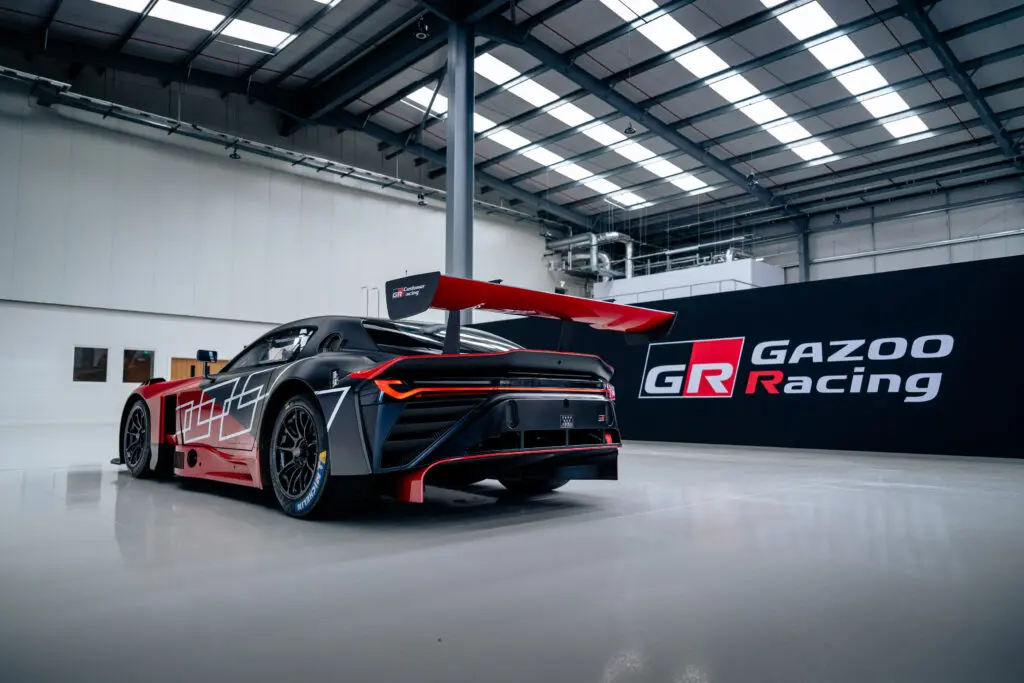
Morizo’s humiliation wasn’t only the catalyst for the GT’s existence. It also dictated the car’s design philosophy. The road car and its racing sibling, the GT3, were developed in tandem, with motorsport at the very top of the brief.
‘The interesting point about this car is the reversed process,’ Doi explains. ‘We focused on the cooling and aerodynamics first, then we gave it to the designers to create the body around it.’ Where most sports cars begin as design concepts, engineered around a largely pre-determined aesthetic, the GR GT sees function determining form.
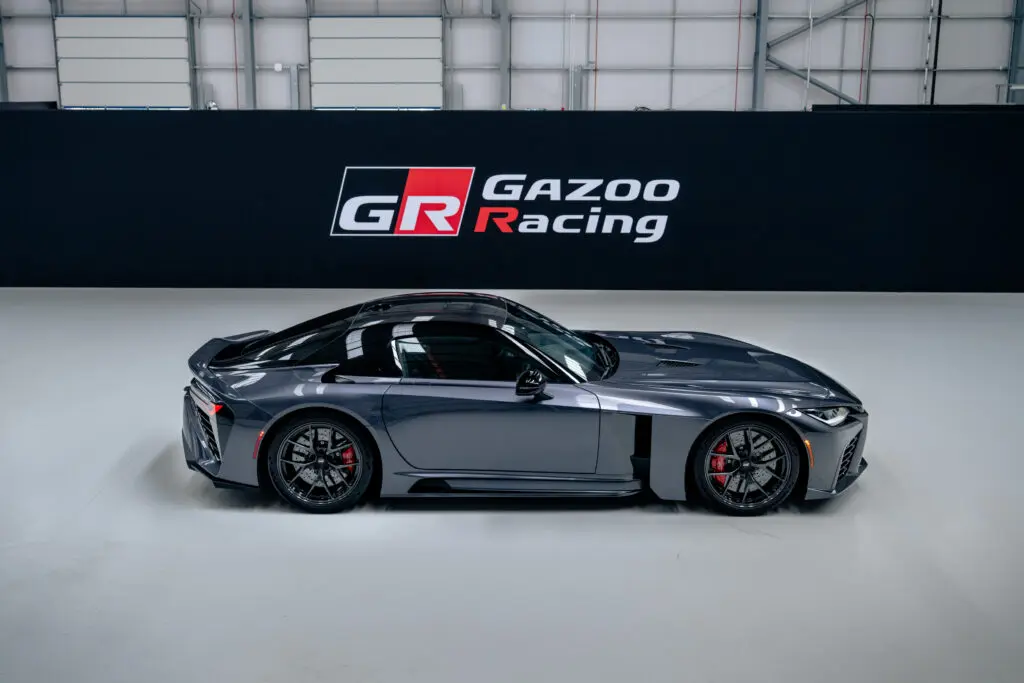
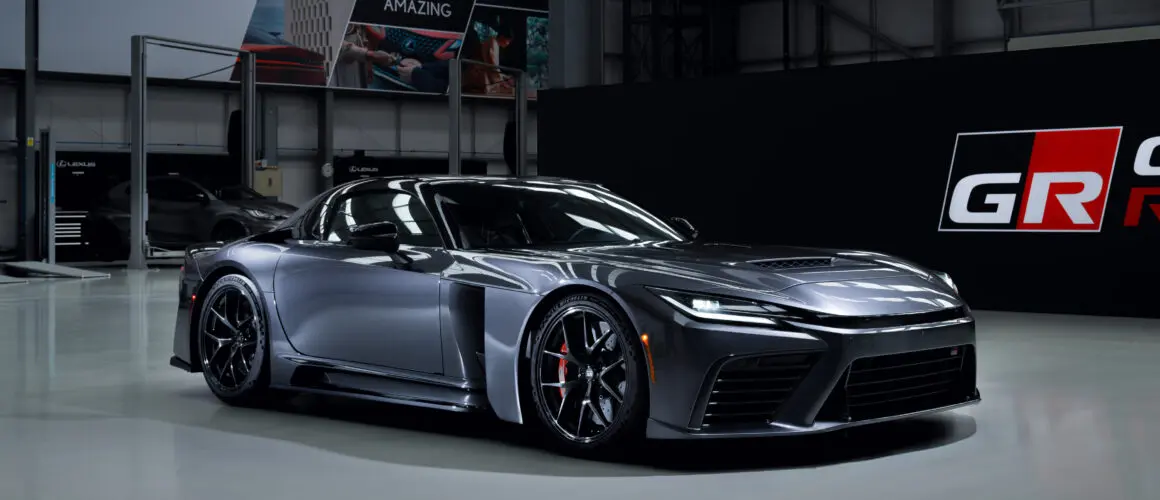
The vast, slab-like bonnet exists to accommodate cooling ducts and radiators required for the low-slung V8 nestled behind the front axle. The brutalist, angular tail and side profile were shaped for downforce, and there’s not a fake vent or stylistic flourish in sight – everything serves a purpose.
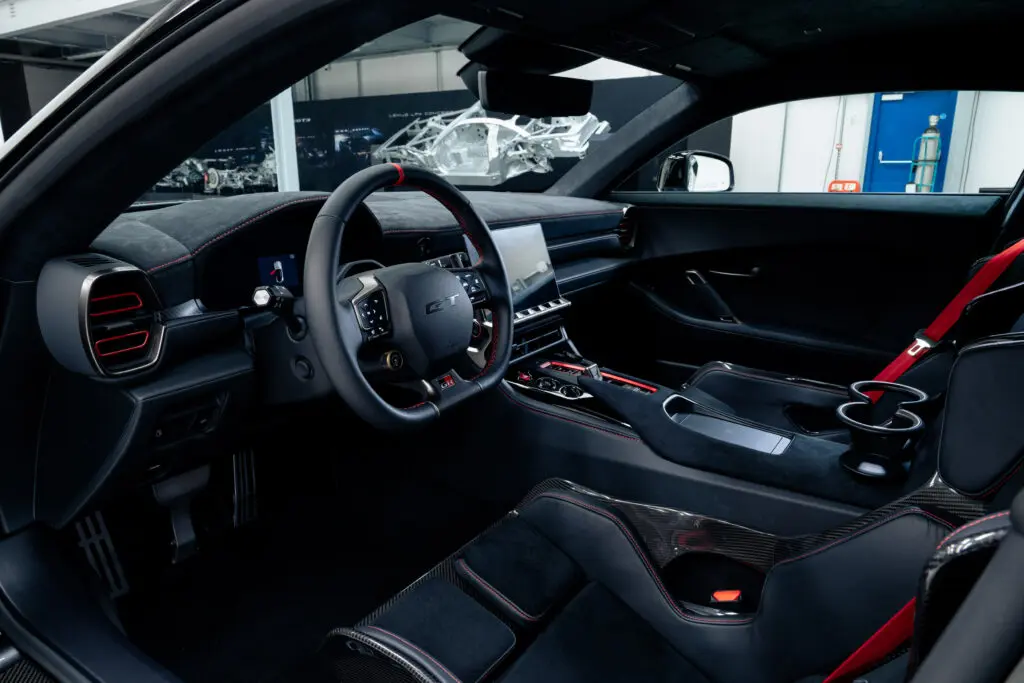
Even the driving position predates the car itself. To develop it, professional drivers sat in seating bucks – helmets on – checking ergonomics and clearance to a roll cage that didn’t yet exist. The pedals are positioned to accommodate left-foot braking, and the controls are designed to be intuitive enough never to distract from the process of driving.
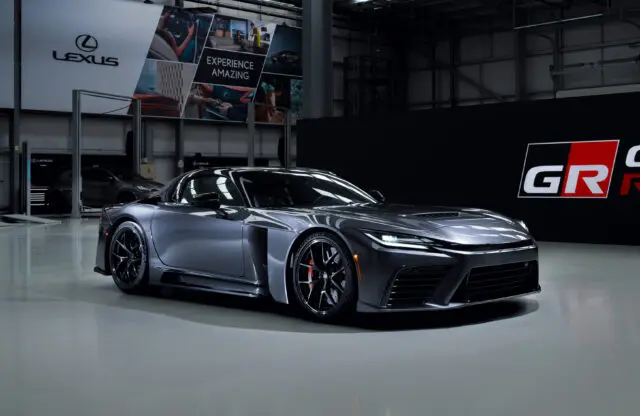
Styling is subjective, but the end result is far more convincing in reality than last year’s launch images suggested. Seen in the metal, the GR GT looks impossibly low, wide and purposeful, with an honesty few modern cars possess.
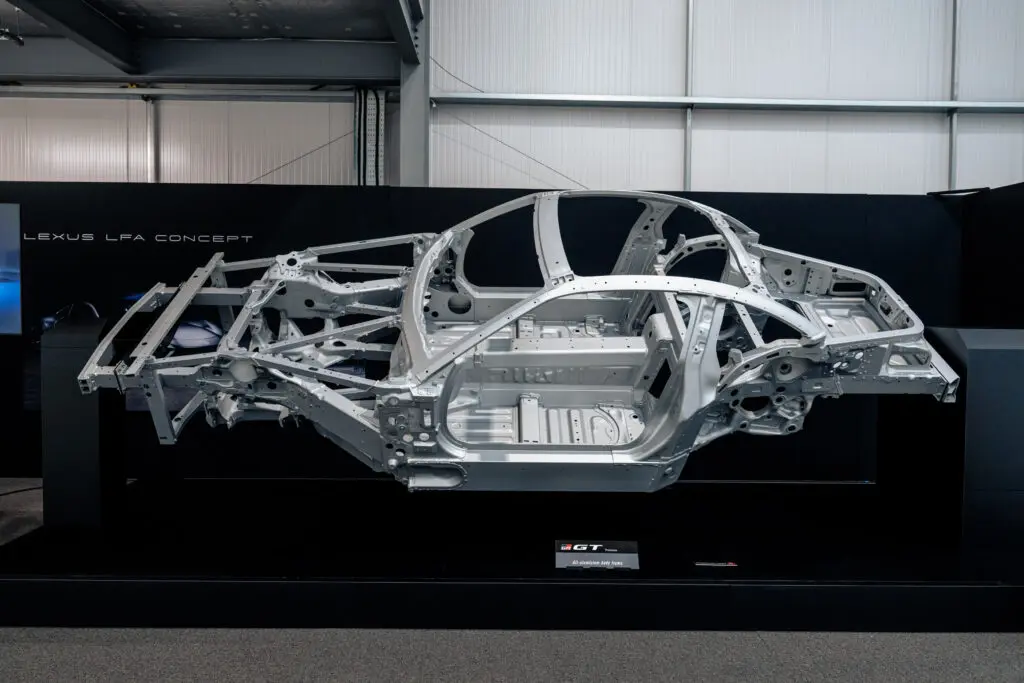
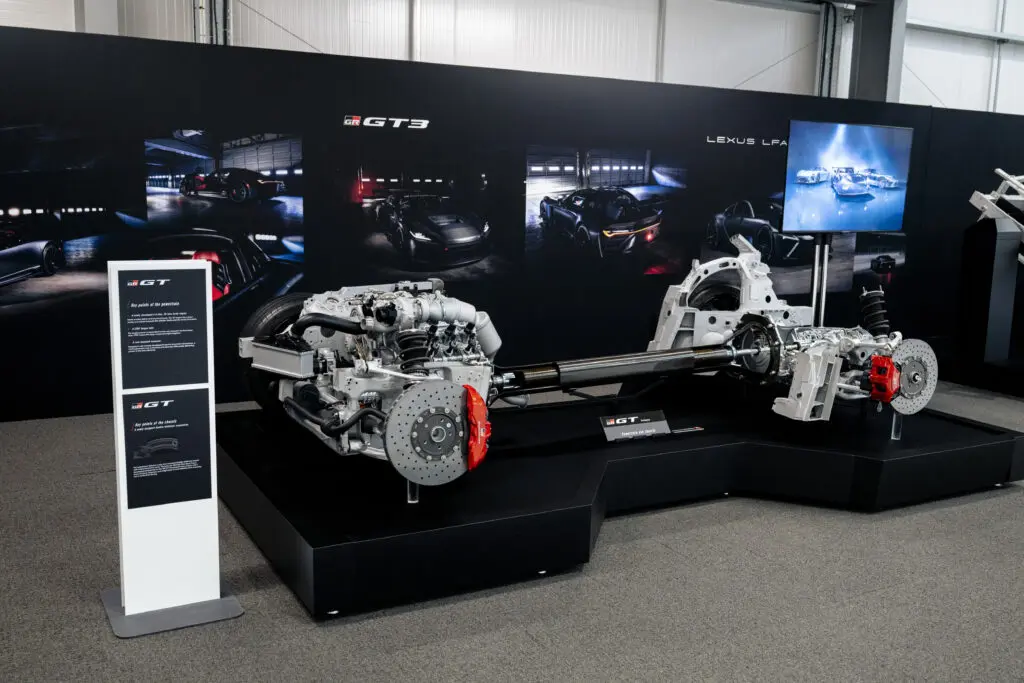
Beneath the aluminium and carbonfibre-reinforced-plastic body panels lies Toyota’s first all-aluminium chassis – one of the GR GT’s most impressive features. ‘The goal was rigidity and lightness,’ xxxx says bluntly. To achieve this, the engineering team opted to use three types of aluminium. Large castings sit at the points where the double-wishbone suspension hammers its loads into the body, long extruded sections running between them like bones between joints, lightweight panels filling the gaps. It’s all fixed together using a pragmatic mix of arc welding, spot welds, rivets and adhesive.
The castings are the most innovative part. Most manufacturers use high-pressure casting, which produces parts with an open, channel-shaped cross-section. Toyota, however, developed a new low-pressure technique that creates fully enclosed box sections, far more resistant to twisting forces. ‘For the same weight, we get a much stronger and more rigid construction,’ chassis engineer Jun Hirabaru explains.
The motorsport-focused design philosophy means road and race car chassis are almost identical. The differences amount to additional crash bracing on the road car, and engine mounts positioned a touch further back in the GT3, exploiting the space freed by the absence of the road car’s beefy catalysts.
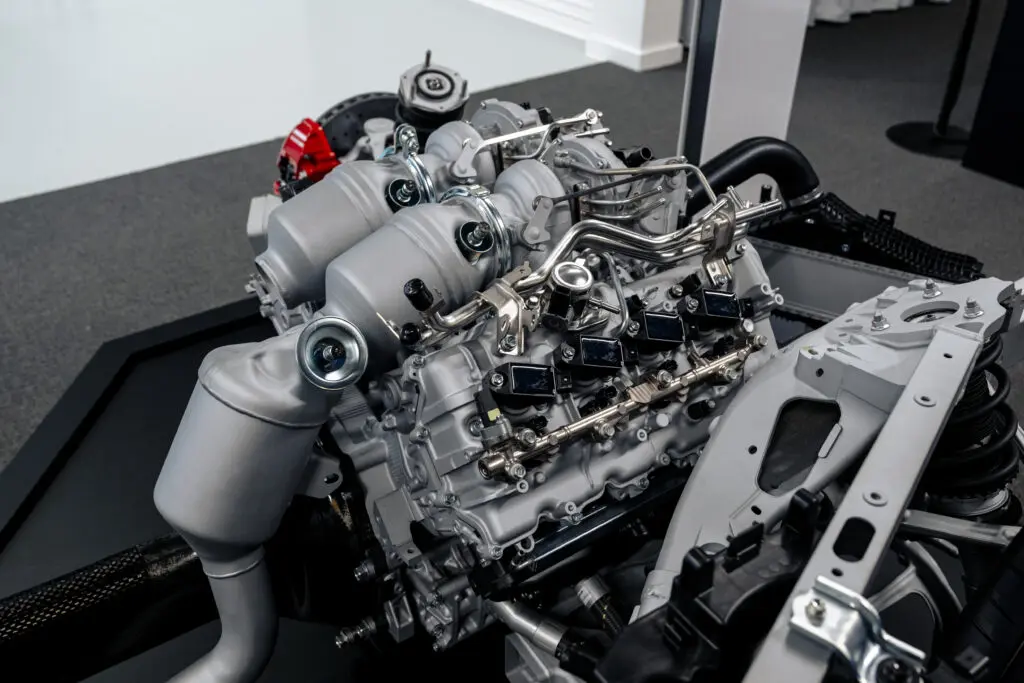
Complementing the chassis is the 4.0-litre twin-turbocharged V8 hybrid lurking beneath the bonnet. It’s designed to be as lightweight and compact as possible, so the turbos sit between the cylinder banks – splayed at 90 degrees – to create a ‘hot-vee’ layout, while a dry sump system allows the aluminium block to sit as low as possible. The technical presentation shows it sits 66mm lower than the Lexus LFA’s vaunted V10.
While most hybrid systems exist to improve economy or provide electric-only running, in the GT the system serves performance alone. ‘Because it’s a motor-assisted hybrid, it gets rid of a lot of the engine accessories,’ explains powertrain engineer Eiji Murase. ‘This vehicle doesn’t have an alternator and it doesn’t have traditional air-conditioning components. The hybrid motor doubles as the starter motor and allows us to mount everything as low as possible.’
The electric motor lives at the rear, integrated into the eight-speed transaxle, which is fed by the V8 through a carbonfibre torque tube. Placing the motor, battery and transmission at the rear offsets the mass of the engine, giving a 45:55 front-to-rear weight distribution. There’s no torque converter – a wet clutch handles launches – and in place of frantic downshift rev-matching, the electric motor spins the V8 up to speed. Toyota claims the result is a three-to-two downshift 45 per cent quicker than its rivals can manage. Target output is at least 641bhp and 627lb ft.
All this engineering was honed lap after lap at Fuji Speedway, the Nürburgring Nordschleife and Toyota’s Shimoyama test track. The brutal ‘drive, break, fix’ development process meant early prototypes were driven until something failed, repaired, then sent straight back out – and it continues even today. ‘Just because the car has been revealed doesn’t mean we’ve stopped developing it,’ Doi says. ‘It’s the opposite. The process is ongoing and it allows us to make an even better car.’
The majority of the development driving was completed by professional Super GT drivers Tatsuya Kataoka, Hiroaki Ishiura and Naoya Gamou. Former Formula 1 driver and three-time Le Mans winner Kazuki Nakajima also had some input. Because the GT3 will also be raced by amateur gentleman drivers, GR involved them from day one, too, namely Daisuke Toyoda, son of Akio. Fittingly, it’s Morizo himself who sits above them all, personally testing the GT at each stage of its development.
‘Think of the professionals as chefs and Morizo as the head chef,’ Doi explains. ‘Every now and then, he comes and tastes a sample of the vehicle.’ It’s far from a ceremonial role. Doi reveals that the 69-year-old Master Driver took a development prototype beyond 170mph on Fuji’s pit straight before burying the brakes, purely to judge pedal feel. And when his engineers couldn’t agree on the final steering calibration, it was Morizo who decided.
Akio Toyoda’s hands-on role points to the deeper meaning behind the GT and LFA Concept projects: Shikinen Sengū. This 1300-year-old Japanese spiritual tradition sees the Ise Grand Shinto Shrine rebuilt every 20 years so that knowledge passes from generation to generation, and Toyota takes the same approach to sports car building.
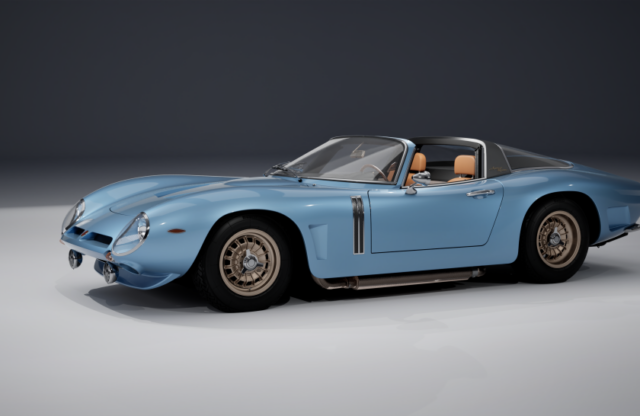
‘Toyota is trying to do the same every 20 years with the sports car. The people who built sports cars before are gone. The data is there, but the know-how can be lost’ Doi says. Which explains the generations of flagship Toyota sports cars stretching back to the 2000GT in the 1960s, through to the LFA. For the GT, veteran engineers who worked on the LFA in the 2000s were deliberately paired with young engineers, ensuring their knowledge endures.
Which brings us back to the Nürburgring. Twenty years on from 110th place, the marque is yet to win the 24 Hour race outright, but it seems it may finally have the car to do just that. Morizo’s old rivals might soon wish they’d kept their mouths shut.