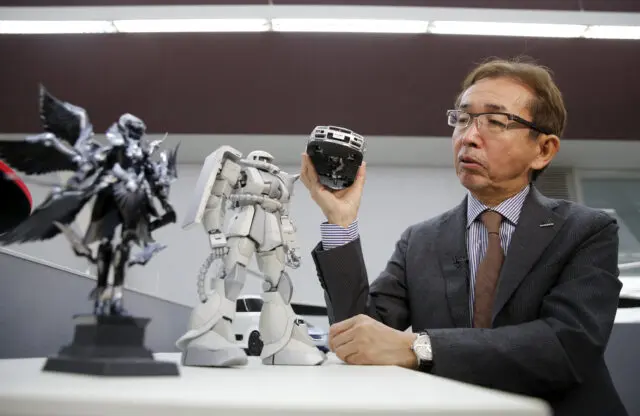

Many of us fondly recall childhood moments spent gazing at photographs of exotic cars – it’s often the starting point for a lifelong passion. For Shiro Nakamura, however, it sparked a remarkable career as a car designer, spanning more than four decades. Best known for his near-20-year tenure at Nissan, Nakamura has designed everything from humble hatchbacks and city cars to crossover SUVs and saloons. Yet his true passion has always been sports cars, and he is the visionary behind one of Japan’s most iconic performance machines: the R35 GT-R.
This feature first appeared in Octane 259.
‘I was born in Osaka in 1950, and when I was young, there weren’t many sports cars in Japan,’ Shiro reminisces. Amiable, softly spoken, and dressed in a crisp white shirt, he sits in his Tokyo office during our video call. Behind him, on neat shelves, a gunmetal grey R35 GT-R model is proudly displayed beneath myriad books on design.
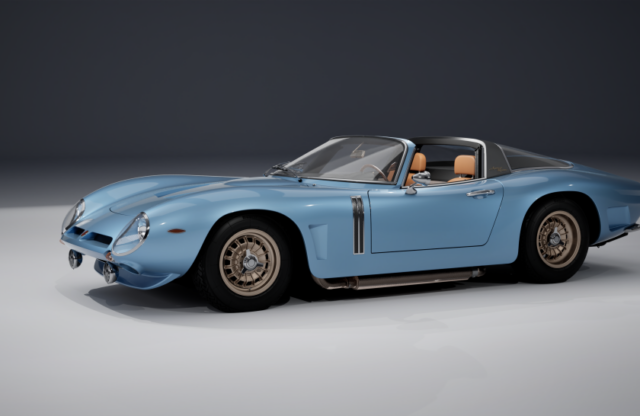
‘When I was ten, I had this book on Italian carrozzerie, and I remember loving Ferraris and thinking they were very impressive. I was attracted to all of these exotic sports cars, but all I had were photographs, and they were all in black and white. There was no chance to see them in the metal in Japan back then – all I had was my imagination. That’s when I knew I wanted to be a car designer.’
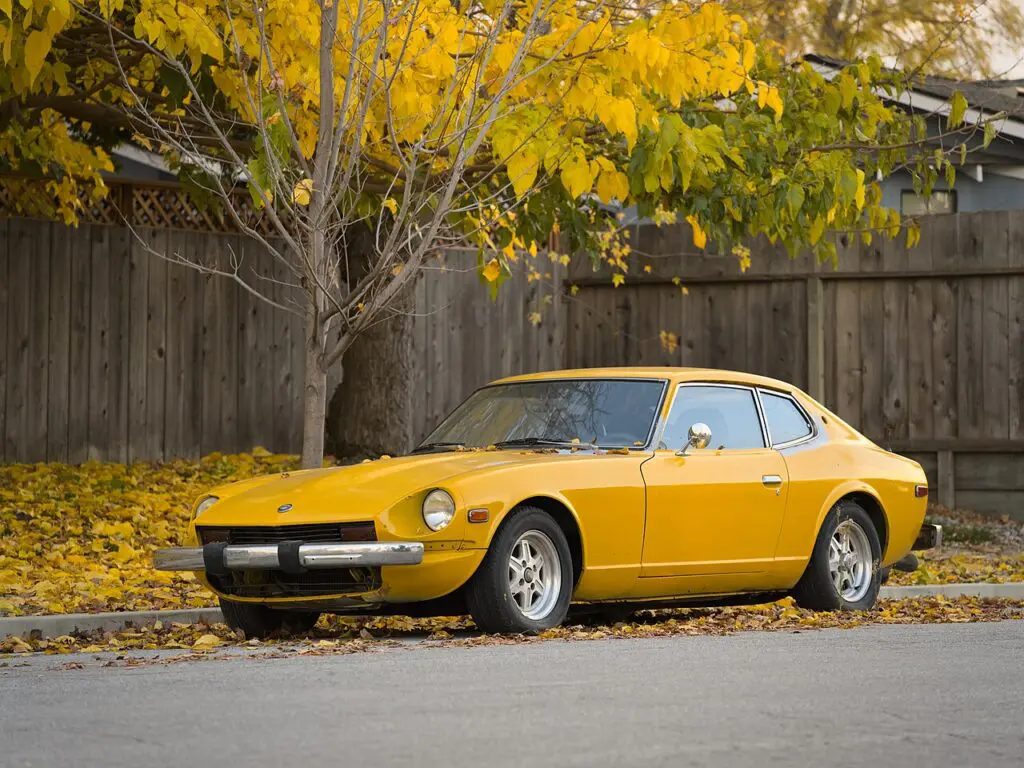
Luckily for the young Shiro, he didn’t have to wait too much longer until real sports cars began to roll out of factories and onto the roads of 1960s Japan. ‘I grew up as the Japanese auto industry was developing, and my career grew alongside it,’ he explains. ‘Gradually, some domestic sports cars began to appear, and when I was 20, fast cars like the Nissan 240Z had come out as Japan’s car industry began its global expansion.’
Four years later, in 1974, Shiro graduated from Tokyo’s prestigious Musashino Art University with a Bachelor of Arts in Industrial Design, the closest field to automotive design available in Japan at the time. This education paved the way for his first steps in an illustrious career at Isuzu that began as a studio draftsman primarily designing commercial vehicles.
As Japan’s car industry went global, so too did Shiro’s career. Recognising his talents, Isuzu sent him to the renowned ArtCenter College of Design in Pasadena, California in 1978. ‘All of a sudden, Japan was open, and after I joined Isuzu, I had the chance to move to the US,’ Shiro recalls. While there, he studied alongside another renowned car designer, Chris Bangle, and drew inspiration from the vastly different culture and automotive landscape of the US. ‘I saw so many great cars while I was there – it really opened my eyes,’ Shiro says.
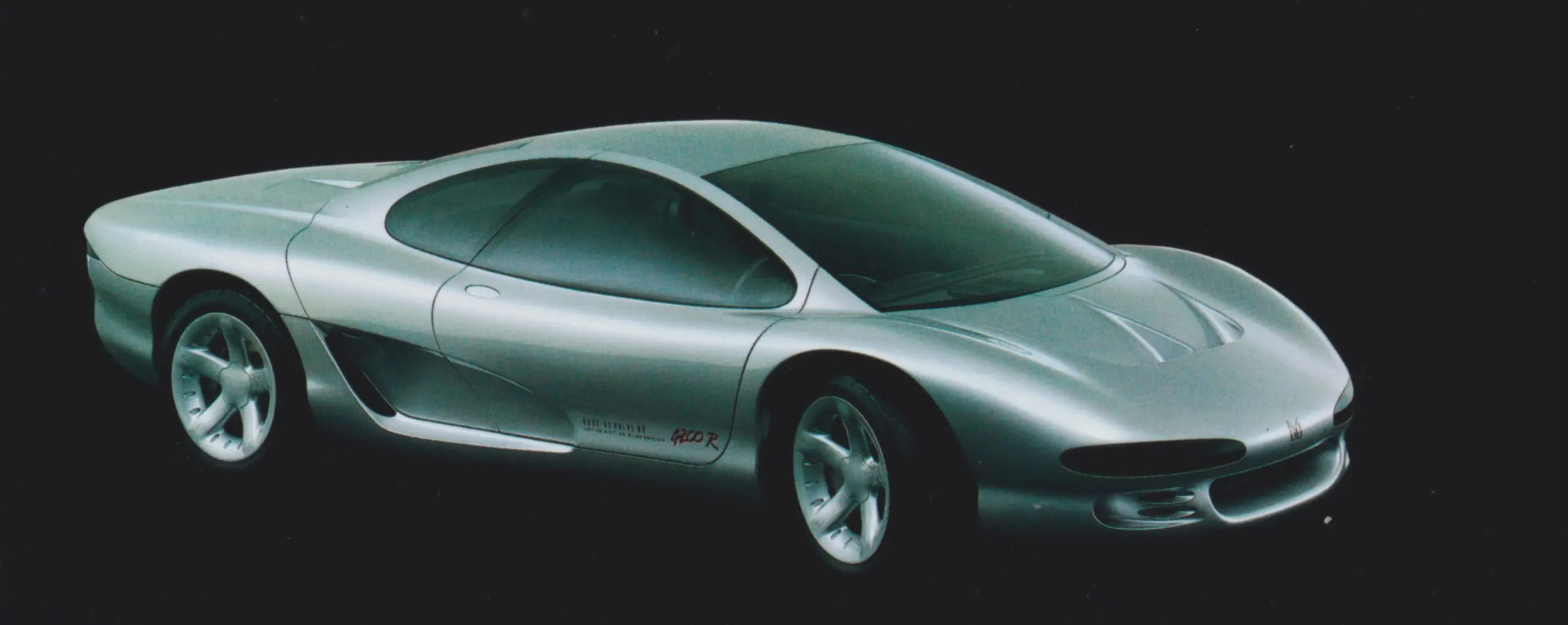
After his second graduation, the stage was set for Shiro’s career truly to take off. There came a a brief spell back in Japan, then Shiro relocated to Europe. ‘Isuzu had a studio in Brussels, so I spent a lot of time in the UK. But when I first moved there, I needed to put a team together to work with me, and at that time Lotus was also affiliated with GM – so I talked to them and said: “Why don’t we work together?” That’s what led to the creation of what was my first breakthrough project, the Isuzu 4200R.’
Shiro was working with some very esteemed designers such as Peter Stevens and Julian Thomson, who were both at Lotus at the time. Stevens’ time at Lotus is best remembered for his redesign of the Esprit, while Thomson was responsible for creating the Elise after Romano Artioli took over the marque in 1993; Stevens had moved on to design the McLaren F1’s body. ‘I worked with many English designers; it was such a great time for me,’ Shiro remembers. ‘I was still relatively young and all of these people became my friends.’
Although it was a concept car, the Isuzu 4200R was a radical departure from the utilitarian commercial vehicles and off-roaders the Japanese manufacturer had previously produced. This smooth, pebble-shaped piece of exotica featured a mid-mounted 4.2-litre V8, active suspension developed by Lotus and even a fax machine. Sadly, it never made it into production but it was the first of three concept cars Shiro produced that put him on the map as a designer.
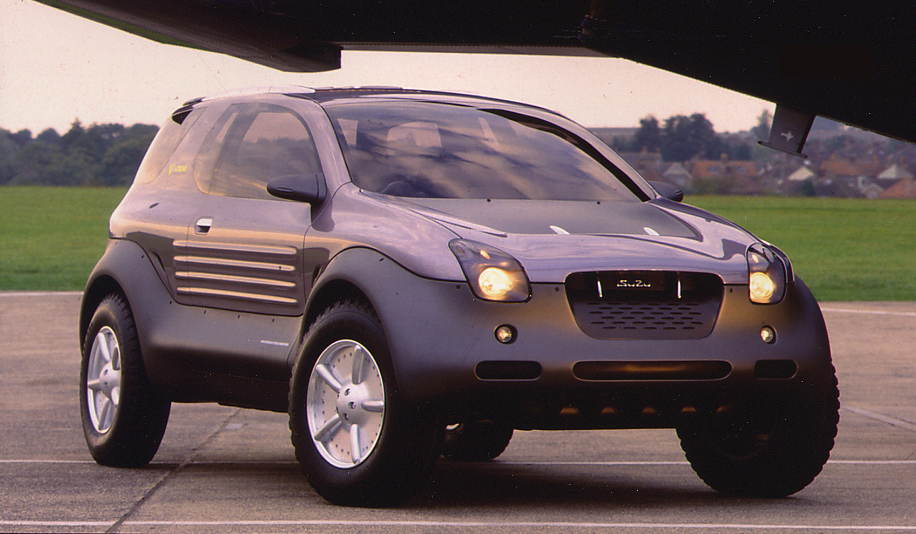
Shiro and his team were commissioned to design other concepts, not least of which was 1993’s VX. Designed to be lightweight but tough and environmentally friendly, it was put into production as the Vehicross with minimal design changes in 1997. It was ahead of its time, predating today’s crossover SUV trend by more than a decade, and presaging some of Shiro’s most successful designs at Nissan: the Qashqai and Juke.
While the Vehicross didn’t sell in great numbers, it attracted the attention of British-French designer Patrick Le Quément, who was working with Carlos Ghosn to turn Nissan’s fortunes around following its partnership with Renault and Mitsubishi in 1999. Ghosn asked Le Quément for a shortlist of designers he could headhunt for Nissan; Shiro got the call.
‘I went to New York and met with Patrick and Carlos Ghosn and joined Nissan Motor Company in 1999. Nissan was almost bankrupt at the time and they were looking for a new head of design who was Japanese. This is what pushed me to join the company; the chance to make original Japanese designs. The 4200R was a fantastic, beautiful car, but it’s not clearly a Japanese car – it could be European or American. I realised this was my golden opportunity.’
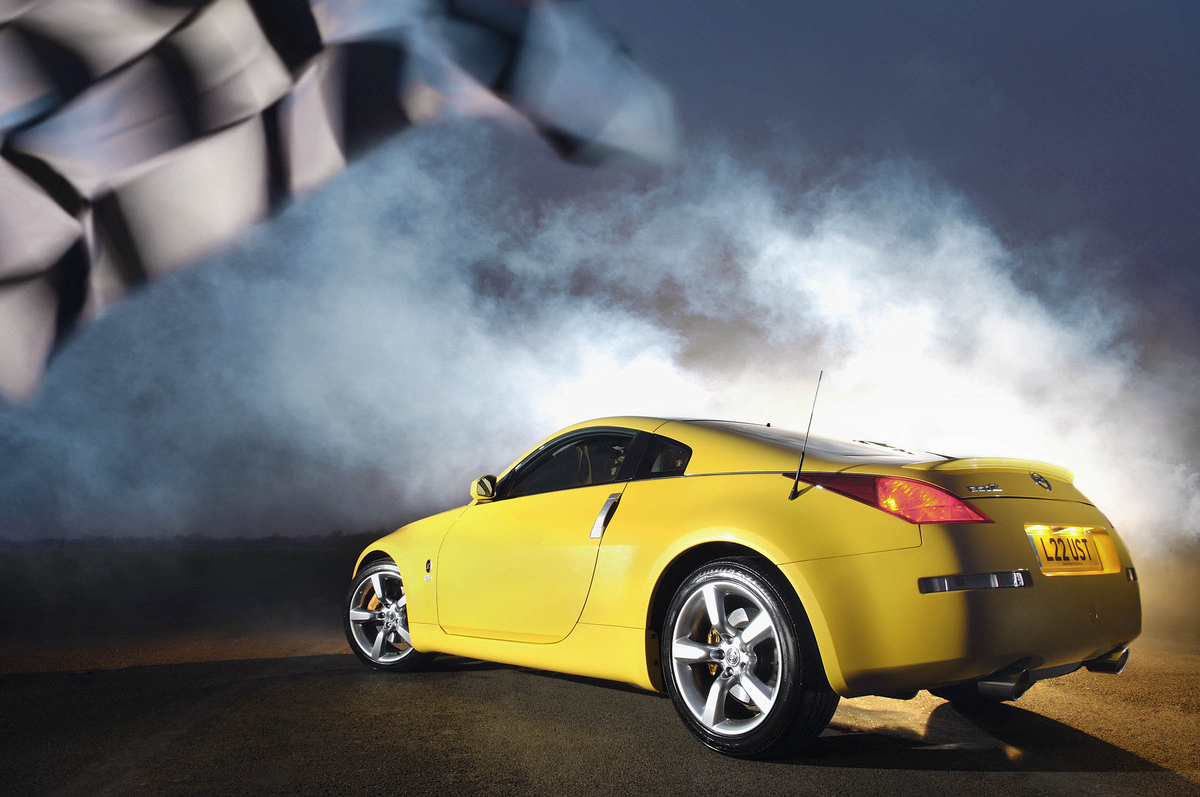
Nissan quickly reaped the benefits of Shiro Nakamura’s talent when his first design for the manufacturer, the 350Z, was released to critical acclaim in 2002. ‘I think the 350Z is the first car I designed that truly looked Japanese. There may be a touch of European influence, but the styling definitely has Japanese finesse,’ Shiro reflects.
His next project was a complete departure: the Nissan Cube. ‘It’s obviously very different, a car that’s “anti-speed”, something that aligns with Japanese culture. In European history, up to eight horses would pull the aristocracy in carriages, but Japanese noblemen used one cow – slow, but elegant. In Japanese culture, driving fast isn’t considered elegant. The Japanese mentality is more about travelling slowly and appreciating your surroundings. I also wanted the Cube to stand out, so I drew inspiration from the asymmetry of famous Japanese architecture. This asymmetry also had practical benefits; if the driver sits on the right-hand side, why not wrap the window around the rear-left corner for better visibility? The Cube was designed from the inside out.’
With the 350Z and Cube under Shiro’s belt, Nissan’s revival was well underway. Yet, as successful as those cars were, their impact pales in comparison to the next machine penned by Shiro: the R35 GT-R. The R35 was released in Japan all the way back in 2007 and is still (just about) in production. It will be remembered as one of the most disruptive sports cars of the 21st Century, priced at £56,795 when it was released in the UK, yet with 473bhp, all-wheel drive and four-wheel steering, it offered supercar levels of performance for around half the cost of an equivalent Porsche 911 Turbo.
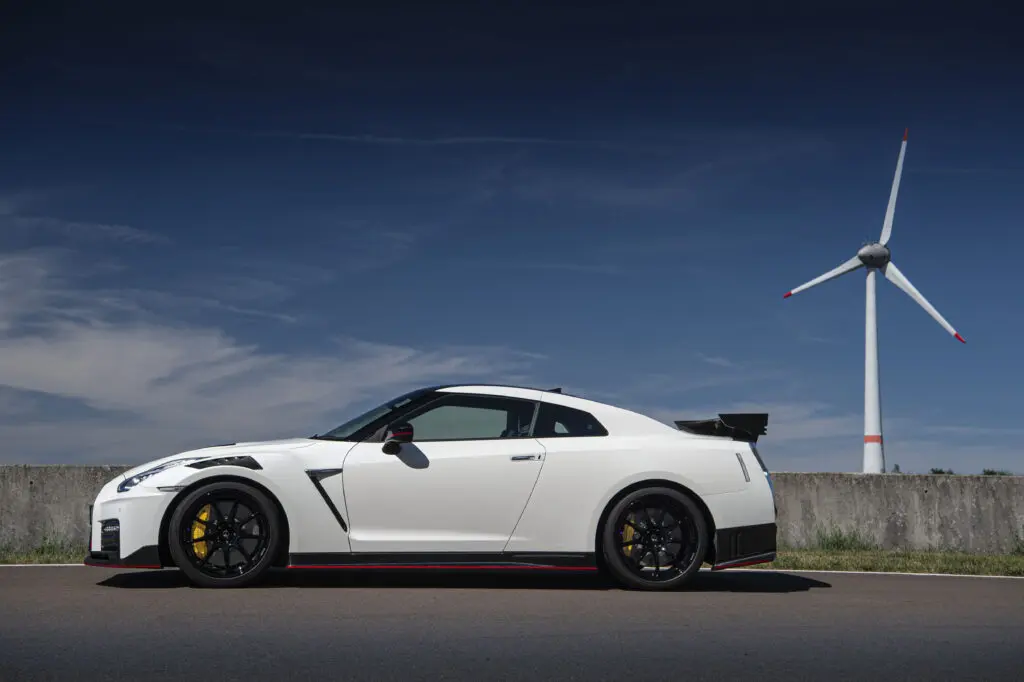
‘R35 was the fifth-generation GT-R and the performance of the model was always top class. At the time I remember speaking to the R35’s lead engineer Mizuno-San, who said “There’s no doubt about the level of performance, this will be one of the quickest cars on the planet”. I knew tht the GT-R had to look totally different from a Ferrari, Aston Martin, Corvette or Lamborghini. I also knew that it had to look completely Japanese – and not necessarily beautiful. We had to ignore trends. The GT-R was designed to stand alone.’
That doesn’t mean the R35 would turn its back on its predecessors, however. ‘Of course we had to respect the GT-R’s history and there’s some influence from the Hakosuka Skyline and the R34. But another big influence came from the Gundam manga. One day myself and the design team were talking about the R34 and one of them said that it looked a little bit like a robot from Gundam. That probably wasn’t a completely positive comparison because you could say that Gundam is childish or toy-like, but I agreed – and Gundam is part of Japanese culture and younger people love it. So we decided we should be proud of that: it looks powerful, mechanical and totally Japanese.’
Ironically, the R35 went completely against Shiro’s own aesthetic tastes. ‘I love the curves of ’60s cars. But to create something totally new you must keep your mind young. After all, young people know modern culture, so when I was finished with the GT-R design I was 100% convinced by the vision.’
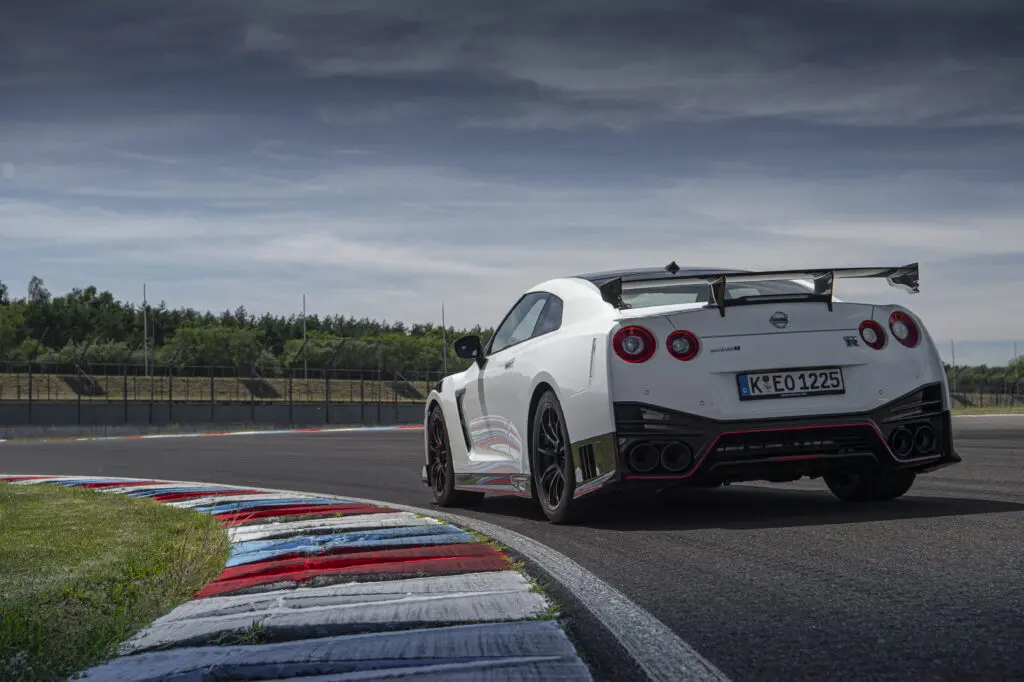
The R35’s run will soon come to an end. As this is being written, sales are ceasing in the USA, its last major market outside Japan; it bowed out of the UK and Europe in March 2022, having fallen foul of upcoming noise regs. Yet the fact that it has remained relevant for so long, with a design that still doesn’t feel 17 years old, is a testament to Shiro and his design team. ‘I never expected it to be in production for so long – it’s incredible!’ he laughs.
‘I actually bought the very first GT-R that was built in 2007, and then I bought a 2022 model because Nissan said that they were going to terminate production two years ago. I wanted the very first and very last models, but they kept building it for another two years. The GT-R is one of the cars I’m most proud of, alongside the Cube and Juke.’
After almost 20 years, Shiro finally retired from his position as Nissan’s design chief in 2017. Retirement has allowed him to enjoy his other lifelong passion, playing jazz and classical music, although he has remained involved in automotive design by founding his own studio and consultancy business, SNDP. His most recent creation is the AIM EV Sport 01, which reflects his admiration of elegant ’60s styling.
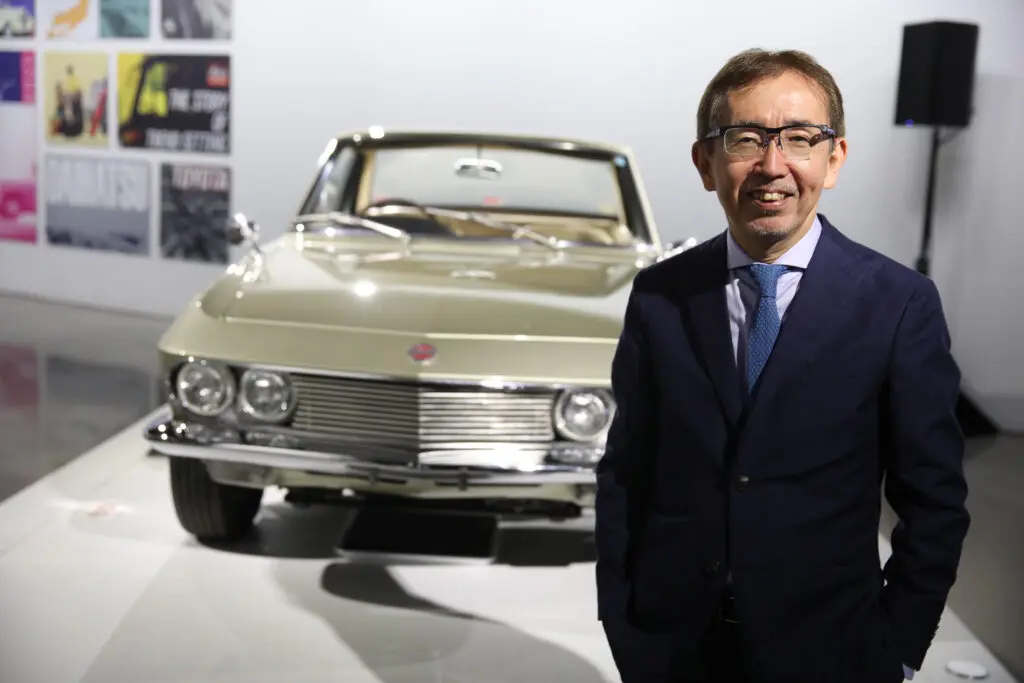
In many ways, Shiro’s storied career is the perfect example of the Japanese concept of ikigai. Roughly translated into English as ‘a reason for being’, it says you should ask yourself what you love, what you are good at, what the world needs and what you can be paid for to achieve a long enriching life and career. Shiro is living proof that the maxim works.