The Palazzo Medici Riccardi in Florence has opened a new exhibition that explores the shared DNA between Renaissance craftsmanship and the golden age of Italian motorsport, running until 28 June 2026.
Dubbed The Sculptors of Speed and the Dream of Leonardo da Vinci, the exhibition draws parallels between the armourers of 15th-century Florence and the Modenese battilastra masters who hand-shaped aluminium bodywork for Ferrari, Maserati and others during the 1950s and ’60s. It also traces the evolution of the internal combustion engine, from Leonardo da Vinci’s early mechanical studies to the innovations of Eugenio Barsanti and Felice Matteucci.
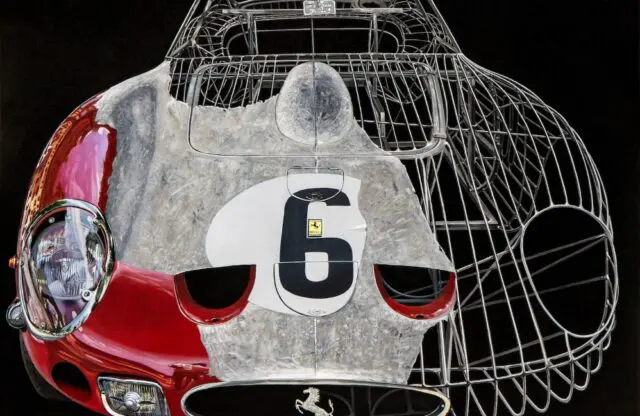
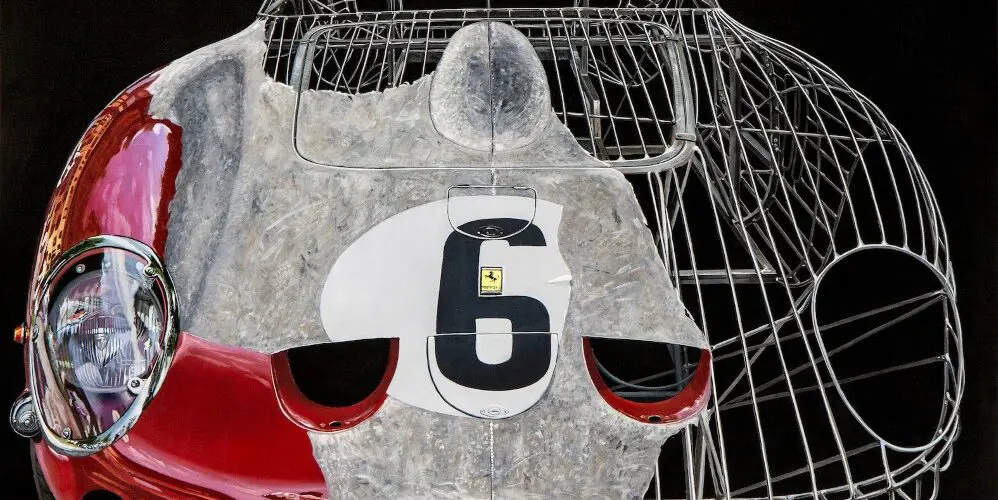
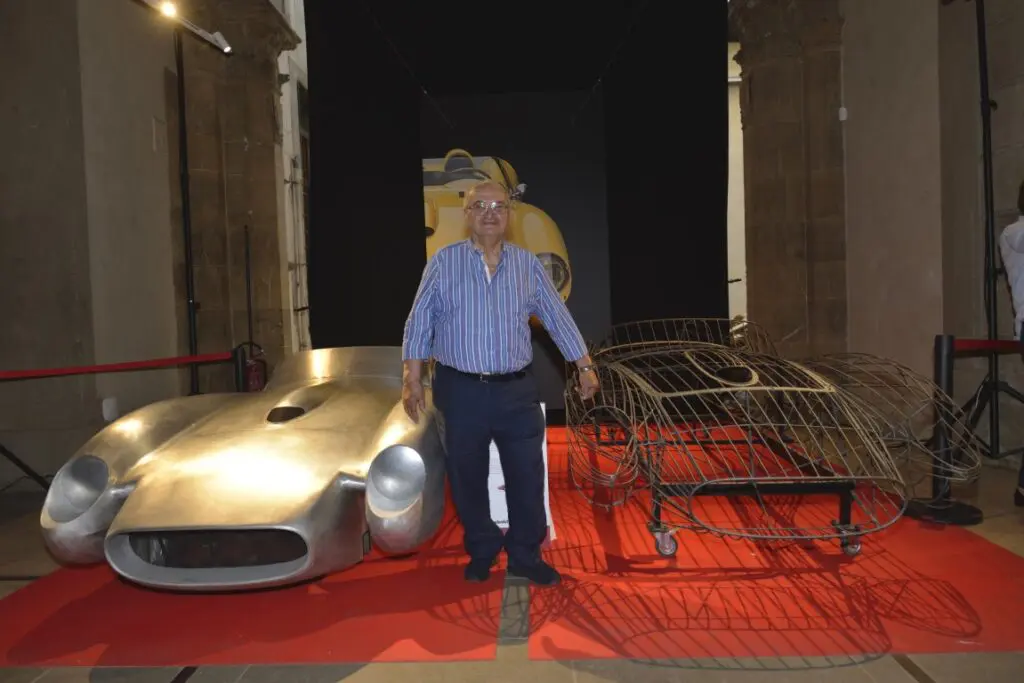
The exhibition includes 15 pieces from the ModenArt Collection, a project founded by Jean-Marc Borel to preserve and showcase hand-beaten aluminium bodywork and the iron filoni structures used as full-size forming guides. The craftsmen celebrated include Afro Gibellini, Giancarlo Guerra, Fernando Baccarini and Oriello Leonardi, who shaped bodies for coachbuilders such as Scaglietti and Fantuzzi.
The star attraction for classic car enthusiasts is a 1962 Ferrari 250 GTO bodied by battilastra master Giancarlo Guerra. Complementing the GTO are the Ferrari 412P, P3/4 and P4 race cars that famously crossed the line in formation at the 24 Hours of Daytona in 1967.
The exhibition officially opened on 27 May with a ceremony that included a live demonstration showcasing how battilastra masters shaped the aluminium bodywork of some of the world’s most iconic machines. Adding to the occasion was the attendance of 90-year-old Afro Gibellini, who was responsible for several of the works on display.
‘This exhibition celebrates the poets of aluminium who, inspired by the genius of the Renaissance and Leonardo’s dream, succeeded in giving speed a concrete and immortal form,’ said ModenArt Collection founder Jean-Marc Borel.
‘We wanted to create a bridge spanning more than 500 years,’ added exhibition curator Mauro Bertoli. ‘Without that ancient knowledge, the dream of speed would never have acquired the extraordinary forms admired throughout the world today.’