We’re spoiled for choice when it comes to fast estates these days. We could spend hours discussing the latest AMG, Alpina or even the excellent Volkswagen Golf R estate. Eventually, the conversation will circle back to Audis. It’s a niche that the company has made its own, and it’s all thanks to the ballistic Audi RS2 Avant.
Based on the 80-derived S2, the first RS Audi was actually the result of a partnership with Porsche. Shells were shipped from Ingolstadt to the Rossle-Bau plant in Zuffenhausen, where Porsche engineers worked their magic. First, the regular 2.2-litre, 20-valve five-cylinder engine received a bigger KKK turbo – running at higher boost – along with high-lift camshafts, a new intercooler, bigger exhaust and high-flow fuel injectors. The result? A staggering 315bhp and 302lb ft.

The engine remains flexible at low rpm but the boost comes in with a kick, accompanied by the off-beat five-cylinder thrum reminiscent of those rally cars. Combined with the quattro four-wheel drive system, it could out-accelerate a McLaren F1 to 30mph and, being built by Porsche, meant that it wasn’t subject to the normal 155mph ‘gentlemen’s agreement’, topping out at 163mph.
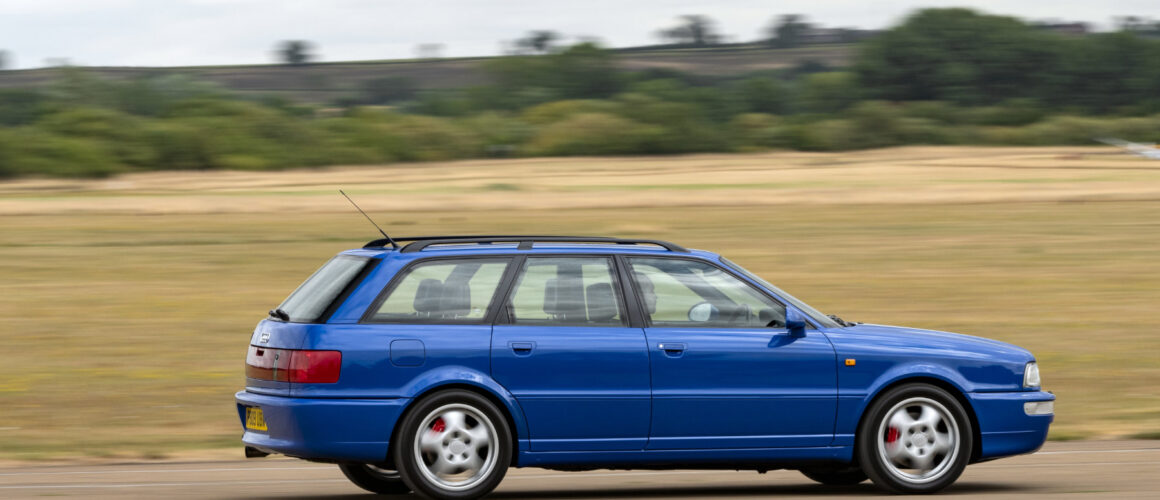
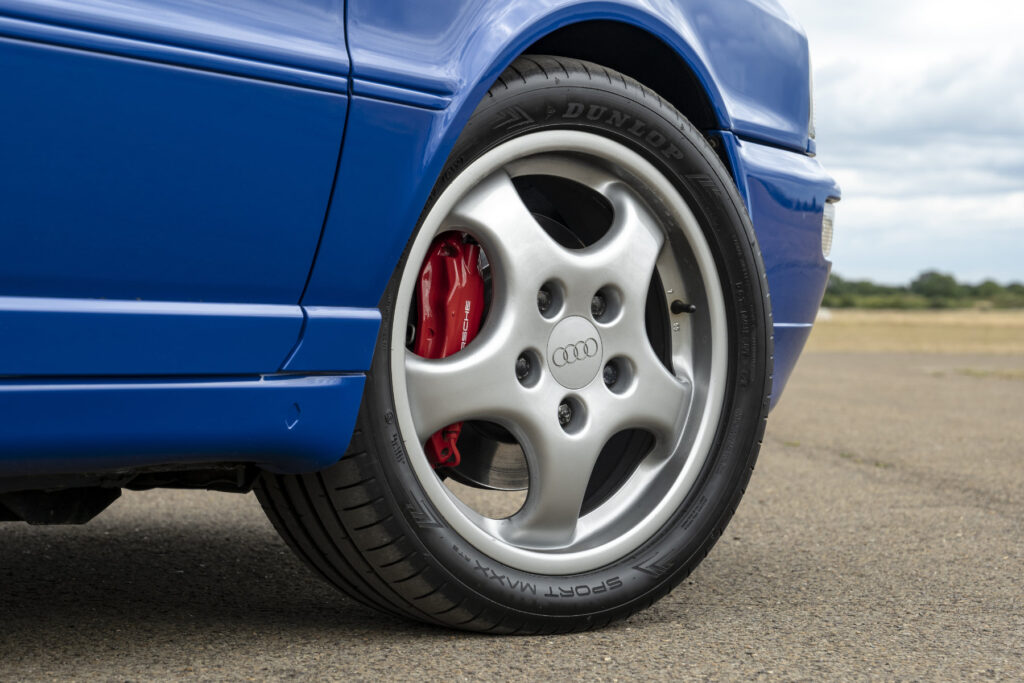
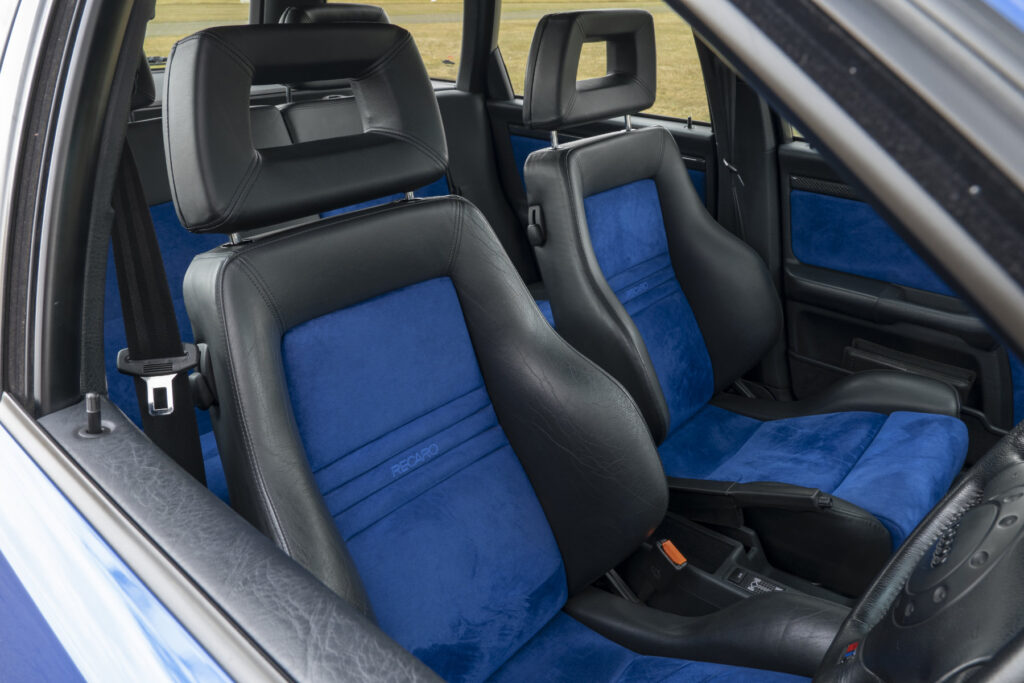
A wide-mouthed front bumper, dished Porsche wheels and bright red brake calipers from the 968 Club Sport make it abundantly clear that this Audi means serious business. The full-length red tail lamp strip, colour-coded side strips and Porsche door mirrors differentiate it further from the regular S2. The blue Alcantara trim on some cars is an acquired taste, but more subtle options were available. Five exterior paint colours were offered in the UK, but RS Blue is the signature.

Bespoke 245/40 Dunlop tyres, thicker anti-roll bars and slightly firmed-up springs and dampers completed the package. Just like the original Quattro rally cars, the RS2 is slightly hampered by the nose-heavy weight distribution inherent to all Audis of the time, but Porsche did a good job of getting the balance just right. The dead-feeling steering came in for criticism but, thanks to the mighty traction and unflappable high-speed stability, a well-driven RS2 could still cover ground quicker than most sports cars. And it could do it all day, every day, in all weathers. It was popular with robbers looking to make quick getaways, too.
Thanks to the £45,705 base price in the UK, only 180-odd right-hand-drive examples were sold between 1994 and 1995, with production totalling 2891. It’s no bargain today either. There are more exciting and driver-focused machines out there for the money, but there’s something alluring about this legendary wagon. Being the first car to wear Audi’s RennSport badge makes it an increasingly important piece of history. Above all else, though, the RS2 managed to recapture some of the original Quattro’s magic, something very few Audis since have managed.
Common problems
• Always confirm that the car is a genuine RS2 – check for an ‘ARGE’ chassis plate – as lesser S2s can be dressed up to look similar.
• Many components are shared with the S2, but unique RS2 parts are scarce and costly; trim, brakes and body panels are especially hard to replace.
• Engines are robust and capable of handling extra power, but higher-mileage cars rely heavily on regular, high-quality servicing to stay healthy.
• Transmissions can wear out, particularly on cars driven hard; check for smooth gear changes and any evidence of recent gearbox work.
• Expect most examples to have covered over 100,000 miles; condition and maintenance history matter more than mileage alone.
• Suspension and brake components should be closely inspected for wear, as Porsche-specific parts add significant expense to refurbishment.
What to Pay
Values briefly dipped below £10,000 in the mid-2000s, but demand for the RS2 has always outstripped supply. At the moment, £25,000 is the entry point and that will only get you a high-mileage, left-hand-drive example. Anything sub-100k miles is considered super-low mileage these days, and you can expect to pay upwards of £40,000 for one of those. Right-hand-drive cars, of which only 180 came to the UK, carry a fair premium.