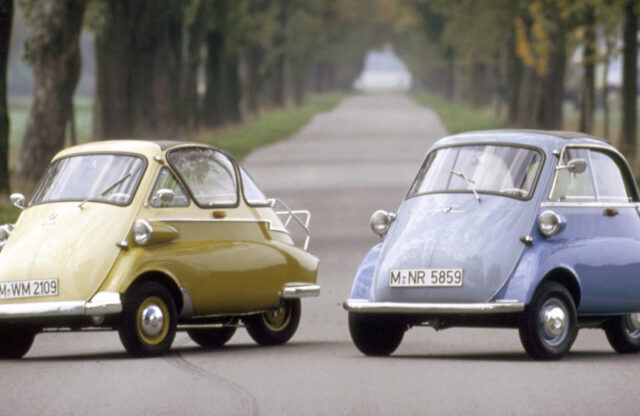
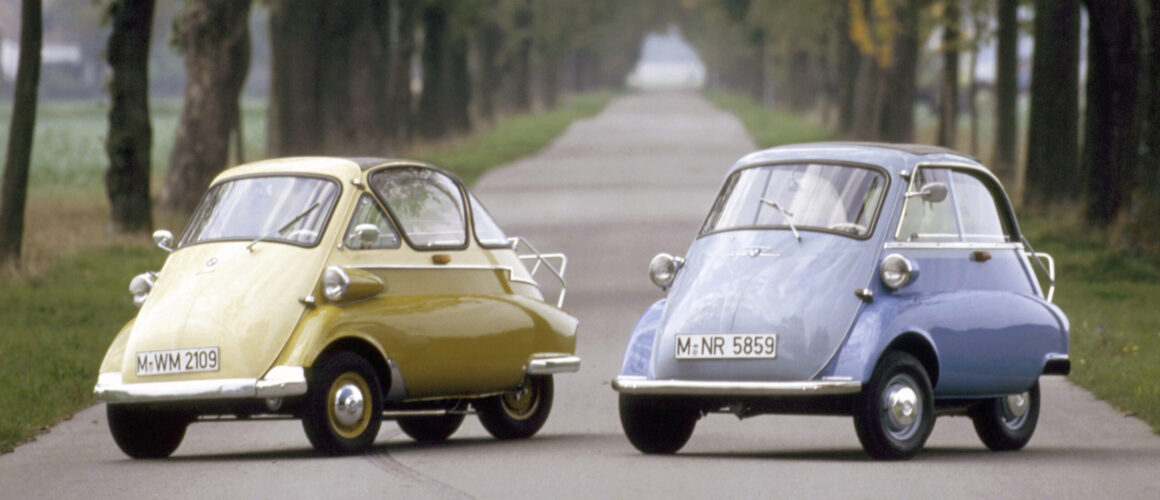
The BMW Isetta really is a prime example of why less can sometimes equal more. Have you ever seen a bubblecar driving around and, even if only for a split second, considered that they are not only incredibly cute and quirky, but actually make a great deal of sense? Small, very cheap to run and full of joy, these tiny vehicles once helped to mobilise entire nations but, while mobility may once have been their primary purpose, today these characterful little vehicles can represent a whole lot of fun.
Although later made successful by BMW, the Isetta story actually began in Italy, when motorcycle manufacturer Iso – later the company that would bring us the Grifo and others – decided to develop something that would take advantage of what Renzo Rivolta deemed to be a gap between the motorcycle market and the hugely popular small car market, then dominated by the Fiat 500.
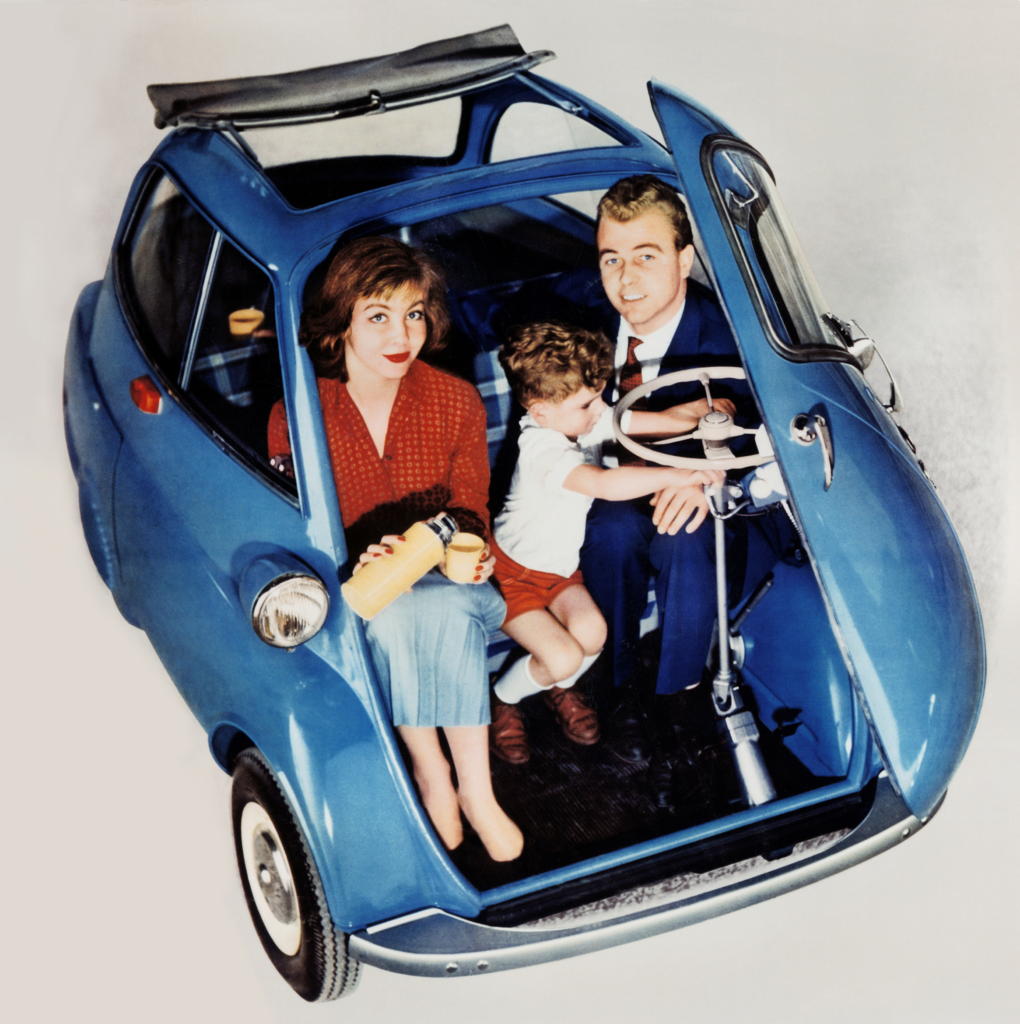
The result was the Isetta, launched at the end of 1953 and combining the super-efficient and cheap mechanicals of a motorcycle, with the (relative) safety and practicality of a proper car: four wheels (with a wide track at the front and narrow at the rear) clothed in an iconic egg-shaped body. The driver and passengers enter through a hinged front door, which takes the steering wheel and instrument binnacle with it as it opens.
These early Isettas made do with 9.5bhp, and performance was glacial – with a top speed of 47mph. Still, a number were entered in the Mille Miglia, cleaning up in the economy class! Although the Isetta wasn’t a huge commercial success in Italy, Iso licensed the concept to many companies around the globe, including France, Spain and as far away as South America. In 1955, BMW negotiated to buy the tooling, with plans to begin German production.
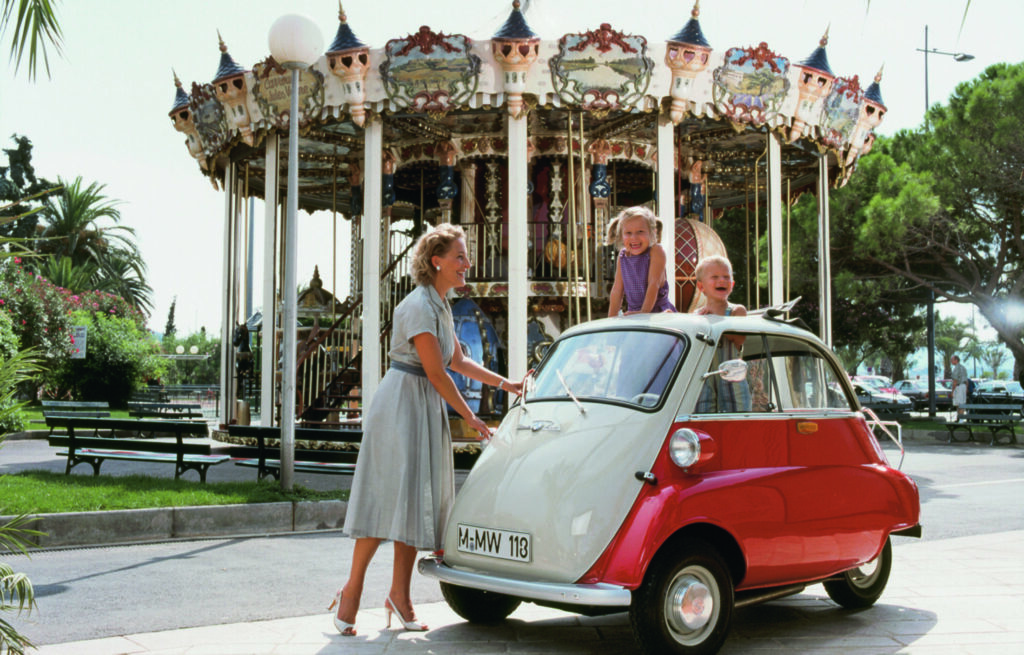
Despite that, the German company ended up re-engineering the Isetta to such a degree that none of the original parts were actually interchangeable. When the first BMW Isetta 250 arrived in 1955, it was a big hit – in part due to the fact it could be driven on a motorcycle licence in West Germany, thanks to the 250cc engine being a modified version of the four-stroke single-cylinder from one of BMW’s motorbikes. When new German licence regulations in 1956 closed that particular loophole, it prompted BMW to increase capacity to 297cc for the Isetta 300 model. While the new variant required a full driving licence, it was also slightly more powerful, which enhanced the driving experience, even if top speed stubbornly remained at 53mph.
In 1957 a UK-built version was put into production under licence by Dunsfold Tools Ltd. Initially it proved unpopular and a three-wheeled version was soon launched, which could take advantage of less strict tax and licence requirements. The ultimate evolution of the Isetta arrived later that year: the four-seater BMW 600. This was in effect a stretched version, sharing the same front suspension and hinged door. To make extra space for rear passengers, however, the wheelbase was extended, the rear track widened and a side access door added. Power was via a 20bhp 582cc flat-twin engine. Production of BMW Isettas stopped in 1962.
Small in size but huge in presence, the Isetta certainly has an appeal today. Do you have a small space to fill in the garage? Find a good one, squeeze in, and prepare for some laughs.
BMW Isetta price guide
For such a small car, the Isetta has always commanded a strong following, and equally resilient values. You can expect to find a running and driving example for around £10,000-15,000. Exceptionally nice or fully restored cars tend to be offered from about £25,000 up to £35,000. There are far more 300s on the market, but prices of 250s are much the same. UK prices are slightly lower than those in the EU and, while museum-grade cars often sell for big money during Monterey Week, US values are broadly in line with Europe.
If you’re looking for the more family-friendly 600, as once driven by Sir Stirling Moss, then you should expect to spend a little more. Prices for tidy examples tend to start at £15,000 and rise to £40,000 for the very best.
Common problems
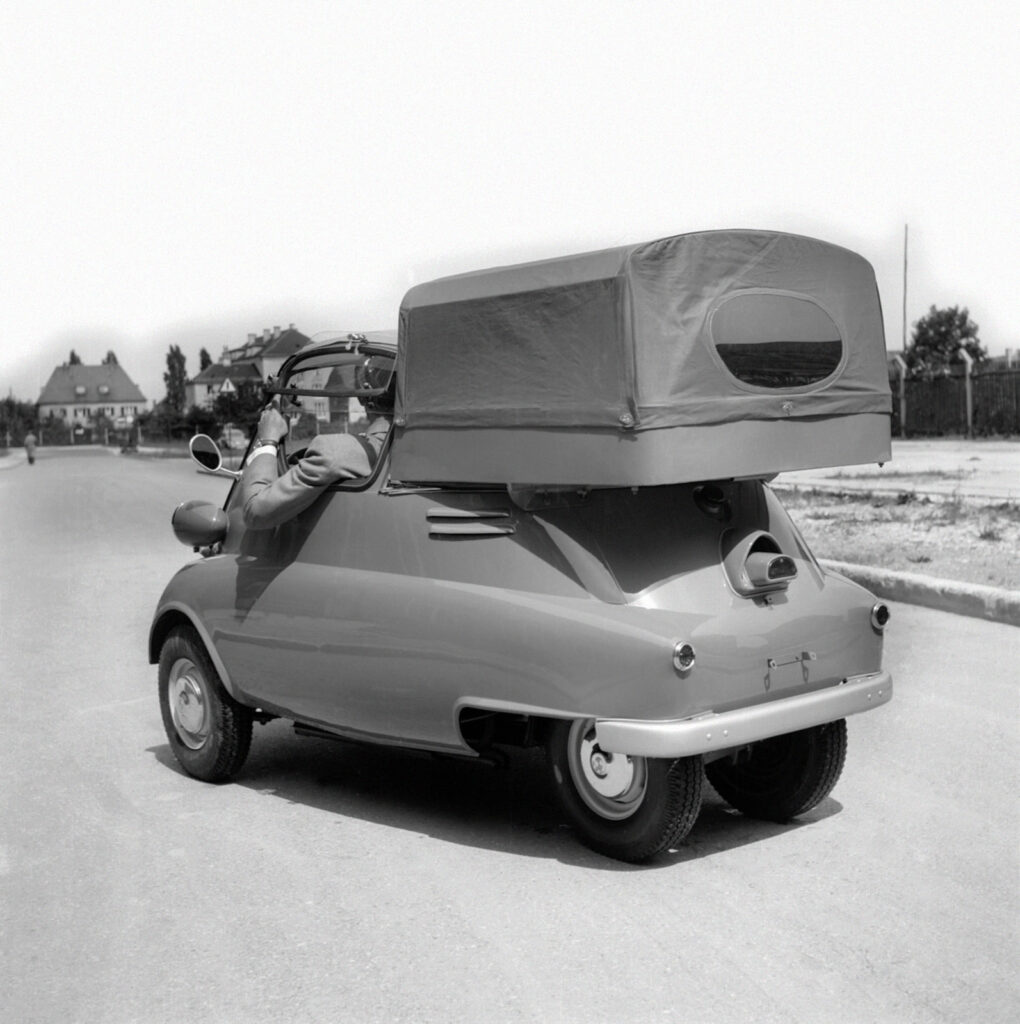
Although there’s seemingly not much to the Isetta, it’s vital that all the metalwork is checked for rust. As with a conventional car, wheelarches can suffer – especially if it’s a car that’s been used during UK winters. Parts supply is good, so items such as window rubbers and canvas roofs can be replaced easily if they’re looking tired. Parts prices can soon add up, though, so it’s worth considering a well-restored car to begin with.
The motorcycle-derived running gear is easy to maintain and is generally hard-wearing, but an overheating engine is possible if the cooling fan is not operating correctly. Most engines have been rebuilt by now, but don’t be scared off by one that’s in need of work – it’s an easy job to refresh. Ensure that all four gears engage smoothly because worn linkages and bushes are common. The rest is just general classic car (or motorcycle) maintenance.