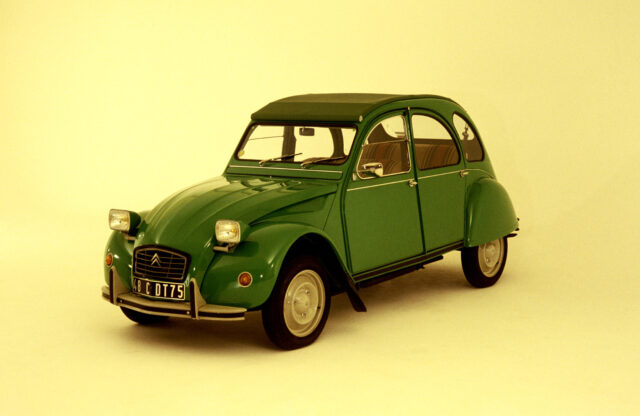
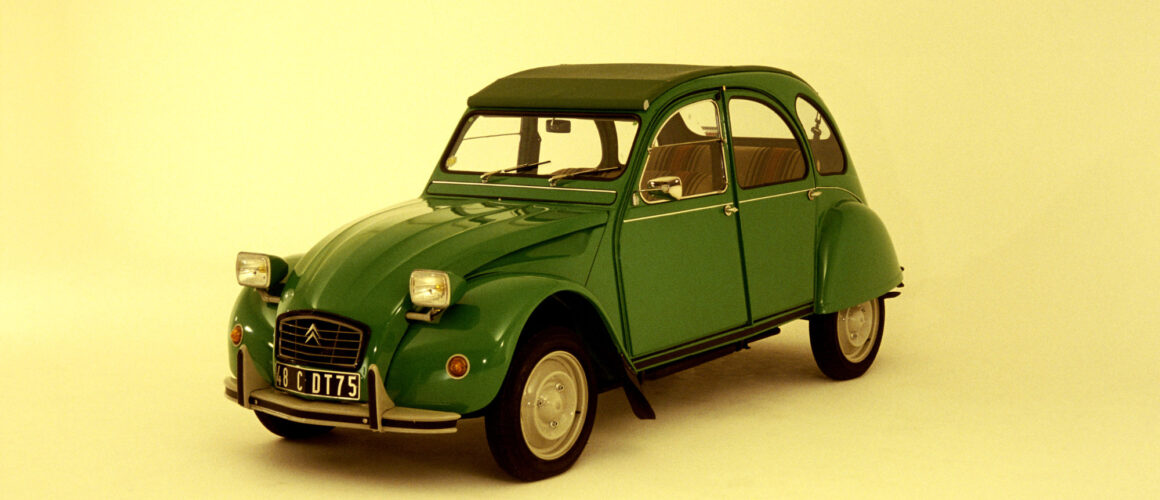
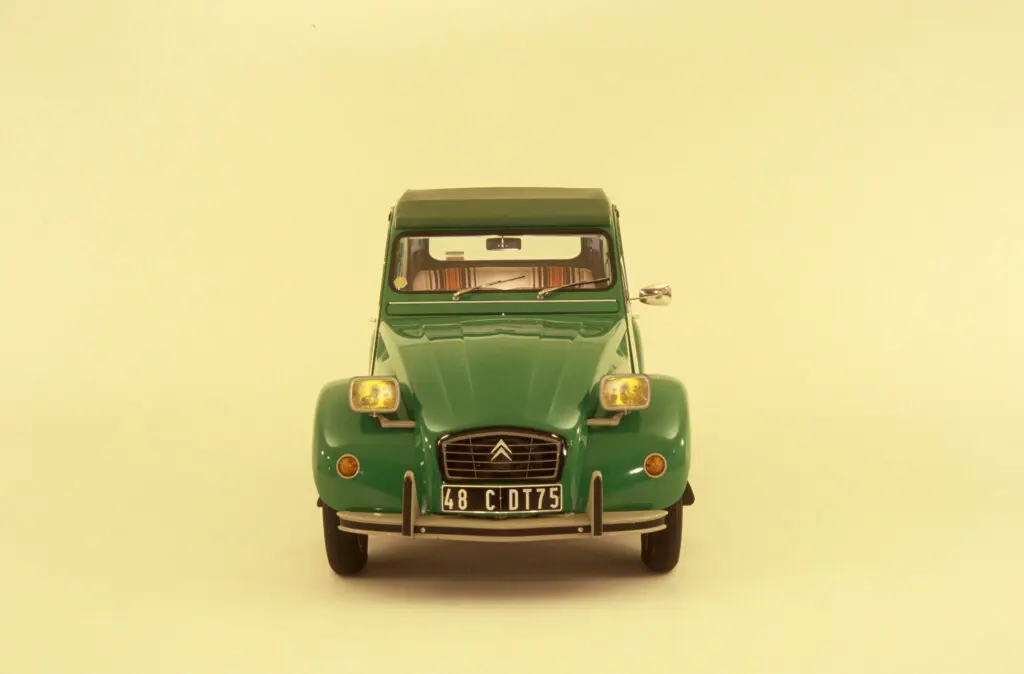
To the casual observer, the Citroën 2CV appears an antiquated relic – a utilitarian throwback to rural France in the mid-20th century. Yet beneath its deliberately simple exterior lies one of the most ingenious and influential cars ever produced. Conceived in the late 1930s as the ‘Toute Petite Voiture’ (TPV), the brief was famously to create a car as practical as an ‘umbrella on wheels’, capable of transporting farmers and their produce across rough terrain with minimal cost and complexity.
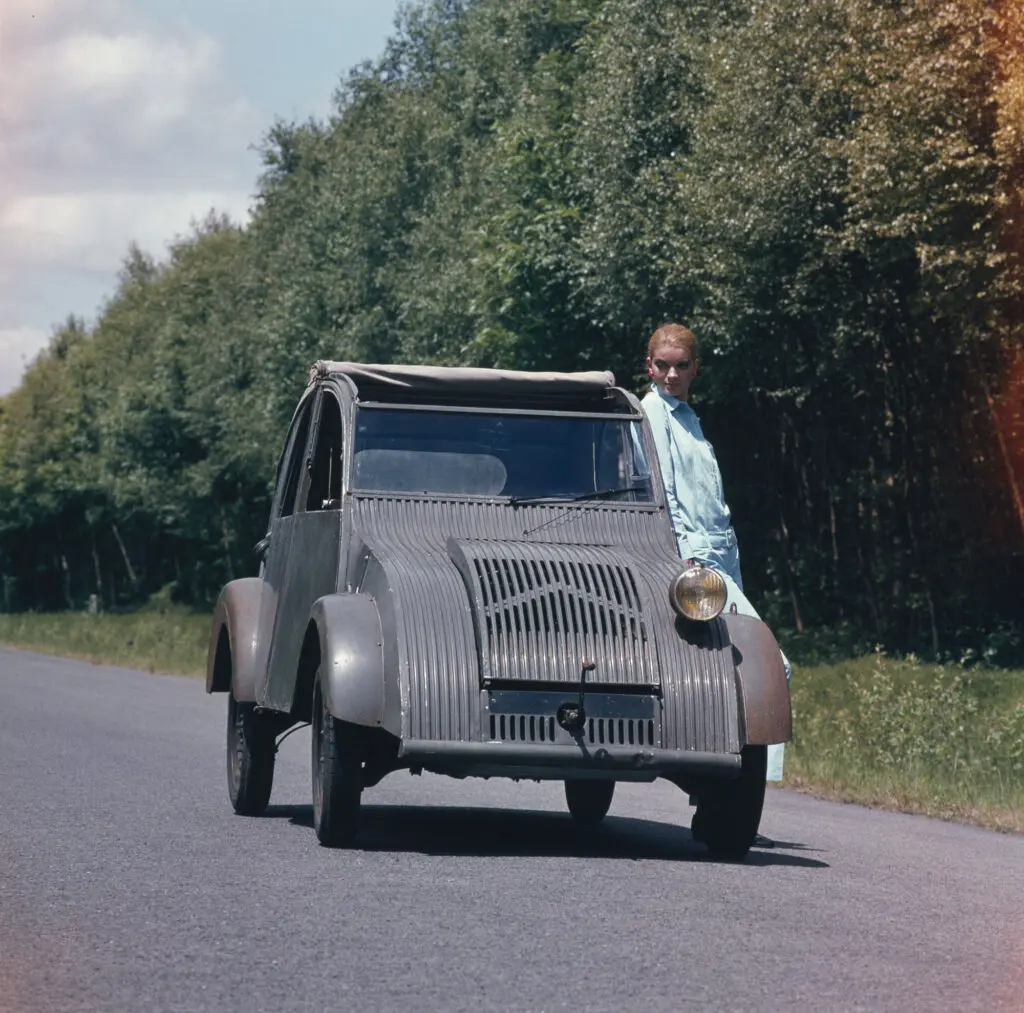
The TPV prototype was as rudimentary as its mission suggested, featuring corrugated body panels, a single headlamp and extreme mechanical simplicity. Development was interrupted by World War II, but the concept survived, and in 1948 the production 2CV emerged. Although more refined than the TPV, it retained the same ethos: lightweight construction, ease of maintenance and exceptional ride comfort over poor surfaces.
Much of the 2CV’s brilliance lay in its engineering. Its fully independent suspension, using interconnected horizontal coil springs and mass dampers, delivered a ride quality that remains remarkably supple even by modern standards. This long-travel set-up allowed the car to traverse uneven ground with composure, a vital trait for its intended rural clientele. The car also featured innovations such as inboard front brakes, adjustable headlights controlled from within the cabin, and a simple yet effective air-cooled flat-twin engine.
Performance was never a priority. Early engines produced as little as 9bhp, rising to 29bhp in later 602cc versions, but the 2CV’s charm lies in its character rather than outright speed. Its lightweight construction and narrow tyres made the most of modest power outputs, while the almost gasketless engine design contributed to its reputation for durability.
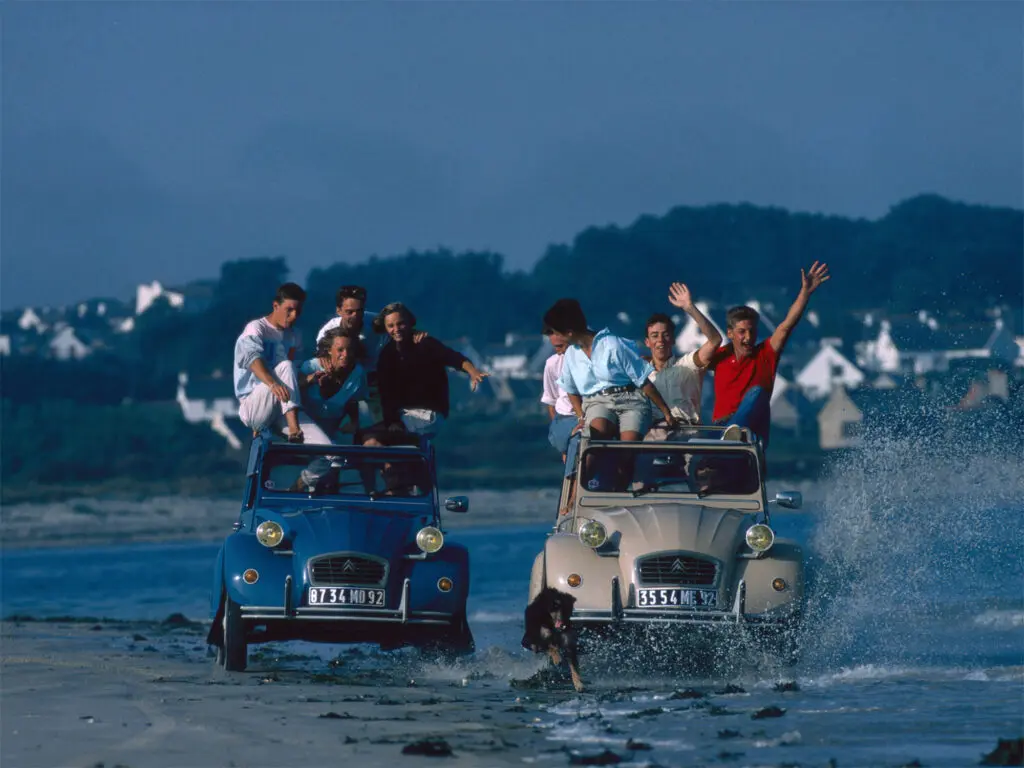
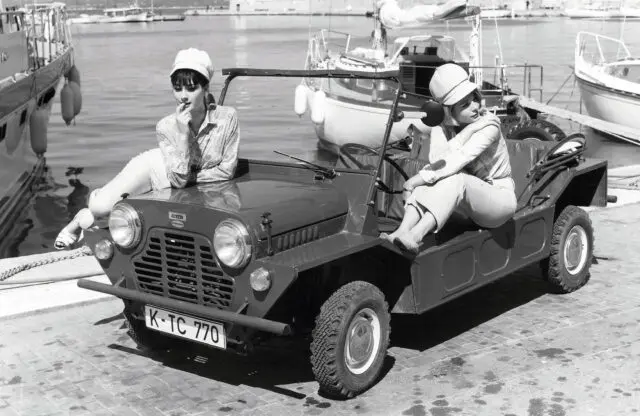
Over its 42-year production run, more than 3.8 million examples were built, making it Citroën’s most successful model. Numerous updates and variants appeared along the way, including the Dyane-based Méhari and the remarkable four-wheel-drive Sahara, which featured twin engines – one at each axle. By the time production ended in 1990, the 2CV had become far more than basic transport. It was a cultural icon, symbolising practical ingenuity and a uniquely French approach to automotive design.
Today, the 2CV has transitioned from humble workhorse to cherished classic. Its simplicity makes it approachable, while its historical significance ensures enduring appeal. Values have risen accordingly, and buyers are increasingly drawn to well-preserved examples that retain the car’s original charm and usability.
Common problems
Engine and cooling
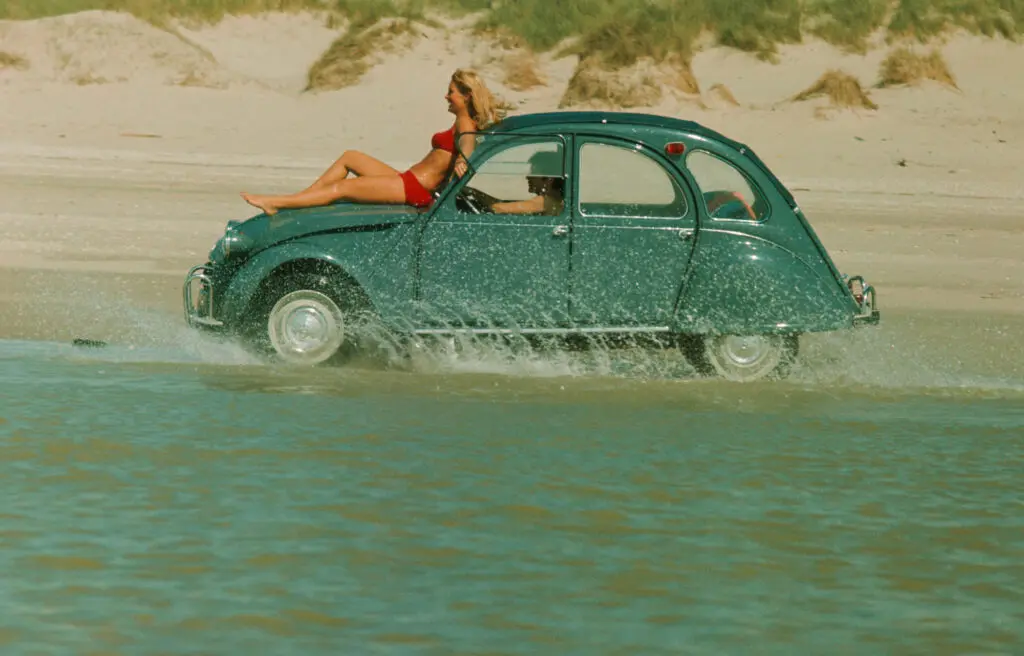
• The air-cooled flat-twin engine is fundamentally robust, but rattling noises may indicate broken piston rings, while excessive mechanical noise could point to poorly adjusted valves.
• Some smoke on cold start is considered normal, but persistent smoke when warm can suggest worn valve-stem seals or more serious internal wear that may require an engine rebuild.
• Oil on the sump may indicate leaking push-rod tube seals, which require cylinder head removal to rectify, while oil on the front chassis legs often points to rocker-cover gasket failure.
• Dirty or low oil suggests neglect, and regular oil changes every 3000 miles are essential to ensure longevity. Reconditioned engines can cost around £2000.
• During a test drive, operate the heater and check for exhaust fumes in the cabin. A strong smell may indicate a blown cylinder head.
• Electronic ignition systems are often retrofitted for improved reliability. These are generally a worthwhile upgrade and relatively inexpensive to install.
Transmission
• The four-speed manual gearbox is generally reliable and should feel smooth in operation, with no excessive resistance or notchiness when shifting between gears.
• A common issue is worn synchromesh on third gear. This can be detected by shifting into third at around 30mph; any crunching noise suggests the synchro is worn.
• Transmission bearings can wear over time, producing noticeable noise while driving. This is less common but should be checked during a test drive.
Suspension and brakes
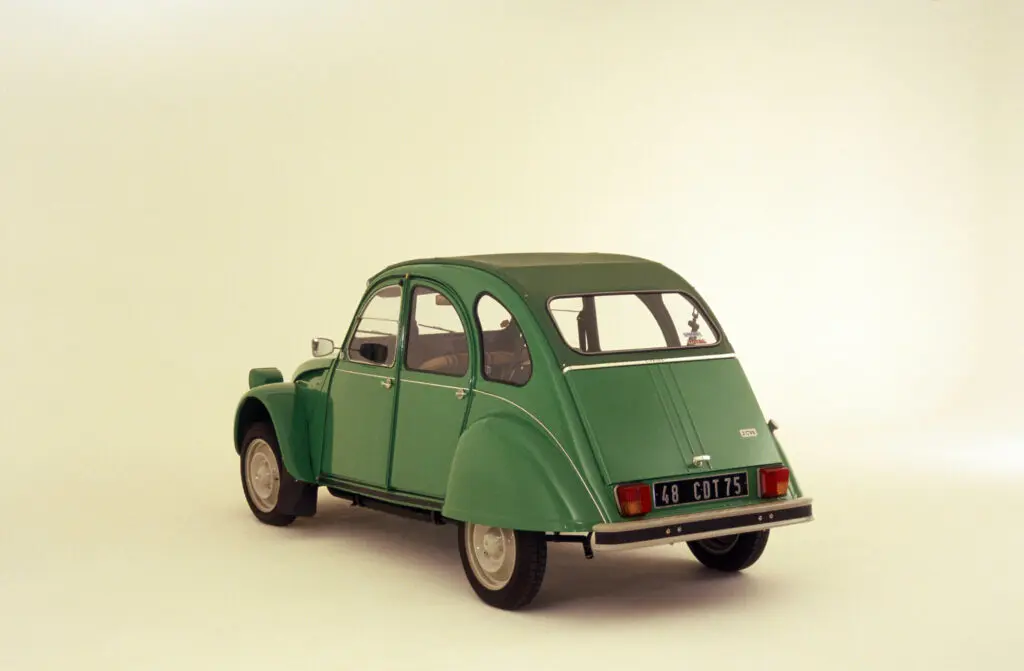
• The suspension should deliver a soft, composed ride. A ‘honking’ noise over bumps usually indicates that the spring tubes require lubrication, which is relatively simple.
• Kingpins must be greased regularly, ideally every 1000 miles, to prevent premature wear. Neglecting this maintenance can lead to more serious suspension issues.
• Wear in the steering rack or track-rod ends can lead to vague steering. Excessively heavy steering may indicate a bent chassis, in which case it is best to avoid the car entirely.
• From 1981 onwards, front inboard disc brakes were fitted. Regardless of configuration, braking performance should feel smooth and consistent.
Bodywork and chassis
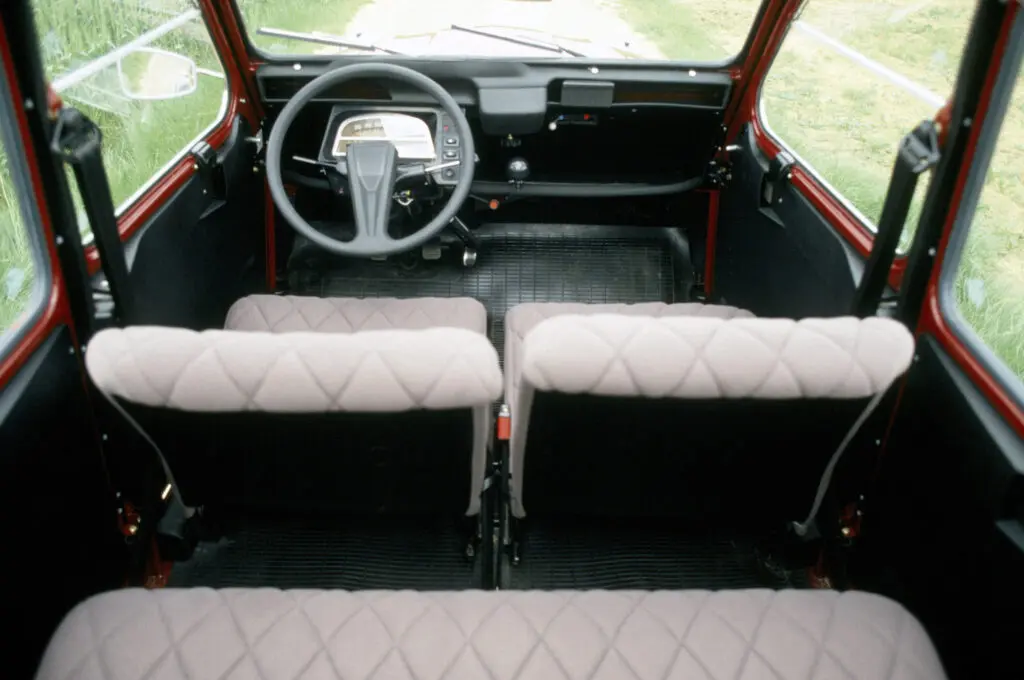
• Rust is the 2CV’s greatest enemy and can affect virtually every part of the structure. Many cars have already undergone chassis replacement, so verifying the quality of any work carried out is essential.
• Check for sagging doors or floors, which often indicate a severely corroded chassis that may have been poorly repaired to pass inspection.
• Replacement chassis options vary widely in quality. Poor aftermarket examples may lack galvanisation and correct geometry, while high-quality galvanised units or Méhari Club Cassis chassis are far more desirable.
• Corrosion is also common in rear wings, sills, shock mounts, screen surrounds, bonnet hinges, boot floor and rear panels. Fortunately, many of these panels are relatively affordable and widely available.
• Inspect the fabric roof carefully for tears, leaks or deterioration, as replacements are straightforward but still an added expense.
Interior and trim
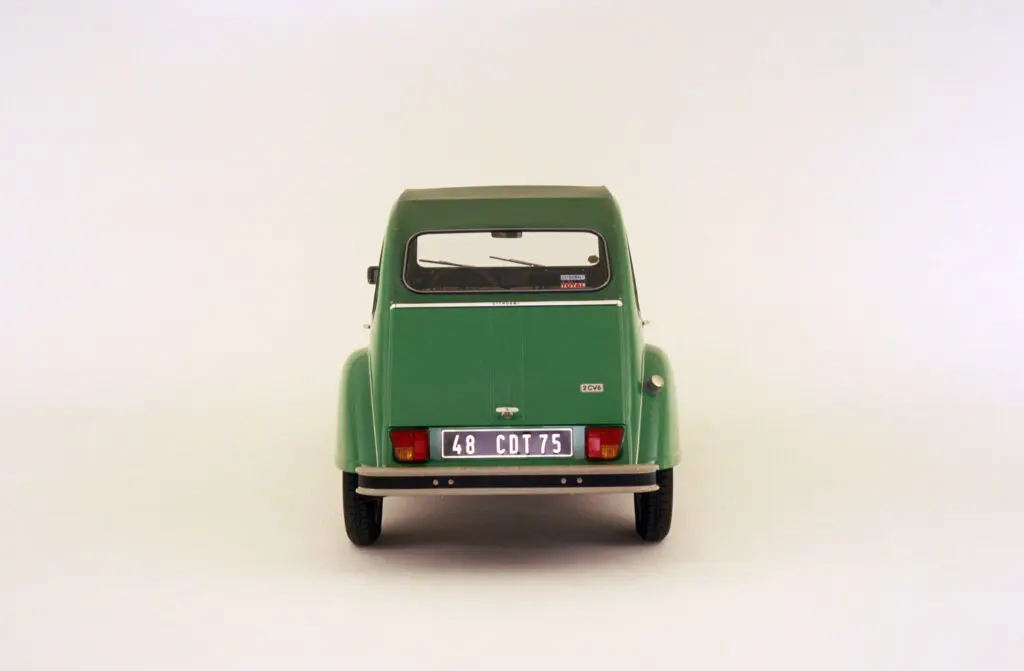
• The interior is simple but comfortable. Seat upholstery, particularly the ‘deckchair’ style seats, tends to wear at the edges and can suffer from sun damage over time.
• Many cars have already been retrimmed, which is not especially costly due to the car’s basic construction.
• Replacement interior components are generally available, but condition should still be assessed carefully when viewing a car.
What to pay for a 2CV?
As with many once-humble classics, values for the Citroën 2CV have risen significantly as it has transitioned into a lifestyle icon. While entry-level cars can still be found from around £2500-3000, these are typically in need of restoration and should be approached with caution due to potential hidden costs.
A good, usable example will usually command around £5000-8000, depending on condition and specification. Excellent cars can reach £13,000-14,000 in private sales, with dealer examples occasionally exceeding this range. The rare and highly desirable Sahara models sit in a completely different league, with values stretching towards £90,000 due to their rarity and unique engineering.
Ultimately, condition is far more important than mileage or specification. A rust-free car with evidence of consistent maintenance is always the best investment. Thanks to strong parts availability and an active enthusiast community, ownership remains relatively straightforward, and there is even a growing trend towards electric conversions for those seeking a modern twist on this enduring classic.