Few cars better encapsulate Ferrari’s renaissance of the 1990s than the F355. Launched in 1994 as the long-awaited successor to the 348, it felt like a decisive return to form for Maranello. Sharper to drive, more usable day to day and blessed with one of the most evocative V8 engines ever fitted to a road car, the F355 swiftly re-established Ferrari at the top of the junior supercar class. More than 25 years on, it remains one of the most compelling entry points into modern classic Ferrari ownership.
At first glance the F355 looked like a careful evolution of the 348, but beneath the familiar mid-engined silhouette lay a comprehensively reworked machine. The 3.5-litre flat-plane crank V8 was heavily revised, gaining five-valve cylinder heads and producing 375bhp – a substantial figure for the mid-1990s. The result was not merely stronger performance but a sharper, freer-revving character and a harder-edged soundtrack that immediately distinguished it from its predecessor.
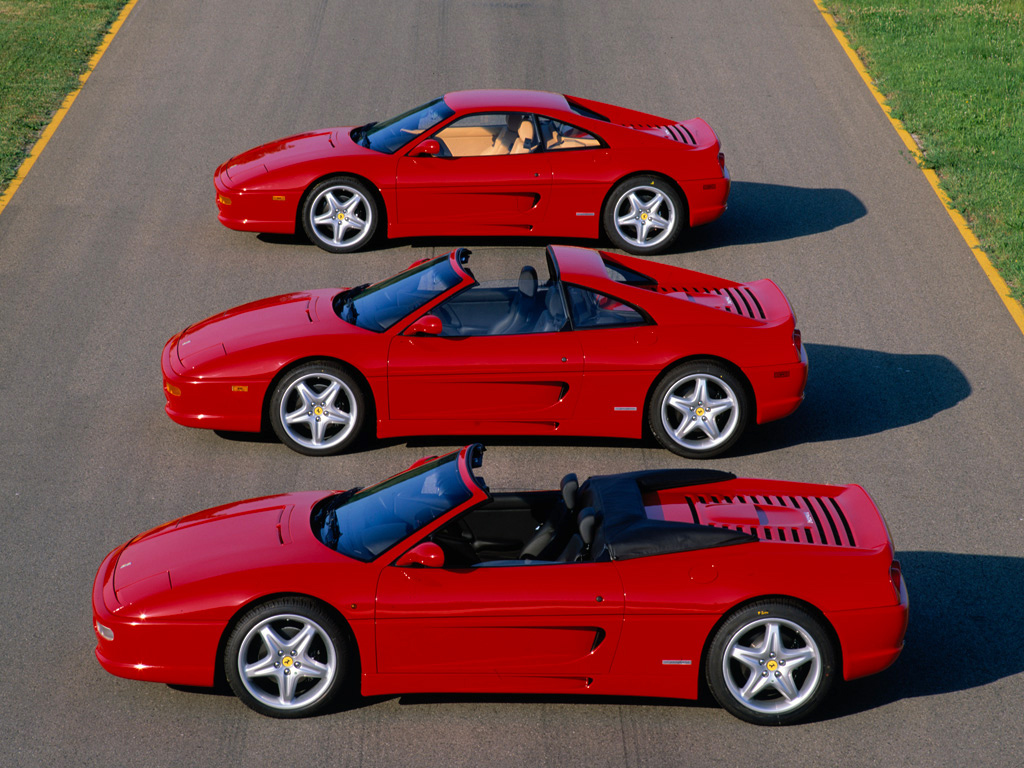
The F355 debuted in Berlinetta (GTB) and targa-roof GTS forms in 1994, with the Spider following in 1995. Initially, all cars were equipped with a six-speed manual gearbox, its exposed metal gate becoming one of the defining visual and tactile elements of the interior. In 1997 Ferrari introduced its Formula 1-style paddle-shift transmission, broadening the car’s appeal and signalling a technological direction that would soon dominate the brand’s range. Around the same time, the Bosch Motronic engine management system was upgraded from 2.7 to 5.2 specification, and by 1997 the ‘F’ prefix was dropped, with cars marketed simply as the 355.
• Browse Ferrari F355s for sale
The F355 Challenge, introduced for Ferrari’s single-marque racing series in 1995, further cemented the model’s sporting credentials. Although primarily intended for the track, road-legal versions were offered for the 1995 model year. In 1999, as production drew to a close, Ferrari released the limited-edition 355 Spider Fiorano, of which 100 were built, featuring competition-inspired steering and brake upgrades.
In total, just over 11,000 examples were produced between 1994 and 1999. That figure strikes a balance between rarity and usability: enough cars exist to sustain specialist knowledge and parts supply, yet numbers remain sufficiently modest to preserve exclusivity. The F355 also marks the end of the long-running Pininfarina styling theme that began with the 308, before the 360 Modena ushered in a new design language. For many enthusiasts, it represents the sweet spot between analogue purity and modern reliability.
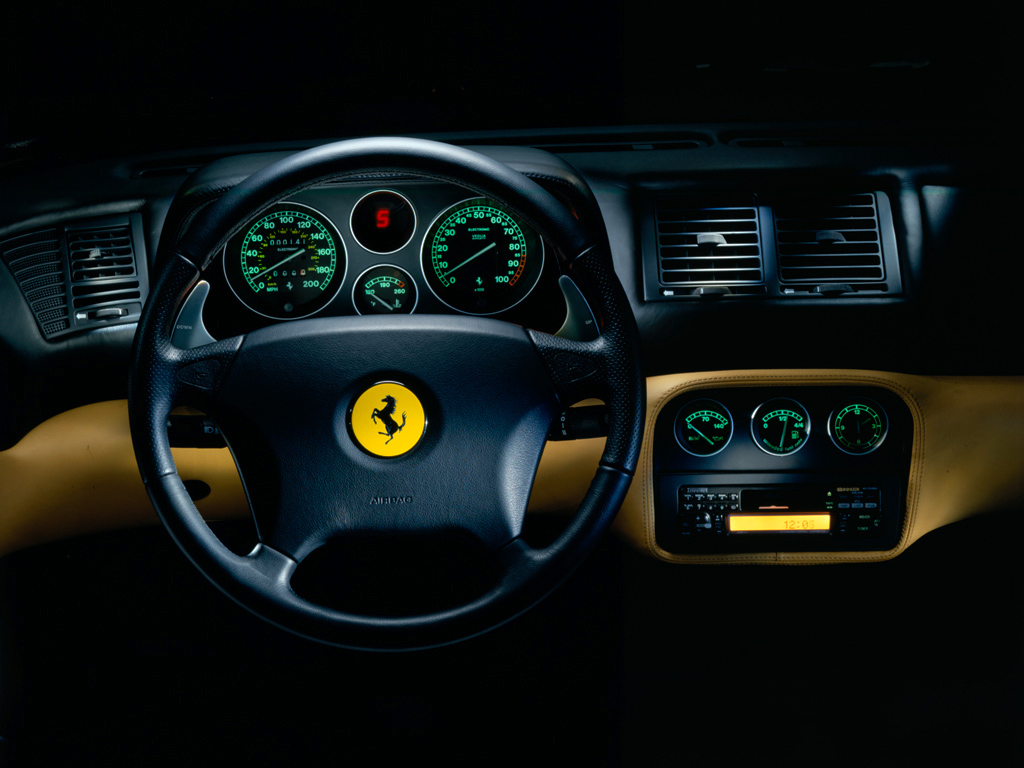
Crucially, the F355 was the first of Ferrari’s mid-engined V8 line to combine genuine everyday usability with serious performance. With 0–60mph dispatched in 4.6 seconds and a top speed of 183mph, it was every inch the junior supercar. Yet, unlike some earlier models, it can be driven regularly without constant fear of catastrophic failure – provided it is maintained properly. That caveat is central to any buying decision. The F355 is robust when cared for, but neglected cars can generate formidable bills. A specialist inspection is essential, and purchase decisions should be guided by condition and history rather than headline price.
Common problems
• Cambelt replacement requires engine removal if carried out to factory procedure. Belts are due every three years or 30,000 miles, whichever comes first. Evidence of regular changes is critical, as deferred maintenance can lead to catastrophic engine damage and significant expense.
• Exhaust manifolds are prone to cracking over time. Many cars will already have had repairs or aftermarket replacements fitted. While upgraded components are available, unresolved cracks can lead to further issues and should be addressed promptly.
• Exhaust bypass valves can wear and produce a rattle at idle. Although this does not usually affect performance, replacement parts are costly, so budget accordingly if originality and refinement are priorities.
• Pre-1999 cars were subject to recall work relating to fuel-pipe manifold leaks. The braided stainless-steel pipes terminate in aluminium ends that can crack. Confirm recall work has been completed and inspect carefully for any signs of fuel seepage.
• The six-speed manual gearbox is generally strong, but transmission rattles may indicate a worn gearlever-housing bush. The F1 transmission is also robust, though clutch wear can be accelerated in heavy urban use.
• Clutch life varies considerably. F1-equipped cars may require replacement between 15,000 and 30,000 miles depending on use, while manual cars typically achieve around 30,000 miles. Both systems rely on hydraulics, so fluid leaks and actuator issues must be checked.
• Adaptive suspension dampers can fail, often indicated by a dashboard warning light. Leaking dampers require full replacement, at around £1200 per unit. Broken springs are common, and seized handbrake cables are another known issue.
• Braking performance can feel modest by modern standards, particularly under sustained hard use. Inspect discs and calipers carefully, especially on cars that have seen track work or Alpine driving.
• Magnesium wheels are susceptible to corrosion and can be expensive to refurbish properly. Inspect inner rims and spoke edges for bubbling or pitting.
• The steel rear subframe or cradle supporting the engine is vulnerable to corrosion. Use a torch to inspect the area thoroughly, as repairs can be labour-intensive.
• Rear buttresses on Berlinetta and GTS models can corrode, often revealed by bubbling paint. Repairs may need repeating every five years depending on use and storage conditions.
• Sill plates are prone to corrosion on all but the best-maintained cars. Replacement panels are available, but poor repairs can mask more serious structural issues.
• Interior leather, particularly on the dashboard and seats, can shrink when exposed to prolonged sunlight. Proper rectification usually requires a full retrim, which will be costly.
• The centre console’s plastic coating becomes sticky with age. Many owners remove the degraded layer, although specialist companies now exist to fully refinish the ‘soft-touch’ finish back to original.
• On Spider models, the electrically operated roof is complex. Hydraulic pump failure, leaking rams and faulty seat potentiometers can prevent operation. Replacement hydraulic components can cost £1000-£1500, and deteriorating roof canvases or brittle rear screens add further expense.
Ferrari F355 prices
Values for the Ferrari F355 have strengthened markedly in recent years, establishing the model as one of the most sought-after Ferraris of the 1990s. Over the past five to seven years the market has moved steadily upwards, with most examples now sitting in the £60,000-£150,000-plus bracket depending on specification, mileage and provenance.
Gearbox choice remains the single biggest factor influencing value, and six-speed manual cars command a significant premium over the F1 paddle-shift transmission cars. As one of the last truly analogue Ferrari V8s, a gated shifter typically adds between 20 and 40% to a car’s value.
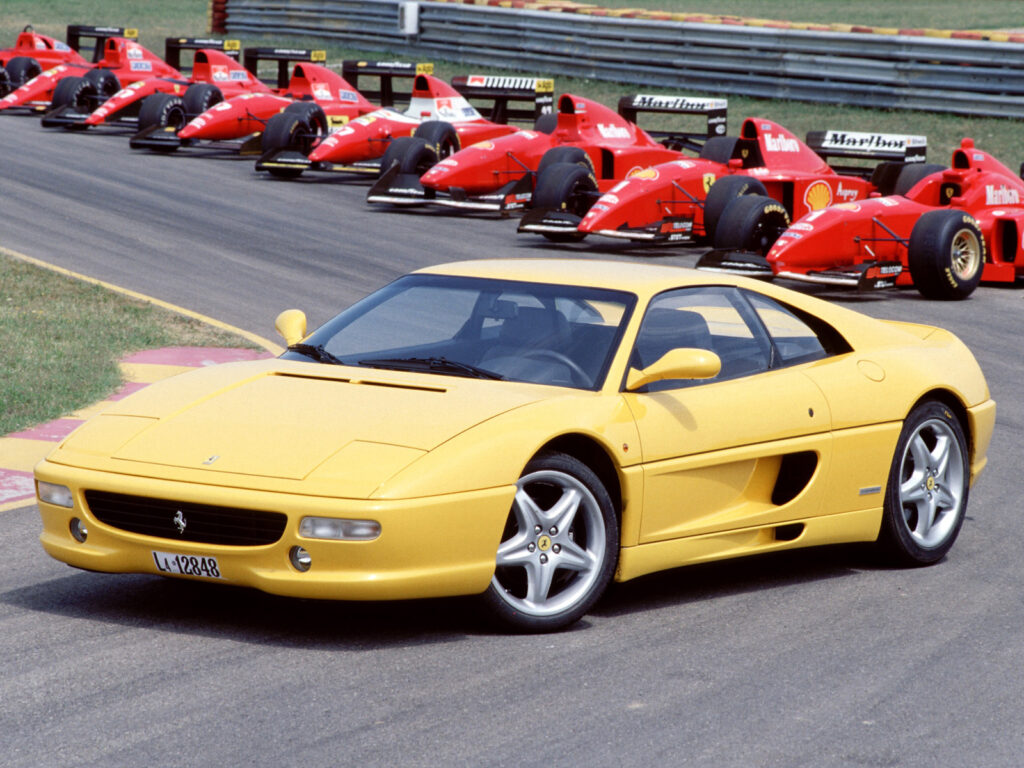
Among the three bodystyles, the Berlinetta coupé is often regarded as the purest driver’s car. Manual examples generally range from around £75,000 for usable cars to £110,000-£150,000 or more for low-mileage, well-documented examples. F1 Berlinettas tend to trade slightly lower, typically between £65,000 and £115,000 depending on condition.
The GTS targa occupies the middle ground and is widely considered the most versatile roadgoing variant, combining open-air driving with the coupé’s lines. Good manual cars usually command £85,000–£120,000, while exceptional examples can reach £170,000. F1 versions typically sit in the £75,000-£95,000 range.
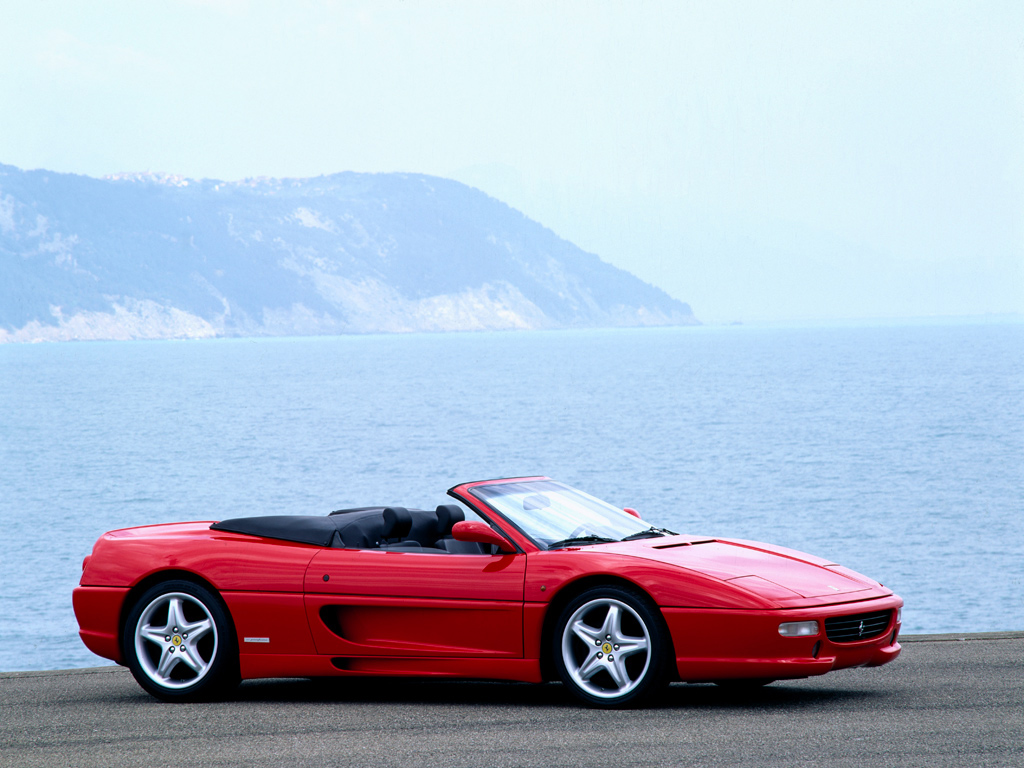
Spider models were historically the most accessible entry point into F355 ownership, though renewed enthusiasm for 1990s convertibles has narrowed that gap. Good manual Spiders generally trade between £80,000 and £110,000, with outstanding low-mileage cars exceeding £160,000. F1 Spiders remain slightly more affordable, usually changing hands between £70,000 and £95,000.