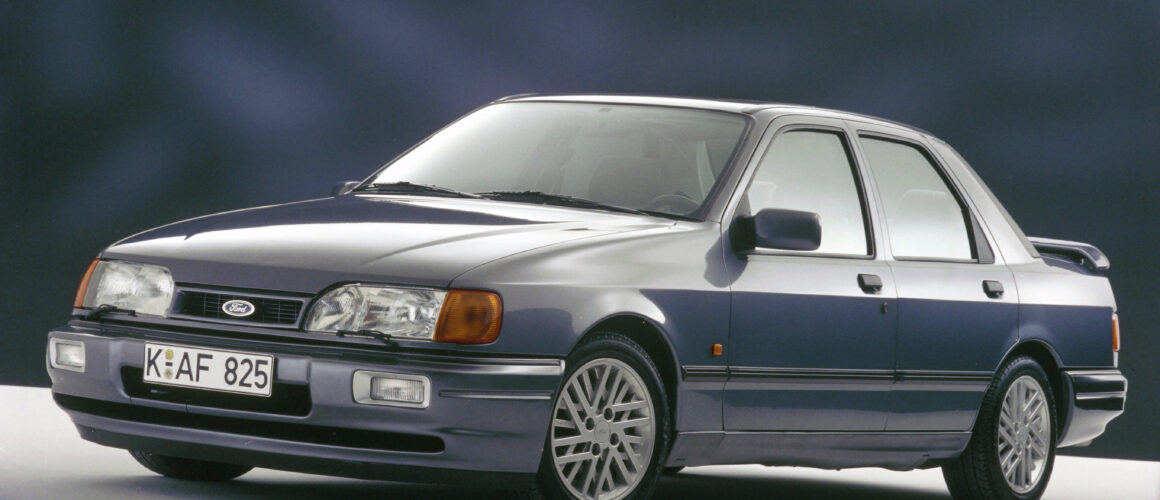
Being sandwiched between two undeniable legends – the three-door Sierra RS Cosworth and Escort RS Cosworth – probably hasn’t helped the Sapphire. I recall attending a track-day at Donington in the early 2000s and remarking on the glut of heavily tuned Sapphire Cosworths dominating the circuit. These were very serious cars, available for very little money at one point, and, unlike those of the three-door Cosworth, their values have risen at a much steadier rate.
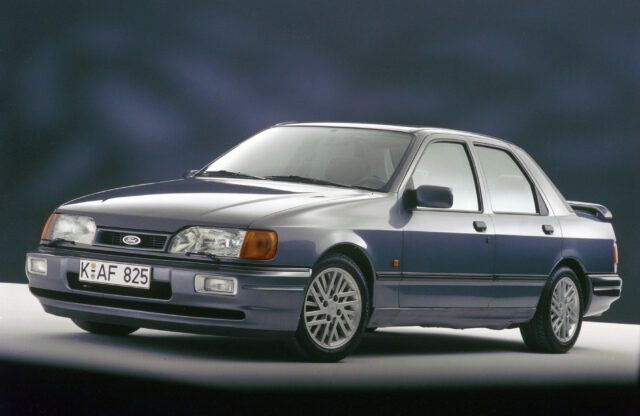
Understandably, the booted Sierra was less of a collectible from the get-go, given that its brief was to make the ‘Cossie’ more civilised and usable – not to mention sensible – as a road car than its motorsport homologated predecessor. Mechanically, the Genk-built Sapphire shared its UK-made 204bhp YBB engine and five-speed T5 gearbox with the three-door. The suspension remained identical in layout, but was re-tuned for slightly more comfort.
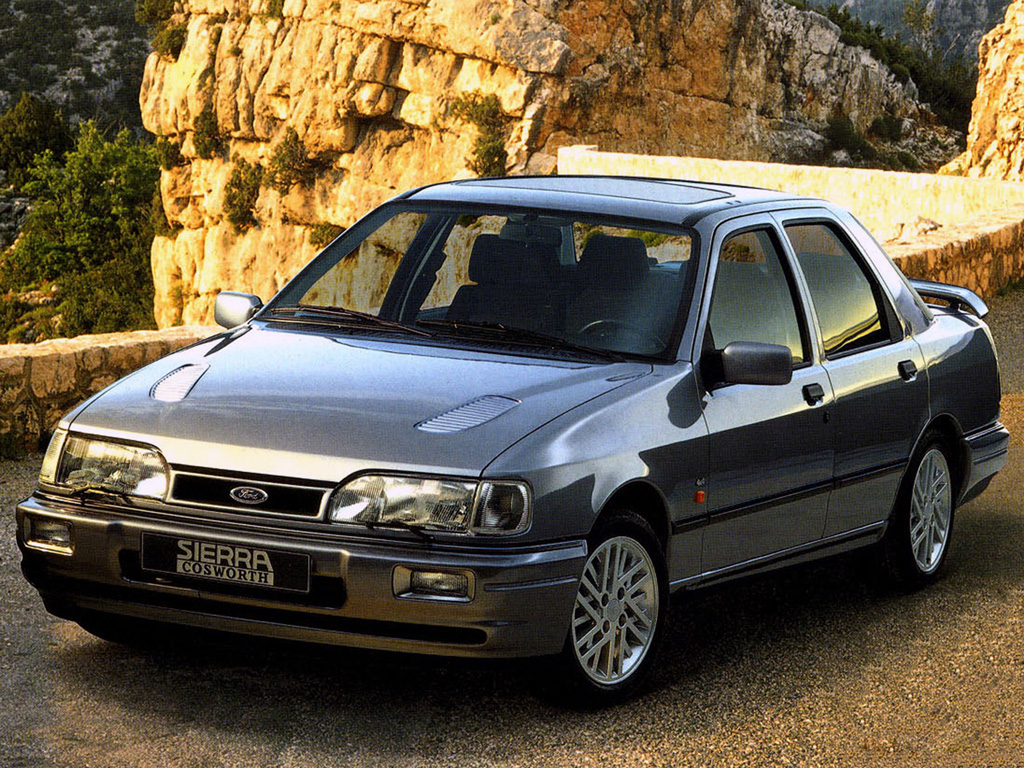
Starting with a top-spec Ghia as a base, Ford added bespoke bumpers, staggered-spoke lattice alloy wheels and a discreet boot spoiler – and inside a pair of Recaro front seats, leather three-spoke steering wheel and 170mph speedometer. The result was a car that many preferred to the original and it was actually faster, technically, with a top speed of 150mph thanks to the saloon’s more slippery profile.
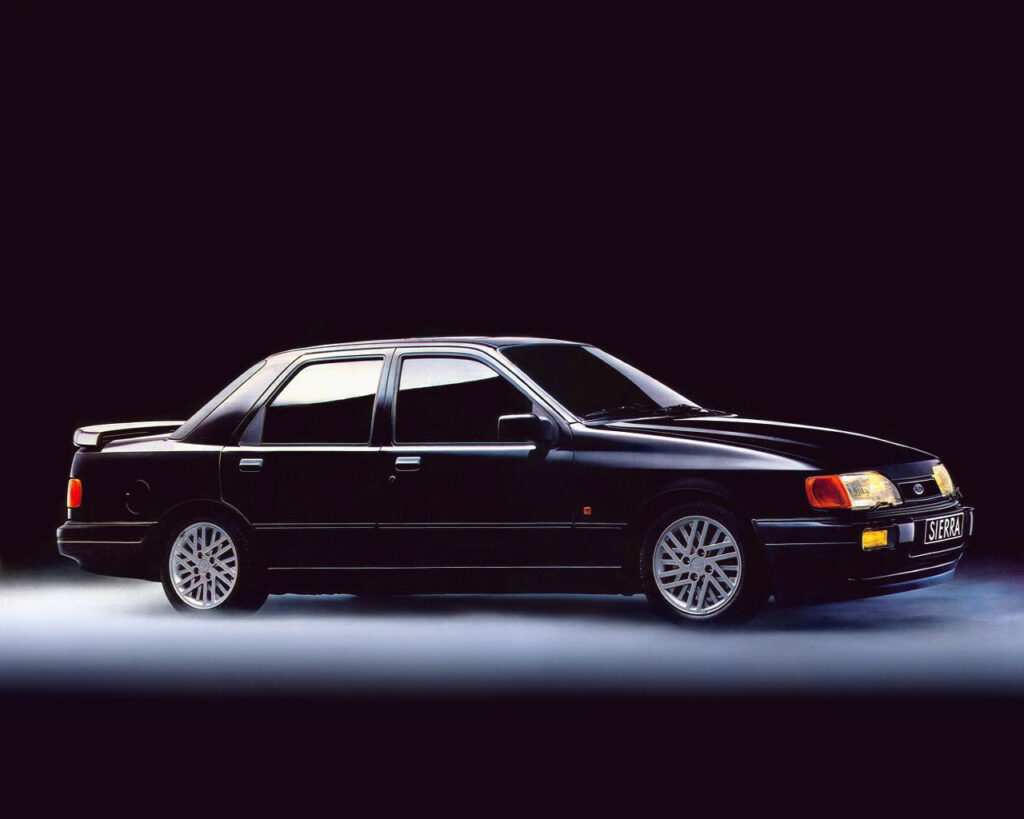
While the story of the original three-door RS Cosworth was mostly about Touring Car racing, the Sapphire was intended to offer a grown-up rival to the mini-executive saloons from BMW and Mercedes-Benz. At least, that was the plan – for 1990, Ford replaced the rear-wheel-drive model with a four-wheel-drive version in order to homologate a new four-wheel-drive Group A rally car!
On the face of it, the 4×4 didn’t look hugely different: a pair of bonnet vents increased the aggression factor, with clear indicators and smoked taillamps helping to freshen the looks. Under the skin, however, the conversion to all-wheel-drive had involved a thorough re-engineering exercise – with a new Ferguson MT75 gearbox at the heart of the process, offering a 34:66 front-to-rear torque split.
It was at this point that Ford introduced a revised version of the Cosworth engine, featuring a stronger block and improved cylinder head. A larger intercooler helped to bring power up to 224bhp, with torque increased slightly to 214lb ft.
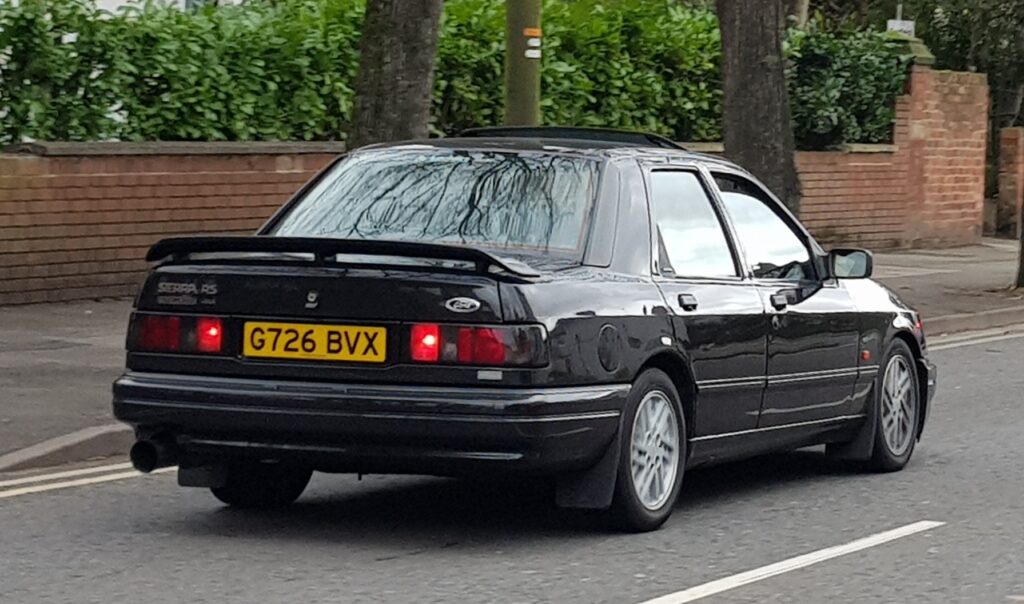
There was a major facelift in 1991, which brought in cross-spoke alloy wheels and a more modern dashboard. Production came to an end in December 1992 as the front-wheel-drive Mondeo came on stream. In total, Ford built 13,140 RWD Sapphires and 12,250 4x4s, meaning they outnumber the 5545 three-door Cosworths hugely.
The Cosworth legacy did, of course, continue with the Escort – which under the skin was very much an evolution of the Sapphire 4×4. Its rallying career was far more successful, though, and the return of that legendary rear wing meant that icon status was assured. A good number of cars were lost to modifiers during the Max Power era, not to mention those stolen and joyridden in the early 1990s. Much time has passed since the days when you could pick up a Sapphire for pocket change, but it remains the most affordable Ford ‘Cossie’ of them all, and in many ways the most overlooked, too.
WHAT TO PAY
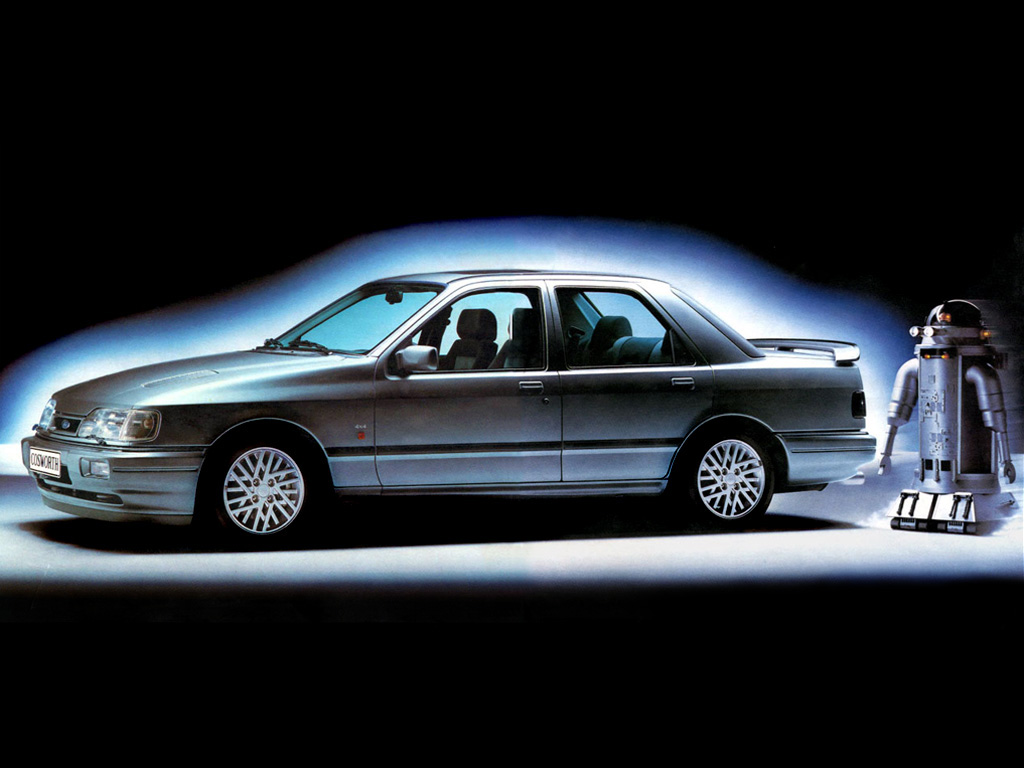
The £15,000-20,000 range is a fruitful hunting ground if you are looking for a presentable, usable example of either version. Most will have been modified to some extent; just watch out for anything too lairy. Increase the budget to £25,000 and you could be in for something with a very good history and sensible mileage. Mint cars with very low mileage and a perfect history could command £45,000-50,000 – and for genuine museum-quality fast Fords, the sky is the limit.
LOOK OUT FOR
The Cosworth YB engine is the heart and soul of the car, and must be carefully inspected. First of all, is it the correct type of engine? Early cars should have the YBB, while the 4×4 models should have the stronger YBJ. Any smoke should be treated with suspicion: head gasket failure is not uncommon, as is a failing turbocharger. Corroded fuel pump wiring or poor-quality replacement can cause lean running and major engine trouble, so ensure this is in good shape.
It’s quite common for the 4×4 versions to be converted to rear-wheel drive. This is acceptable if carried out correctly with a replacement T5 gearbox, but reverting back to AWD will not be easy or cheap. If the system is still in place, ensure the front wheels are actually being driven, as a worn viscous coupling could be a major expense to sort.
For a while, anything with a Cosworth badge was an extremely easy target for thieves, and they were also quite often written off, so history checks (and also consultation with the clubs) is advised if you are unsure!
Trim and seats can be difficult and expensive to track down, so be wary of temptingly cheap project cars – they can be a minefield.