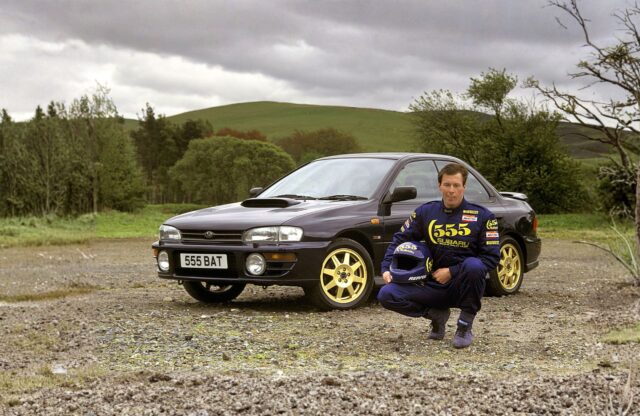
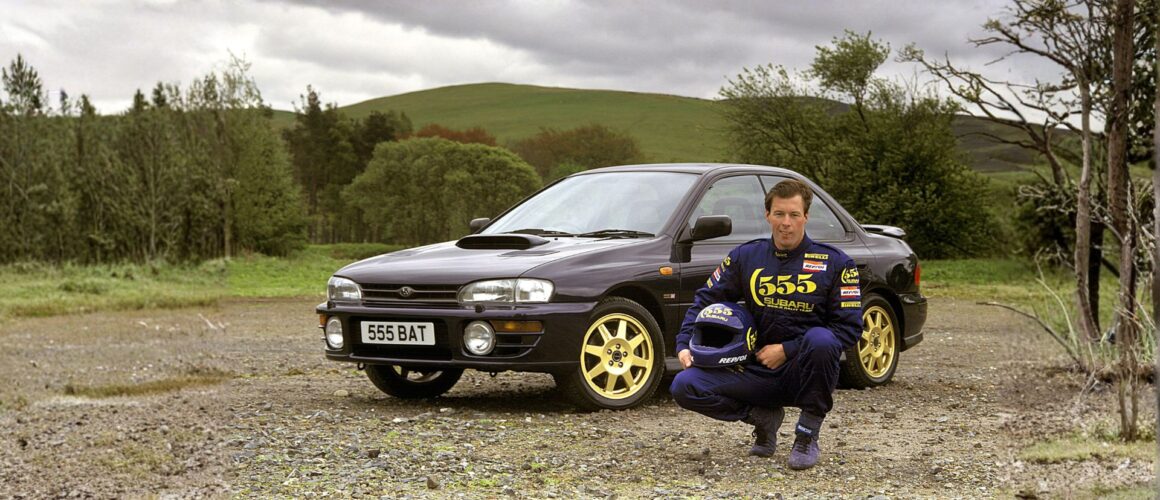
The first-generation Subaru Impreza Turbo arrived in the early 1990s as a modest family saloon with a very immodest turn of speed. What began as the UK-market 2000 Turbo, known elsewhere as WRX, quickly proved that all-wheel-drive traction and a punchy 2.0-litre turbocharged flat-four could humble far pricier machinery on broken British roads. The recipe was simple, the execution superb, and the legend was sealed by World Rally Championship success that propelled the Impreza into popular culture. In period the cabin drew criticism for its hard plastics, yet the chassis, drivetrain and sheer cross-country pace made enthusiasts forgive the lack of flash. A 1997 update improved the interior and brought incremental mechanical changes, but throughout its life the car was far more about go than show.
Launched in Japan in late 1992, the Impreza line included WRX and competition-leaning RA variants. UK cars badged 2000 Turbo followed soon after, initially with 208 bhp, a five-speed manual and permanent all-wheel drive. Short gearing and a relatively low kerbweight meant startling real-world performance, particularly in the wet. Subaru’s global rally presence amplified the appeal, with Colin McRae’s 1995 drivers’ title and Richard Burns’ later success ensuring the first-gen Turbo’s cult status. In 1997 the model gained 16-inch wheels, stronger brakes, a tidied-up dashboard and a mild power lift to 215 bhp, keeping it competitive against more overtly sporting rivals while preserving its everyday usability.

Special editions formed a key part of the story. The UK-market Series McRae of 1996 wore Mica Blue with gold wheels and was limited to 200 units. The Catalunya followed in 1997 with black paint, air-conditioning and gold five-spokes, while numerous Japan-only derivatives offered unique combinations of hardware and trim. Most celebrated of all was the two-door 22B of 1998, re-engineered with a 2.2-litre engine rated at 280 bhp, wider bodywork and uprated clutch, suspension and brakes. Only 400 were built worldwide, with around 15 officially reaching the UK. Near the end of the classic shape’s life, Prodrive created the P1 for Britain, a Sonic Blue two-door with 276 bhp and chassis tuning that distilled Subaru’s rally knowledge into road-car form. These halo models sit at the top of the tree for desirability today.
Not every Impreza lived a sheltered life and originality is rare. Many cars were modified when near-new, some tastefully and reliably by reputable specialists, others less so. That makes careful inspection crucial. Panel fit, paint quality and corrosion hotspots all warrant attention, as does evidence of sympathetic maintenance. The upside is that the fundamental engineering is robust when kept within sensible limits, and a lightly updated example can be a brilliant daily-use performance car that remains happy on school-run duty and weekend blasts alike. If you prefer investment-grade hardware, the best limited editions command serious money, but for pure driving enjoyment a well-looked-after standard 2000 Turbo still hits the sweet spot.

Common problems
• The EJ-series flat-four is durable if serviced, but hard-used or heavily boosted engines suffer. Prioritise cars with conservative tuning, reputable upgrades and frequent oil changes at 7500–10,000 miles, halved for track or modified use.
• Cambelt interval is 45,000 miles. Verify recent replacement with receipts and dates, and confirm correct tensioning to avoid mis-timing on start-up.
• MAF sensor failures cause poor running and hesitation, particularly on later cars. Budget to replace and avoid driving for long with a faulty sensor to prevent bore wash.
• Oil leaks around cam covers and sump are common. Rocker cover seepage can drip onto hot exhausts and smoke, while sump joints may need resealing with proper gaskets.
• Knocking at low revs and blue exhaust smoke can signal bearing wear or turbocharger seal failure. Walk away from engines with persistent rumble or heavy blue haze on overrun.
• Standard five-speed is strong at factory outputs, but high torque maps hammer second and third synchros. Slipping clutches are common on tuned cars, so test hot and under load.

• Differentials can develop a cruise-speed whine after sustained hard use. A faint hum is acceptable, but pronounced howl under steady throttle suggests impending rebuild.
• Many cars sit on uprated springs and dampers. That is not a red flag if the set-up is matched and aligned, but check for leaking shocks, tired bushes and uneven tyre wear patterns.
• Brakes are adequate for fast-road work, yet repeated heavy stops cause fade and warped discs. Feel for steering shimmy under braking and inspect discs for scoring or cracks.
• Early power-steering pumps can play up. If assistance feels inconsistent or noisy, inspect the pump and fluid level, and check rack mounts for perished bushes.
• Rear arch corrosion is the big bodywork killer. Look and feel around inner arches and the tops of rear suspension turrets from both wheel-arch and boot sides, as repairs are involved.
• Front subframe areas, lower wing bottoms and under-radiator panels can rust. Lift trims and arch liners to inspect, and expect cutting and welding where sill ends are flaky.
• Fuel smell near the nearside rear arch points to a perforated filler pipe. Replacements are available, but use it as leverage to negotiate given age-related prevalence.
• Sills may hide rust beneath plastic covers, and rear subframes can corrode badly. A car that looks tidy outside can still require significant metalwork underneath.
• Interiors wear well, but bolster wear and shiny plastics are normal. Focus on water ingress, heater function and any evidence of hacked looms from aftermarket stereos or alarms.
• Grey-import JDM cars can be brilliant but history may be patchy before UK arrival. Verify chassis numbers, import paperwork and ensure any Japan-only parts are still obtainable.
What to Pay?

First-generation UK 2000 Turbos remain the gateway to ownership, although JDM cars can often be a good buy if you know what you are looking for. Realistically, prices for decent cars start at around £8000, although there are plenty of projects around for considerably less. Judge each car on condition, originality and paperwork, as it’s the standard cars with modest mileage, consistent servicing and sympathetic upgrades that really command a premium. Poorly repaired or heavily modified examples should be priced to reflect remedial work.
The standout editions sit in a different league, especially the Prodrive-developed P1, which is consistently in demand. UK-market Series McRae and Catalunya cars have strong followings, and the two-door 22B occupies the top tier for collectability with long-established sky-high values. If your priority is driving rather than investing, a lightly modified UK 2000 Turbo with verifiable maintenance remains the sweet spot for value and enjoyment.