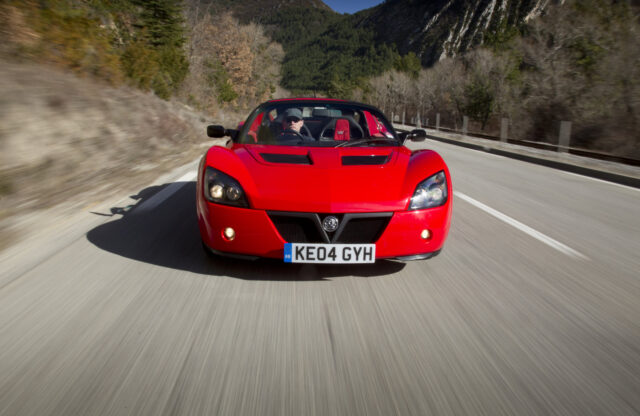

Vauxhall might not immediately spring to mind the when yo think about the lightweight sports cars, yet the VX220 remains one of the most intriguing and rewarding models the marque ever produced., not to mention a slightly hidden gem. Born from an unlikely partnership through necessity, about when Lotus – struggling to re-engineer its Elise to meet tightening crash regulations – required both cash and a partner. General Motors, meanwhile, wanted something to inject excitement into its Vauxhall-Opel range. The result was a trans-Atlantic collaboration that delivered one of the finest-handling sports cars of the early 2000s.
Launched in 2000 and built alongside the Elise at Lotus’s Hethel factory, the VX220 (sold as the Opel Speedster in Europe) shared its aluminium chassis and much of its engineering with its Norfolk sibling. Yet it wore its own sharp, wedge-like bodywork and, crucially, used GM power rather than Toyota’s. Early cars featured a 2.2-litre, four-cylinder, naturally aspirated engine producing 144bhp and 135mph, good for 0-60mph in 5.6 seconds.

In 2003, the Turbo version arrived, replacing the original unit with a 197bhp 2.0-litre turbocharged engine from the Astra SRi. The result was a car capable of 0-60mph in 4.7 seconds and a top speed of 151mph. The following year saw the ultimate evolution: the VXR220. Limited to just 60 examples for the UK market, it featured uprated brakes, semi-slick tyres, carbonfibre seats and Speedline wheels, all finished in Calypso Red. With 220bhp, this was the most hardcore and track-focused VX220 of all.
Production ended in 2005 after around 7000 units (including Speedsters) were built. While it never achieved major sales success, the VX220 has steadily gained cult status for its purity, rarity and raw driving appeal. It offers Elise-like thrills at often lower prices and remains a superb entry into the world of serious lightweight sports cars.
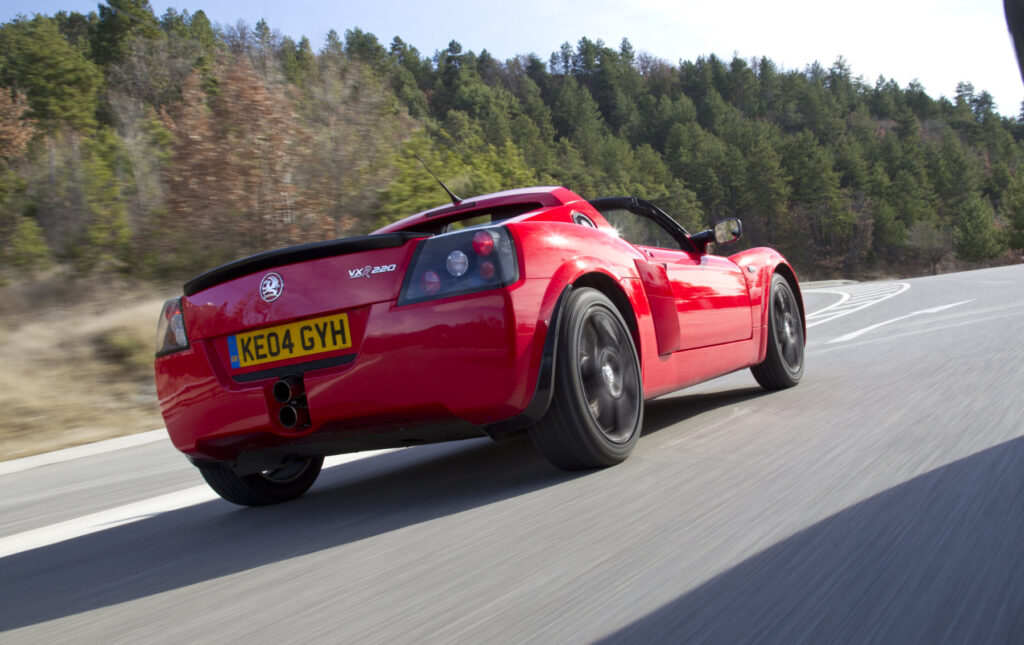
Today, the VX220 stands as both a fascinating chapter in Lotus’s history and one of Vauxhall’s most interesting experiments. Its simplicity, delicacy and communicative handling make it one of the great driver’s cars of its era – and a guaranteed future classic.
Common problems
• Some early 2.2-litre cars suffered cambelt pulley seizure, which can cause catastrophic engine damage. Listen for a high-pitched whine from the top of the engine, a sign of potential trouble.
• Engine mounts are prone to failure; during a test drive, accelerate and brake sharply to listen for knocking that may indicate worn mounts.
• Turbo models need evidence of rectification work, particularly replacement of the poly V-belt, spark plugs and coil packs. The 2.2 should have had its throttle body, air intake and electrics checked.
• Gearboxes are strong Getrag units but can develop bearing wear if abused. A grating or rumbling noise under load can signal early failure; fortunately, replacements are inexpensive.
• Suspension and brakes wear quickly if the car has been driven enthusiastically. Check for uneven tyre wear and tired dampers; replacement parts are relatively affordable.

• The VXR220 uses different wheel and tyre sizes front to rear (16in front, 17in rear), identical to the Lotus Elise set-up – ensure these are correctly matched.
• Steering should feel razor-sharp; any vagueness or play may indicate worn suspension knuckles, bushes or lower ball joints. Left unresolved, these can make the car feel unstable at speed.
• Bodywork damage is the biggest red flag. Fibreglass repairs can be costly, while any damage to the extruded aluminium chassis can be terminal. Carefully inspect panel gaps and the underside for accident repairs.
• Cabin wear is common due to the car’s minimalist layout. Driver’s seat bolsters and sill tops scuff easily, while the removable roof can leak if not properly fitted.
• Many VX220s were cheap for a long time and may have been owned by inexperienced drivers. Prioritise a straight, uncrashed example over one with cosmetic upgrades.
• The basic 2.2-litre model offers the purest handling and most delicate balance, but the Turbo delivers significantly greater performance and tunability. The rare VXR220 is the ultimate collector’s choice.
What to Pay
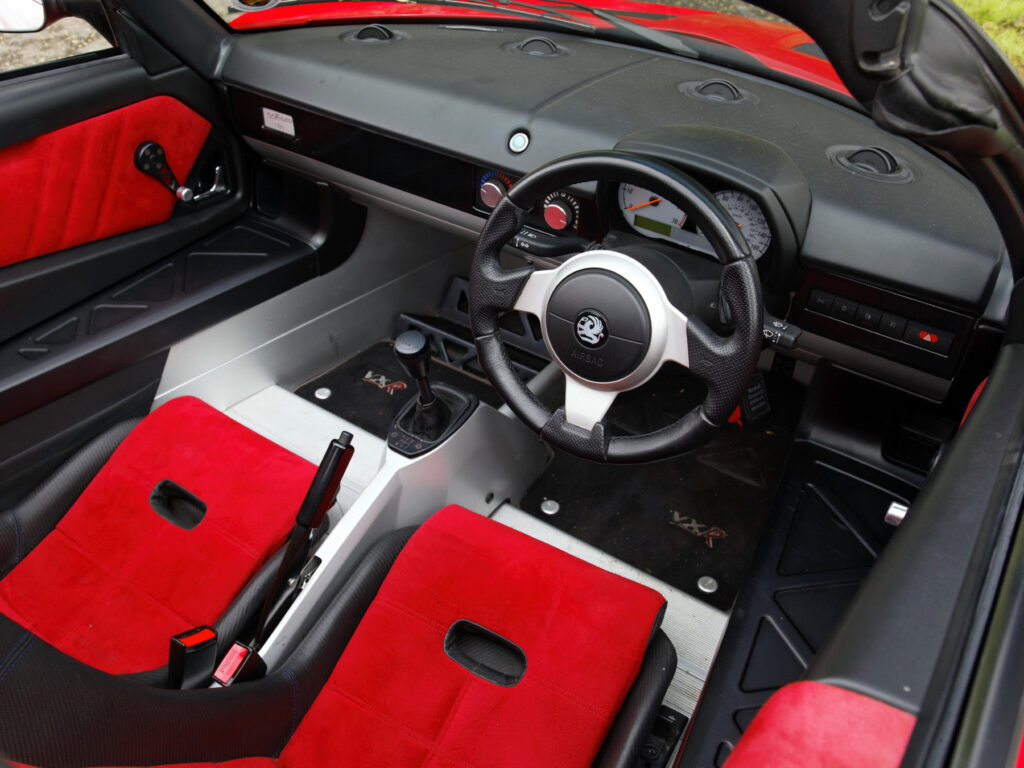
Prices for the VX220 have risen steadily in recent years as enthusiasts and collectors recognise its rarity and driving purity. Expect to pay around £12,000 for a fair example requiring cosmetic attention, £18,000 for a well-maintained, clean car, and up to £22,000 or more for an exceptional, low-mileage or collector-grade vehicle.
Naturally aspirated 2.2s remain the entry point into VX220 ownership, while Turbos are typically more desirable and command a premium. The limited-run VXR220 sits in a different league altogether – values are climbing, and the best cars are considered blue-chip modern classics. Given the modest running costs and mechanical reliability, a good VX220 represents one of the most rewarding sports car buys of its generation.