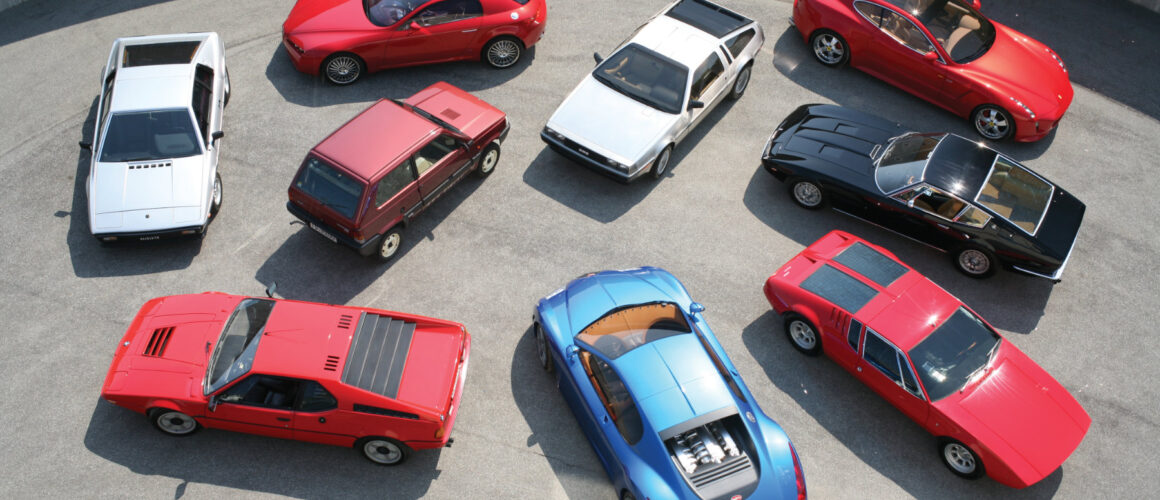
Back in 2006, Octane spoke with Giorgetto Giugiaro about his career, personal highlights and the industry outlook (at the time). Here is the interview, in full.
From humble beginnings as the son of a fresco artist in the remote coastal mountain town of Garessio in the Piedmont, Giorgetto Giugiaro was urged by his father Mario to add technical know-how to his obvious figurative talents. So, in 1952, the 14-year-old Giugiaro headed to Turin’s Academy of Fine Arts.
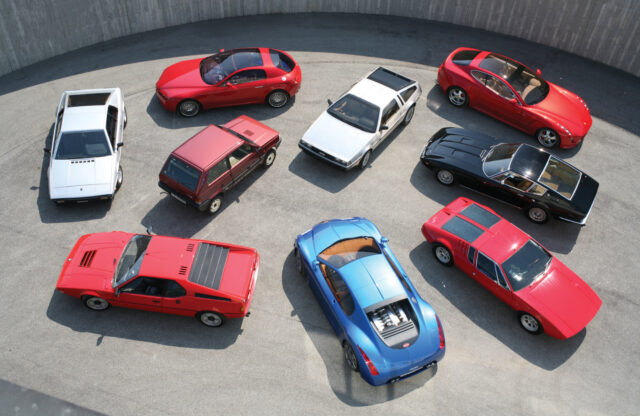
Singled out at an exhibition by Fiat talent scouts in 1955, the Giugiaro legend began under fortuitous circumstances in struggling post-WW2 Italy. He has seized every opportunity since then and has never been one to simply wait for things to fall into his lap. The designs you see here in the accompanying photos represent only a few of the milestones in a 51-year career. The actual total for prototypes and production cars overseen by Giorgetto Giugiaro hovers at around 80 of each at the time of writing.
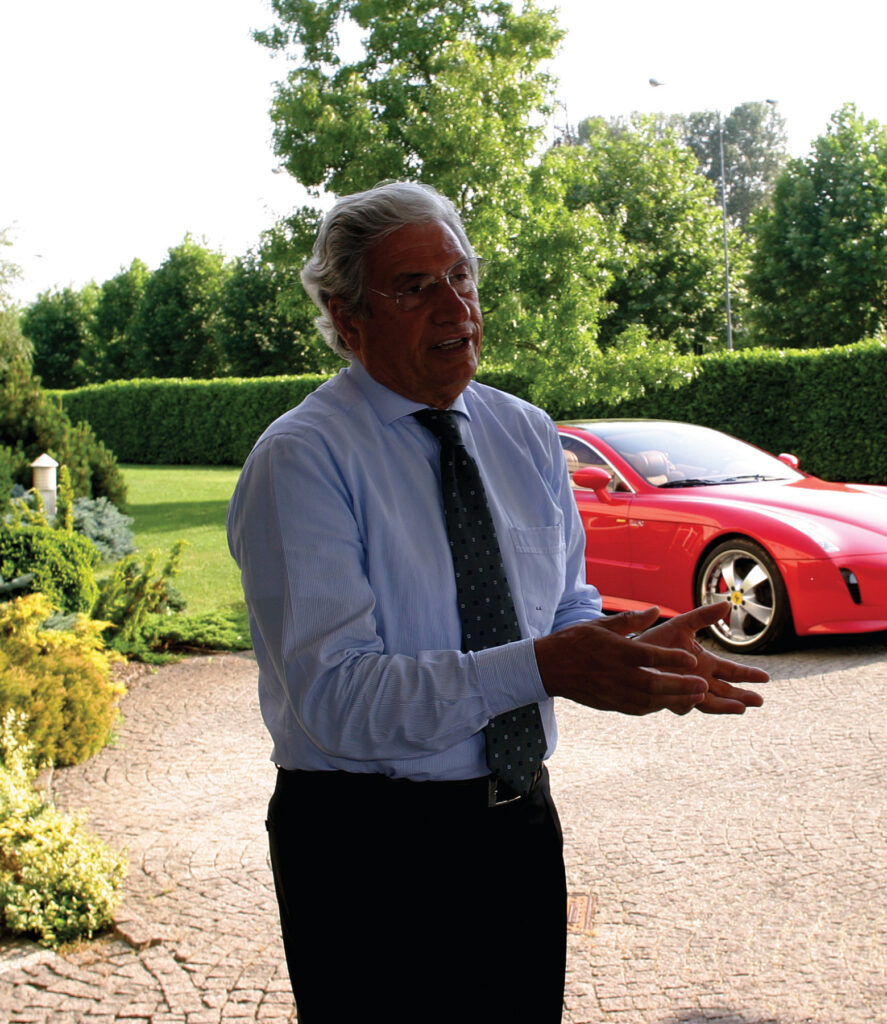
When did you realise that it wasn’t enough to work for a Fiat, Bertone or Ghia, and that you were meant for greater things under your own name?
‘It came out of a small ambition – to do something that can be appreciated by others. Whether that meant criticism or compliments wasn’t important and there wasn’t an ultimate goal that I had in mind.
‘I started out as an artist just like my father, then came the offer from Fiat [in 1955] and I began to see the world. But only by working with a smaller shop do you start to see drawings and ideas come to life. [Nuccio] Bertone was a technical wiz. He specialised in structural aspects, though not much in vehicle styling. The truth is that at Bertone there was only me.
‘Then Ghia approached me with an offer of becoming their design director. I would have people working with me whom I could utilise as I thought necessary – and it wasn’t a typical family operation. But it was risky since with the Bertone name I felt protected when it came time to judge a prototype. Nonetheless, I needed to find out if I could be as good a director as Bertone.
‘At Ghia, I had to literally change everything I was used to doing. We did all-new styling; the [De Tomaso] Mangusta and [Maserati] Ghibli had no precedents when they debuted [in 1966].
‘My contract with Ghia was for three years, but then De Tomaso bought Ghia [in 1967] and I really didn’t see eye-to-eye with him. I told him that I wanted out and he wouldn’t release me. Then, thanks to his secretary, I found out that he had started opening all of my mail. I brought this up with him and we agreed that I would fulfil the last year of my contract as an outside consultant under the name Ital Styling.
‘So, it wasn’t just ambition, but a clear cause-and-effect that led to where we are today.’
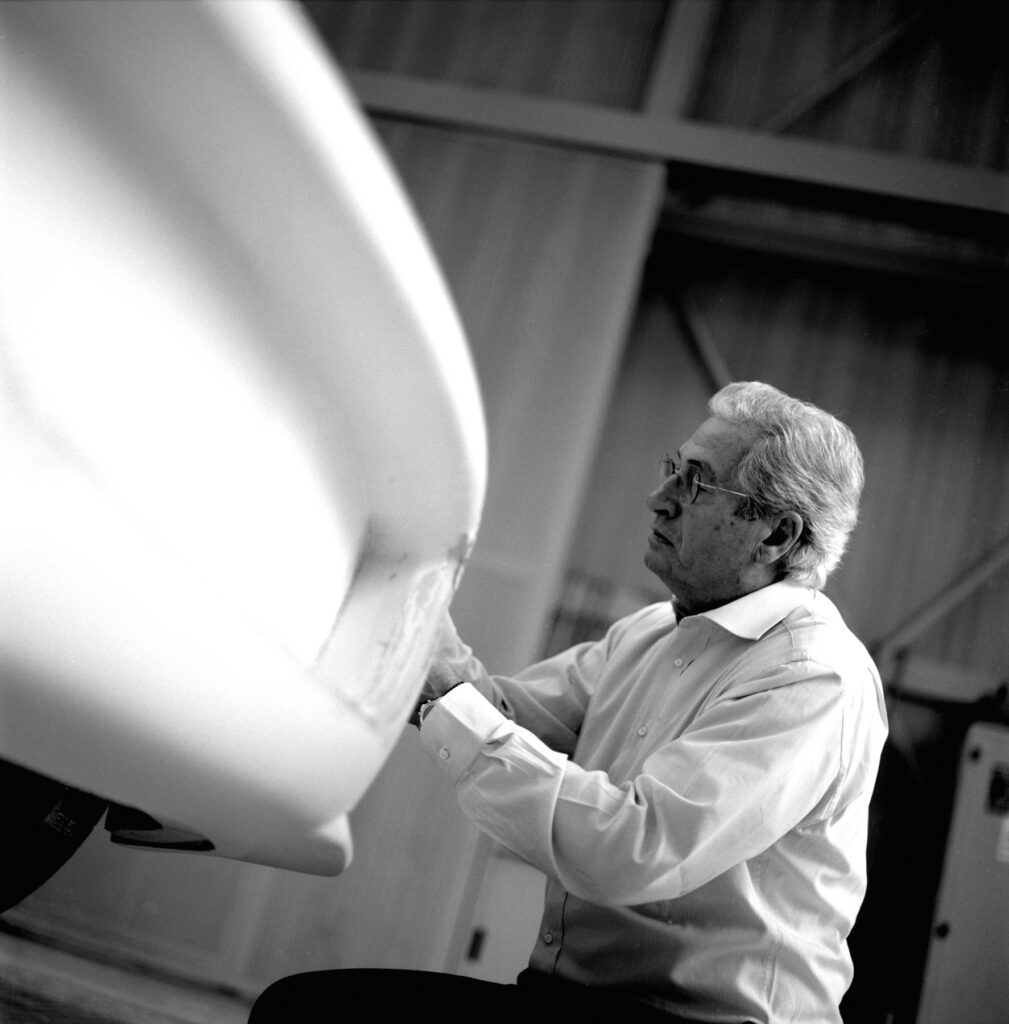
Is it true that it’s actually compact cars – VW Golf/Rabbit, Fiat Panda, VW Scirocco and Passat, Alfasud – that made your fortune?
‘These are the cars that allowed the business to thrive. Only then can there be the resources to create futuristic dream cars, many of which end up revolutionising the business. It’s by handling these types of important smaller cars that we became so good at handling all aspects of the production process.
‘Working with Fiat early on for these small-car projects, I’d be sitting with all of the various department heads and I would ask all kinds of questions about every aspect of the car’s manufacturing process. Because they continued to doubt that we could do what I was proposing, I asked them all individual questions about the panels, seats, axle assemblies… They were shocked that a young stylist like me was actually interested in these things, but I needed to justify my designs in practical terms. This way of working is what got us the Golf project. The Germans didn’t want to hire someone who just did style sketches and sat around waiting for feedback.’
What was your first assignment when you joined Fiat in 1955?
‘Our departmental director did the designs and I would do the colouring for his sketches. I was trained in painting and I used a technique common within Fiat at the time. I think the first colouring assignment was for the [Autobianchi] Bianchina.
‘I had seen various art magazines with car illustrations from an American illustrator and I tried these techniques at Fiat. My boss looked at some of these renderings and he asked me, ‘Why don’t you use the normal techniques? I don’t like these sketches. When we show them, I’ll say they were all done by you.’ Then there was a meeting with the executive director [Fabio Luigi] Rapi and he immediately said, ‘Great designs. Who did these?’ My boss half-heartedly indicated me and Rapi exclaimed, ‘Well done! Do all your designs like this from now on.’
‘We always presented new designs to the board using 1:1 illustrations done with coloured chalk. I had started illustrating the wheels using a chrome effect I had taught myself. So, again, Rapi is one day eyeing this huge flat rendering on a wall and the first thing he notices is the shining 3D wheels. ‘Who did this?’ he asked. ‘This is crazy.’ My boss once again indicated me and Rapi blurted out, ‘Fantastic! From now on we do it this way!’
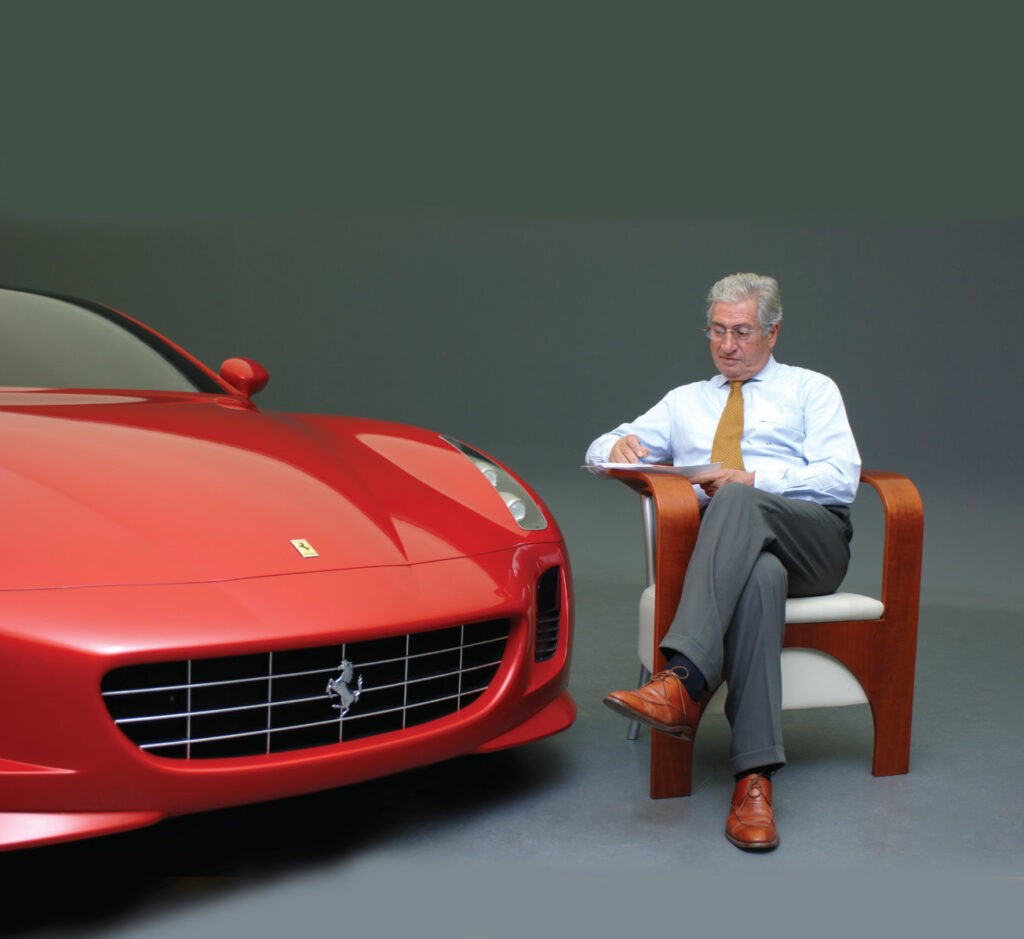
What would you like to have happen in the next five decades of Giugiaro?
‘These days all of the big manufacturers now have their own in-house design talent and there are several excellent schools for study. It’s not like it was before and these clients don’t really need our design services much per se. But this aspect of our business can survive if the people above the design department in these companies have the idea to see what we can do for them design-wise in addition to the various other services we now provide.
‘Research services will be an ongoing service for the future. We can quickly provide information on what’s happening worldwide in any segment of the market – the trends, the future ideas.
‘We started doing a lot of jobs with the Chinese since Fiat started severely cutting what it would pay us for our services. But it’s so much easier to work with Fiat, of course, since working with the Chinese means flying to China all the time. Thank goodness I have [my son] Fabrizio.
‘All we’re lacking today are contracts to actually build the cars. This would be a final component, but we don’t have much real need to do this.
There has been commentary on ‘the death of Turin’ as a design centre. Bertone, Ghia, Stola, Zagato and others are seemingly dying or already dead. What’s your view?
Yes, this is a constant theme around this area. What has happened simply is that over time we were all made to compete with the manufacturers’ research and design centres which didn’t exist before. In the past, company bosses never thought of investing the money needed for a dedicated research department. They left all of this up to the design houses. Now we’re going up against huge manufacturers with far more money to invest than we ever could. Nonetheless, we did invest more or less at the right time. Those who didn’t invest when they might have done so at lower costs are now finding it impossible to compete.
In the past two years, there has been a large number of very significant cars having their debuts. Which three models interest you the most?
I generally am not thrilled with super-originality. What excites me the most is the perfecting of something already well done. The BMW 5-series is fascinating work. After that, the A6 is really the embodiment of Audi’s recent design language. The Ferrari 599 is really attractive, even though I keep wanting them to do something with a more futuristic vision. Final decisions on re-design can’t be ordered by the chairman of the company, but at Ferrari it will always be this way.
Giorgetto Giugiaro – the career highlights
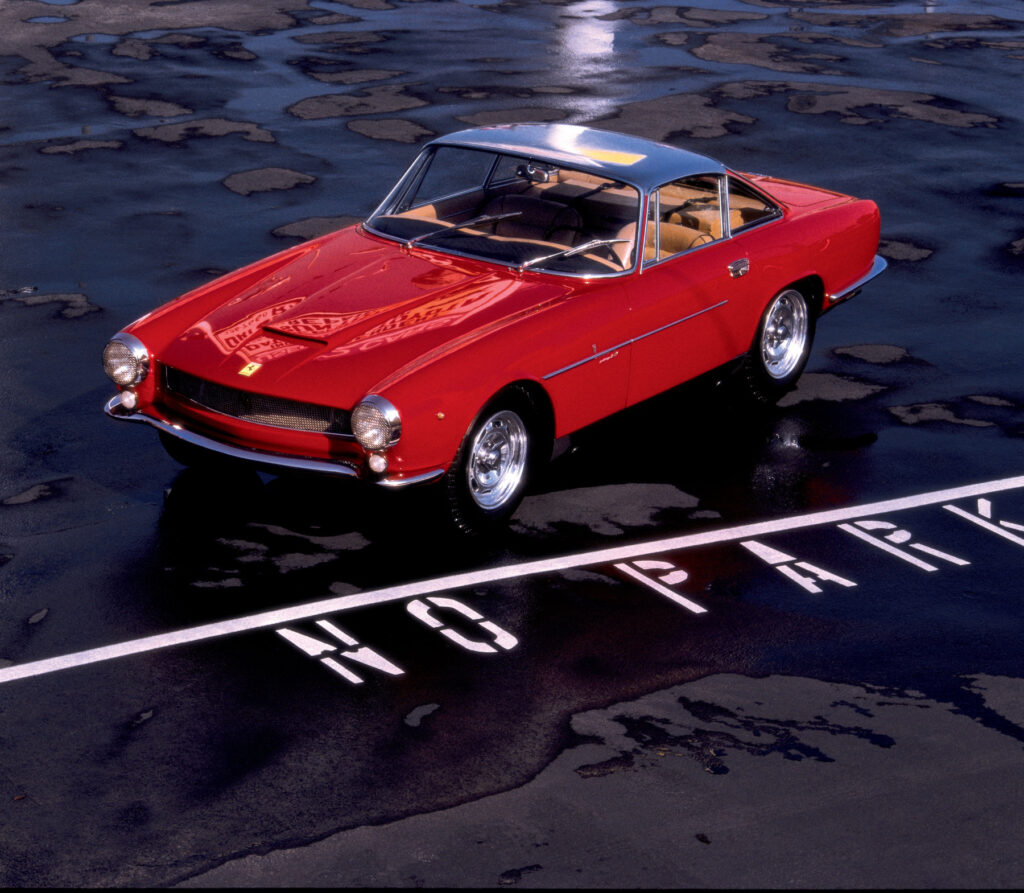
1960 Ferrari 250GT Bertone
This one-off was designed for a Genoa industrialist on 250GT chassis no. 1739. The requirements laid down were that the design must be streamlined and elegant rather than curvy and sexy. ‘I was young and really needed to control my excitement over doing
a Ferrari,’ says Giugiaro.
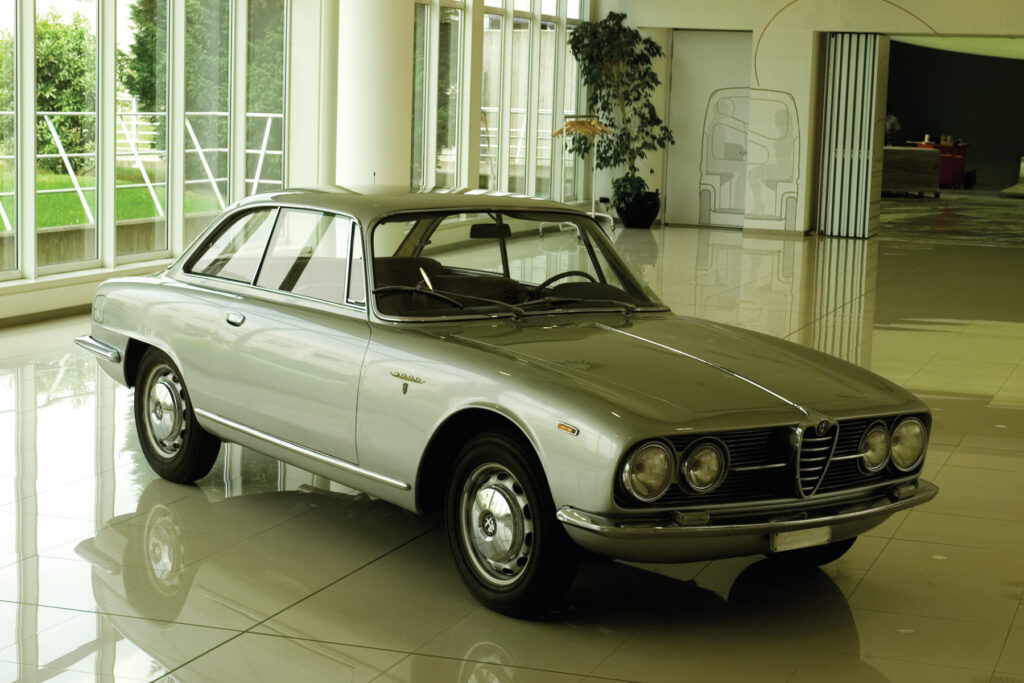
1963 Alfa Romeo Giulia GT
The Giulia GT was designed during 1960 by Giugiaro while he was employed by Bertone and also while in the middle of his one-year stint in the Italian military. ‘Not an easy project. It needed to be sporty, a 2+2 and an everyday practical car.’ The car sold over 192,000 units worldwide over its 14-year life.
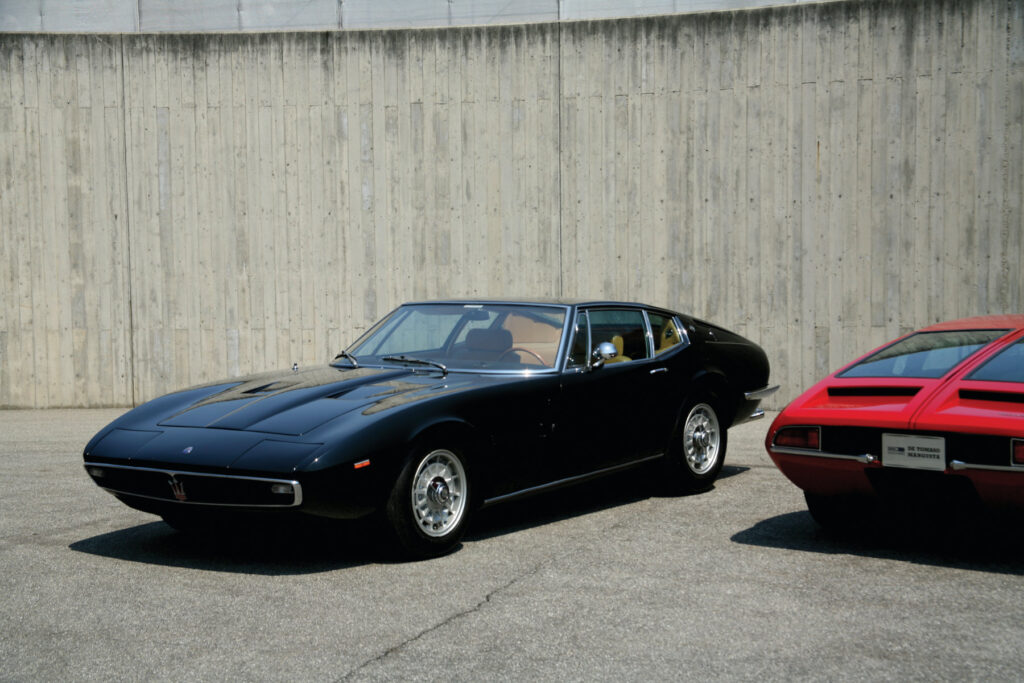
1966 Maserati Ghibli
The perfection of the two-seater exotic coupé of the time. Total production for the Ghibli was 1149 units, outselling both the Ferrari Daytona and Lamborghini Miura. The original Ghibli used the 330bhp Maserati 4.7-litre V8 engine. Note the pop-up ‘pedestrian-killer’ headlights versus the integrated lights of the Mangusta.
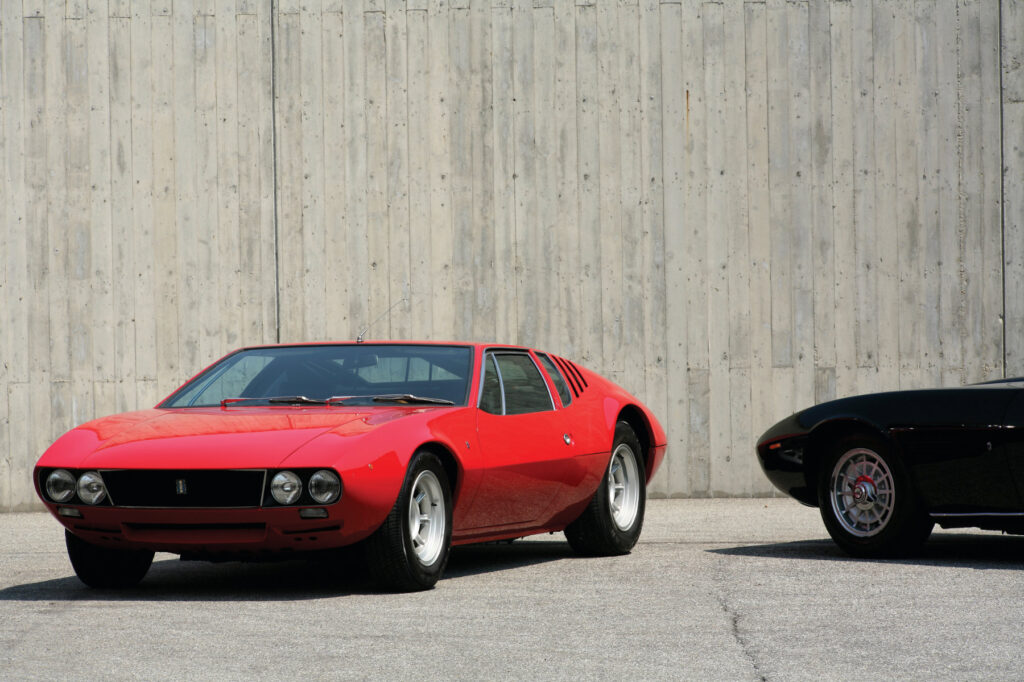
1966 De Tomaso Mangusta
Completed prior to Alejandro De Tomaso’s buy-out of Ghia, at a time when Giugiaro had full freedom within the company. Initially powered by a 4.7 V8, then a 5-litre. This design is a Giugiaro personal favourite: ‘While the Ghibli was more traditional, the Mangusta was a step beyond. Both were very emotional projects.’
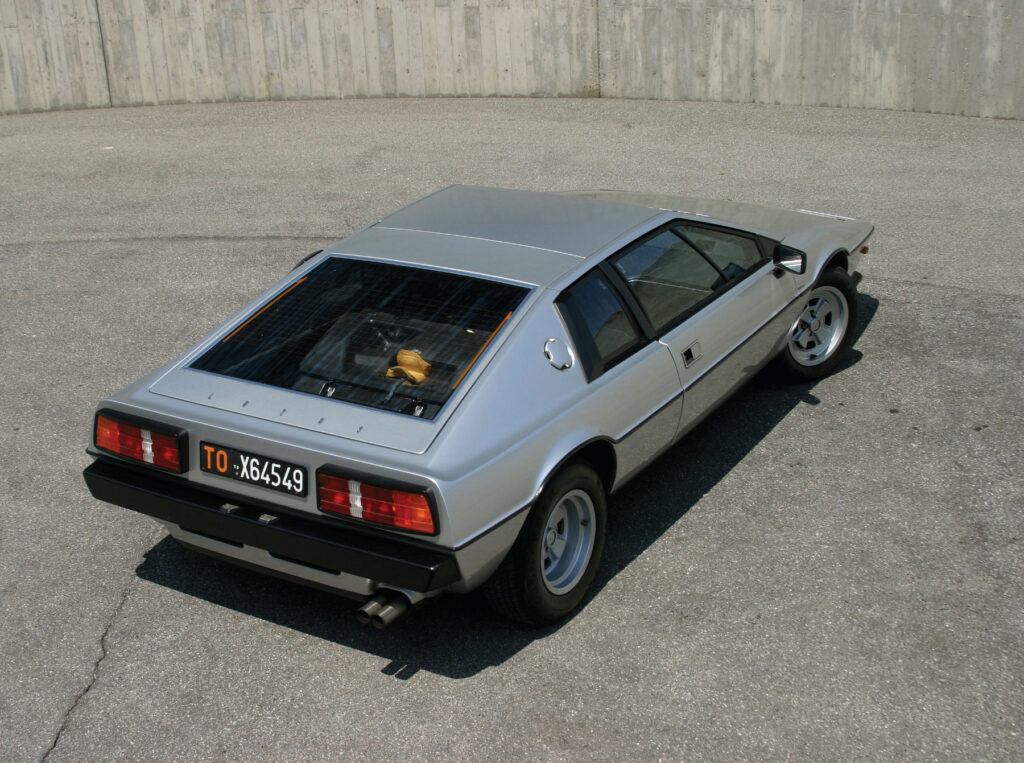
1972 Lotus Esprit
The lines of the Lotus supercar (10,675 built from 1975 to 2004) are a ‘domesticated’ version of the Boomerang show car, according to Giugiaro. Chapman and Giugiaro bickered incessantly over the Esprit, even disagreeing over which badge should go on the front wings; ‘Styled by Giugiaro’ was the solution.
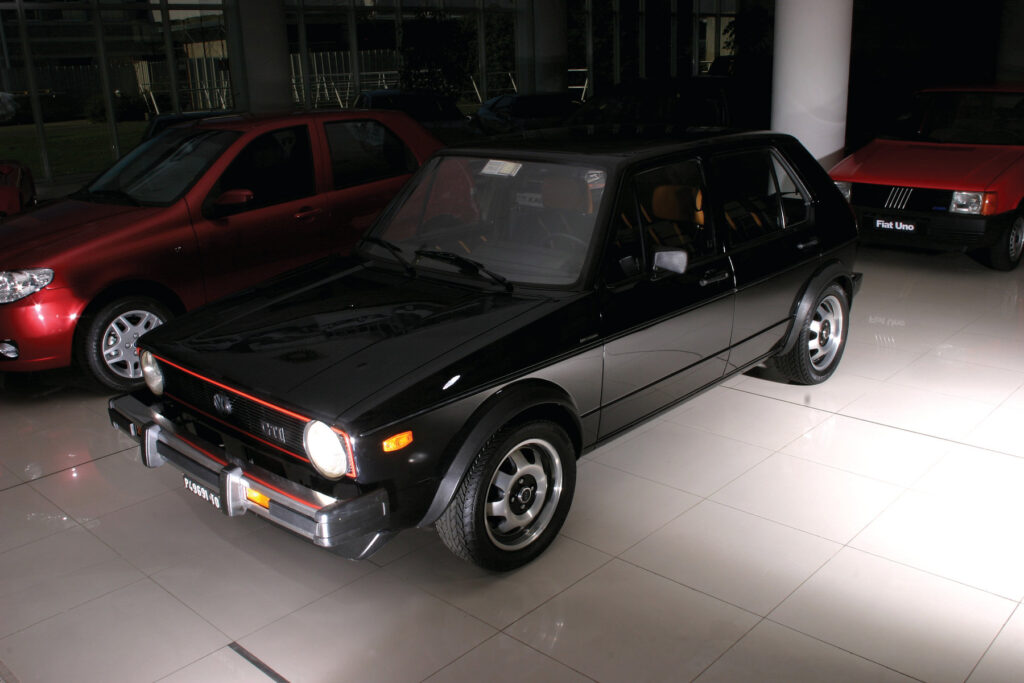
1974 Volkswagen Golf/Rabbit
The early 1970s were a tough time in Germany and the new hatchback had the responsibility of turning VW around. Total sales are approaching 21 million cars. What convinced VW bosses to award the project to Giugiaro in 1969 was the designer’s knowledge of all design and manufacturing details.
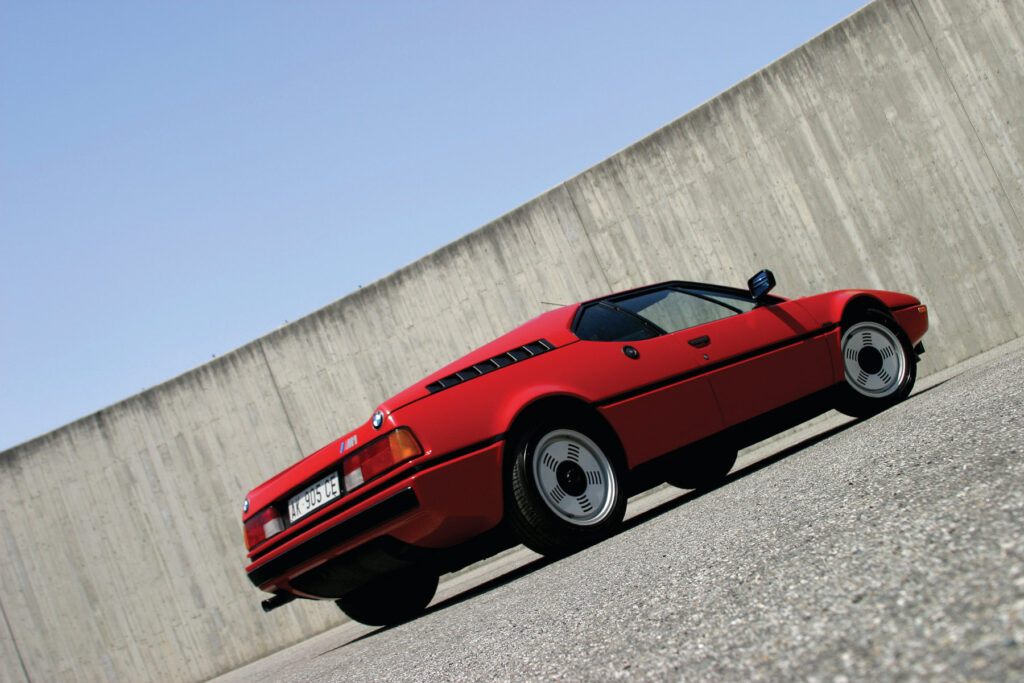
1978 BMW M1
Giugiaro built the M1, the only time production was undertaken in-house. Manufacture needed to comply with BMW standards but Giugiaro had never worked directly with fibreglass. ‘The M1 needed to win at the track and please everyday drivers,’ recalls Giugiaro.
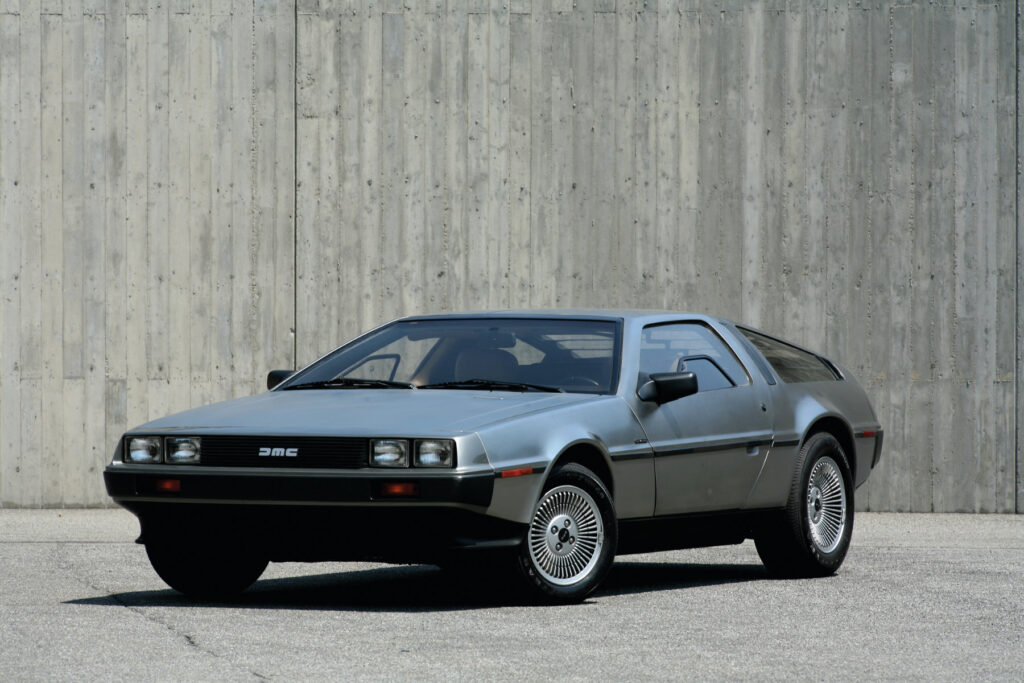
1981 De Lorean DMC-12
John Z De Lorean approached Giugiaro at the Turin Show of 1974. After bamboozling the UK Government into paying for the factory and later getting caught dealing cocaine, De Lorean was finished. The company closed in 1983 after nearly 8600 cars had been built.
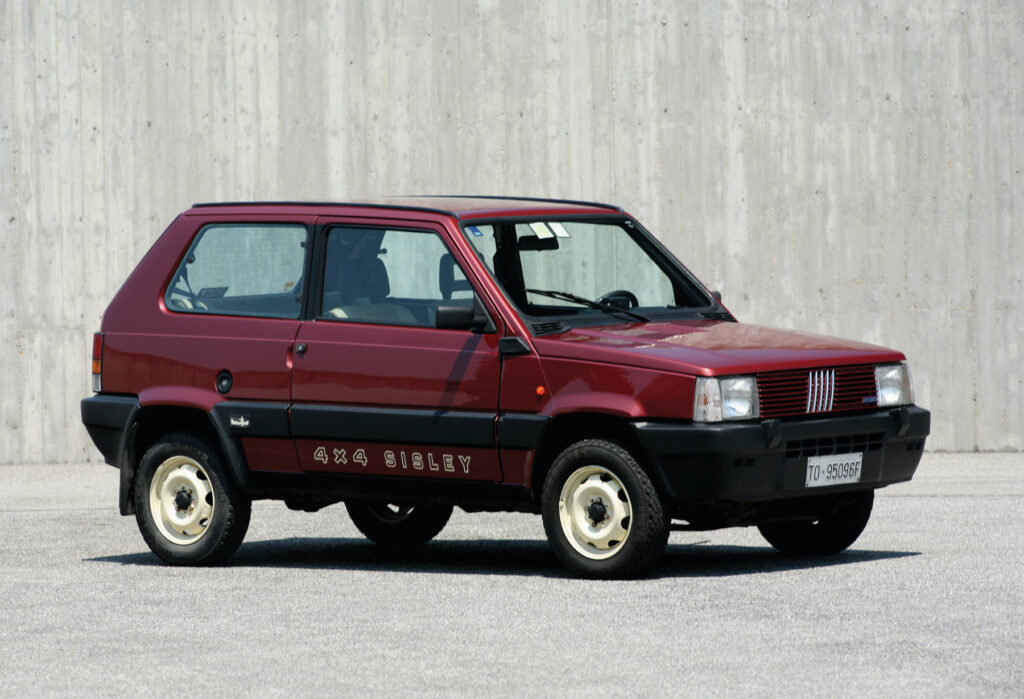
1987 Fiat Panda 4×4 Sisley
This actual car is the daily driver owned by Giorgetto Giugiaro’s mother-in-law and has been used regularly. For the original 4×4 Panda (1983-1994), Steyr-Puch provided the 4wd system and created a minor legend.
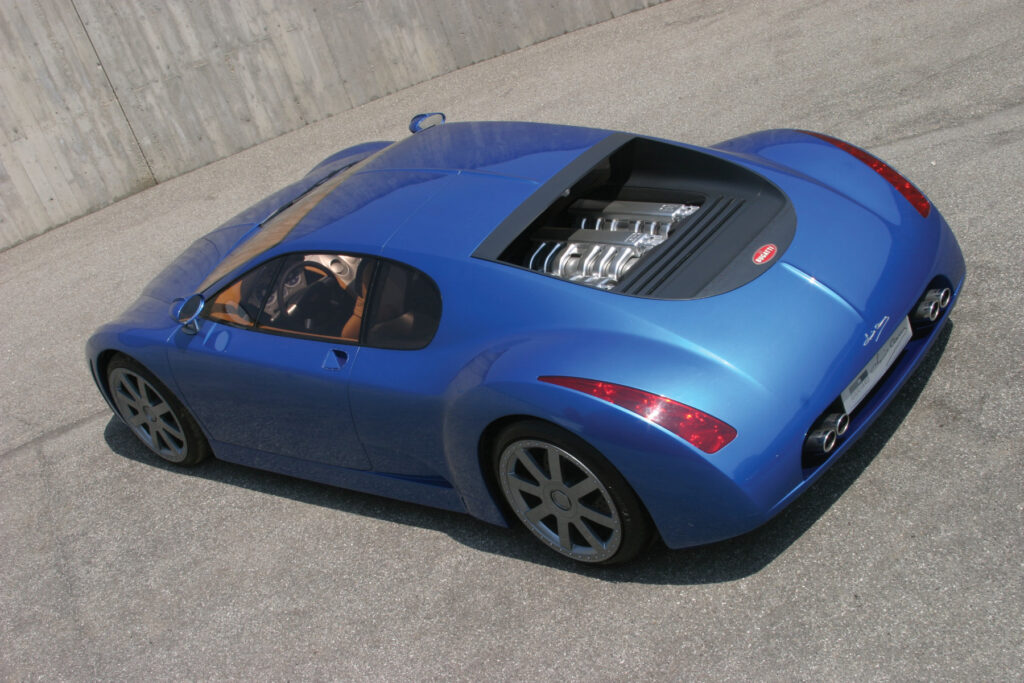
1999 Bugatti 18/3 Chiron
Yes, that’s a rear-mid 6.3-litre W18 engine – three banks of six cylinders spaced 60 degrees apart. Giugiaro worked closely in the early-1990s with the fledgling effort to give new life to the Bugatti marque. The Chiron design was inspired by the Bugatti Atlantic.
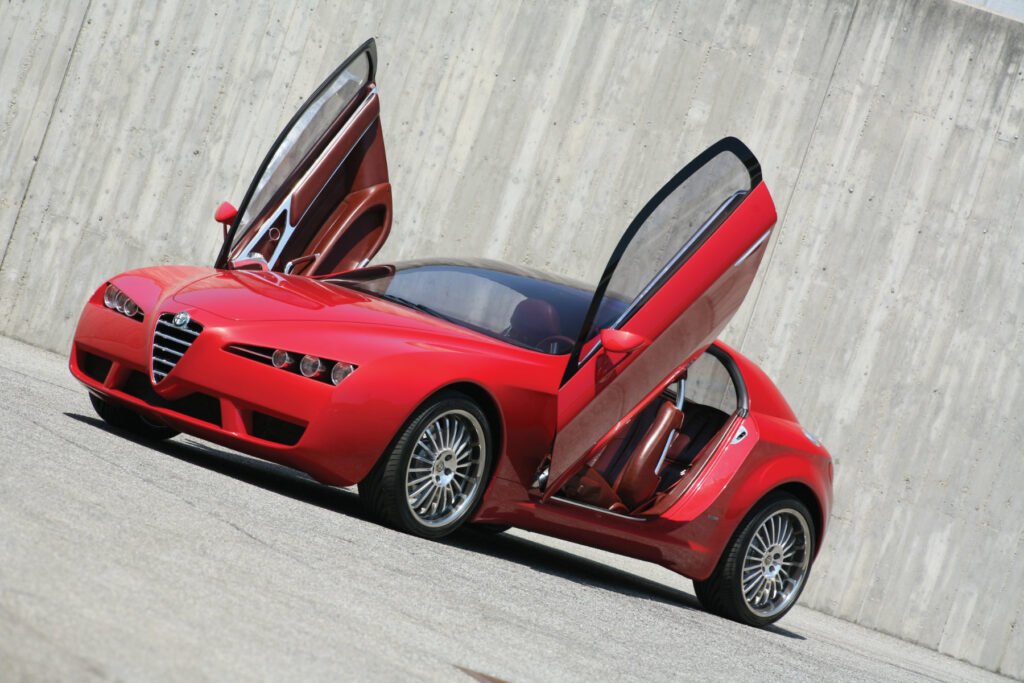
2002 Alfa Romeo Brera
The only shame about the Brera is that it took so long to be produced and had to undergo vast compromises in order for the suffering Alfa to afford it. This is the prototype, first seen on the Giugiaro stand at the 2002 Geneva show, with a 4.2-litre V8 from Maserati.
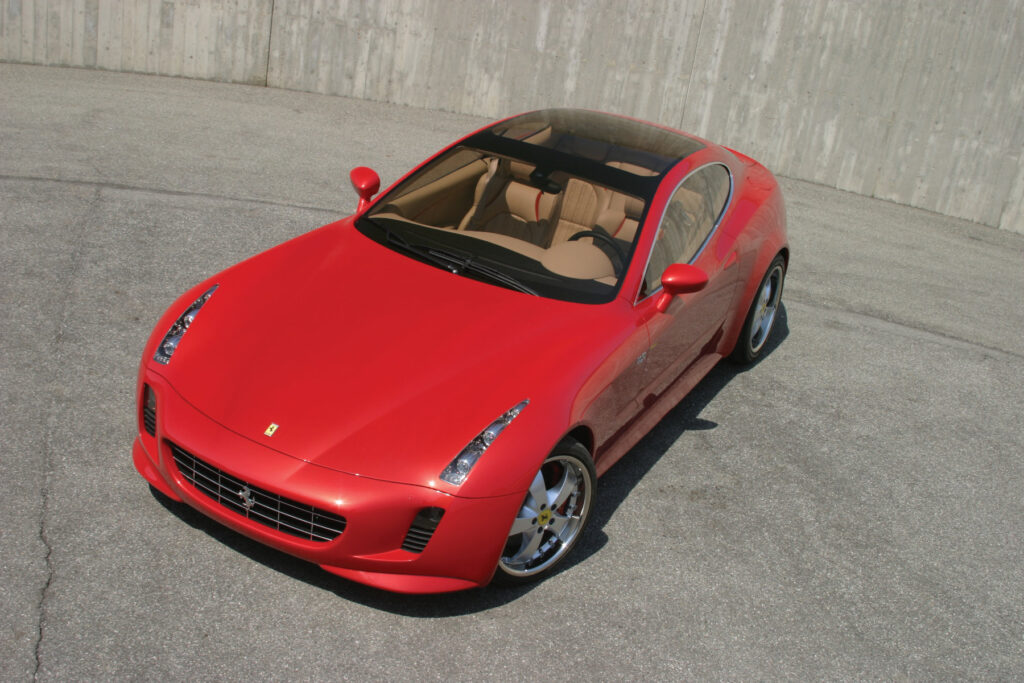
2005 Giugiaro-Ferrari GG50
First seen at 2005’s Tokyo Show, the GG50 is based on a Ferrari 612 Scaglietti. Giugiaro’s only mistake is that he improved upon the 612’s original packaging, thus incurring the wrath of Ferrari bosses. ‘Ferrari was my first choice for celebrating 50 years in the business.’