I was a bit fazed when Ron Dennis phoned me. Ooh-err. We hadn’t spoken in the years since I’d completed the owner’s special edition of our McLaren F1 book Driving Ambition and Ron had decreed that, although I could have a copy, I would have to pay full price for it. I have seldom been more deeply unimpressed.
This feature first appeared in Octane issue 120.
Never before had I been refused a discount on one of my own books. On principle I suggested an alternative destination for the volume in question. I think I’d already blotted my copybook when he’d suggested that I’d make an ideal manager for a McLaren F1 Bonneville record attempt. I’d honestly confessed that while I’d love to do it, his confidence was wildly misplaced, I actually knew my limitations, and by his standards I’d just prove I couldn’t even run a bath. Another – unspoken – reason was that I couldn’t see myself willingly wearing some team uniform, plastered in sponsor logos from people and products I might detest. Hmm – but now he again wanted something from me.
I opened the conversation by remarking ‘Oh gawd – what have I done wrong?’. Chuckling, he assured me this wasn’t the case. He wanted to check some ancient history and we had an enjoyable half-hour or so exploring the field. But my notions of old McLarens’ monetary value were laughably out-of-date, as he made clear. I then readily explained in detail what my long-time colleagues at Bonhams Auctioneers totally understand. I’m a history man, not a money man, and to me no old banger can itself be worth more than five to ten grand. It’s then that genuine stature, proven record, superstar association and – above all – market perception add the zillions.
In contrast, a long-overdue lunch with Gordon Murray – creator of the McLaren F1 – went rather better. We giggled a lot, recalling when he had invited me to tag along with the inaugural McLaren Cars project – as a kind of semi-resident Boswell to his Dr Johnson – very early in the piece.
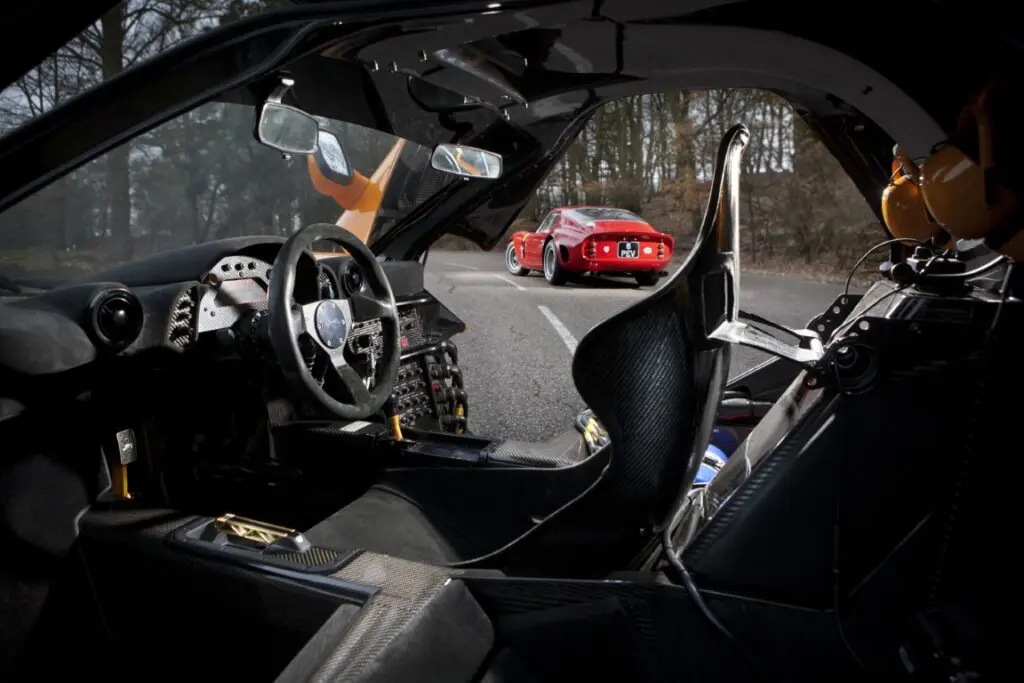
He and McLaren’s late, wonderful, Creighton Brown had first asked me to sign a confidentiality agreement which, in puzzlement, I did. Then they took me down into the workshop at their spanking new Albert Drive factory in Woking, and there on a surface plate sat a rough-cut MDF cockpit mock-up. It was at the time all that existed of the McLaren F1. Its windscreen was defined merely by strings stretched between tacks in the timber header rail and scuttle top. Creighton’s confidentiality agreement was explained by the core arrow-head seat layout and centreline driving position. Despite my prejudice against ‘ordinary’ roadgoing supercars I recognised that Gordon had brought me in on the birth of something truly wonderful – and in later years it proved a real privilege to tell the full story.
This March, part of that story came full circle. The great Nick Mason and I found ourselves co-presenting a group of our favourite cars to a select – but frankly dauntingly highly qualified – audience at the 7th Connoisseurship Symposium in Miles Collier’s fantastic Collection at Naples, Florida. We had only an hour, more or less, for that module, but spent 25 minutes of it on the very first car selected: the McLaren F1.
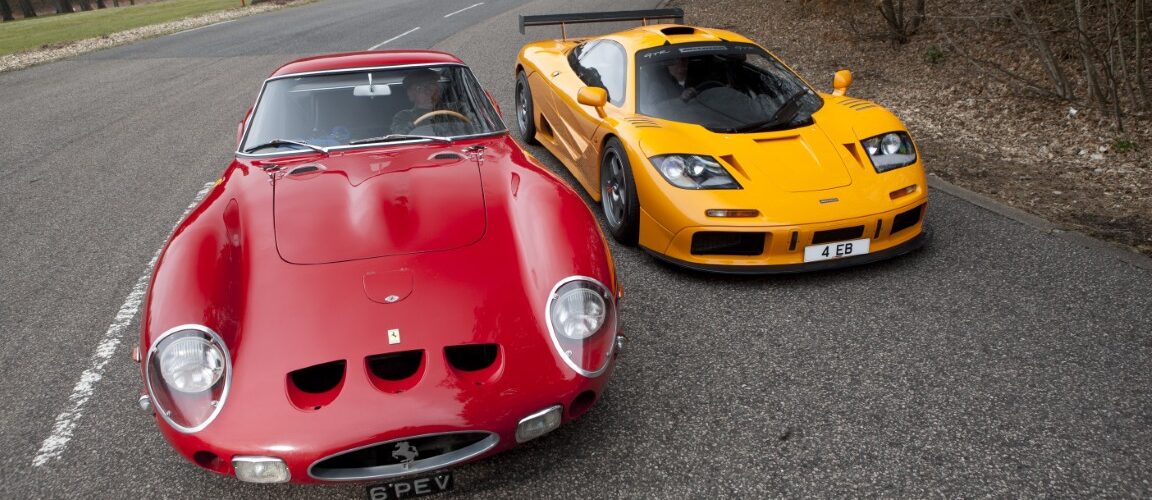
Within that select audience there were several owners of both F1s and, significantly, of 50-year-old Ferrari 250GTOs. Nick himself, as a truly discerning connoisseur of truly great cars, has one of each. Back in the late ’80s when he ‘only’ had a £70,000 GTO he had lent it to mutual friend Murray.
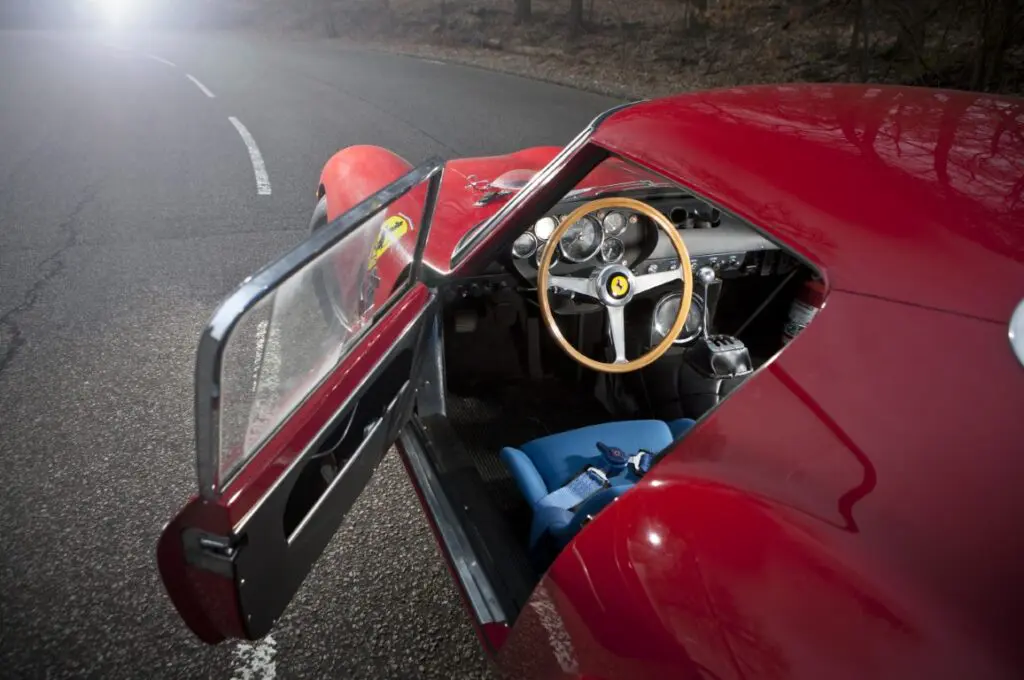
And this is where, though my sense of attached monetary numbers is demonstrably inadequate, I can claim some insight. Nobody would claim that a GTO offers 21st-century refinement, quiet, comfort and mod cons. But by happy circumstance the Ferrari design team that developed the model in 1961-62 provided one of the best-balanced, most driveable and forgiving private-owner quasi-competition cars of all time.
Nick tells me that today he’s perfectly happy to have his GTO circuit-raced on a Sunday by professional drivers (with a realistic prospect of a decent result), while remaining confident that the car will emerge fit enough for his wife to take it on a comfortable, enjoyable – and QUICK! – week-long Rallye Feminin next day. What’s true today was just as true 50 years ago when the first of the 39 Ferrari 250GTOs built first rolled out of Maranello’s factory gates.
It was Nick who loaned his Ferrari F40 to Gordon back in 1989 for the engineer to experience what a standard-setting contemporary ‘supercar’ did well, and what it did poorly. The old 250GTO went along so he could also study the essence, the soul, the character of a truly iconic connoisseur’s car… and to absorb the experience that cannot be defined by factory drawings, data recordings, nor numbers on graph paper.
Nick assured Gordon: ‘I don’t know how you do it, but that’s what you need to capture!’
Today, $35 million is regarded as the benchmark price for a 1962-63 Ferrari 250GTO. Yet $40 million has been offered for one or two, and rejected by long-term owners who know darned well that, if they sell, they’ll probably never own another. Once sold it’s lost forever. For many (of the favoured few), a GTO is for life.
But let’s now address another aspect of car connoisseurship. Only a minority of life-sentence ‘car guys’ will ever possess the funds to indulge their enthusiasm. What’s common between us all, those who can buy, and those who can’t, is that we are all conditioned to a great extent by the whizzbang wonders of our youth. I grew up absolutely starry-eyed at Carrera PanAmericana Lancia D24s, Le Mans D-type Jaguars and, of course, Mille Miglia Mercedes-Benz 300SLRs. Then we were smitten by Aston Martin DBRs, the 250GTOs… and the affordable E-type Jaguar. Slip five years or so and the Ford GT40 plucks the heart strings.
For fans of ’70s vintage, the Porsche 917s and Ferrari 512s surely float their boat. From the 1980s it might be Porsche 956s and 962s, the Walkinshaw Jaguar XJRs or Lancia’s startling LC2s – and more recently the Le Mans Audis or Peugeots?
But for decades now, purebred racing cars – even sports-racing cars – have become purely track-day propositions. As with zoo animals, freedom could kill them. Attempt to run one on the open road and it’s a toss-up what will happen first – expensive breakage, or arrest and prosecution. I have driven both a number of 250GTOs and a Ferrari 275LM on the open road and the high-tide of useability is plainly exceeded by the latter. Hair-trigger clutch, hopeless three-quarter visibility, the LM proved as uncongenial for road use as the GTO is a delight.
And for perennial teenagers deeply imprinted in youth by GTOs, the wealth to acquire one provides entry to the coolest of private clubs. This remarkable useability – the GTO being equally at home on road or track, in Historic motor race, club rally, concours, shopping trip or (if you’re rash enough) pub crawl – will remain the GTO’s prime asset as long as governments permit private motoring.
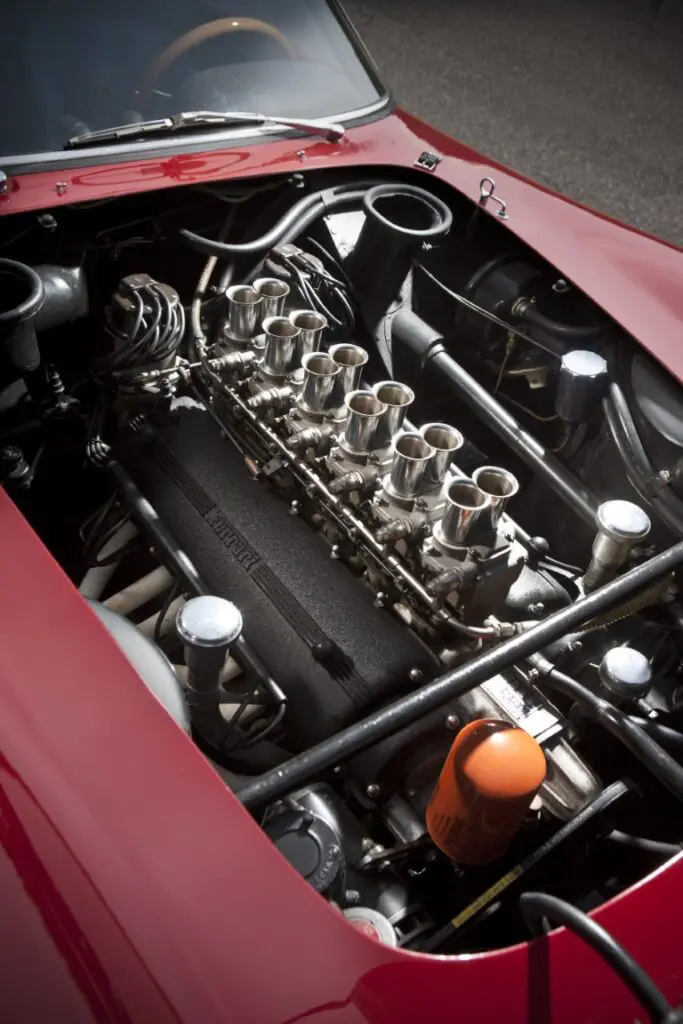
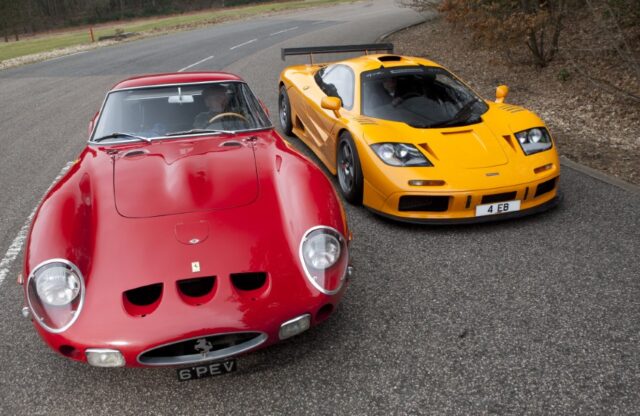
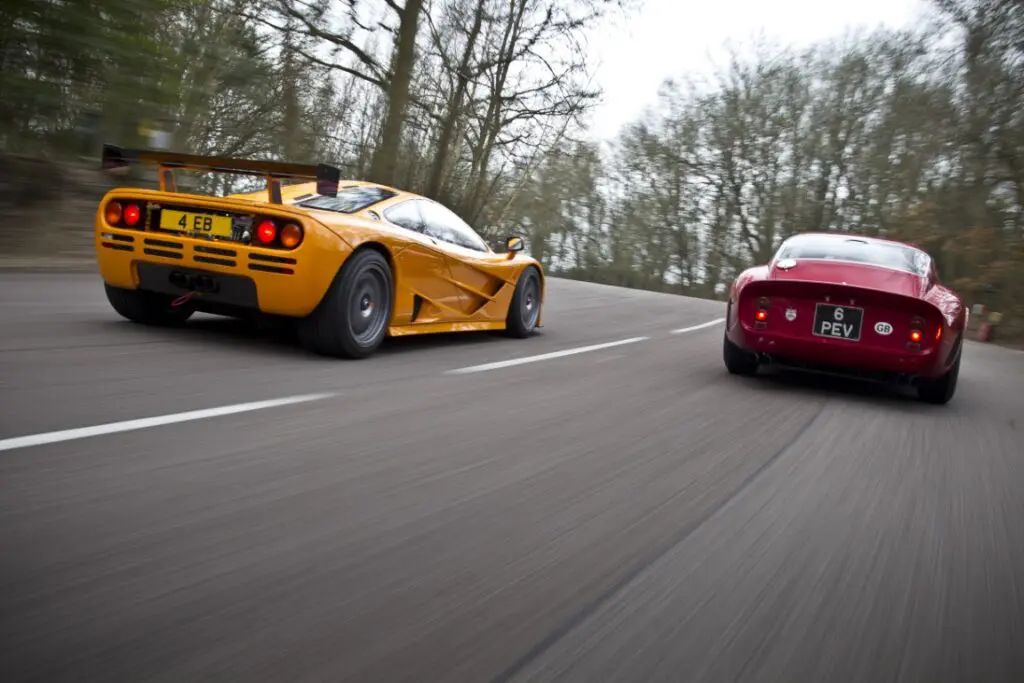
But if there’s a modern-era successor rapidly achieving recognition as the future 250GTO, I think it has to be the McLaren F1. This carbon-composite V12-by-BMW-engined wonder offers – albeit in a more variant-dependent manner – as much of the 250GTO’s useability as 21st-century traffic law can concede. And if we compare it, inch by inch, by record and charisma, with the 50-year-old Ferrari, the parallels become quite fascinating – save for one critical factor.
That critical factor is initial design philosophy. When Giotto Bizzarini’s little design team began work on what became the 250GTO they were consciously producing A Racer. Then, 30 years later, Gordon Murray’s little design team specifically produced an uncompromised road car… in no way a road racer, but a purebred Road Car. So before we go further, just park that essential difference and let’s proceed with that in mind.
I’m going to present a worst case, contrasting the broadly useable yet racebred Ferrari 250GTO Berlinetta family to the reluctantly race-developed McLaren F1 GTR Coupés. McLaren’s more numerous standard F1 road cars, of course, have accrued no competition record to challenge the Italian’s. At not too great a pinch, an enthusiastic owner could still drive his F1 GTR to the race meeting and back, without too intense grief to follow. After all, the F1 GTRs were basically road cars fitted with rollcage, fixed wing and nose spoiler. Even the 1997 ‘Longtail’ versions shared the same centre-section structures.
While 39 Ferrari GTOs were made – including the platypus-nosed GTO/64s – McLaren Cars delivered 28 F1 GTRs, so the British cars are rarer. A comparison of the two designs is intriguing, considering that both are V12-engined. The mainly 3.0-litre two-cam Ferraris, of course, have the power unit mounted ahead of the strictly two-seat cabin with a tiny boot pre-packed by fuel tank and spare wheels. In contrast, the 6.1-litre four-cam McLaren has its BMW-developed engine amidships, behind a cabin that in road trim offers three-seat accommodation, centre-drive, and further practical baggage space in the helicopter-style side lockers.
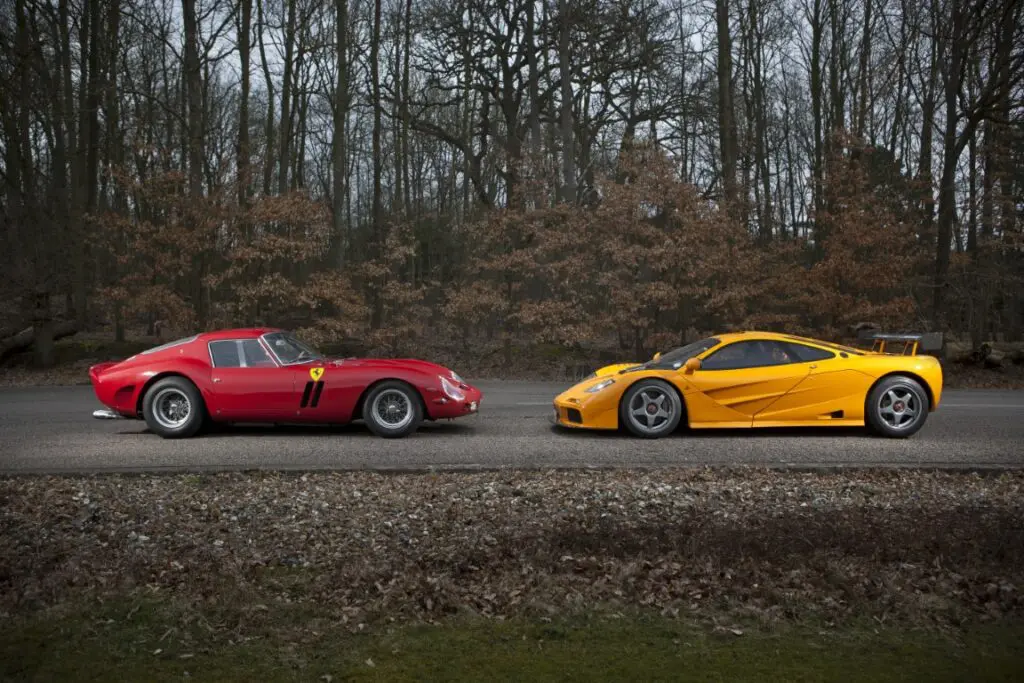
Yet despite the McLaren’s better-packaged accommodation, overall dimensions are within a gnat’s of one another. Ferrari 250GTO: length 4300mm, width 1760mm, height 1235mm and weight 950kg. McLaren F1 GTR: length 4287mm, width 1820mm, height 1140mm and weight 1050kg. That weight disadvantage of even the racing F1 GTR still gnaws at Gordon Murray. He’d aimed at a metric tonne, no more, but that remains a rare miss.
In period the Ferrari 250GTOs contested nine FIA World Championship-qualifying events in 1962, 14 in 1963 and 13 in 1964, including such races as the Sebring 12 Hours, Nürburgring 1000Kms, Spa 500Kms and the Le Mans 24 Hours (two seconds and a third there). In these events the GTO derivatives finished in the top three places as follows:
1962: three firsts, six seconds and three thirds (from seven of the nine races).
1963: four firsts, seven seconds and two thirds (from eight of the 14 races).
1964: three firsts, five seconds and three thirds (from six of the 13 races).
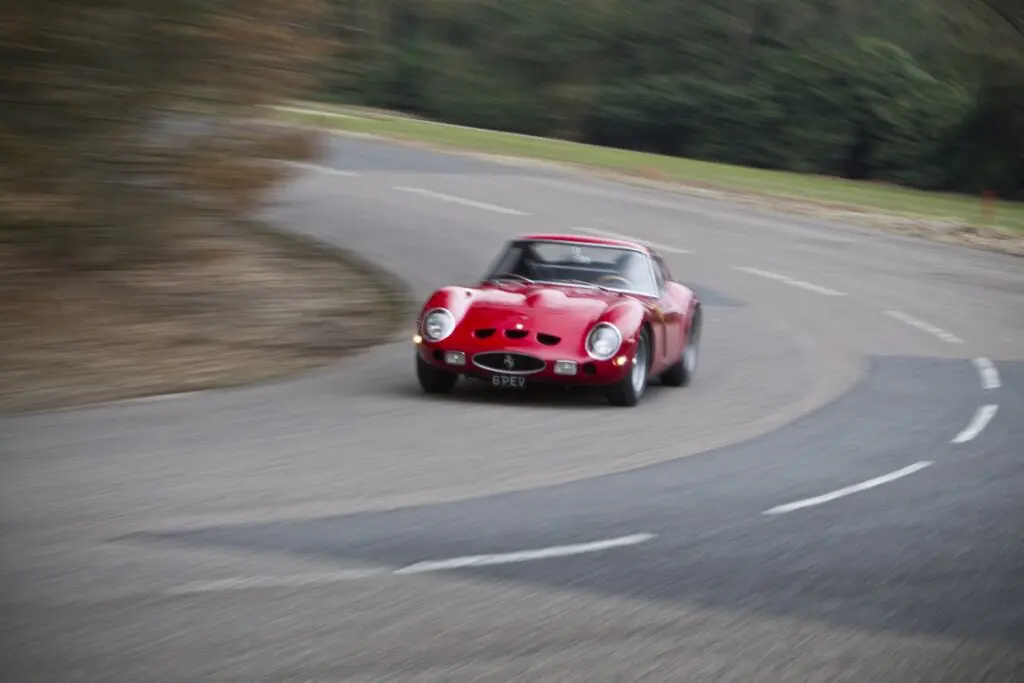
This record for the Ferrari 250GTO in period is noble, without really fulfilling the paeans of praise since heaped upon the model. In fact in period, while I for one adored the look, sound and success of these magnificent motor cars, much more enthusiast attention was being paid to their Ferrari sports-prototype sisters, which were normally storming around very much faster in overall contention. One question must be asked, however, involving proper historic perspective. It’s quite simple. Who did the GTOs beat? In 1962-63 the answer was most often the 250GT Short-Wheelbase Berlinettas that they had superceded. Anybody else? In category, no. Come 1964 and the Shelby Cobra Daytona Coupes began to out-muscle them at top level, so the fine finishes mainly of the GTO/64 cars as listed above does demand credit.
OK, now spool forward 30-odd years to the McLaren F1 GTRs’ era, 1995-97. Here we saw a broadly GTO-like pattern of mainly private owner/drivers campaigning their cars in rather more races; 13 in 1995, 20 in 1996 and a final dozen in 1997 before, with FIA connivance, Formula 1 swallowed virtually all top-level motor race funding – and worthwhile sports/GT racing died.
The 45 individual races are too many to list here, but let’s summarise the F1 GTRs’ record in those three seasons, 1995-97 inclusive.
1995: ten firsts (from 13 races), seven seconds and six thirds.
1996: 16 firsts (from 20 races), seven seconds and five thirds.
1997: six firsts (from 12 races), one second and three thirds.
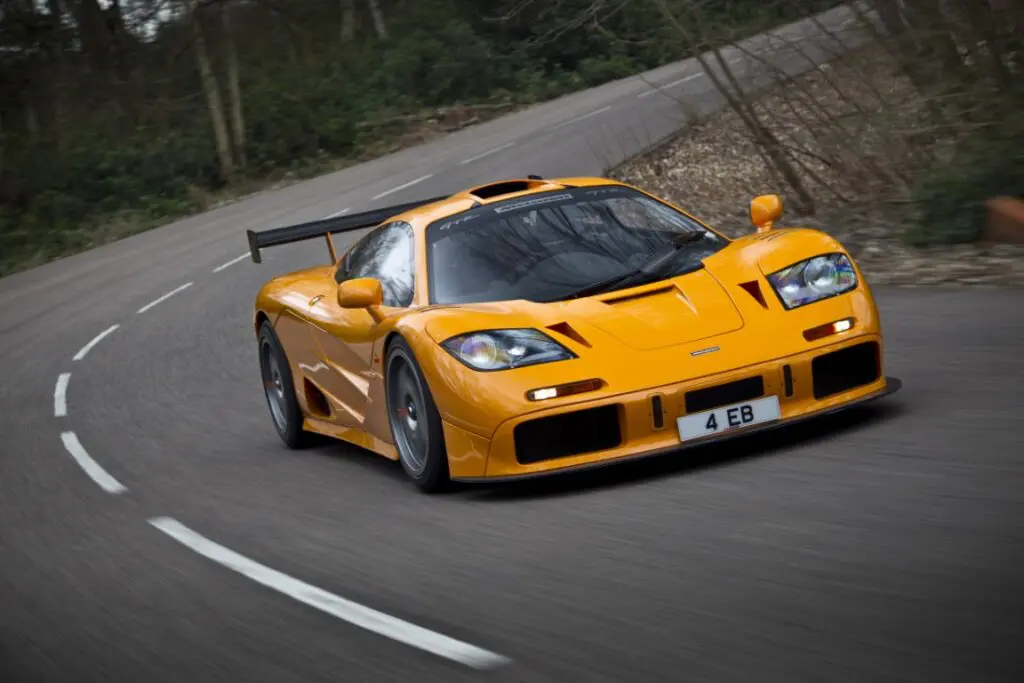
In essence, during 1962 the now so legendary, so revered Ferrari 250GTOs won one in three of their races. In the parallel race season of 1995 the McLaren F1 GTRs won once per 1.3 races contested. During 1963 the Ferrari 250GTOs won once in every 3.5 race outings. In the parallel race season of 1996 the McLaren F1 GTRs won once in every 1.25 race outings. During 1964 the Ferrari 250GTOs won once in every 6.5 race outings. And in the parallel race season of 1997 the McLaren F1 GTRs won every second race contested. Taken overall, through 1962-64 the Ferraris won one in four of their races, and during that period they also achieved a hat-trick of three consecutive outright victories in the FIA GT World Championship.
In contrast, while racing – it must be said – in a devalued era of endurance competition through 1995-97, but latterly against strengthening (and some claim rule-bending) opposition initially from Porsche, then Mercedes-Benz, the McLaren F1 GTRs won once in every 1.3 race outings, far outperforming the illustrious 250GTOs’ record.
The McLarens also won Le Mans outright, in 1995, which is a feat the GTOs –facing sports-prototypes – never managed. As Gordon recalls: ‘The McLarens could have just tooled round for 24 hours and still dominate their class, but instead they went for an outright win. If anyone had told me one of our road car-based GTRs would would lap 16 seconds slower than the prototypes in the wet, at night, I wouldn’t have disagreed. But when JJ Lehto was 16 seconds a lap faster, I was blown away! They went balls-out! And won…’
And the F1 GTRs also won the GT Championships of 1995-96, then added the All-Japan Championship of ’96, and – for what it’s worth – the 1998 British GT Championship.
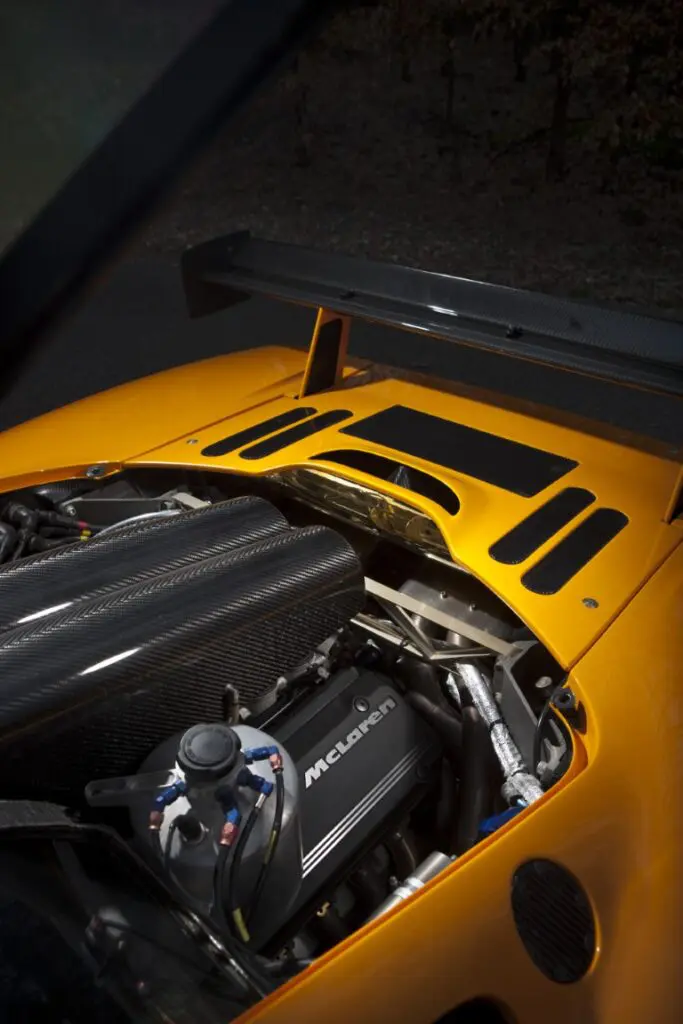
So it is with eminently good reason that the carbon-composite McLarens of the 1990s are now increasingly highly valued by an emergent new generation of knowledgeable car connoisseurs. I vividly recall the day, early in the F1’s test programme, when Creighton Brown let me drive the works prototype homeward from its proving ground, and in Milbrook village – as we took a sharp right at a junction – we saw a dog-walker coming towards us on the footway. And the instant he saw that new grey McLaren snuffling into the corner, he threw up his hands, dropped to his knees and salaamed energetically in our honour.
And then equally vividly (how could I forget) I recall the day on the Classic Adelaide Rally in Australia when the generous Paul Vestey let me drive his Ferrari 250GTO on the Gorge Road special stage past the Kangaroo Creek reservoir. With thin Perspex door windows slid ajar, we ripped down that gloriously rhythmic road in mainly third and fourth gear, the wailing Italian V12’s exhaust note, up around 7000rpm, reverberating back at us from the sheer roadside rock faces. That was pure aural sex.
And while the McLaren record absolutely shines against that of the fabulous Ferrari GTOs’, I must confess I remain more grateful for the latter.
Aah nostalgia, the real thing.