Cut into the Porsche 917 at any point and it will bleed the essence of Ferdinand Piëch. While that talismanic leader of men went on to become known for many amazing cars, not least the Audi Quattro and the Bugatti Veyron, arguably his more-is-more mantra is best illustrated by this awe-inspiring sports-racing car. A car that dominated Le Mans for several seasons and even starred in a film about the race. A racing car that has become a cultural icon. A car so fearsome that in its early days certain racing drivers refused to drive it at certain tracks, while those who did faced down the tears of their wives. No doubt about it, this car would make an incredible epitaph come his day of reckoning.
This feature was first published in Octane issue 193.
But the 917 is also known for being a car that evolved into a winner. Glory wasn’t there from the off, even though the potential always was. Of that there is no doubt. Not with an assembled cast of greats from the world of engineering, design and development driving. Porsche had all of these to hand, still building their reputations, reputations that were certainly cemented by their roles with the 917. Yet if you ask any of them today about the part they played, one aspect (other than modesty) unites them all. They mention Piëch. Regularly.
Back in 1968 he was Porsche’s chief engineer in charge of motorsport – and as a nephew of Ferry Porsche himself, it’s fair to say the company was in his blood. As was its racing success. But Piëch sought more than class wins for little 2.0-litre coupés. He wanted to win the Le Mans 24 Hours outright. And in order to do so, Porsche would build the most powerful sports car of its era.
‘We had fought for victories for more than 20 years, yet never won overall,’ says engineer Hermann Burst, who worked on the original project. ‘We had a dedicated team but very little time. And it was all led by Piëch. “The biggest risk of my life,” he called it.’
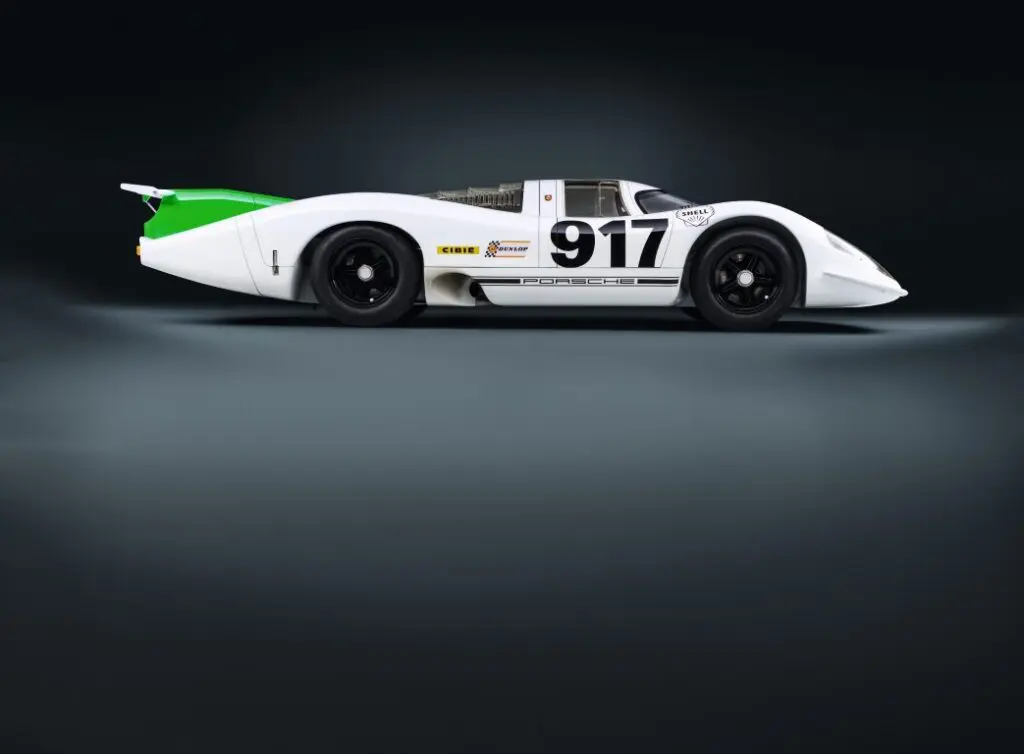
Piëch dreamt up the spec with his engine maestro Hans Mezger, who went on to become the 917’s overall project manager. He promised 500bhp and a top speed of 380km/h, figures previously unheard of in sports-car racing. ‘Back in 1963, Ferdinand Piëch had welded together two Porsche 911 engines to create a flat-12,’ says Mezger. ‘So they were already thinking about a 12-cylinder engine within the company. But for the 917, it was not really a flat-12, it certainly wasn’t a boxer. We had to change the firing order so in reality it was a 180º V12. But it had a central power take-off. The reliability of the 917 engine originated from this central power take-off. And the power output itself was greater than we expected.’
A figure of 520bhp had been printed in a brochure produced for the 917’s debut at the Geneva Motor Show in March 1969. That was based on trials carried out with a four-cam flat-six that had produced 260bhp: the engineers simply doubled it. But the result, when the 12-cylinder was finally tested, came in at a rather higher 580bhp.
‘We had two pistons per crank journal, and the conrods were more solid so the bearings could be reduced. This has benefits in fabrication and oil consumption. We also fed oil into the crankshaft so there was far less friction at the bearings,’ says Mezger. ‘That’s how we gained 60bhp in the 12-cylinder layout. And that’s how we moved from smaller class-winning engines to larger ones that would win overall.’
‘Everybody wanted to win,’ says Burst. ‘With this project, we could. We must. There were no excuses any more.’
Fellow engineer Gerhard Küchle adds: ‘If Porsche was at the start, we would win.’
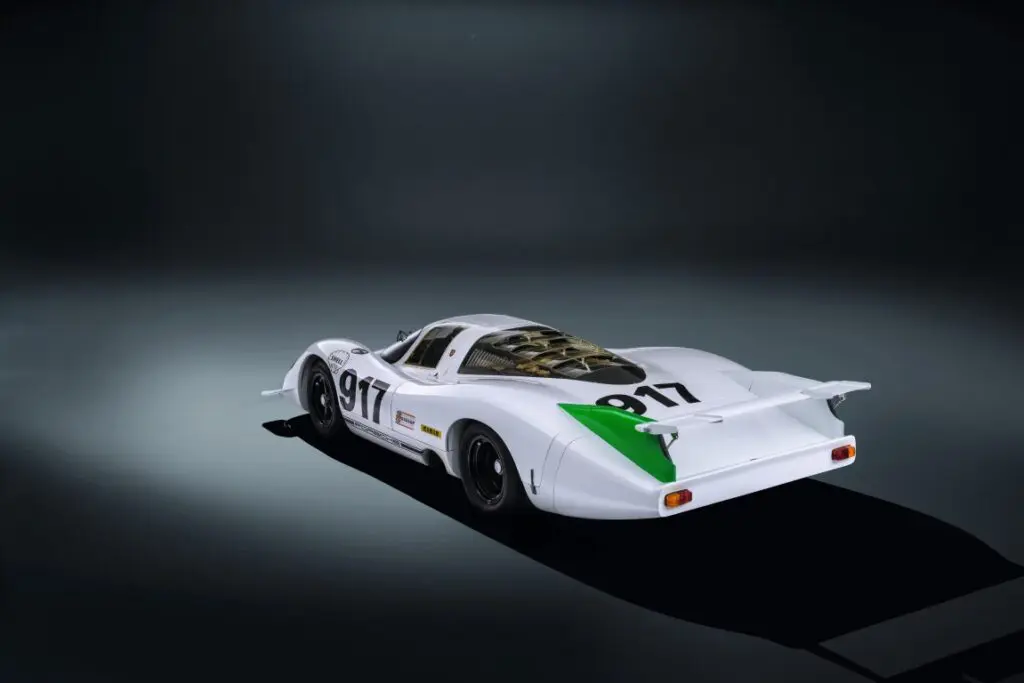
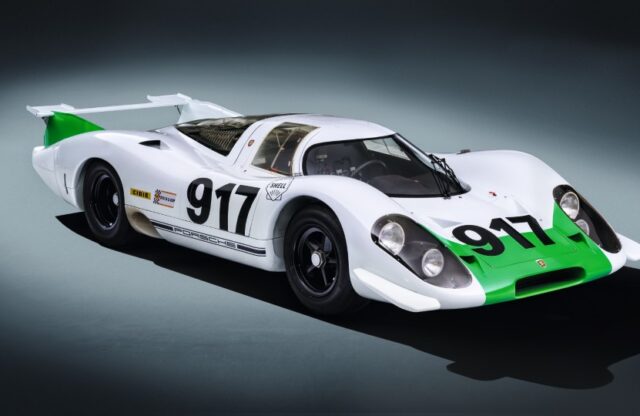
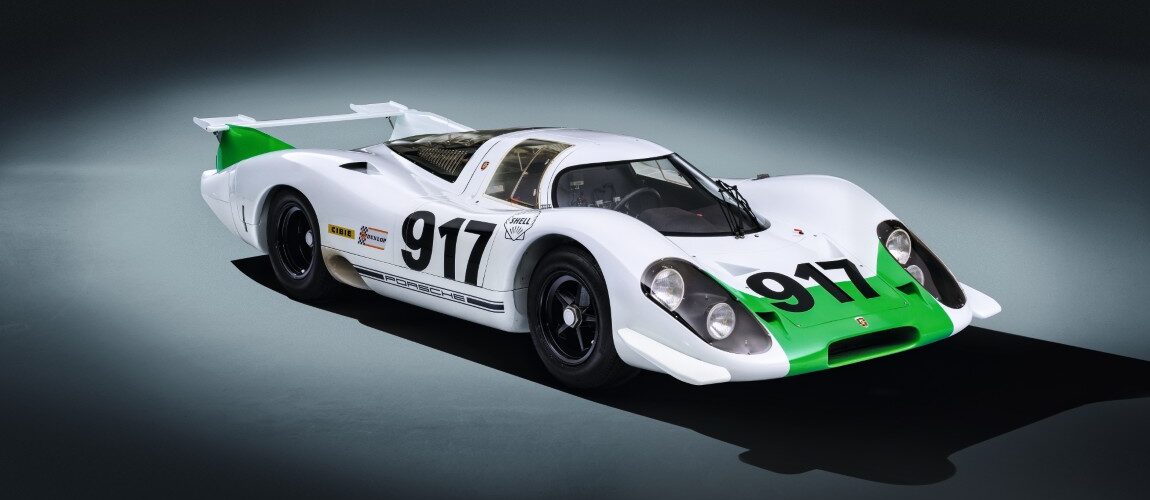
And yet in 1969 they didn’t even expect to. That was the car’s shakedown year. In fact this car, chassis no 1, has never raced, and has never left Porsche. It has always been used for promotional work, and spent most of its life wearing the body-style and iconic red-with-white-stripes livery of the Team Salzburg car that won Le Mans in 1970: yes, in the 917’s second year, Hans Herrmann and Richard Attwood scored a stunning victory in the short-tail 917K (‘K’ for kurz) ahead of Gérard Larrousse and Willi Kauhsen in the 917 lang-heck (long-tail). To get there, much work had to be done on the aerodynamics. But let’s be clear: even the original 917 was the result of enormous attention to aerodynamics. Enormous attention to everything.
‘We were building for a new class of car,’ says Burst. ‘A new 5.0-litre class, and they reduced the homologation requirement from 50 cars to 25.’ That was an open invitation that Piëch just couldn’t resist, but it meant the team had only ten months to design and build 25 cars.
‘There was a lightweight lattice frame, just 45kg, built for us by Baur,’ Burst continues. ‘The bodies were outsourced to Wendler, which had built those for the 550 Spyder, though for the 917 they were finished and put together at Porsche. No two cars were the same. And though the 917 was based in many ways on the 908, we needed more room for the engine. That meant moving the driver further forwards.’
The team developed a 1:1-scale model that would be tested at the FKSS wind tunnel, actually a Mercedes-Benz facility. ‘It was the only wind tunnel we had,’ says Burst. Importantly, while the model scored very well for aerodynamic drag, the tests revealed much less about lift. That would prove a crucial aspect in the 917’s need for evolution as Porsche strove towards that elusive Le Mans win.
As for car no 1, it was completed in time for its debut at Geneva in March 1969 – barely eight months since Piëch had announced his intentions. He presented it not on Porsche’s stand but on that of the Automobile Club Switzerland. Meanwhile, back at Porsche’s factory no 1, the battle was on to complete the remaining 24 cars. ‘We had 48 men in 12 teams,’ says Burst. ‘And the cars had to be driveable! The only space we had where they could be lined up was the executive car park. So on 21 April 1968, Ferdinand Piëch’s secretary called the executives and asked them all to remove their cars. We wanted to overwhelm the homologation inspectors with what we had created.’
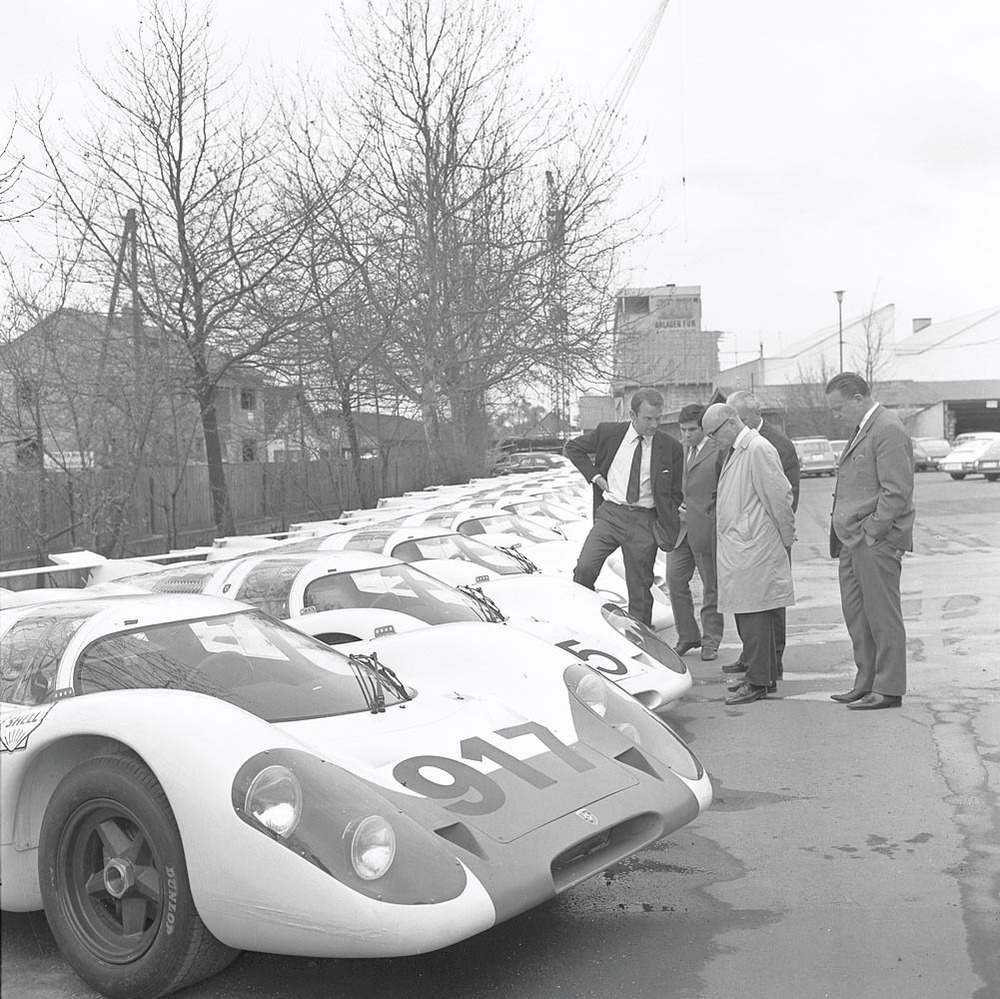
It turns out that the inspector chose to drive car no 12. Could he really have chosen any of them? ‘They all had engines that would start, and they all drove,’ says Burst. ‘They didn’t all have full suspension, but they could all be driven in that car park…’
We move on to the present day, and the reality of the 3000-hour restoration of Chassis Number One. ‘This car was created in the Porsche motorsport department at Weissach, and this is where it was restored too,’ says Alexander Klein, manager of the Porsche Museum. ‘Our priority was to maintain maximum authenticity. To build the car in its exact original state. And to do that, we involved some of the people who’d built it 50 years ago.’
Amin Berger led the restoration, assisted by Klaus Ziegler, Roland Bemsel and Gerhard Küchle, all of whom were involved in building the original 25 cars, and also Eugen Kolb, from the design department. ‘We disassembled the car and looked for original components – body, fuel tank, engine. All original, but with some modifications,’ says Berger. ‘The tank still wore its original neck, blanked-off when the bodywork was altered, and the floor was still shaped to accommodate it. Inside, the steering wheel and switchgear are original; we just had to make new tape labels. And we had the same upholstery fabric still in stock.’
Kolb spent time poring over microfiches in the archive, and the existing body was scanned and digitised to find out which elements needed to be re-modified and which to keep. The main differences were in the shape of the nose and front wings, the front air intakes, and also the tail, which had been shortened. The spaceframe was extended at the rear for the wing carrier.
‘Back in 1969, we had no CAD, no data transfer. Everything was put together manually, and quickly, we had so little time. So the restorers ran into problems!’ smiles Klaus Ziegler. ‘The reality didn’t always match the drawings.’
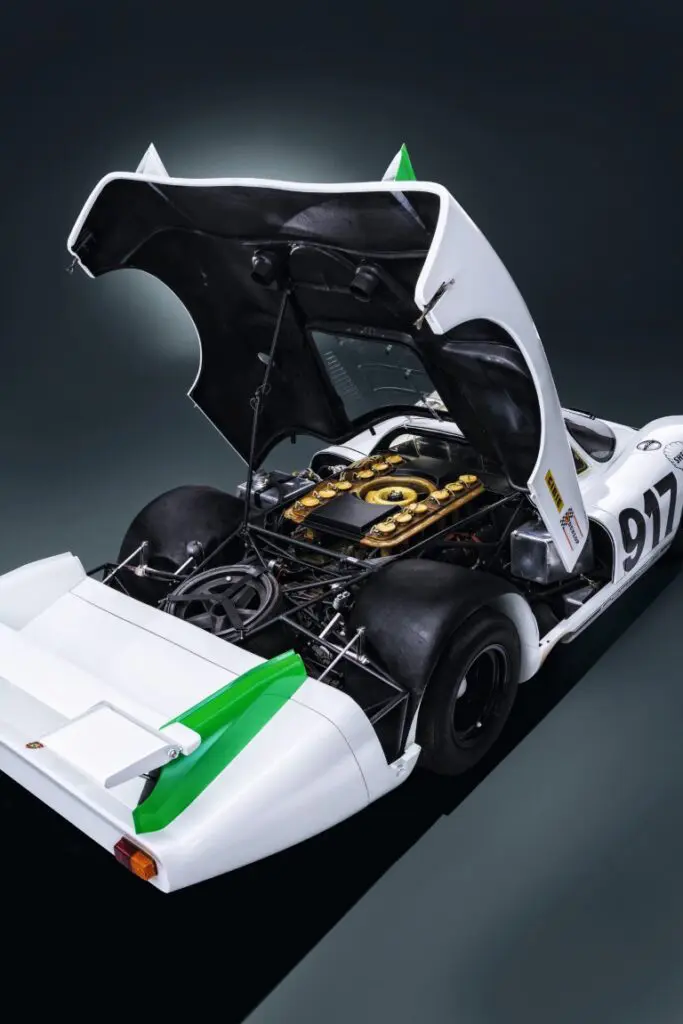
Gerhard Küchle worked on the engine, as he had done 50 years ago. ‘It had to be squeezed into the tubular frame, tilted at 7º in order to fit. The injection pipes were plastic and we had to heat them with a hairdryer to make them fit,’ he recalls. ‘Pictures reveal that the engine bay is exactly as it was. We found the original 1969 exhaust in our warehouses.’
The 917 as a breed had soon begun to move on from no 1’s exact original state. It was was fully 30km/h faster than anything that had previously been driven at Le Mans, using its huge power to exploit its low drag, but at the expense of downforce and at the risk of tyre explosions. Some had considered the 917 too powerful for its own structure, but modifications proved that to be unfounded.
Driver Kurt Ahrens was instrumental in its evolution, having joined the Porsche factory team in 1968 after racing Formula 2 Brabhams and more. His car was quickest in practice at Le Mans in 1969, a race that no 917 finished, and he partnered Jo Siffert to the 917’s first victory, in that year’s Zeltweg 1000km. By 1970 he was contracted to John Wyer’s official factory Gulf Porsche Team, and began testing. ‘It soon became clear that we needed extra downforce over the rear axle,’ says Ahrens. Legend has it that, at the Österreichring, Wyer’s chief engineer John Horsman had noticed that the bodywork showed a pattern of dead gnats dashed against it, revealing the airflow – and the tail was clean.
‘For three days, we tried everything. In the end, we attached aluminium sheets to the body, did a tentative lap, no lift. Second lap, a bit faster, still no lift. Third lap, I took four seconds off the time! It gave me goosebumps. I had to explain to Piëch, “Good news, it’s four seconds faster. Bad news, it looks ugly!” The engine, the chassis, they were great from the start. We just had to work on the aero.’
And so the lang-heck was born. ‘By 1970 it was perfect for Le Mans. For me, it’s the car of the century and I was a part of it. The speeds were unprecedented. Piëch was a fanatic when it came to top speeds.’
The rest, as they say… well, I’m not going to say it. And anyway, you can find out everything that happened during the 917’s racing career in the following pages, in which Paul Fearnley speaks to all the drivers about their experiences in the 917 as it made history with them behind the wheel. But what I will add is that this was a car that not only made itself a fearsome reputation on track, it was a great looker, too. And who better than car designer and Octane contributor Peter Stevens to give us his insight into that?
Peter Stevens on the design of the 917
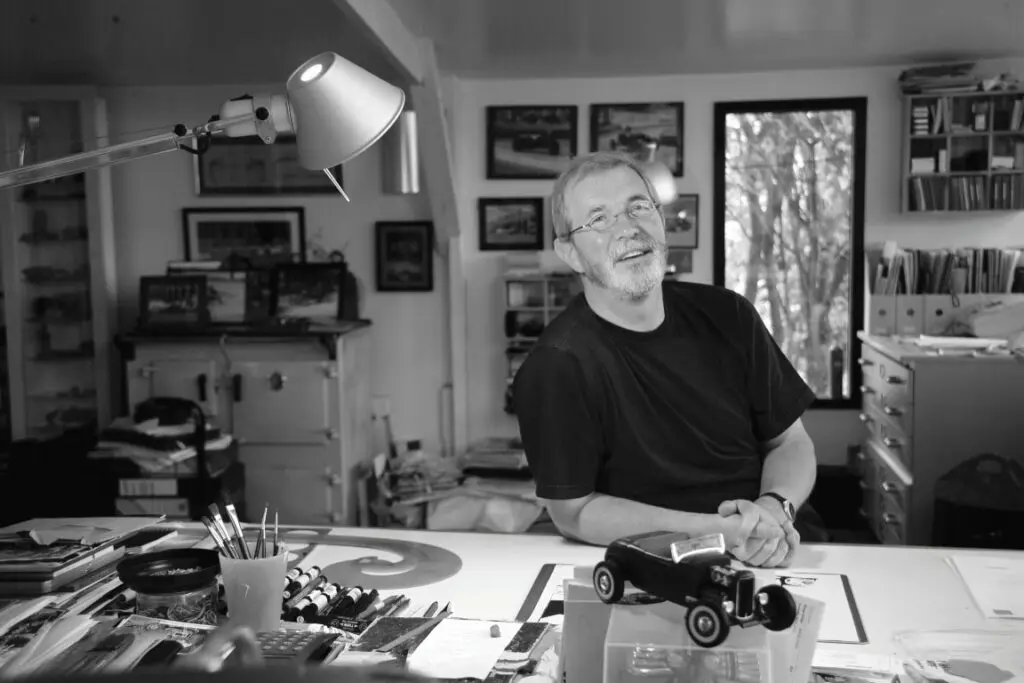
We now live in a time when anyone can propose any kind of crackpot theory not as opinion but as truth. Historical events, even when recalled by those who were there, can be coloured by time or politics. But when some of your very best mates were involved in a project as extraordinary as the Porsche 917, you listen wide-eyed and remember all you heard and saw.
I’ve studied the early wind-tunnel results for the very first 917, and it is clear that, as usual, Porsche’s engineers were looking for low drag. With a drag coefficient of just 0.33, the whole concept was way beyond Porsche’s experience. But from those same results, it is easy to see that the engineers took little notice of lift values at either the front or the rear of the car. Piëch’s mantra was lightweight construction and low drag. Having established the figures by using a comparatively small-scale model in a fixed-floor tunnel – with no simulation of the ground moving beneath the car and no rotating wheels – none of the figures achieved were really to be trusted on a track. At 250mph.
It is fairly certain that, when lifting off the throttle or braking, the softly sprung nose would dip, changing lift to downforce at the front, while almost completely losing rear downforce – an alarming state of affairs on the Mulsanne straight at Le Mans. As Brian Redman described: ‘Incredibly unstable, using all the road at speed; if you were lucky at the kink on the straight you would be on the left side and could take a bit of a line but you never knew from one lap to another.’
And so, for 1971, Piëch decreed that the company would develop a number of different versions. One of the groups chosen to make a design proposal was Porsche’s in-house design team, led by Anatole ‘Tony’ Lapine; another was the French aerodynamic research company SERA-CD, under aero chief Robert Choulet; a third was the ‘Long-tail’.
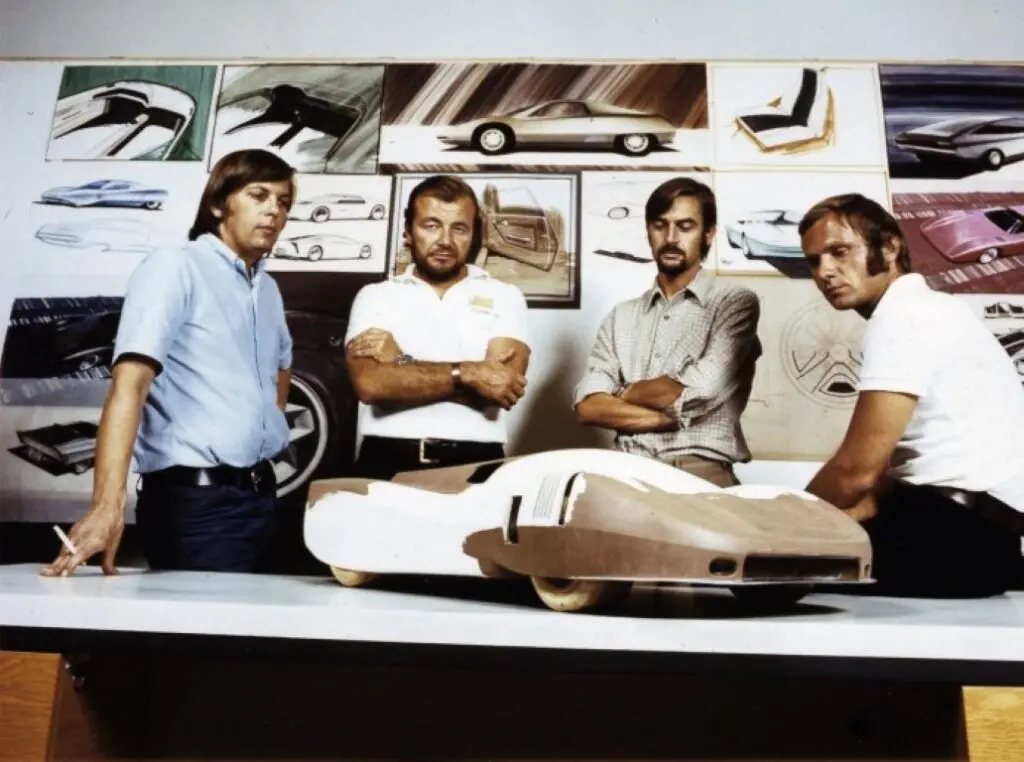
The car developed by the in-house group was a great-looking machine with smooth surfaces, and very clever air management around the wheel wells, the result of much wind-tunnel work by studio aerodynamicist Hans Brun. Overall drag was low while lift at both front and rear was converted to downforce when a small rear wing was added at a later tunnel test. The opposition from SERA was a strange-looking monster with a body much wider than the ‘standard’ 917’s, wheels tucked well within strongly radiused openings. The drag coefficient was undoubtedly low but the frontal area was much larger than any other proposal’s.
Probably the most interesting detail on both these cars was the addition of a small horizontal front splitter, un-noticed by just about every journalist at the time, or later historians. It was almost certainly the first time a front splitter had been seen on a race-car.
But with the race budget getting out of hand, Piëch cancelled the Design Studio car. At Porsche every component was ‘lifed’, so the scrap containers were full of beautiful race-car bits. Just about everyone in design had coffee tables made from 917 rear wheels with a locally sourced disc of glass dropped into the rim, or a table lamp made from a crankshaft and flywheel. No wonder money was leaking away. Lapine’s group, comprising design chief Dick Söderberg plus designers Dawson Sellar and Wolfgang Mobius, suggested to Lapine that he should get a signed agreement from Piëch that in exchange for cancelling their project they would have absolute control over the graphic design of all Porsche racing cars. Piëch agreed and then had to bite his tongue when the wild ‘hippy’ schemes appeared.
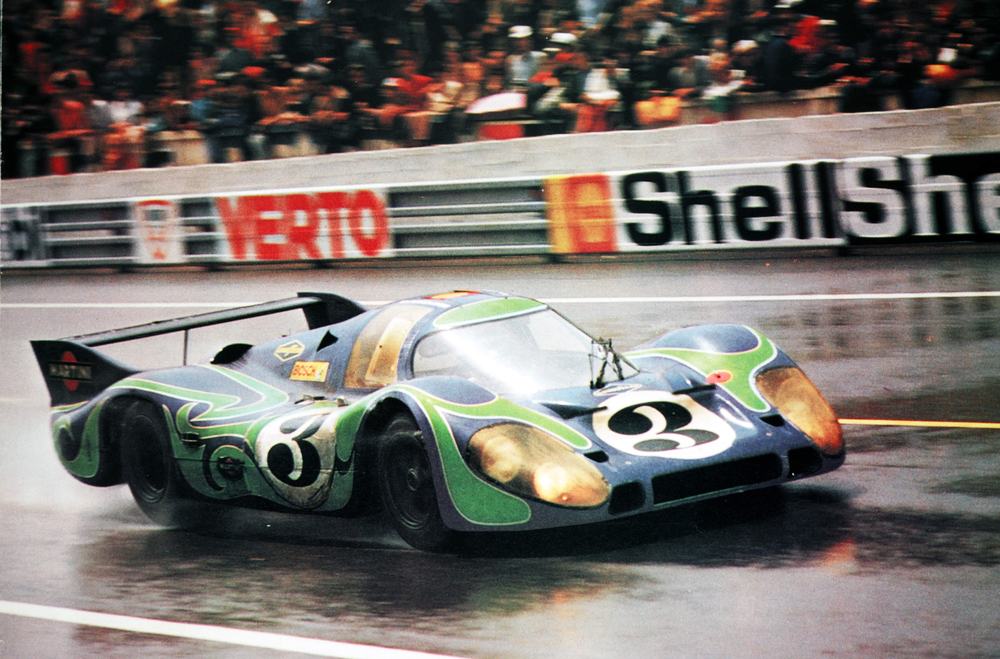
He had even more of a problem enduring ‘Der Trüffeljäger von Zuffenhausen’ – pigs were often used for rooting out truffles in the forests around the Porsche test track. This 917-20 was painted pink for its Le Mans 24 Hours debut, with names of the various cuts of meat written in German across it, in a similar fashion to a butcher’s carcass diagram. This car is usually described as being very fast in official documents but in qualifying Pedro Rodriguez’s lap in the new Long-tail, of 3min 13.9sec (average speed 250km/h – 156mph) was actually more than seven seconds faster than the ‘Pink Pig’s’ 3min 21.0sec lap. The car crashed due to brake failure; no-one had realised that the front brake cooling was inadequate on the poor old porker. It was not raced again, yet the colour scheme is now revered at Porsche.
What’s really fascinating to me about Porsche in the late 1960s is that, because the race programmes were always about selling cars, mostly by demonstrating the company’s engineering skills, it was important that the race-cars looked good too – and that they looked like Porsches. Therefore the Design Studio was always quietly involved, for example in the 908/3 that, for me, has always been one of the great-looking competition Porsches: absolutely designed for purpose.
The first 917 never had that same clarity of purpose, probably because its gestation was so confused, and also because it was cobbled together too quickly and always looked unfinished. But then came the short-tail version, which looked so right and so much better resolved, and worked so magnificently that it is one of the most easily identified sports-racing cars ever. Then there was the heavily revised version of the Le Mans Long-tail. This was an extraordinarily competent racing machine, a symphony of seductive curves and well-resolved surfaces, and it left you in no doubt as to its purpose: going very fast.
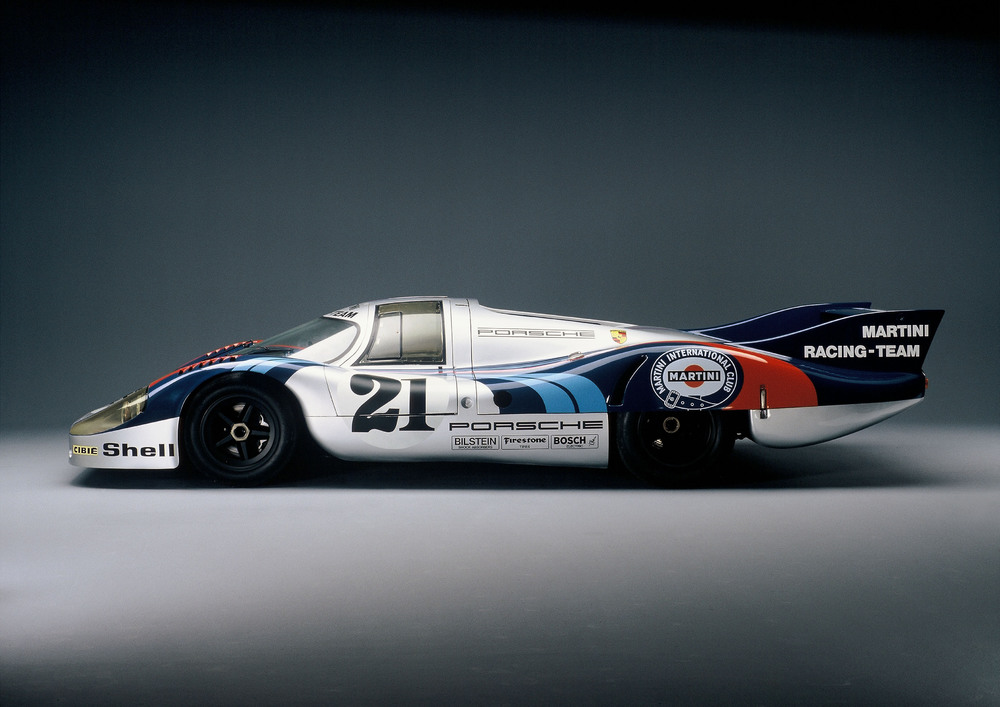
Derek Bell, who never drove the original 917 Long-tail, said to me recently: ‘I only raced the ultimate 1971 917 LH. It was wonderful! Any car that would take the Mulsanne kink flat at 246mph had to be very good. And we drivers had to be very brave.’
As a designer we are usually told that if a race-car wins then that makes it beautiful, or that it is all about aero performance and not about style, but the designer John Barnard constantly proved that not to be true. And when looking through the amazing portfolio of 20th Century competition Porsches, topped by the 917, it is clear that you can have great-looking cars that are winners too.