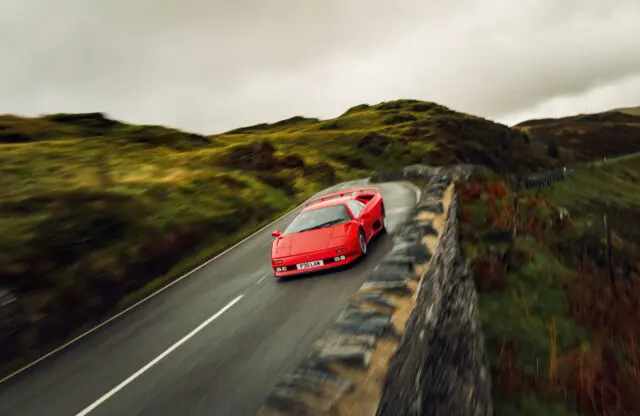
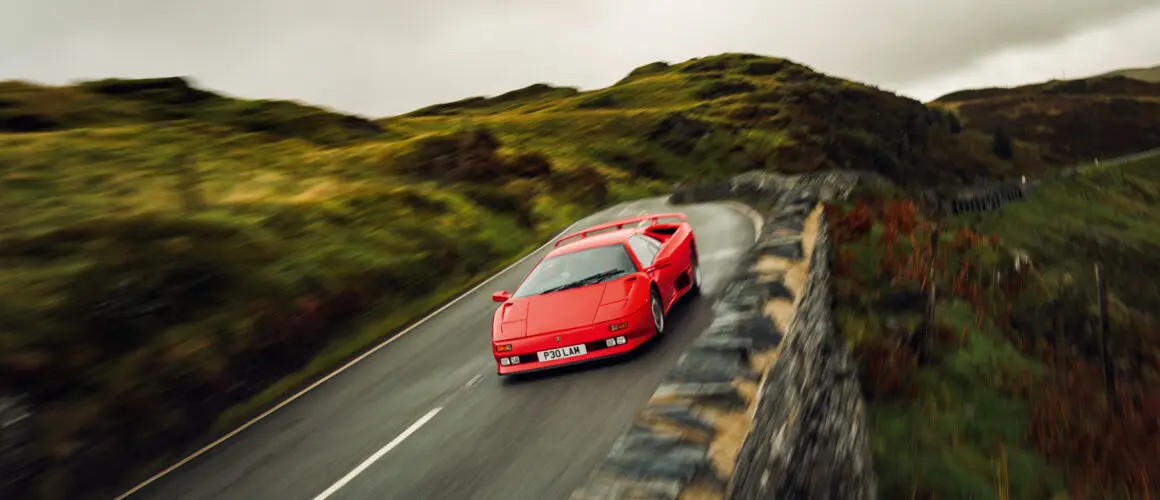
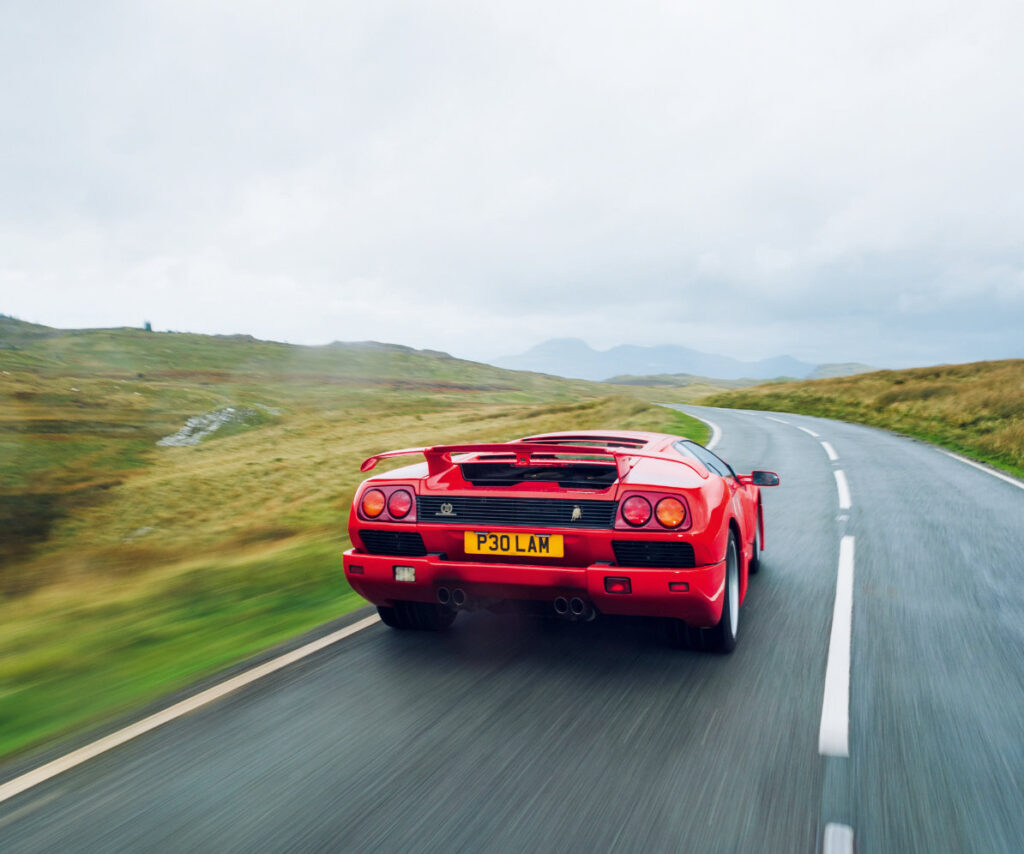
Truth be told, I’m not entirely sure who’s in control here. A deserted stretch of Welsh asphalt winds out ahead, a single-arm wiper struggles to clear water streaming over the Lamborghini Diablo’s arrowhead windscreen, and a mighty V12 sings brusquely behind me, pushing out over 500bhp through the rear wheels alone.
It’s like a flashback to car magazines I’d read as a kid of the mid-80s and early ’90s, except now those hazy reads are snapping into vivid first-person reality. I sense the Diablo moving around through a small-diameter steering wheel that’s contoured so perfectly it could’ve been moulded to my own palms, and feel it through the base of a rakishly reclined seat that says spacesuit, not jeans and jumper.
Already I understand why period road-testers didn’t routinely hang these things on the lock-stops and how, much more recently, Top Gear TV put one in a field – no question this Diablo would bite and that I’d need a compass as much as a recovery truck if it did.
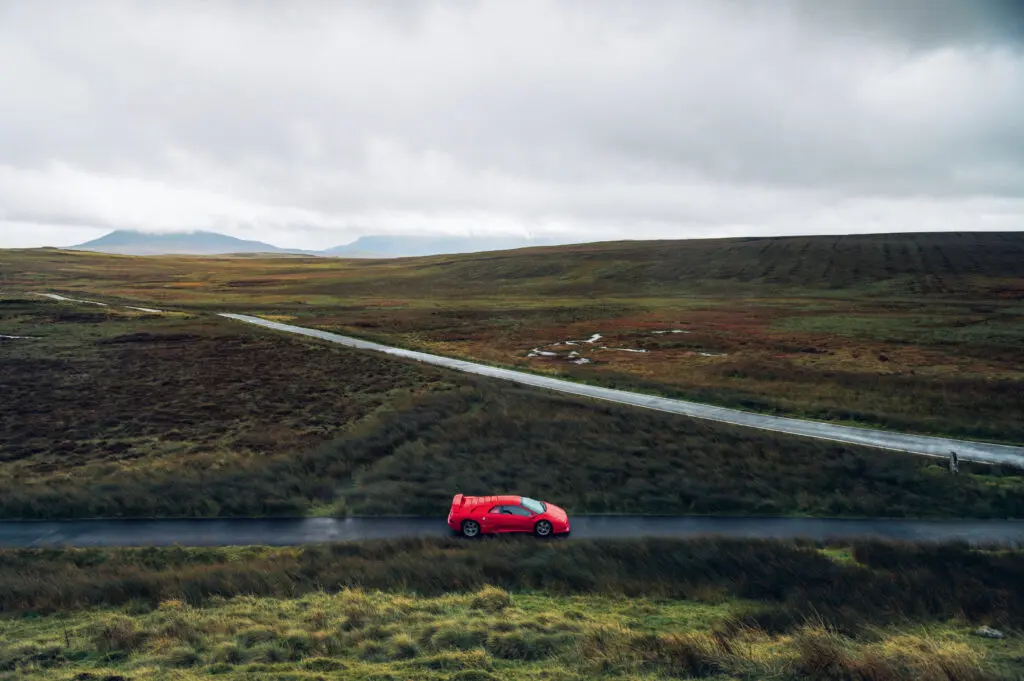
I do have a scare. A tunnel of evergreens amplifies a rush of speed one minute, I’m skimming over well-sighted moorland the next, then, while rounding a quick corner, I find a trio of sheep organised in a kind of chicane formation. The Diablo’s right front tyre snatches and locks as I squeeze the aluminium brake pedal progressively but hard – a near-miss and cautionary reminder that the buck stops with you here (though there is traction control).
Lamborghini has been celebrating its 60th anniversary in 2023 and brought us the Revuelto, a new mid-engined V12 hybrid hypercar funded by both its modern-day success (9000-plus units annually) as well as the largesse and stability of the Volkswagen Group. Rewind 30 years and its Diablo SE30 predecessor was born into a rather different context – a ‘Special Edition’ V12 built on shakier foundations to celebrate Lamborghini’s first three decades as an uncertain future loomed large.
The Diablo was three years into its 11-year-long production run when the SE30 landed, while founder Ferruccio Lamborghini had recently passed away and was already some two decades absent from his eponymous company. And despite Chrysler’s take-over, Lamborghini was far from in the clear, as Diablo development attests.
Work had begun under the Swiss-based Mimran brothers with a classic Gandini wedge and was finished under the new US owners with a softer Tom Gale re-style. But by the time of the first SE30 deliveries in June ’94, Chrysler had been sold to Indonesia’s Megatech. The new custodians needed the Diablo – sole Lamborghini after the end of LM002 ‘off-roader’ production – to do some heavy lifting.
Nigel Gordon-Stewart, today the chairman of electric mobility company EAV, had arrived from the McLaren F1 programme, helped negotiate the company sale and became Lamborghini’s International Sales and Marketing Director, tasked with putting together a ten-year product plan. He recalls Chrysler management having lost interest in Lamborghini following a dismal 100 sales in 1993 (‘it was seen as an Iacocca indulgence’), with the Italian workforce understandably downtrodden. New Indonesian ownership promised a fresh start, though there were warning signs from the off.
‘I was working for McLaren in Singapore and had the most bizarre conversation with a guy called Setiawan Djody, who was supposed to be an Indonesian rock star and a prince from Sumatra,’ explains Gordon-Stewart. ‘He wanted to buy a car company and I said “Well, I hear Lamborghini is for sale.” He phoned his mate Tommy Suharto and the rest, as they say, is a nightmare!’
Chrysler demanded an industry-recognised leader be in place before they sold up, so Gordon-Stewart chatted with ‘one of the Ferrari sons’ before helping bring in Lotus stalwart Mike Kimberley as MD. When Kimberley pushed Gordon-Stewart to project a sales figure, the eventual 301 ‘felt like a mountain to climb’ but Gordon-Stewart credits the SE30 – limited to just 150 units – as generating fresh interest and significant press coverage for what had become a rather lacklustre brand. Later, it would also memorably star in Jamiroquai’s Cosmic Girl video in the violet launch colour, further boosting Lamborghini’s profile.
After 16 years of Countach evolution, the Diablo was a sizeable step forwards. Spaceframe construction (in the Diablo’s case, steel rectangular tube with high-strength alloy and some carbonfibre) and a Bizzarrini V12 mounted longitudinally and behind the gearbox were familiar, as was a wedgy spaceship of a design that couldn’t be anything else.
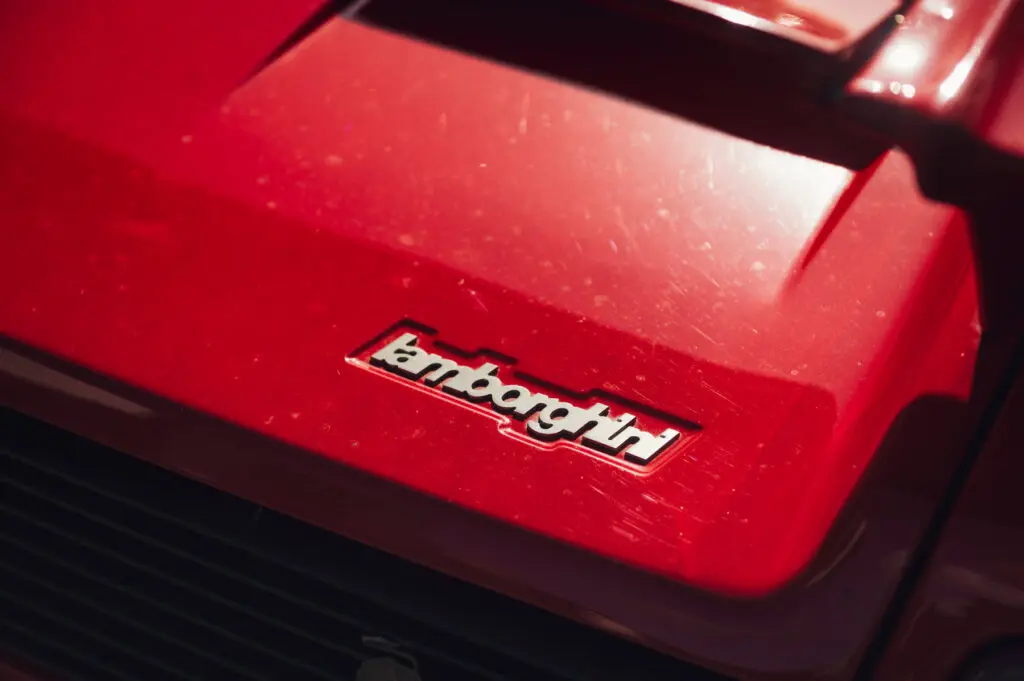
But there were more creature comforts as well as more active driver aids in the form of power steering, all-wheel drive that took learnings from the LM002, and, from 1999, ABS brakes. The SE30 was the counterpoint to all that, a car to prove Lamborghinis hadn’t lost its edge: rear-wheel drive, no ABS, no power steering, optional air-con and stereo, not even a Diablo badge. Clearly the highly successful Ferrari F40 was influential.
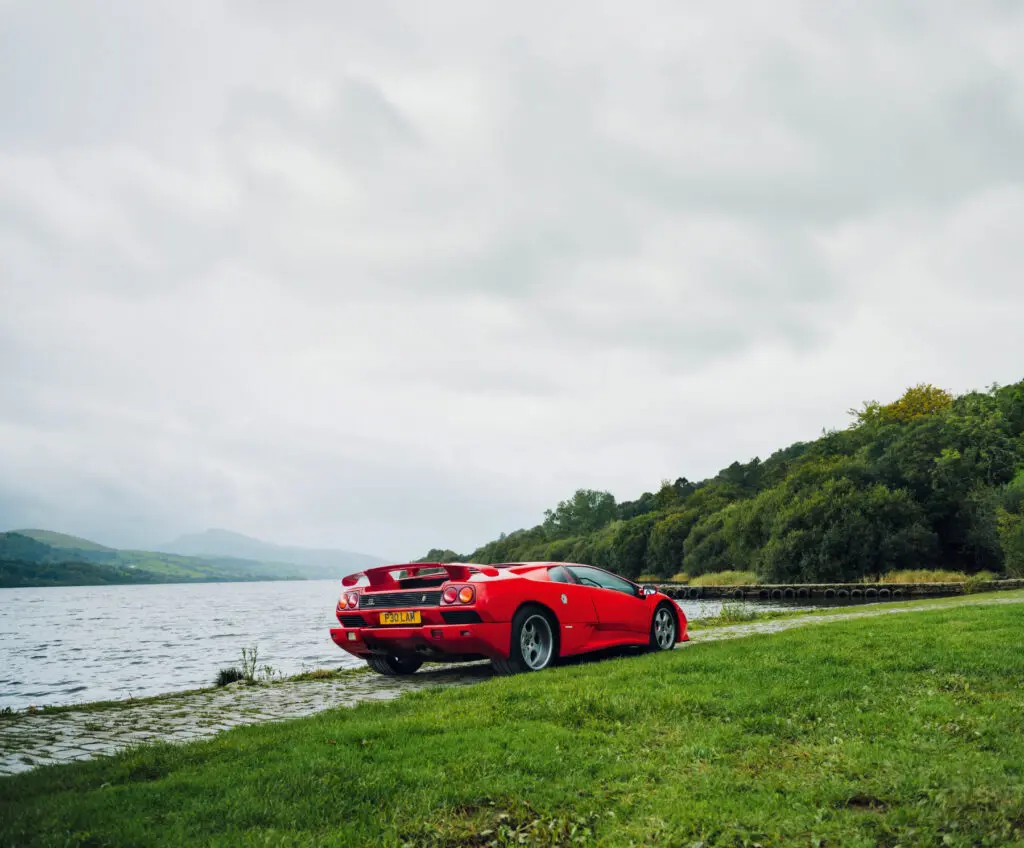
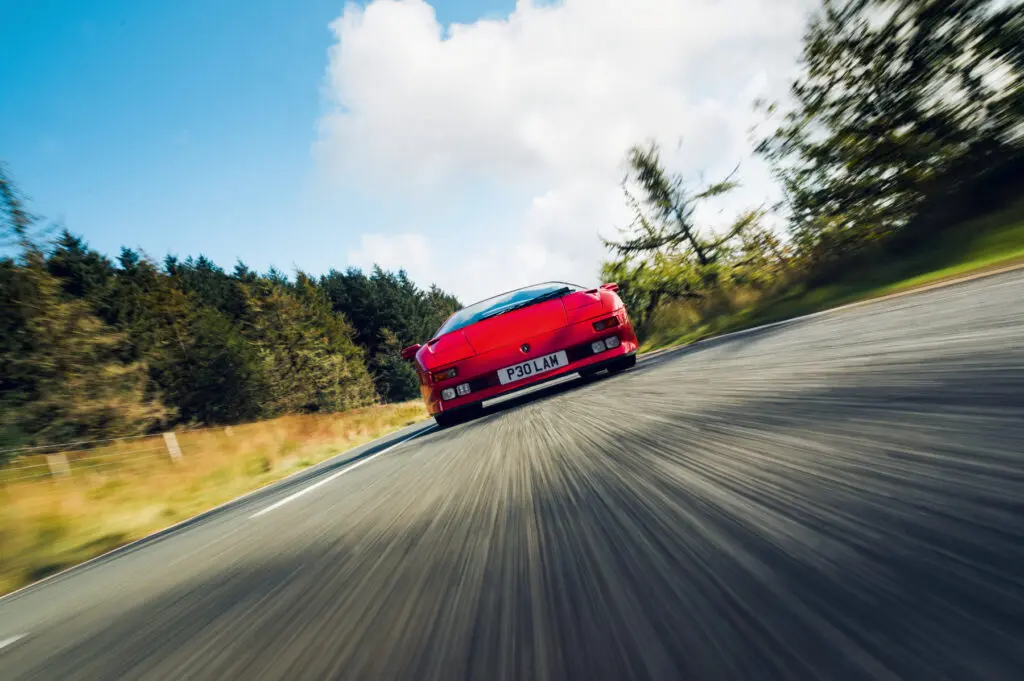
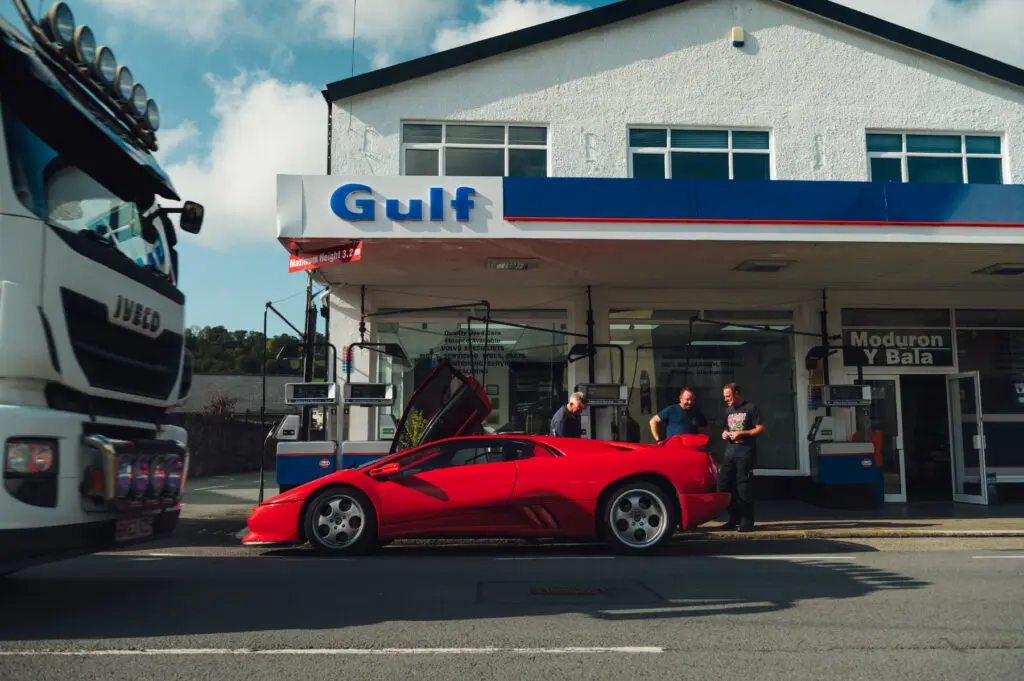
Bloody hell, the example we’re testing looks good in its gorgeous lipstick red. A sharpened pencil of a nose fans into a rear like a superhero cape, swollen and vented to package a V12 that clearly dominates the design, never mind the drive. SE30 tell-tales include a new front bumper, restyled rear bumper and adjustable rear wing (all made from carbonfibre), with Miura-style louvres over the engine.
Deep-dish OZ magnesium alloy wheels – 17in at the front, 18s at the rear – add a suitably purposeful stance while providing a flash of the SE30-specific Brembo calipers and drilled discs. Naturally, all SE30s were assembled at the same Sant’Agata production line as every other Diablo, but owners probably wouldn’t have wanted a factory tour.
‘The difference from the McLaren F1 line was just biblical but also brilliant,’ Gordon-Stewart tells me. ‘A guy would sit on a stool with a sort of compound paste and sucker with a stick on it, grinding valves into the top of each cylinder in between puffing on a roll-up. I remember thinking “Christ, if Ron Dennis saw this he’d literally have a heart attack.”‘
He also remembers an extensive re-working process at the end of the production line. ‘The number of hours that went into them was just astonishing,’ he describes. ‘Fit and finish was poor. The paint was poor. Quality was not fantastic. It was artisanal, put it that way.’
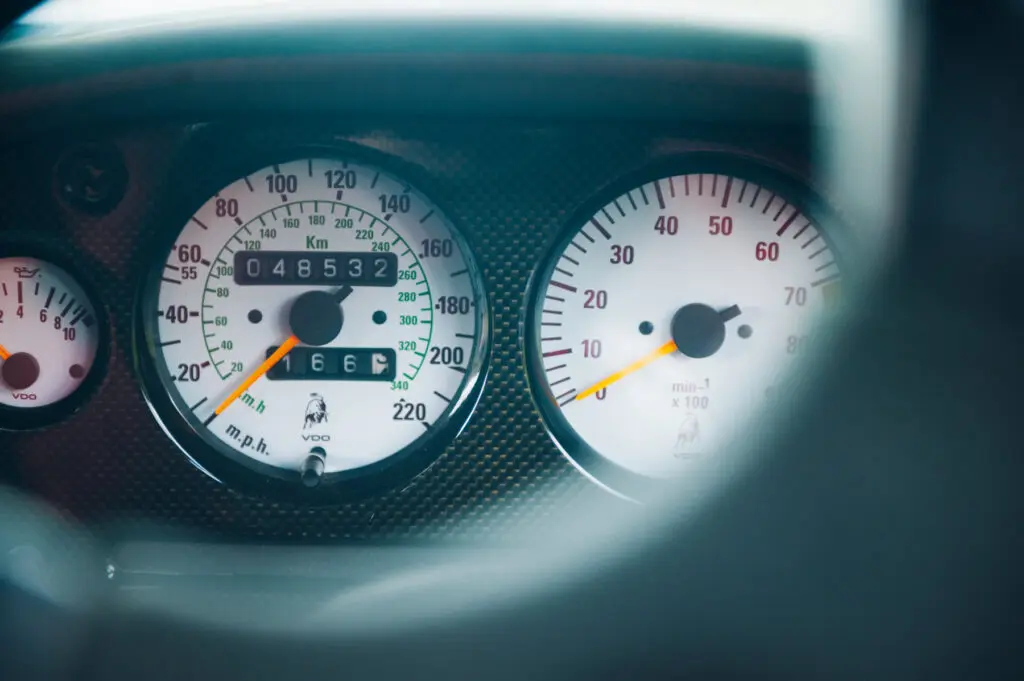
Not that you’d know from this rare right-hand-drive SE30, which has been owned by Nick Tranter for a decade and impeccably maintained by Cheshire-based Iain Tyrrell. It’s covered just 30,000 miles (48,532km at the time of our shoot) from new but Tranter – a tech entrepreneur and commercial director of the Lamborghini Club UK – uses it regularly on driving tours and even commutes into London on occasion. He kindly allows me a spirited drive.
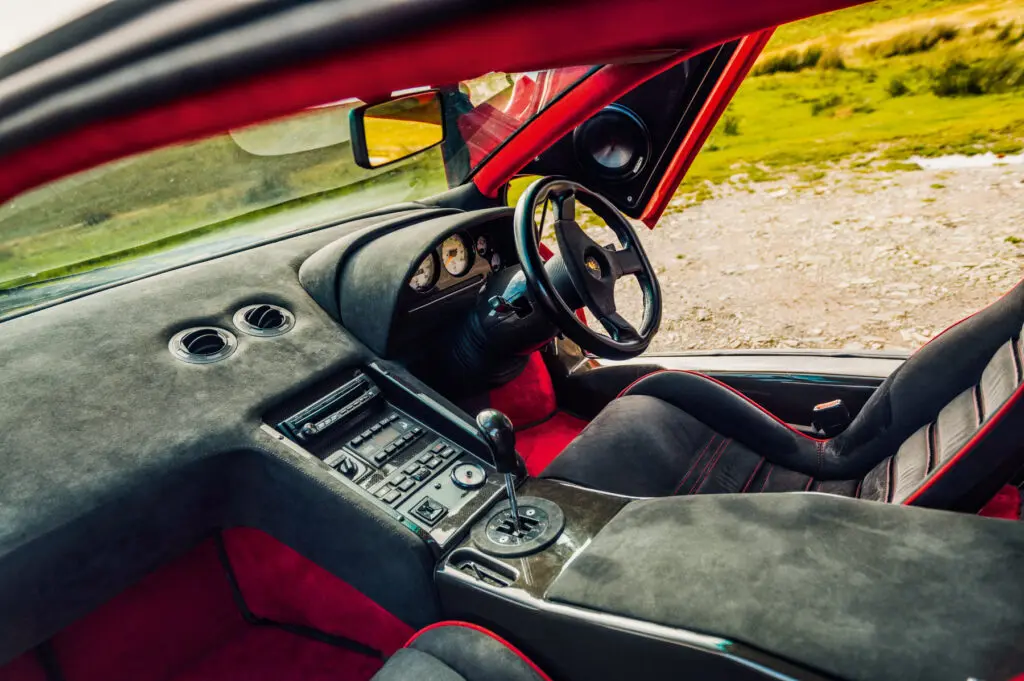
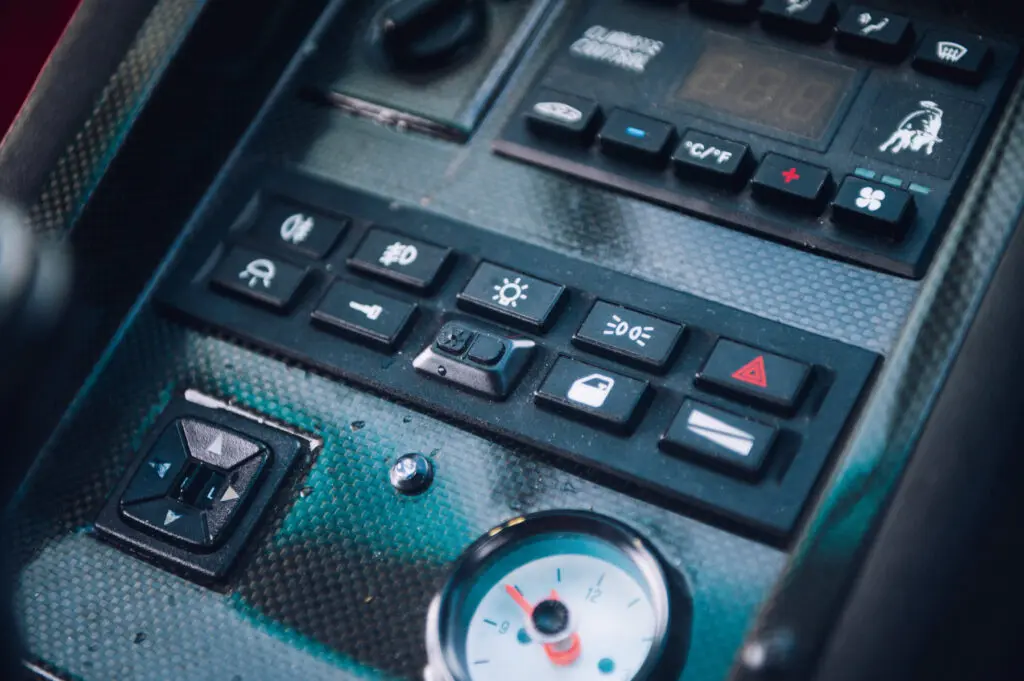
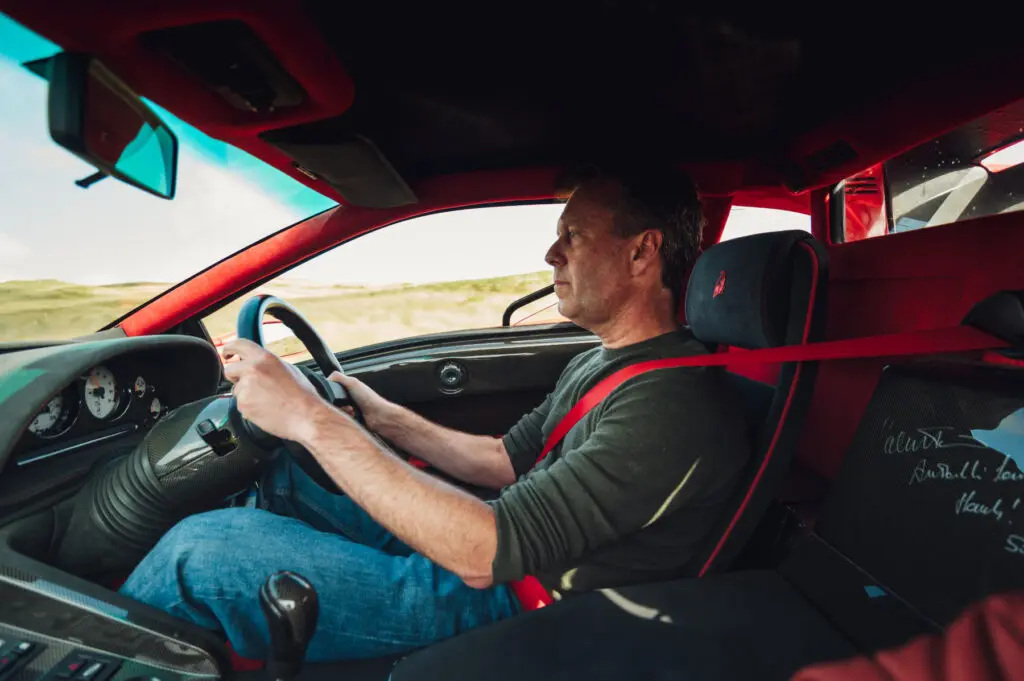
The scissor door swings up vertically like a gunslinger twirling a pistol and I squeeze between B-pillar and roof, finally landing in a world of red and grey Alcantara and carbonfibre (uniquely signed by period test driver Valentino Balboni in this case) rather than the usual swathes of luxurious leather.
Plexiglass side windows with tiny inset opening portions add another dose of pseudo race-cred, while the steering wheel includes a centre cap taken from Lamborghini’s first car, the 350GT – a nice touch, albeit one that even period press material describes as ‘an old component, found in among the dusty, old, out-of-date parts stock’. You can almost hear someone throwing their cap on the floor.
There’s plenty of space in here, but it’s perhaps not all in the correct place. Relatively modest 235-section 17in tyres sit up front but substantial wheelarch intrusion skews my feet inboard to the left. Snagging my foot under the brake when I lift the throttle feels a real possibility – note to self, bring race boots next time – and, while there’s headroom, the cant rail encroaches to my right. Over to my left, a vast expanse of dashboard rolls away to a distant spot on the horizon. That said, I am not uncomfortable.
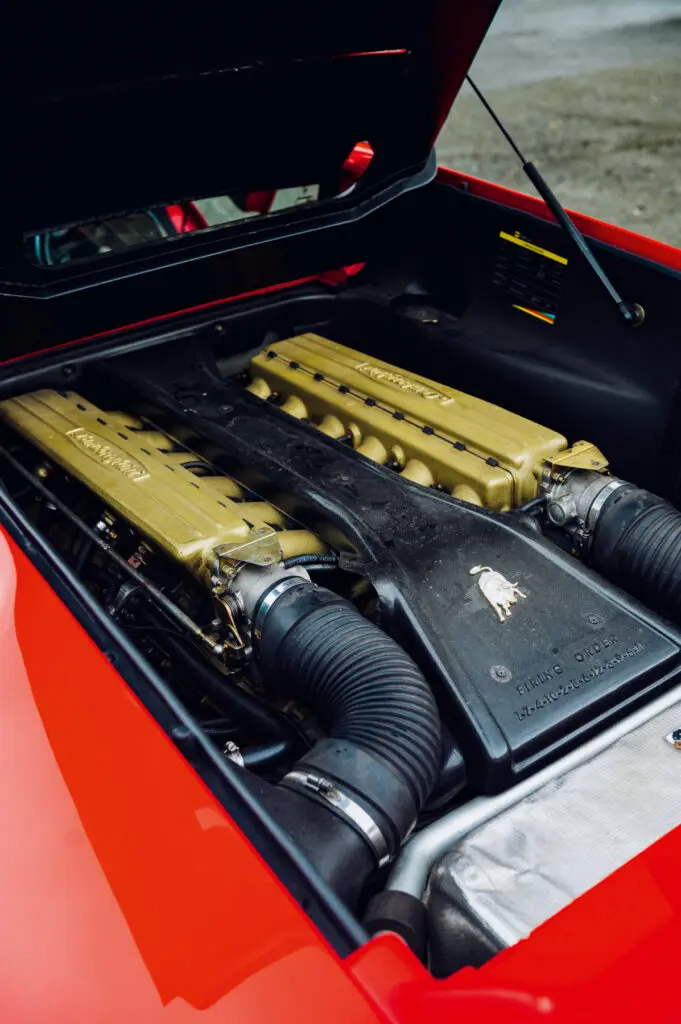
Twist the key and the 5.7-litre V12 rumbles awake with its deep burr, bumped by 38bhp to 518bhp here versus the standard engine courtesy of a new magnesium intake system, tweaked fuel-injection flow and revised exhaust. Combined with a 125kg reduction in kerbweight versus the regular rear-drive Diablo, it all helped the SE30 dispatch the 0-62mph sprint in a claimed 4.0sec and hit 207mph. Still punchy.
This is a suitably physical car to drive. The clutch is long and meatily weighted, first gear is off on a dog-leg and needs a positive clack home, and unassisted steering works shoulders and core. Yet nothing is excessively heavy. Besides, with speed the steering in particular becomes far more fluid. There’s a little play at the dead-ahead, but the ratio is as quick as you’d want given dynamics that demand a delicate sort of finesse, and it weights up beautifully to provide real clarity on loading, information streaming through the suspension components.
We’re exploring fast, well-surfaced roads, but for such a hardcore car the Diablo rides surprisingly well and with a surprisingly fluid gait, whether it’s squishing into quick compressions or getting up on its toes over crests. You can even adjust anti-roll bar stiffness with a little lever next to the open-gate shifter – just the job for these faster flicks.
In fact, the Diablo drives much like it looks – the nose almost inconsequentially feathery and responsive, the rear very much the heavy end of the hammer, squatting down and helping its 335-section rear tyres hook up when you eagerly feed in the power from tighter turns, then bringing its weight to bear with just a few degrees of steering lock in the faster stuff. You feel it loading up behind you, so you’re always aware that you need to keep that mass in check with smoother, more measured inputs for the steering, throttle and brake pedal.
The latter feels a little dead in the race-car tradition (though it is servo-assisted) but becomes stoutly reassuring with a firmer push. Thankfully smooth downshifts are easy, made so by pedals set up nicely for heel-and-toe, and the more robustly you lean into that process, the slicker it becomes and the more involving the drive.
Naturally the highlight is that glorious V12 with its surprisingly baritone pitch, sparkling throttle response and a stretch right through to the 7500rpm redline that just never seems to run out of energy.
Gordon-Stewart remembers bringing the first SE30 into the UK and by chance meeting a Ferrari F40 on the M40, then ‘seeing a little puff of smoke from the Ferrari and the pair of us charging off at deeply, deeply illegal speeds. Can you imagine, sitting there in your Cavalier?!’
No question an SE30 remains an extremely rapid car to this day, with the objective speed amplified by a chassis that most definitely won’t mollycoddle. I can only imagine how the (not road-legal) 15 examples that were upgraded to Jota specification feel with almost 600bhp.
Today, the SE30 is even rarer as time and accidents have taken their toll. Gordon-Stewart recalls one of the SE30s being hung on the wall at Sant’Agata, and another that was turned into a mule car for development of the Diablo SV, a de-contented, more affordable rear-drive Diablo in the mould of Porsche’s 968 Clubsport.
He also recalls the success of launching the Philippe Charriol one-make race series and increasing road-car sales by more than 300%, hitting those challenging targets in the process. Against the odds, he helped turn things around along with Mike Kimberley.
But the game was changing.
‘The SV was successful for us, but at the same time everyone recognised that we needed to move on and in board meetings we’d say “Well, hang on a second, Ferrari is going front-engined V12, so what’s Lamborghini going to do?”‘
Zagato and Italdesign submitted design studies for various concepts, and there were various avenues to explore, including the LM003 SUV and V10 Cala concept, but by then Megatech wanted out.
‘The Indonesians thought they’d buy a car company and have some fun with it, but then they realised they were going to have to invest significantly and they weren’t prepared to do it,’ sums up Gordon-Stewart.
When Megatech ejected, Volkswagen Group calmly parachuted in, with the facelifted Diablo being the first ever model unveiled under the Germans’ watchful eye and – ultimately – paving the way for the new Revuelto recently launched during this year’s 60th anniversary celebrations.
Made 30 years before, the SE30 doesn’t just recall a rather different period in Lamborghini’s history: it embodies it with a feisty, exciting drive. They certainly don’t make them like this anymore.
Lamborghini Diablo SE30 specifications
| Engine | 5707cc 48v V12, DOHC per bank, fuel injection |
| Power | 518bhp @ 7000rpm |
| Torque | 428lb ft @ 5200rpm |
| Transmission | Five-speed manual, rear-wheel drive |
| Steering | Rack and pinion |
| Suspension | Front and rear: double wishbones, coil springs, telescopic dampers, anti-roll bar |
| Brakes | Discs |
| Weight | 1450kg (without fluids) |
| Top speed | 207mph |
| 0–62mph | 4.0sec |