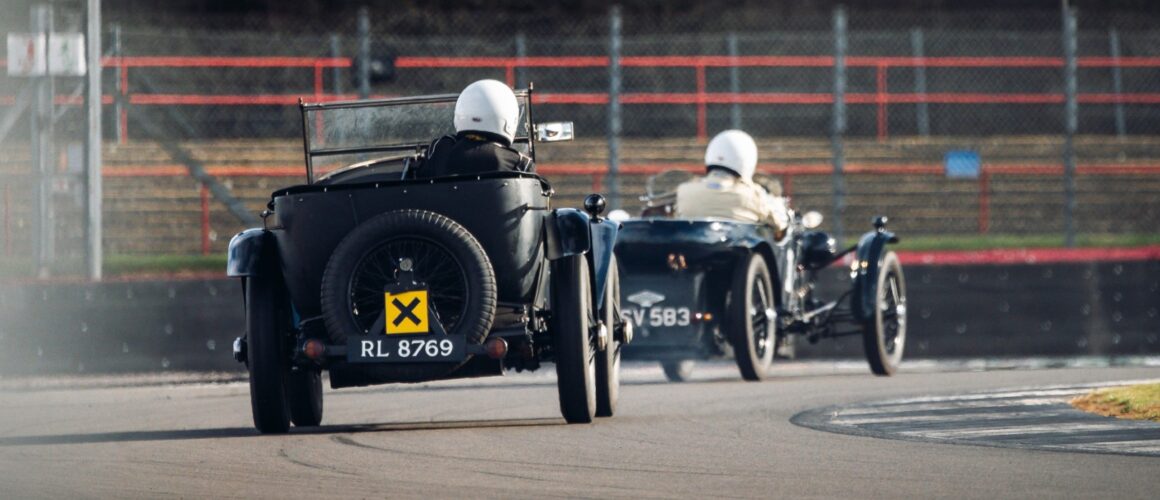
‘Congratulations, you are now a racing driver.’
From the wry smile on the instructor’s face, I suspect that this isn’t the first time that he’s delivered that line and that he doesn’t believe it any more than I do. But, crucially, I’ve just passed the Association of Racing Drivers’ Schools (ARDS) test, and that means I’m now officially entitled to a UK race licence.
This feature first appeared in Octane 240
Which is good news, because in three weeks’ time I’ll be taking part in my first-ever competitive track event. I’ve done lots of historic rallying in my time and I’ve done some spirited track driving, but I’ve never taken part in an actual race. Strictly speaking, I’m not about to, either: the Vintage Sports-Car Club’s annual Pomeroy Trophy is not a race per se but a speed event, conducted under race regulations. While you’re on track with a load of other cars, the only person you’re competing against is yourself.
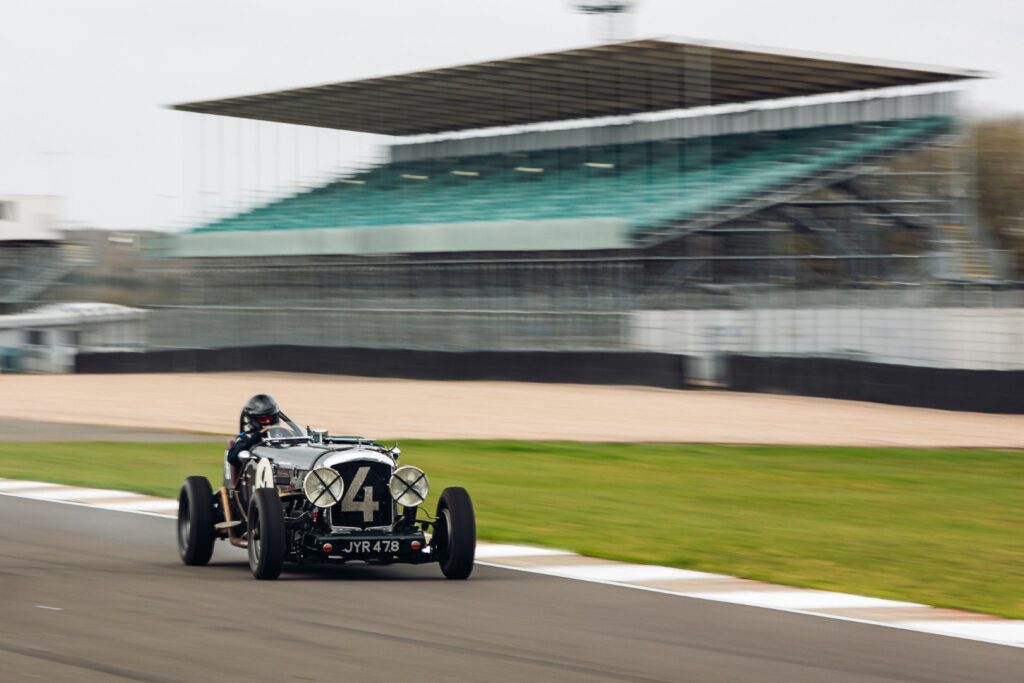
You can enter The Pom, as it’s universally known, in pretty much anything. Editor James Elliott did it years ago in his 2.5-litre Mk1 Triumph 2000; I’m about to have a go in a 1929 Frazer Nash Super Sports. The reason that a car of any age or type can be competitive is that results are decided by a complex handicapping formula, inspired by ones first published in Laurence Pomeroy Jr’s The Grand Prix Car 1906-1939. It’s subsequently been refined to make The Pom more road-car friendly, so that the ability to carry luggage and have reasonable comfort (such as a hood, for an open car) is as important as performance.
Attempting to understand this formula is beyond mere mortals but it clearly works, because The Pom is one of the VSCC’s most popular events. It’s been held most years since its first staging in 1952 and the winner is awarded the actual Pomeroy Trophy, which is a fine model of the 1914 Vauxhall Grand Prix car designed by Pomeroy Jr’s father, the great Laurence H Pomeroy Sr.
I’ve never held a race licence but I’ve always wanted to do The Pom and this year I had the perfect opportunity. For the last few months I’ve been privileged to have the use of Simon Blakeney-Edwards’ Frazer Nash, as featured in Octane Cars, and Simon was very keen that I should do The Pom in it. So I sent off for the Get Started in Motorsport starter pack that you order online for £104 from Motorsport UK. The pack includes a digital version of what used to be known as the Blue Book, which contains all the rules and regs that govern UK motorsport. You mainly need it only for reference, which is fortunate because it’s bloody difficult to use in the PDF format that has superseded print and paper.
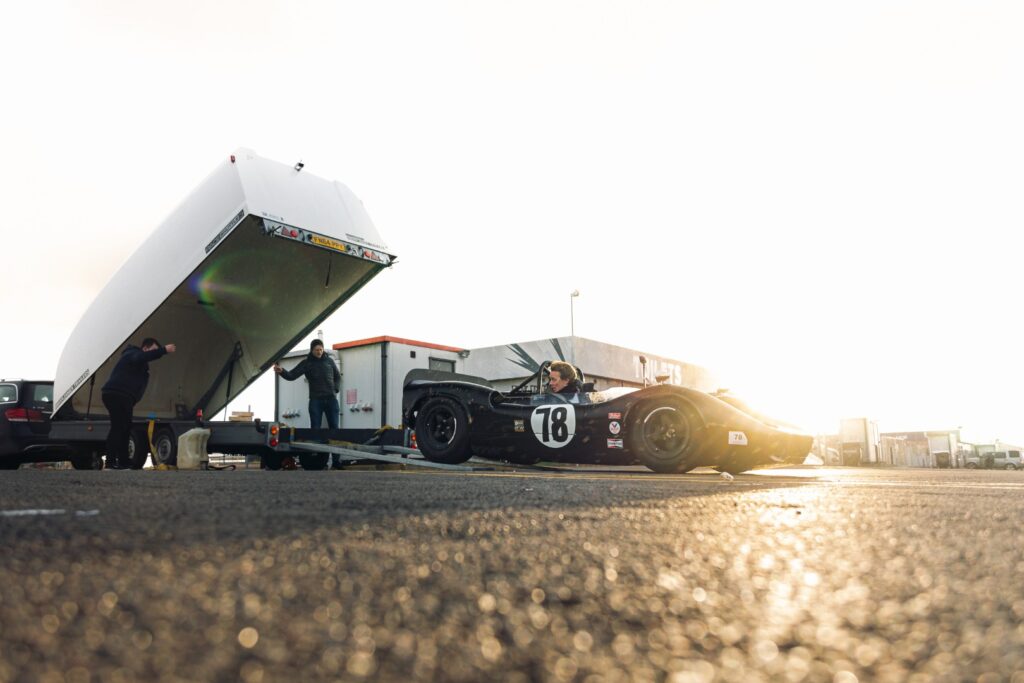
The key element in getting your licence is passing the ARDS test, which you can book direct at a number of circuits for around £300. I chose Thruxton simply because I’ve driven it a couple of times and I like the people there; Silverstone might have been more sensible in terms of having a chance to learn the track, but in practice it doesn’t make a lot of difference. Wherever you take it, ‘the ARDS’ consists of a classroom session and then 20 minutes or so on track with an instructor, not so that you can show how fast you are but simply to determine that you are a safe driver who will not be a danger to other competitors. Most importantly, you have to memorise all the different flags used, because the classroom session finishes with a written multiple-choice test, and getting a single answer wrong here will result in an instant fail.
The good news is that the instructors actively want you to pass, and will do all they can to metaphorically steer you in the right direction. The multiple-choice questions rely heavily on common sense, too. It’s not hard to guess the right answer to the question: ‘You accidentally drop your race helmet onto the tarmac. Do you, a) buy a new helmet, or b) cover up any marks and sell it cheap to a mate?’ Which, by the way, more or less is a genuine question from the test paper. Assuming you’ve done all right in class and on circuit, you’ll be given the vital piece of paper that allows you to obtain your licence from Motorsport UK, with or without the deadpan handover from the chief instructor.
To do The Pom, besides paying an entry fee (£220 this year, which is great value by historic racing standards) you’ll also need a correct-spec race suit, helmet, gloves and shoes. This stuff doesn’t come cheap, of course, so I was very grateful to be lent a full set by mate Paul Bullett.
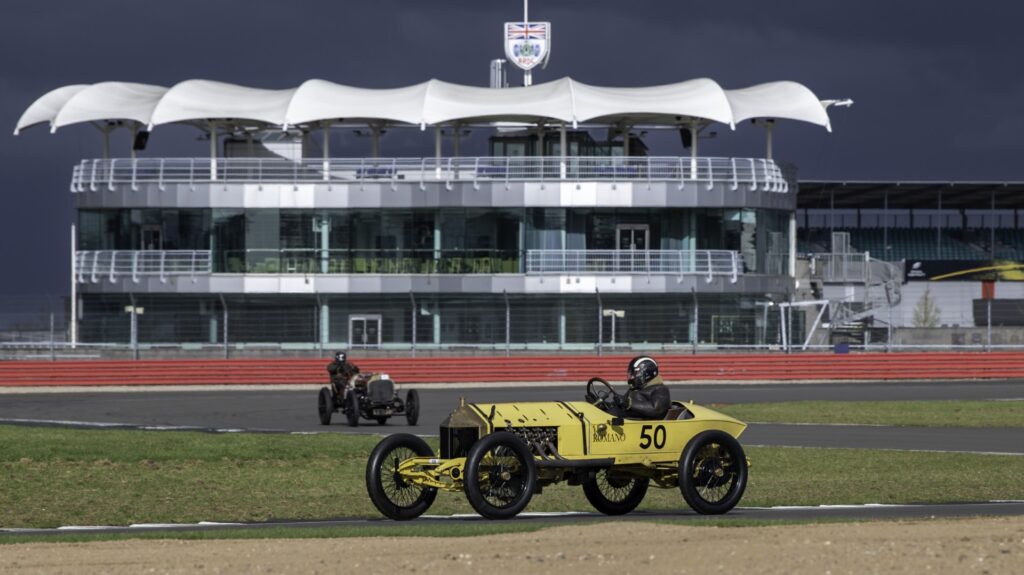
It was all looking good: my entry for The Pom had been submitted and accepted. A day before the event, I thought I’d give the ’Nash a short run to check everything was working properly. It drove brilliantly – until, half a mile from home, the engine cut out and wouldn’t restart.
I had a feeling the fault was electrical and, eventually, after fiddling with rotor arm and dizzy cap, I managed to get the car going for long enough to drive home. But then it stopped again, and this time no amount of fettling had any effect. Time to call Simon. ‘Your first tests aren’t until late morning, so get to the circuit early and we’ll sort it,’ he advised. ‘It’s bound to be something simple.’
Saturday morning dawns at Silverstone, I unload the ’Nash from my trailer, we push it under cover, and Simon gets to work. More and more cars arrive around us – including a fabulous, and extremely loud, 1973 BMW 3.0 CSL in full Jägermeister livery that’s been entered by his brother Patrick – and still Simon continues to work. And work. Eventually, just ten minutes before scrutineering is due to close, he finds the problem: an invisible fracture in the lead to the condensor. I leap into the car, fire it up, and scrape through scrutineering at the last moment.
One of the quirks of scrutineering for The Pom is its suitcase test. If you can’t get two of the VSCC suitcases (built to old FIA measurements for sports cars at Le Mans) within the body silhouette of the car – and not in the front passenger area – then you’re penalised. Similar penalties are applied if you don’t have a spare wheel, full windscreen or a serviceable hood. Since the ’Nash is running aeroscreens and no hood, and its curved rear bodywork won’t take a single suitcase, I’ll be starting the event at a disadvantage.
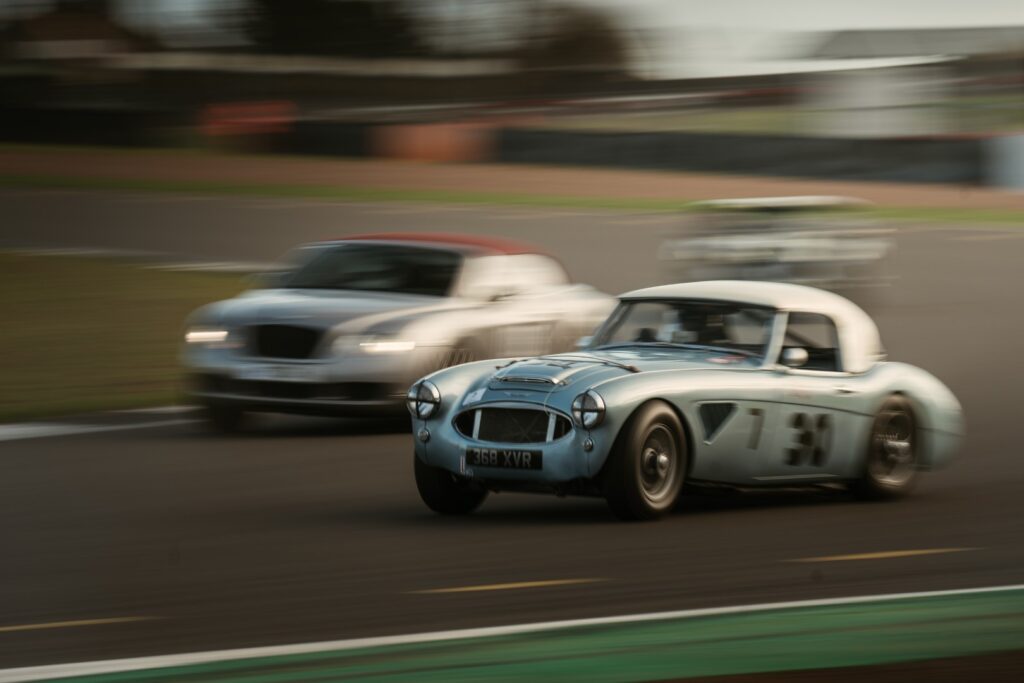
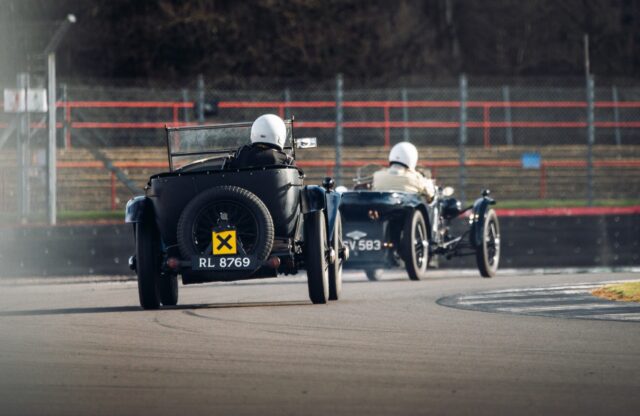
There are compensations, though, namely that the ’Nash is extremely fast for its age and handles brilliantly. The morning’s tests will all take place on the circuit and, as the cars for Class One (the pre-war stuff) line up in grid formation for the sighting lap, I’m feeling nervous but excited. There’s a slight panic as my helmet starts to steam up while we wait for the off, but it soon clears once we’re underway and the tension begins to dissipate.
Sighting lap completed, it’s time for the competition proper. There are three separate tests: a slalom between cones, a braking test into a marked-out ‘box’, and a combined quarter-mile acceleration test followed by a flying 250 yards. The slalom is pretty straightforward – just drop the clutch, gun the engine and avoid touching any cones – but the braking test is the one that catches even experienced competitors out. ‘Remember,’ warned a friend, ‘you only need to get the front wheels over the line, and not the whole car into the box. Try doing that and there’s a big danger that you’ll overshoot.’
His words ringing in my helmet-muffled ears, having accelerated as fast as I dare past the starting point for the test, I stand on the ’Nash’s rod-operated brakes and yank on the handbrake for good measure. Nailed it! The ’Nash slides to a halt half-over the line. Then it’s on to the acceleration and flying quarter-km test. Here, I’m less confident. It’s not my car and Stowe Corner, which begins just after the test ends, looks scarily tight when you’re bearing down on it at serious speed. Even Simon, a veteran of this event, acknowledges that it’s daunting. ‘You shouldn’t need to lift until the end of the flying quarter, but it’s hard not to,’ he admits.
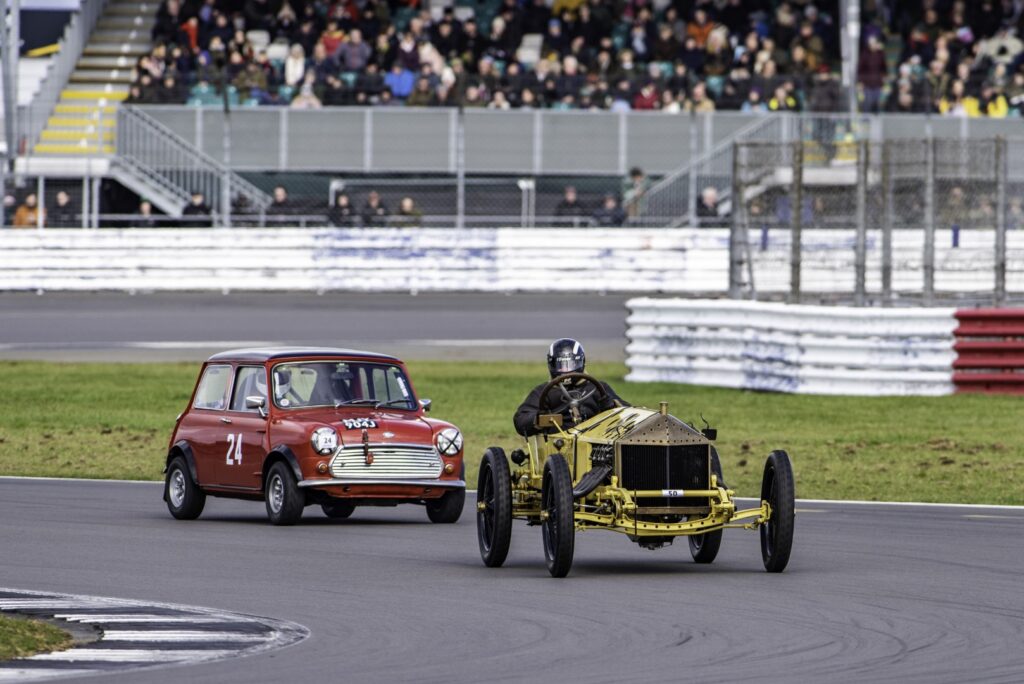
So, not as quick as I ought to be here, but at least I haven’t spun into the outfield. A relaxed trundle back to the pits, and time for a burger and a portion of chips before the bit we’ve all been waiting for: the track session, for which cars in each age group are allocated a certain number of laps to complete within a 40-minute outing. Here, again, it pays to study the regs. You get penalised if you don’t make the number, but you don’t get extra points for doing extra laps. So you need to make brisk progress but you shouldn’t have to drive like a loon to make the target.
But, of course, it’s Silverstone, and everyone here is at least a competent driver, and a number of entrants have been friends for a long time… so it’s inevitable that there’ll be some good-natured rivalry out on the circuit.
My own ambition is just to stay out of the way and experiment a little with the chain-drive, differential-less ’Nash’s handling on Silverstone’s smooth, broad tarmac.
After a rolling start, the flag drops and we’re away. I’ve total confidence in the ’Nash’s 1500cc engine – it’s built to Blakeney-Edwards spec and is pushing out north of 100bhp – so I’m not afraid to gun it hard. The dog-clutch gearchange is an easy one by vintage standards, too, as long as you remember to shift cleanly and deliberately.
Nearly 30 pre-war cars makes for a sizable plateau but there’s a broad spectrum of car ages here, from Tony Lees’ 1913 Vauxhall Viper Special up to Nicholas Lees’ 1938 Riley Sprite two-seater, so it’s not long before the pack starts to separate. After a few laps I find myself in a kind of no-man’s land between the front-runners and the back-markers, and a strange kind of calm descends; I’m still driving hard but I’ve entered a state of detachment where I can start to analyse what I’m doing, which line to take for that next bend, whether to change down into second or stay in third.
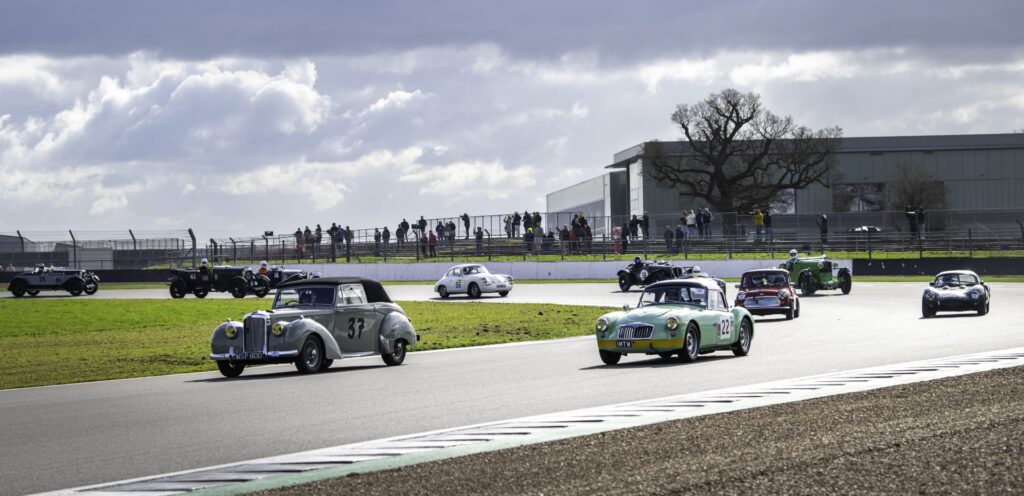
Needless to say, I’m way off the pace compared to more experienced drivers in similar cars – on the exit from one corner, Robert Beebee executes a beautifully controlled power-slide past me in his ’32 TT Rep – but I manage a couple of overtaking manoeuvres of my own and I’m starting to have more confidence in controlling the ’Nash’s oversteer, too. But that lack of experience shows up in some truly shocking lines through corners and, by the time I’ve started to work out where I’ve been going wrong, the 40 minutes is up and it’s time for us to pit.
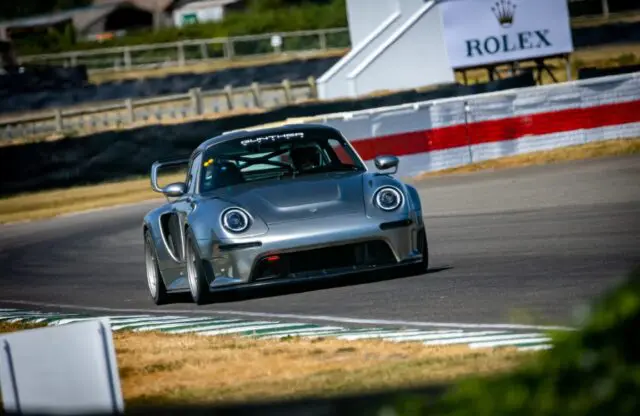
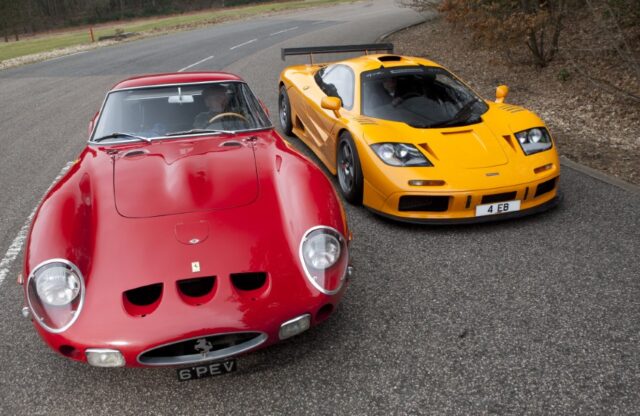
Climbing out of the car in parc fermé, I feel the most incredible adrenaline buzz. Stories are swapped, jokes are cracked, and there’s a great sense of elation. So much so that I’m barely aware of the afternoon sessions that follow ours, although there’s an amazing variety of machines taking to the track. Where else will you see an Armstrong-Siddeley 346 doorhandling alongside, say, a Ford GT40?
When the results are posted a few days later, John Felstead is declared the winner of The Pomeroy Trophy in his 2004 Impreza Turbo. Martin Short is second overall in a nearly new GR Yaris – but third is Andrew Smith in a 1929 Frazer Nash Super Sports. Yes, same year and model as ‘my’ car. I finish a long, long way down the list, but work out that if I’d had a hood and full ’screen, I’d have done a lot better… You see, I’ve already got the excuses ready; perhaps I’m a racing driver after all.