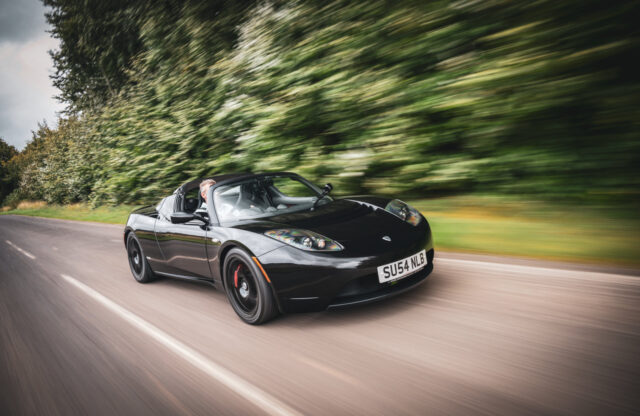
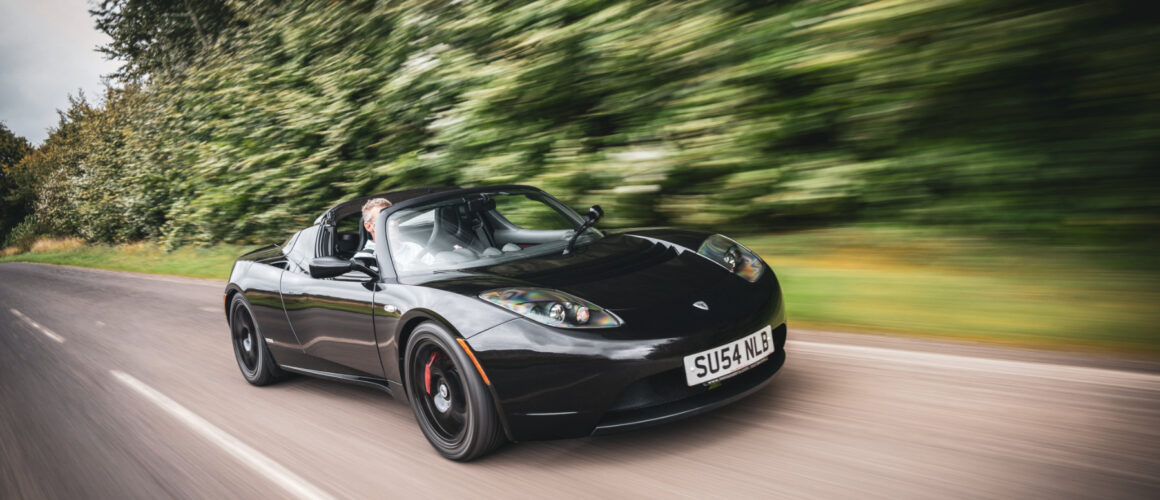
That incredible sensation of whoosh is still there after ten years. With 295lb ft of instant torque and 288bhp on tap, the Tesla Roadster Sport is dramatically fast in other-worldly fashion. Amazing to think that this is pretty much the first of the current wave of electric cars, having sprung out of the trap in 2006 and launched Tesla into the vanguard of automotive technology. Its performance remains, ahem, electrifying – if slightly weird.
That equally weird but smart billionaire, Elon Musk, decided to back internet pioneers Martin Eberhard and Marc Tarpenning’s all-electric car and approached Lotus to help with the design and engineering, using its lively and lightweight Elise sports car as a template. Again, a bit weird – you’d think an electric vehicle should be practical for ostensibly urban use, and the low-slung, two-door open Elise is hardly that. Musk obviously knew what he was doing – grabbing attention – as he now owns the world’s most valuable automotive company ($71.9bn in June 2024). He later admitted that the Lotus was not the best starting point, as only about 7% of the donor was retained for the Tesla Roadster and just 2456 examples were manufactured between 2008 and 2012.
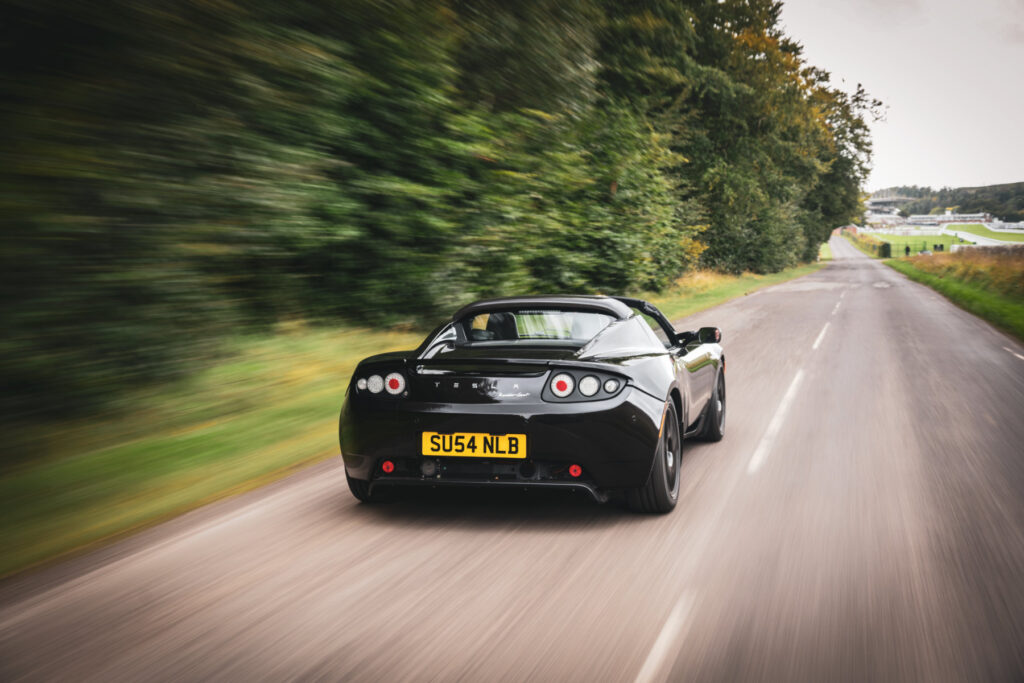
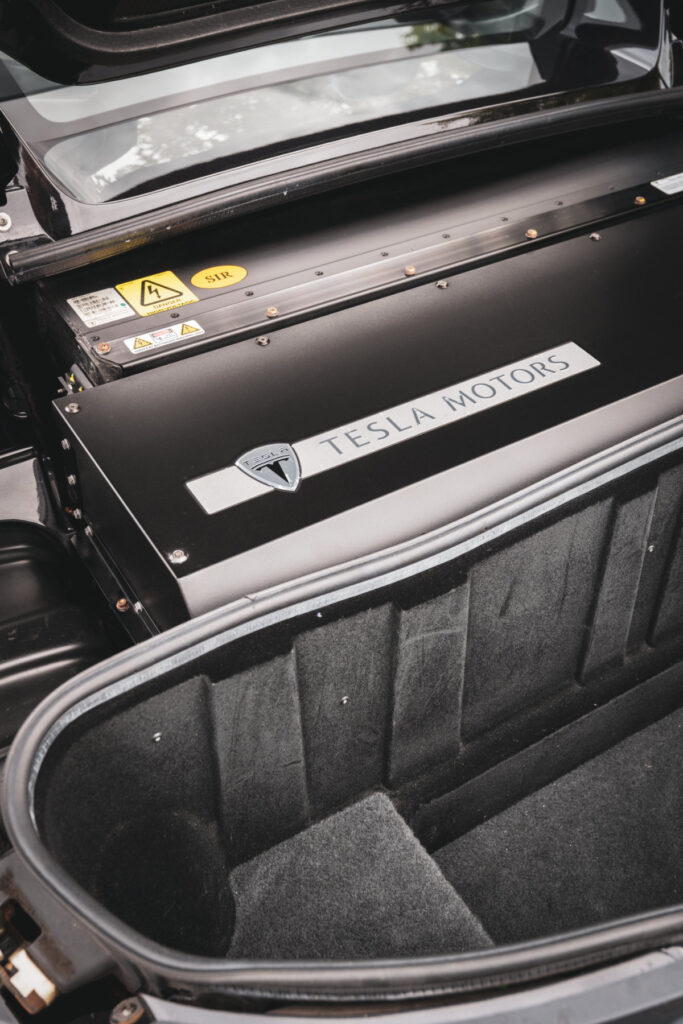
The first prototypes were released in Santa Monica (where else?) in 2006 and Musk received the first road car. It is 2in longer than the Elise, with a stiffer chassis to take its greater weight – being packed with lithium-ion batteries (in a world first for a car), at 1237kg it’s a lot heavier than the flyweight Elise. Its induction motor is air-cooled, and the Borg Warner transmission has a single ratio, which gets the Roadster to 60mph in just 3.7sec. Range is claimed to be 244 miles.
But let’s go back to Hethel and the beginning. The Lotus Elise was conceived in 1994 and released in 1996. Obviously mid-engined, rear-wheel drive with Lotus’s usual glassfibre bodywork, its bonded extruded aluminium chassis was the real innovation, providing strength with light weight (the bare chassis weighs just 67kg) and ease of manufacture.
The car was allegedly named after Elisa Artioli, granddaughter of Romano Artioli – the somewhat improbable chairman of the fast-bankrupting Bugatti and Lotus at the time. He gave Lotus the freedom to design a radically new sports car. It was an instant all-time great.
Styled by Julian Thomson (with Richard Rackham as structural engineer), the Series 1 Elise looks cute, curvy and cheerful. It weighs only 725kg so the 16-valve 1.8-litre K-series engine’s 118bhp output equates to 164bhp per tonne, for 0-60mph in 5.8sec. Its top speed of 125mph is matched by the Tesla.
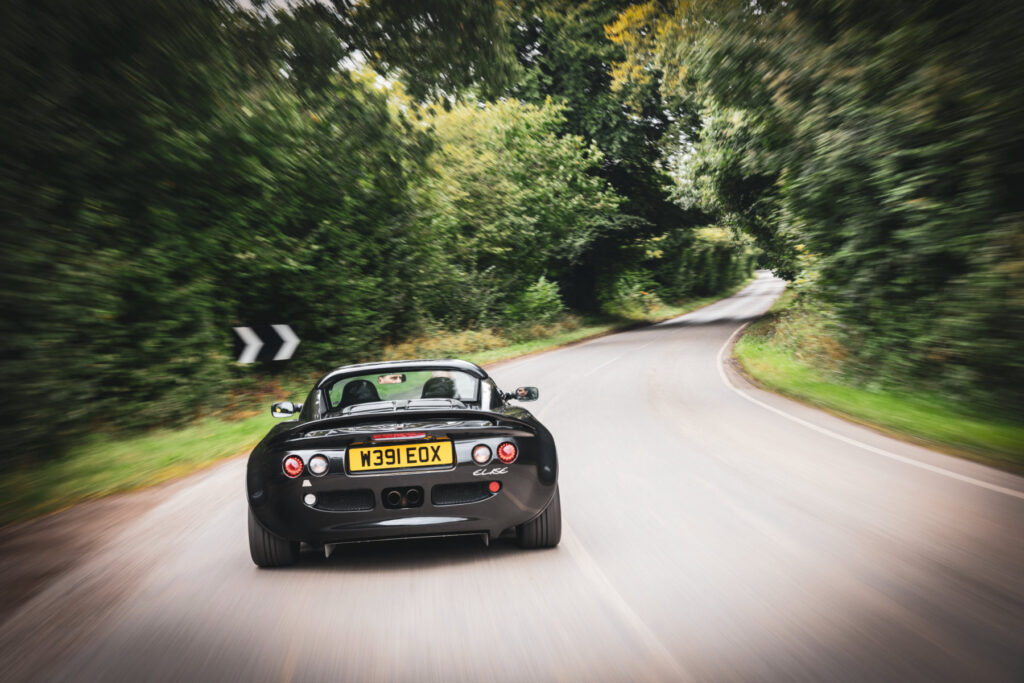
‘Simplify, then add lightness,’ Colin Chapman used to say. So the Elise’s interior is pared to the bone, suitably for an all-out sports car, with bare aluminium and painted glassfibre throughout. Unlike a Lotus 7 it features wind-up windows (with drilled winders!) and there is the luxury of a heater. But many of you cannot have failed to notice that the Elise we have here is rather more special than the standard offering. This is a SuperSport by Analogue Automotive.
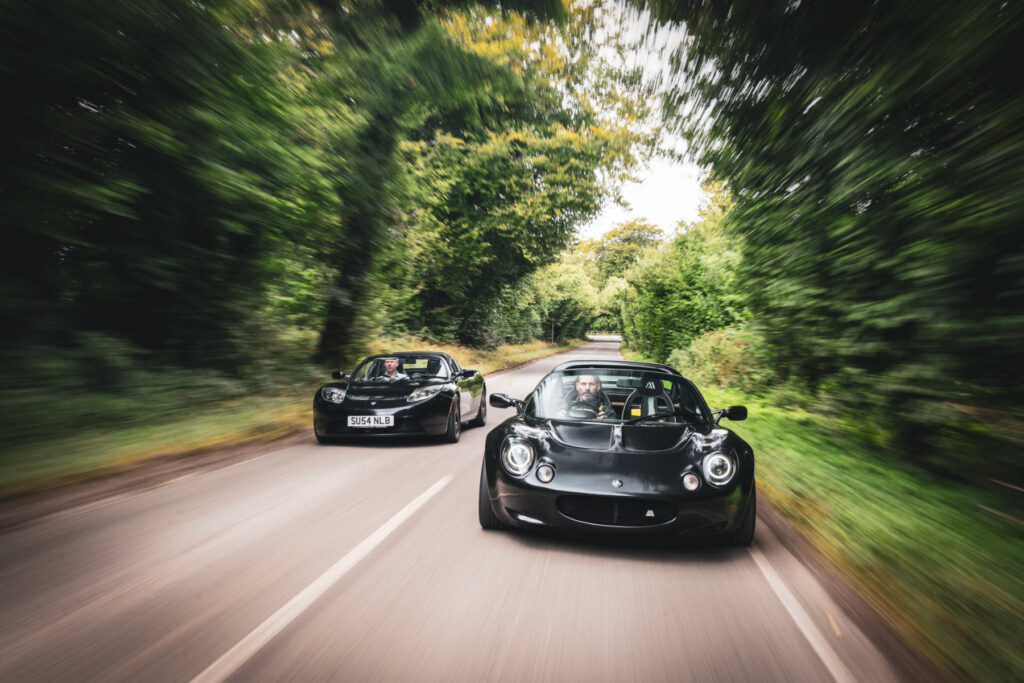
When launched, the Tesla Roadster was priced at £92,000 whereas the Lotus Elise Series 1 was around £20,000. The Tesla has gained an enthusiastic following, hailed as the first ‘classic electric car’ and offering startling performance, the upshot being that good examples now command £150,000. A stock Elise is worth about £25,000 and is considerably outgunned by the 285bhp Tesla. The Analogue Elise SuperSport is harder and much faster than stock, and takes the internal combustion fight to the electric whizzkid.
Analogue Automotive is based in West Sussex, the brainchild of arch Lotus guru Steffen Dobke. You can’t miss the smart-looking showroom, with a phalanx of Lotuses lined up outside, when driving down the A286 to Goodwood Circuit. The workshop inside looks more like a racing car works, with half-a-dozen Elises in various states of stripdown and rebuild. Steffen says: ‘I have been driving and working on Lotuses for decades and think the Elise is one of the best. Underrated, with great potential, I thought it deserved attention in the way of a Singer 911 or Alfaholics GTA.’
His immaculate workshop certainly looks the part. ‘We source good donor cars, then strip them back to the bare chassis. The aluminium tub is the strongest part of the car. We add a little reinforcement here and there and replace all the suspension components with specially developed hubs and wishbones. We have got the SuperSport’s weight down to 695kg and all this takes about 600 hours per car,’ says Steffen.
That’s a lot of labour, which doesn’t come cheap, so at around £150,000 (similar to the Tesla) the bespoke SuperSport is pitched at the driver who wants a modern Elise finished to a higher standard than the original car.
In black on black on black, this Series 1 looks superb. The body panels are sharp and smooth and the paint is deep. The black alloys are neat and the ride height is dropped so they really fill the arches. The Yokohama tyres are modest at 195/225 front and rear, as Steffen’s aim is to retain the Lotus’s light and nimble mien, and the bespoke wishbones widen the track nicely.
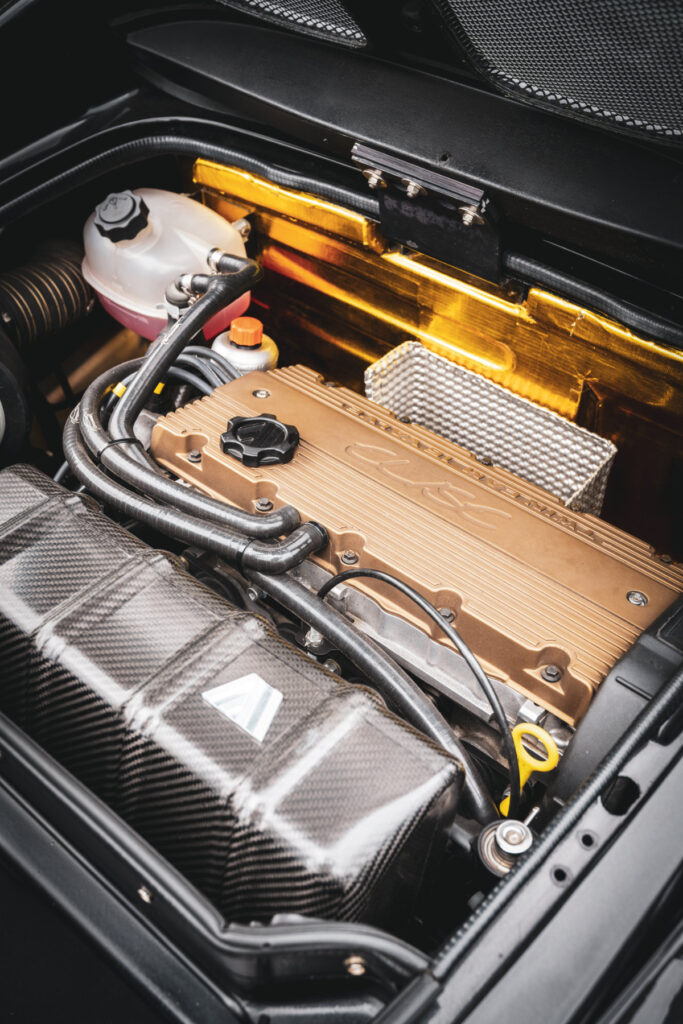
Hop into the fixed Tillett driver’s seat and the Alcantara-covered steering wheel looks noticeably small in front of the Stack instruments; you also notice genuine carbonfibre finishes and new switchgear. Turn the key and the engine bursts into a busy idle. The sound is deep and purposeful through four throttle-bodies – the K-series is producing 210bhp, for a very useful 307bhp per tonne.
The SuperSport moves off with ease thanks to 160lb ft, making it feel featherweight. The steering is accurate and the whole package feels tight, yet the fabled Lotus suspension compliance remains intact and the car is lightning-quick around the country lanes. Think large superbike.
Soon you don’t feel like you are sitting in the Elise but wearing it. Being small, it takes up little road space. The unassisted steering is telepathic, the grunt is great, and the Nitron NTR46 coil-overs keep everything nicely composed. The snappy short-throw gearshift works a very close-ratio PG1 ’box with a Quaife limited-slip diff. Plant the throttle and the powerful engine revs straight up to 7500rpm and you can carry all the speed thanks to the superbly set-up chassis.
All I can think is, if McLaren were to build a sports car in this class, this would be it. The SuperSport is balanced and sharp and offers an intense driving experience. Build quality, finish, dynamics are all superb and the menacing-sounding engine delivers slugs of high-revving performance. Indeed, as the name implies, it really is analogue.
So how does the Elise’s Sci-Fi relative compare? Also finished in black, the Tesla Roadster looks like a smoothed, more mature Elise. The Lotus stamp is evident, but it’s longer and the body panels are expensive carbonfibre instead of glassfibre in an attempt to keep weight to a minimum. This example, brought along by Drew Wheeler Sports & Classics, is rare, being one of only 12 right-hand-drive Signature 250 models with the uprated motor.
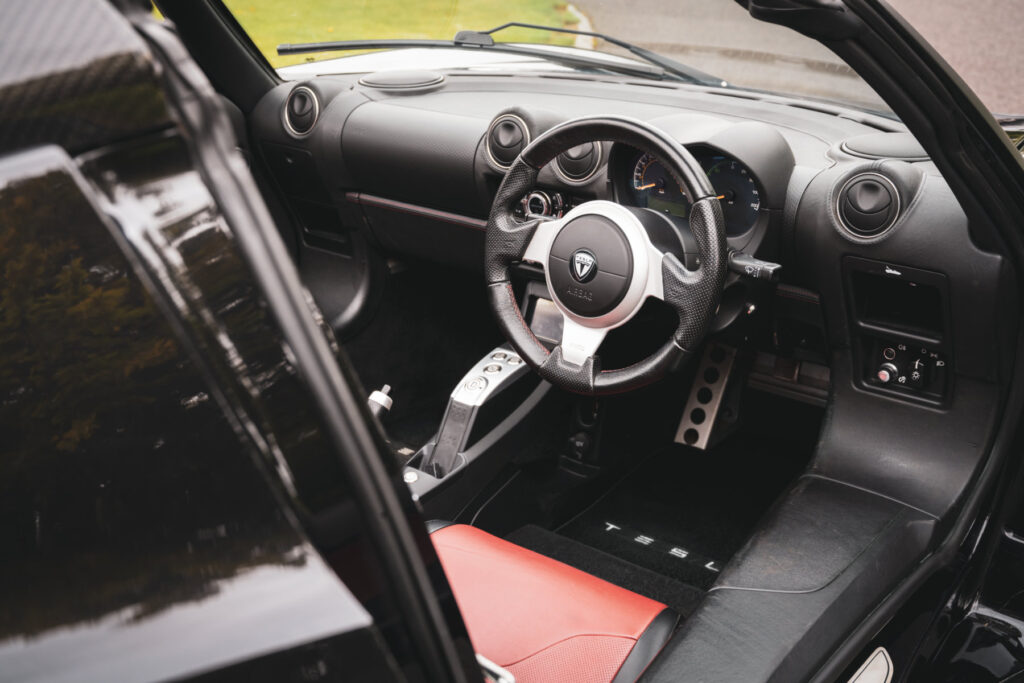
The Tesla Roadster’s interior is simple, spacious and comfortable, with red leather heated seats and carpeting, eschewing the Elise’s extruded ally finishes. Complete with cupholder, electric windows and glovebox, it was designed to appeal to early adopters, who included the likes of George Clooney and Arnold Schwarzenegger. And never mind the lack of power steering.
Operation is a cinch. Switch on with the conventional key and the central display lights up, with the P for Park button illuminated. Then press D and you are ‘good to go’, as the techies like to put it. And go you do, in a silent instant that then stretches relentlessly.
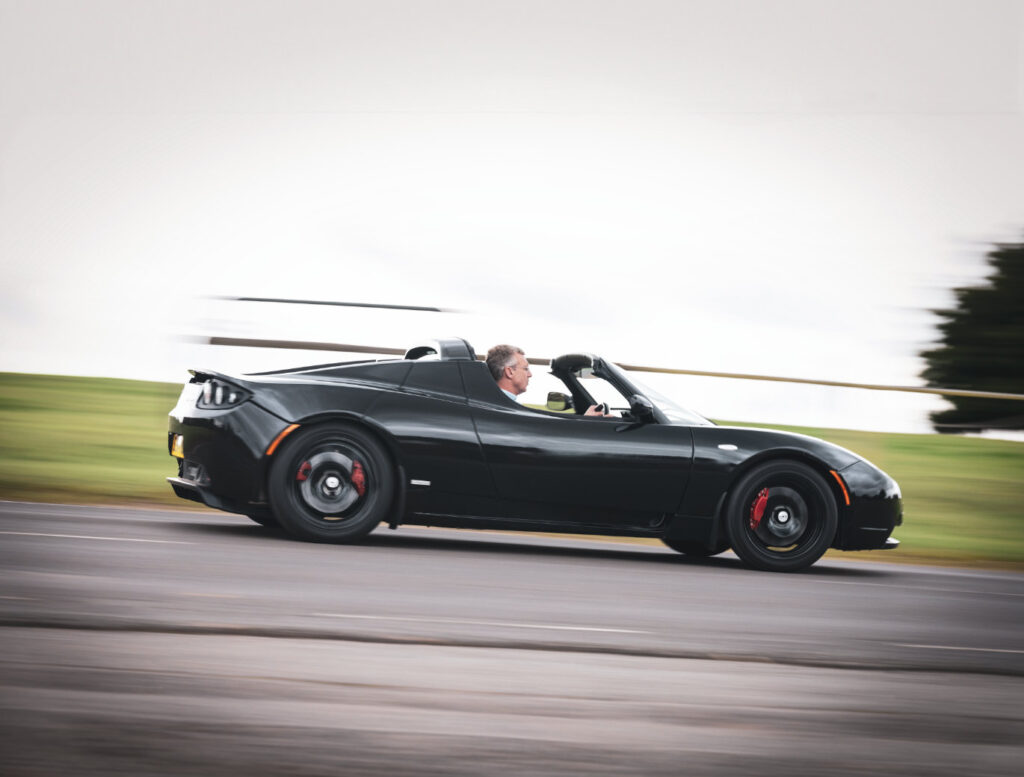
You have to hold on to the small steering wheel firmly as the Tesla lunges off the mark with chest-crushing ferocity. Yes, we all now know EVs produce their full whack of torque from standstill, yet this is still a very enjoyable shock. With only one gear and all that grunt, the Roadster concentrates on seamless acceleration without gear-changing interruptions. It is eerily silent at low speeds yet, as you push the Roadster harder, the mechanical whine of high-revving motor joins the tyre trammel and rush of wind and, when you come off the throttle, the pull of engine braking is noticeable. But with 288bhp per tonne it really feels incredibly quick and alive. And the acceleration is still a real party trick. If you want to impress (or frighten!) someone, just press the pedal and the Tesla will do the rest. All the way up to 15,000rpm.
Being quite a bit heavier than the SuperSport Elise, the Tesla’s progress is less of a dance and more of a steamroll. It is still relatively light and reactive, but the steering requires more concentration, especially if you boot it on B-roads. When that torque hits the wheels all in one go, the steering writhes over the camber and undulations, whereas in the Elise you simply allow it to glide with a dab of directional assistance. And under braking you feel the mass behind you and realise why four-piston AP calipers and vented discs are a popular upgrade, as fitted to this car.
The same yet very different, then. Both based on the Lotus Elise, these cars offer supercar levels of performance but in different ways.
The Tesla Roadster really is shockingly fast. You could argue that it’s heavy and so loses some of the point of the Elise, but never mind that. On the road it handles superbly and is laugh-out-loud quick. At low speed it’s whisper-quiet and extremely easy to drive. There is the fact that the range is around 200 miles and some components, such as the Power Electronics Module and batteries, are expensive should they need to be replaced. But if you want the first electric sports car, and you have a charger in your garage, the Tesla is for you.
The Analogue Elise SuperSport is the polar opposite. It’s about as mechanical as an object could be: light, raw and intoxicating. Power delivery is linear, its strong engine loves to rev, and is this the best steering in the word? Probably. Properly engineered, a beautifully built package that’s impossibly fast on real roads, the Analogue Elise SuperSport has to be one of the most exciting sports cars you can buy at any price.
Electrifying, in fact.
2009 Tesla Roadster Signature 250 specifications
Engine Three-phase four-pole 400V AC induction motor Power 288bhp @ 5-8000rpm Torque 295lb ft @ 0-6000rpm Steering Rack and pinion Transmission Single-speed, rear-wheel drive Suspension Front and rear: double wishbones, coil springs, telescopic dampers, front anti-roll bar Brakes Servo-assisted vented discs, ABS Weight 1255kg Top speed 125mph 0-60mph 3.7sec
2010 Analogue Elise SuperSport specifications
Engine 1796cc DOHC 16-valve four-cylinder, throttle-body fuel injection Power 210bhp @ 7250rpm Torque 160lb ft @ 5900rpm Transmission Five-speed manual, rear-wheel drive Steering Rack and pinion Suspension Front and rear: double wishbones, coil-over-dampers, front anti-roll bar Brakes Vented discs Weight 695kg Top speed 135mph 0-60mph 4.0sec
Thanks to Analogue Automotive, analogueautomotive.co.uk, and Drew Wheeler Sports & Classics, drewwheeler.co.uk.