It takes a certain confidence to challenge genius. Francesco del Giocondo, aka Mr Mona Lisa, may have been sublimely wealthy, but there’s no record of him asking Leonardo da Vinci to level up the horizons of his wife’s portrait. Pope Julius II did not urge Michelangelo to hurry up with his painting of the Sistine Chapel ceiling, and nor are there any royal edits in the margins of Shakespeare’s plays. All of which leaves Emperor Joseph II, ruler of territories that stretched from the Netherlands to Hungary, as something of an outlier. He famously had the audacity to criticise Mozart for writing ‘too many notes’ in an operatic masterpiece.
This feature first appeared in Octane 267.
Then there’s German publishing magnate, Willy König, who had the temerity to think that Ferraris fresh from the production line were in need of serious improvement. But to view König merely as a tuner is to do him a disservice. He didn’t just tweak cars but oversaw their complete re-engineering. Turbos were fitted, intercoolers installed, chassis fine-tuned, suspensions lowered, aerodynamics sharpened, and tyres and rims widened. The results were instantly recognisable as Ferraris, yet distinctly different, as if a supermodel’s identical twin had started power-lifting – the same bone structure, just with muscular bulges.
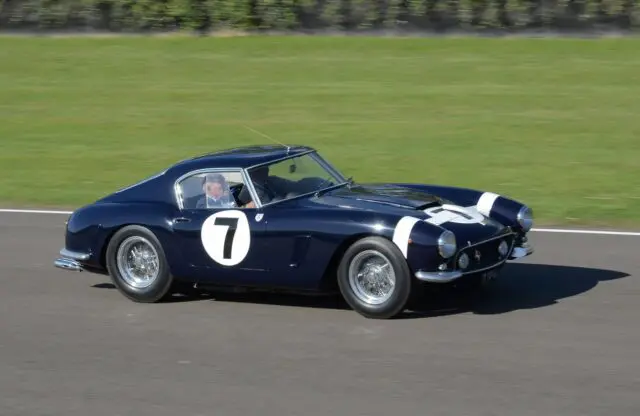
König had a racer’s innate sense of where a car could be enhanced. From as young as 17 he was ‘borrowing’ his mother’s car to compete in airport races that hurtled down long runways. In 1962, driving a Ferrari 250GT SWB Berlinetta, he won the Deutsche Bergmeisterschaft (German Hillclimbing Championship), leading to a personal invitation from Enzo Ferrari to join other victorious Ferrari drivers in Maranello.
But while König may have had respect for Enzo, that didn’t extend to reverence. When, in 1974, he took delivery of the first 365BB delivered to Germany, König had no qualms about swapping out body panels for lightweight alternatives and fitting a modified 512 engine, which boosted power to 450bhp. ‘He saw a new model and immediately knew what he would like to change,’ his son Oliver tells me. König wasn’t a mechanic, yet he knew how to select the best people for the job, and then ‘kept testing and adjusting until a new product met his high demands’.
König’s dream team included aerodynamicist Vittorio Strosek, who went on to work wonders with Porsches, while his chief engineer was turbo specialist Franz Albert, who famously fitted twin turbochargers to a pair of ‘underpowered’ Lamborghini Countach V12s.
With 450bhp on tap, König’s mid-engined 365BB was blisteringly fast. More importantly, it marked the start of Koenig-Specials, as König pivoted his successful publishing career to establish a tuning business, dropping the umlaut in his name for international audiences.
Ferraris were the first cars up on the ramps in his workshop, before customers – ‘rock stars, state leaders/dictators, pop stars, top managers, company owners, criminals… but we don’t mention names’ says Oliver – started asking for similar treatments for a steady stream of Lamborghini, Jaguar and Porsche exotica.
Having described the factory 365BB as ‘not a real sports car’ (very few cars south of the F40 met his definition of a real sports car), König had dismissed the 308 as a ‘little Ferrari’ for those who could not afford the 512. ‘He didn’t take the 308 too seriously, but he saw potential,’ recalls Oliver. ‘And he really enjoyed the many laps at the old Nürburgring after he turned it into a real sports car by creating the turbo version.’
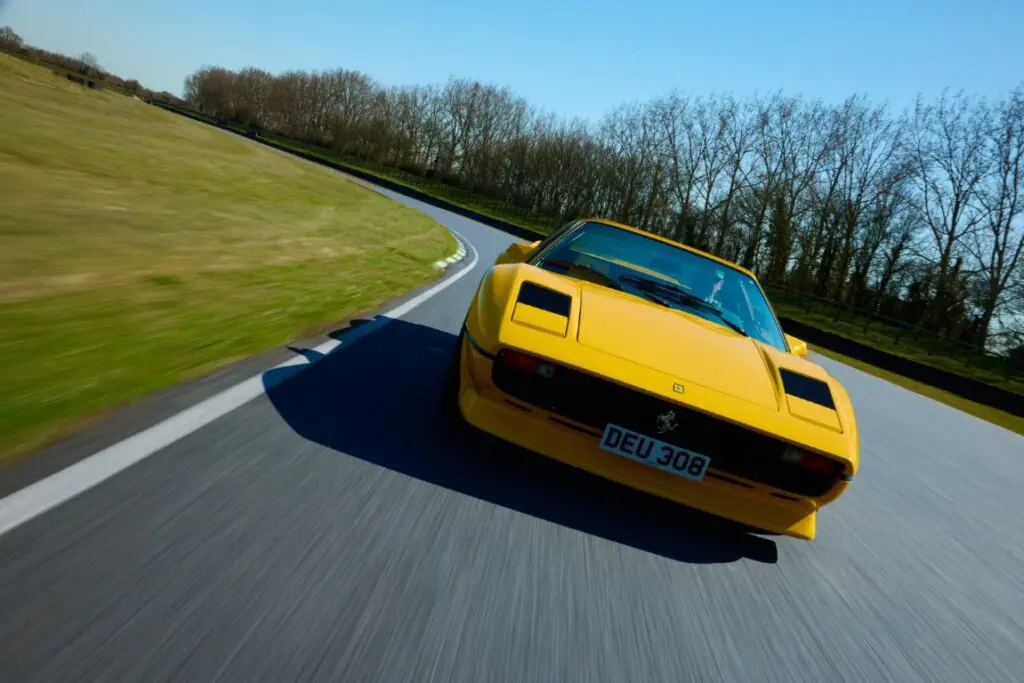
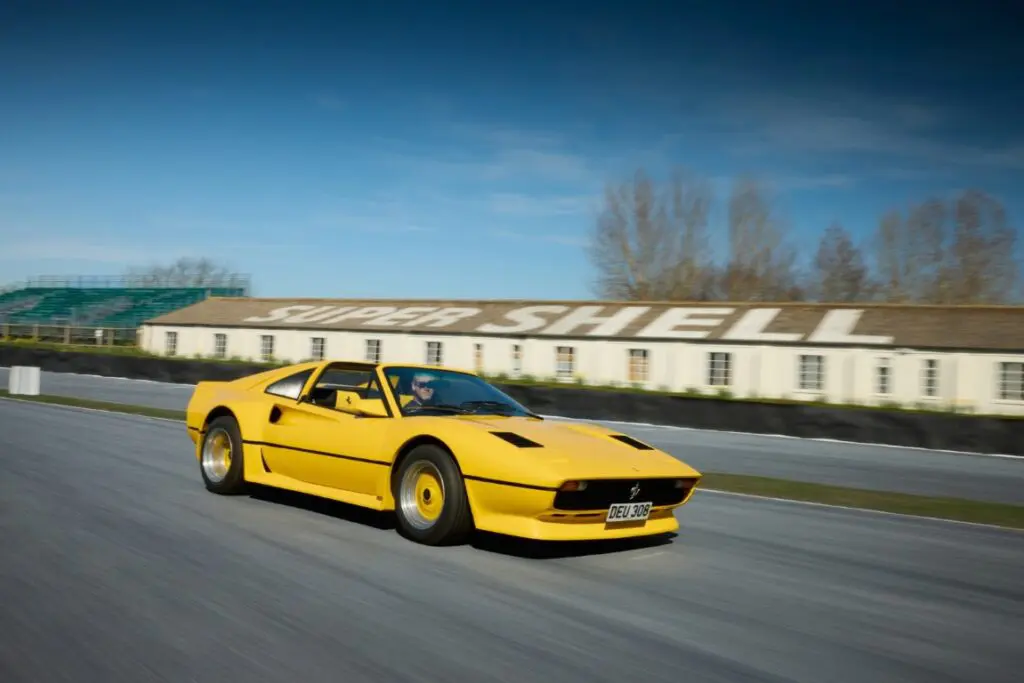
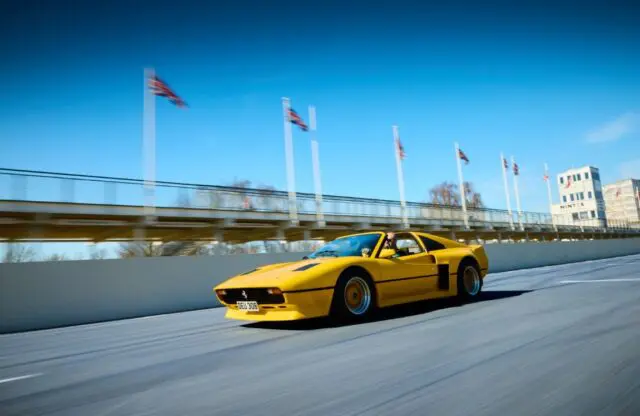
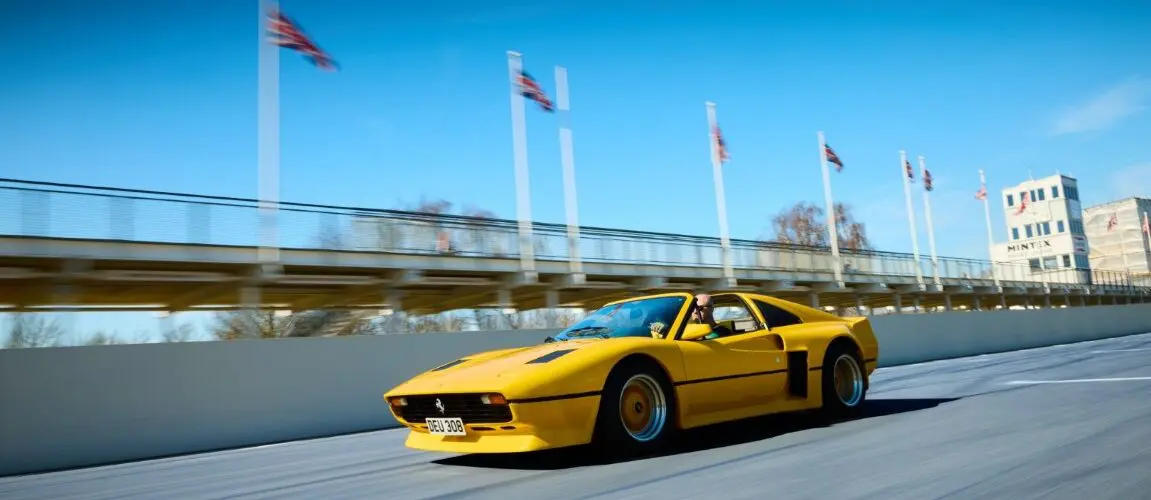
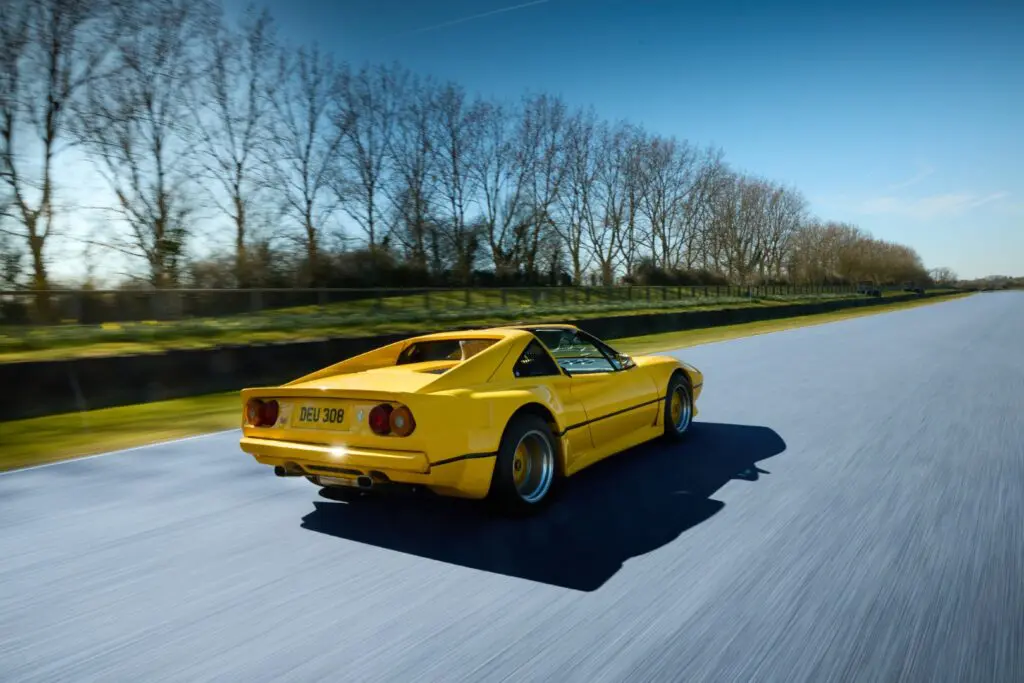
Happily, one of these ‘real sports cars’ is parked in the paddock at Goodwood. This Koenig-Specials 308 GTSi Bi-Turbo may have many qualities, but stealth isn’t one of them. Under König’s guidance the originally white 308 was repainted in retina-melting Ferrari Giallo Fly, and its exhaust note crashes like a piledriver into your solar plexus. A rare icon of its era, this outlandish 308 celebrates 1980s excess with Gordon Gekko glee, not so much ‘greed is good’ as speed is good. In a paddock of immaculate E-types and AC Cobras with impeccable racing pedigrees, it’s the yellow Ferrari that seizes the attention of selfie-seeking visitors. Posters of sensible cars never adorn bedroom walls.
A decade ago, however, this car could not even have driven its way out of a barn. Car restorer Jonathan Rose, of JAR, had been in Finland to inspect a Ferrari 355 on behalf of his client James Anderson when the vendor mentioned that there might be a rare 308 available, too. ‘It was a bloody wreck. It didn’t run, and without taking it apart there was no way of knowing how much it would cost to fix or whether it might need a complete engine rebuild,’ recalls Rose. ‘I told James it was a massive gamble but, if it paid off, he would have something unique.’
Koenig 308s are few and far between and for good reason. König himself knew the value of his work and charged accordingly, which meant his tuning represented a far greater percentage of a 308’s acquisition price than of a 512 or Testarossa. The original 1983 price list, in Deutschmarks, suggested DM1950 for the fender flares, DM1250 per new front wheel and a hundred more for each rear wheel, DM1400 for four sport springs, and DM29,500 for the turbo engine kit. Add in thousands more for uprated dampers, a new engine cooling system, enhanced clutch, wider tyres, plus a new rear wing, front spoiler and even DM790 for the new side mirrors, and the customer who commissioned this car could have bought two new Golf GTIs for the cost of the upgrades alone.
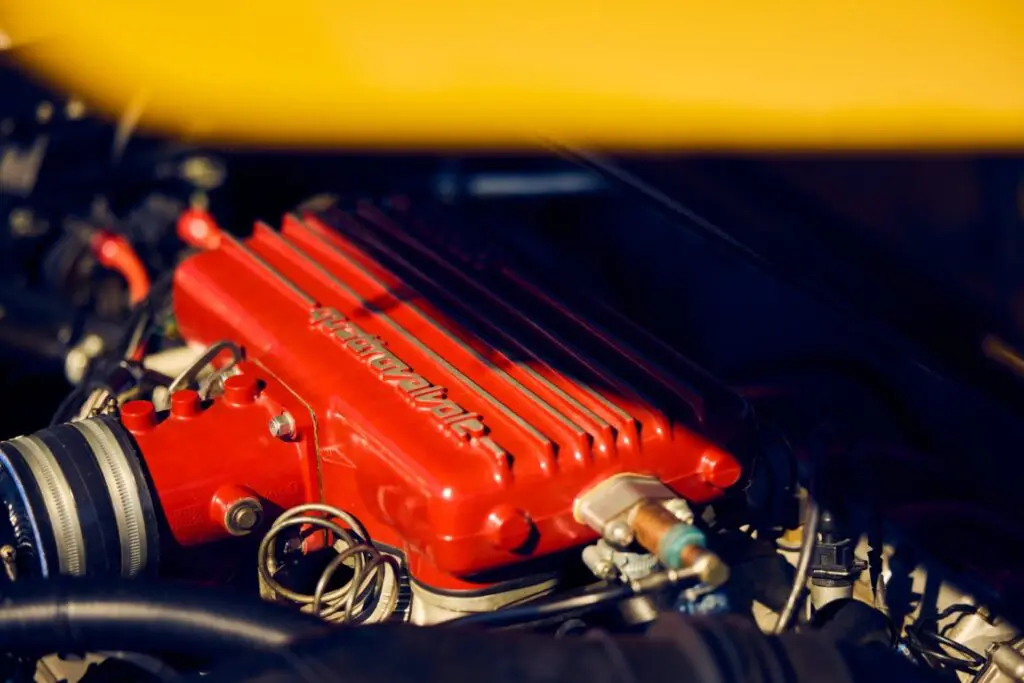
But the 308 was also the ideal car to tune: light, nimble, and in König’s eyes woefully underpowered, despite its fuel-injected V8 Quattrovalvole engine and a top speed of 158mph. His solution was to fit a turbocharger. The ‘Bi-Turbo’ badging actually references the two bypass valves that draw exhaust gases through a pair of inlets, one from each bank of cylinders. By the time this 308 roared out of the Koenig-Specials Munich workshop, the tuner had almost doubled the original 308’s power output from about 240 to 400bhp and increased its top speed to 177mph, triggering a domino effect throughout the car.
Koenig changed the suspension set-up with uprated sport springs and Koni dampers, fitted AP Racing calipers and discs to the front brakes, installed a new engine oil-cooler system, and replaced the 308’s engine cover. Wider BBS three-piece wheels were shod in grippy Michelin 18/60 racing tyres at the front and 26/61s at the back.
Leonardo Fioravanti’s low-slung, curvaceous design was then subjected to Strosek’s flamboyant plastic surgery to lower drag and boost downforce. New glassfibre wings featured extra-wide wheelarches, as well as an intake behind the driver’s door (but not on the passenger side) to channel air to the intercooler: asymmetric function trumps form in the pursuit of speed.
Unfortunately, Finnish winters and cowboy mechanics had reduced this thoroughbred to a mule by the time JAR came to work on it. A Garrett turbocharger the size of a dustbin lid had replaced the original aviation-quality Rajay unit fitted by Koenig, eating into the luggage area to an extent that would challenge even a seasoned budget airline traveller.
‘Fortunately, when the car first arrived in our workshop, the original Rajay turbo was lying in the luggage compartment, with what appeared to be the original Koenig-Specials intake manifold pipes,’ says Rose. His engineer, Ben Nankivell, set to work on the turbo plumbing, before repairing and servicing the ignition and the fuel-injection systems.
Returning the car to its fighting condition was far from straightforward, with no official manuals or blueprints. Scouring the internet for photos and information, and fabricating unobtainable parts through reverse-engineering, the restoration team gradually reconditioned the car’s mechanics without stripping the engine or transmission.
They decided not to reinstall the water-injection system, and instead to keep the turbo pressure below 0.8 bar, which would still deliver somewhere between 320 and 350bhp, down on the original but still a mighty uplift over standard. It’s a tad lighter, too, with the glassfibre bodywork helping it tip the scales at just 1342kg.
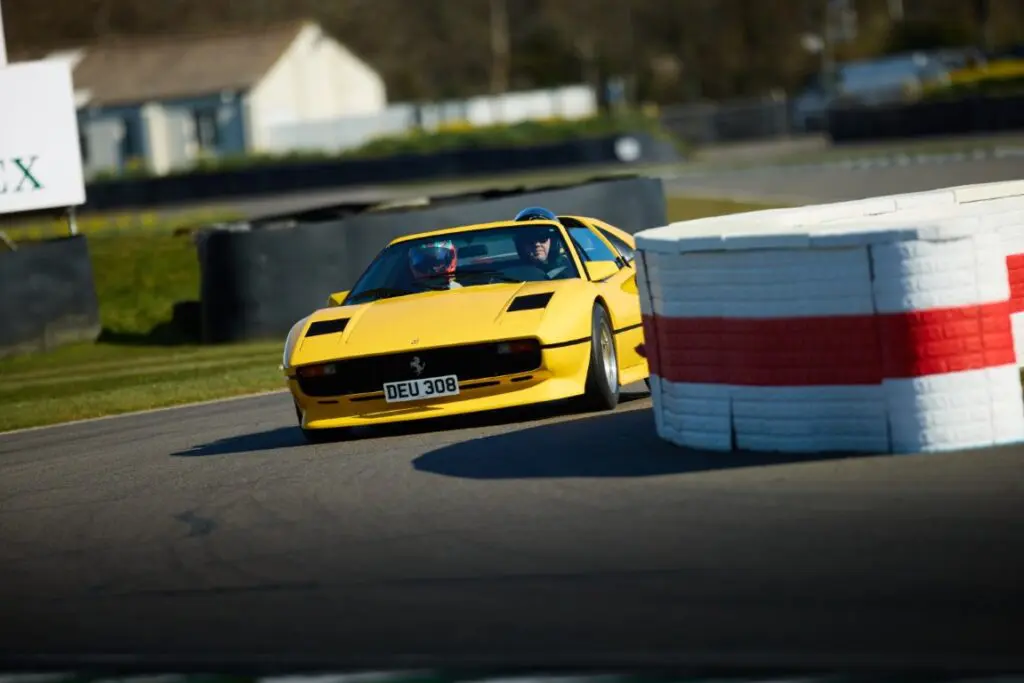
Talking of the standard car, Anderson has one in his stable, and describes the difference between the two as the chasm between a sports car and a racing car. ‘The Koenig-Specials is more purposeful,’ he says. ‘It’s got more power, more guts, and feels more thrilling than the 308.’
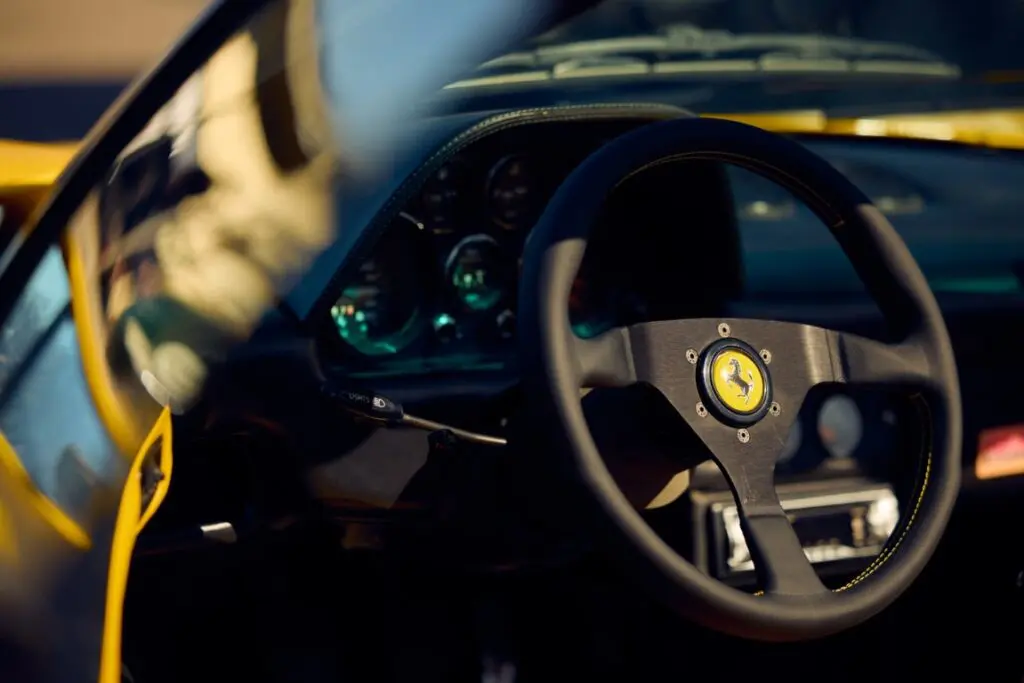
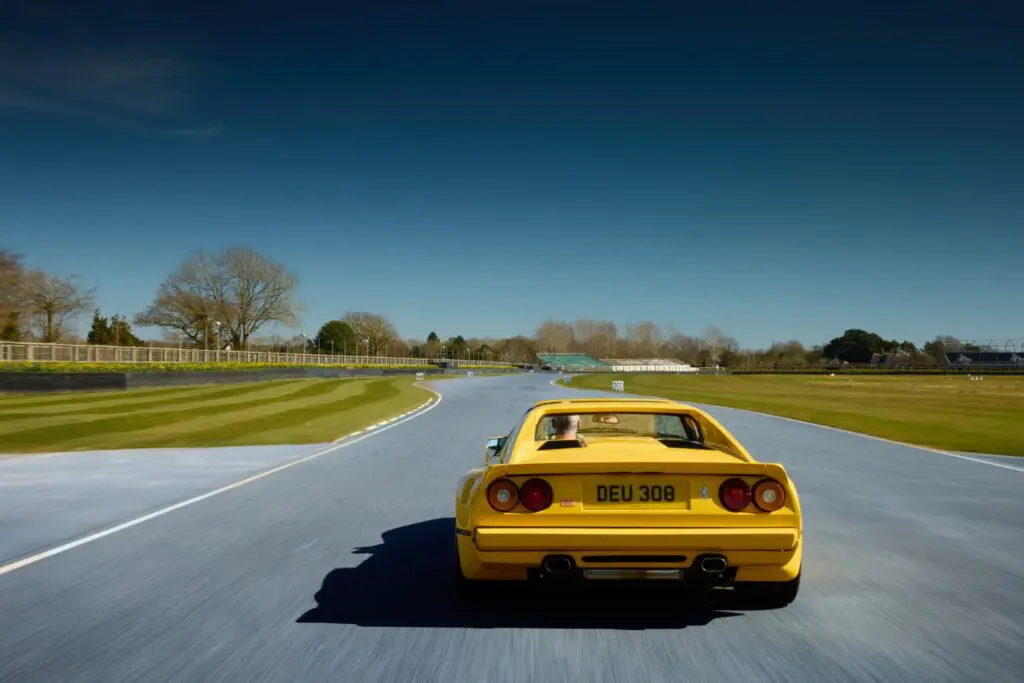
Driving away from the track and onto winding Sussex roads, I find the car a little unwieldy at low speeds, perhaps due to its fat tyres and the steering’s lack of power-assistance, but as it accelerates everything becomes sharper – deliciously so. Gearchanges are stiff but sure, grip is sensational, and were you to lay a spirit level across the dashboard the bubble would remain right in the centre, however severe the corner.
Koenig-Specials originally engineered the turbo to deliver power throughout the rev range, but Rose has tuned it to arrive at about 4000rpm, with the thump of a heavyweight – ironic, given internet gossip claims that Mike Tyson and Sylvester Stallone were both customers. Oliver König dismisses the rumours, although the star of Rocky and Rambo is known to have invited Willy König to Hollywood.
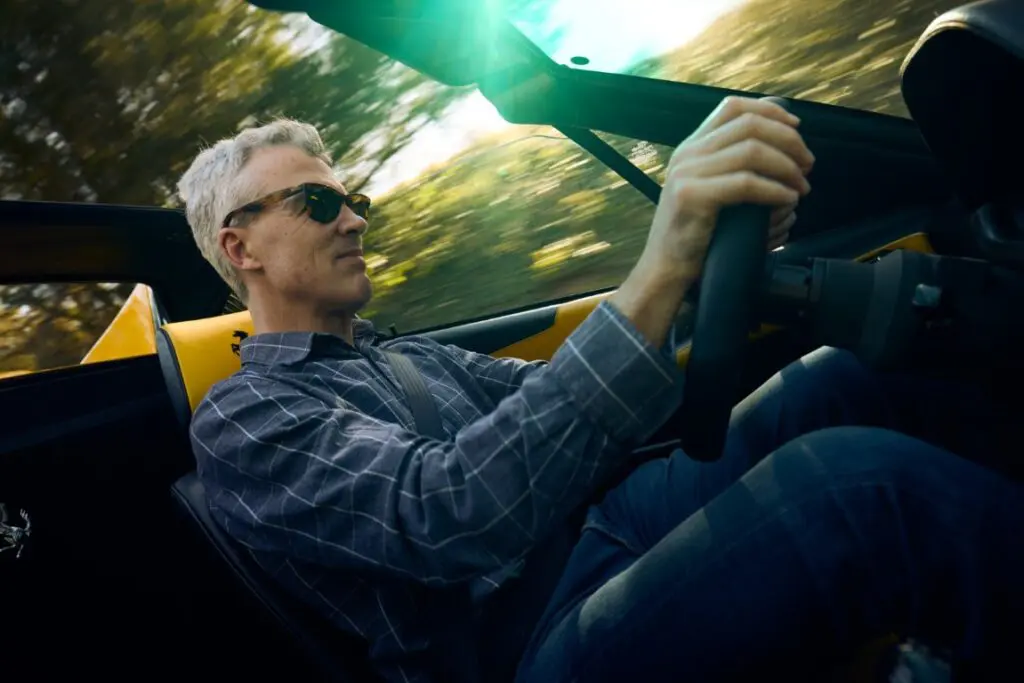
Leaving a roundabout I hit a dual carriageway, drop the dog-leg ‘box into second and stamp on the accelerator, unleashing a cocktail of adrenaline and whiplash. Hard acceleration is utterly intoxicating.
Despite a recent paint-strip and the repair of misaligned panels by Kingswell Coachworks, owner Anderson refuses to preserve the immaculately resprayed Ferrari in aspic. The original Koenig-Specials sales brochure boasts that TÜV, Germany’s rigorous car testing body, had assessed all of König’s tuned cars and that they ‘passed the required hard 2000km tests at racing speeds, as well as all special tests without problem’. Over the past nine years, in its various states of restoration, Anderson has driven thousands of miles in this 308, including a tour of the Scottish Highlands; now that he has finally returned it to its original condition, there’s much more driving to be done.
All of which leaves only one question. What did the master from Maranello think of his Munich protégé? The internet is awash with rumours that Ferrari tried to take legal action to force Koenig-Specials to remove all Ferrari badges from tuned cars, but there’s intrigue, too, that the Ferrari 288 GTO, which stole the show at the 1984 Geneva motor show and paved the way for the ground-breaking F40, owed its turbochargers and 400bhp to the cars tuned by König. Maybe you don’t need to be an emperor to influence genius.