Dakar! In the 1980s, just to hear the name of the Senegal capital was enough to make car-lovers drool. These were the golden years of the Paris-Dakar Rally, a ‘die hard’ desert race conceived by French driver Thierry Sabine to be the ultimate challenge.
Born in 1949 into a wealthy family (his father was a dentist and hobbyist rally driver), Sabine started racing in 1969. In 1974 he won the French GT title; he also took part in several Tours de France, mostly with privately entered Porsche 911 RS and RSRs, and raced at Le Mans for three consecutive years from 1975, Finishing 13th in ’76. He last raced in 1983, driving a BMW 635CSi at the 24 Hours of Spa- Francorchamps. But it was in the mid-1970s that he discovered motorcycle desert racing. And it was this diversion that changed his life.
In 1975, between Abidjan and Nice during the Rallye Côte-Côte, Sabine get lost on the Tchigai Plateau, near the isolated mountain of Emi Fezzan, while crossing the Ténéré desert. It took the organisers fully three days to rescue him. ere came his epiphany: he would create a new rally, across the desert of all deserts.
On 25 December 1978 the first Paris-Dakar left from Trocadéro in Paris, a 12,000km (7460-mile) odyssey for 167 competitors. Finishing fourth overall, and first among the cars, was Alain Génestier in a Range Rover V8. The following year, Swede Freddy Koulinsky won in a Volkwagen Iltis; in 1981 it was René Metzge in a Range Rover V8, then Claude Marreau in a Renault 20 Turbo, and, in 1983, Jacky Ickx in a Mercedes-Benz 280GE.
The Paris-Dakar was an amateur race. Ickx’s 1983 victory was the first for a professional team, backed by a manufacturer and major sponsors. And the game really changed in 1984, when Porsche entered its 911 SC-RS 4×4 (predecessor of the 959), winning the race and seeing a new standard for competitors.
Back in 1979, the event caught the attention of Italian entrepreneur Franco De Paoli. ‘By pure chance, I was in Africa and bumped into these racers competing in the first edition. I immediately felt I should have been one of them,’ he says. And so Franco went on to compete in 24 Paris-Dakar Rallies, his first – in 1980 – with a Range Rover V8. ‘There wasn’t much else, except for some American cars, which were too heavy for the sand. The Japanese were still to come. The Range Rover was perfect, with a lot of race-ready components available, a lot of knowledge surrounding it, and not too expensive to run.’
He raced again in 1981 and finished 18th overall in 1982. But after 1982 there was a difference: ‘In 1981 I sold my company, so I had time to prepare my racing car and established my workshop, the Personal Car Center in Buccinasco, near Milan, specialising in off-road racing vehicles. My idea was to create a car specifically for the Paris-Dakar.’
The first, ready in 1983, was the Rover Range V8 Proto, with a Range Rover chassis and a Rover 3500 SD1 body. ‘It was a fantastic car, capable of flying at 180km/h on the sand, with a very low centre of gravity,’ says Franco. ‘It combined the benefits of both the donor cars. I did three Dakars, a Rallye des Pharaons, the Atlas, Tunisia and so on. A privateer on the Paris-Dakar could really do well then, with hard work and a little luck and money.’
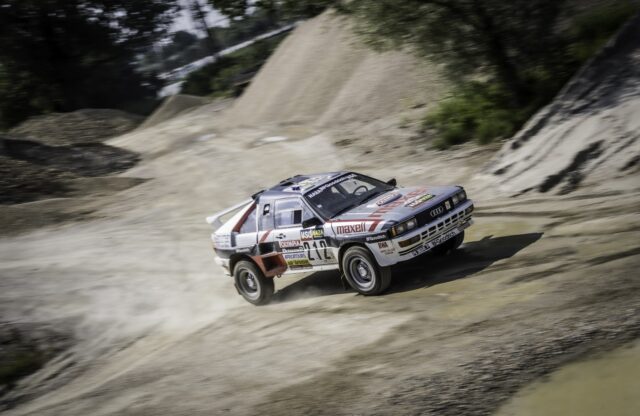
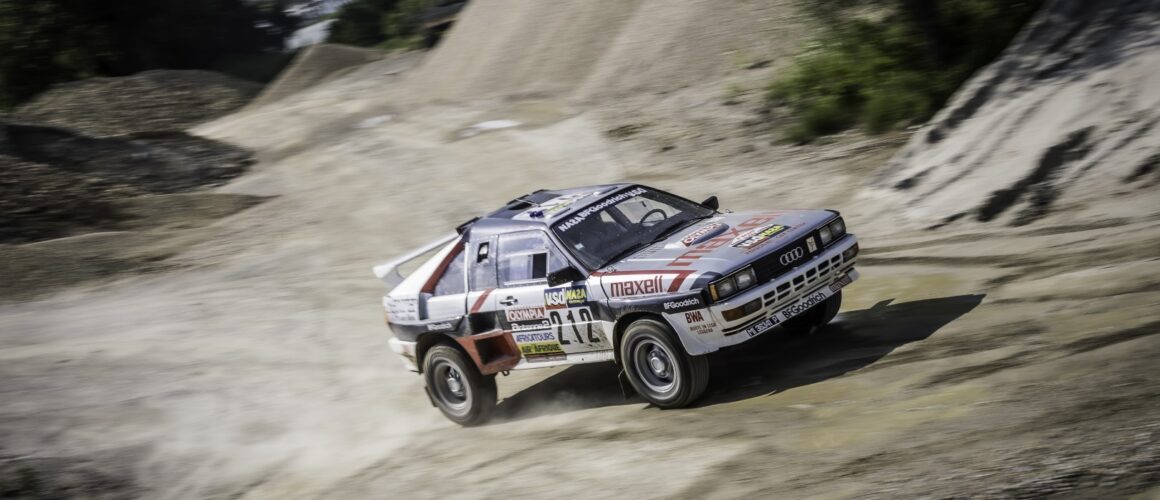
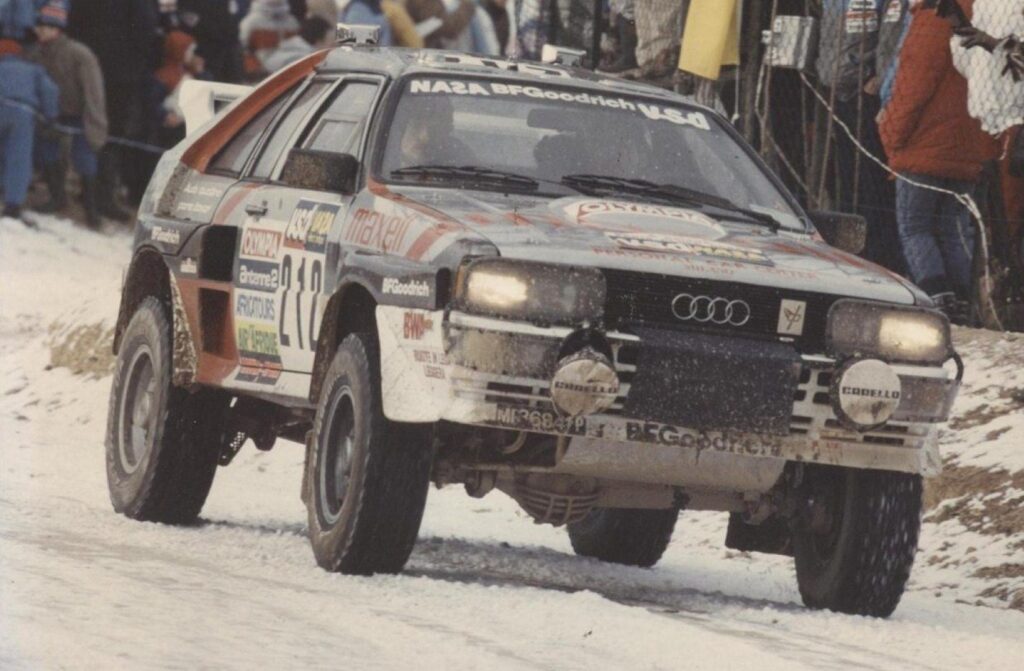
The Rover Range taught Franco a lot, and in 1985 its successor took shape. That car was a heavily modified Range Rover chassis and engine, paired with an Audi Quattro body: the car you see here. ‘With my racing cars, I aimed not to lose money, maybe end up making some while creating something and covering the expenses of studying and manufacturing by the few big sponsors I allowed on my cars,’ says Franco. ‘That approach takes imagination and readily available technology. I should also be able not only to drive the result but to maintain it or fix it in the middle of the desert. These were the parameters.’
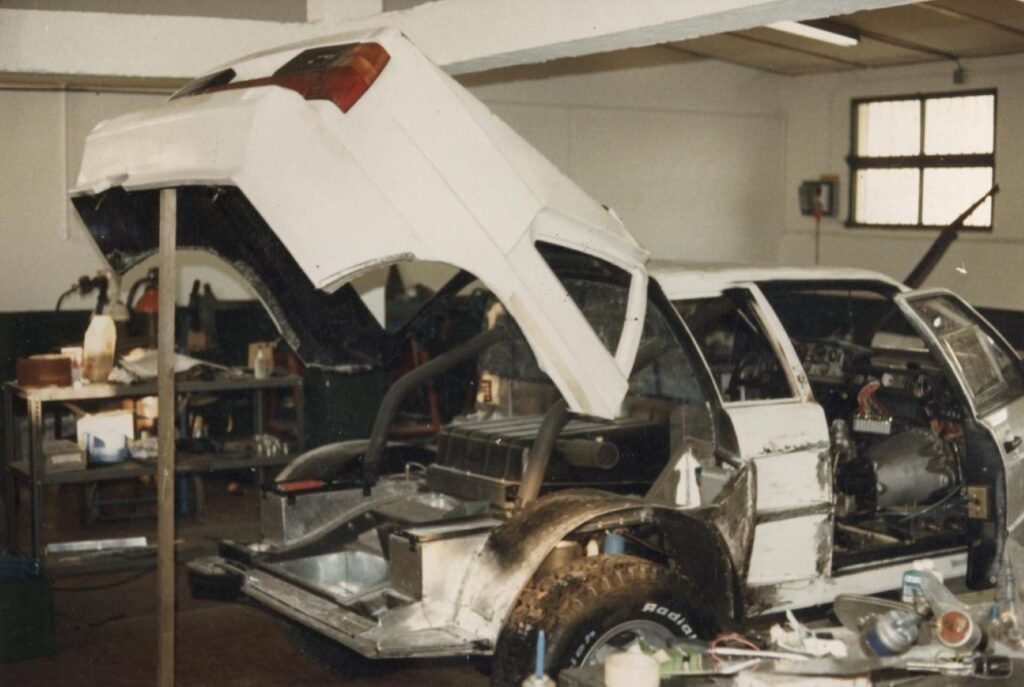
This second prototype came about in a very straightforward way. ‘My everyday car was an Audi Ur-Quattro, with its five-cylinder turbo engine,’ says Franco. ‘I already knew that wasn’t a good car for Africa as, on the previous year’s…’ Rallye des Pharaons, an Audi works team had two cars in the race, and both withdrew after two stints as they were too low and the engines were overheating badly. With the turbo it was already a very hot engine, and there was no space in the engine bay to have more airflow or to improve the situation. I then decided to dismantle my Audi Quattro, to use its body as the template to create the mouldings for glassfibre panels. From there I manufactured three complete cars, including this, my own personal car, plus a further three chassis that I sold. Indeed, the chassis number of this car is the one of my Audi Quattro, even though the whole chassis was deeply revised and little of the original remains. It is definitely more Rover than Audi.’
One of the main problems Franco had to solve was the suspension, by far the most stressed component-set during an African race. He developed an air system so good that, in later years, Range Rover itself (as well as BMW and Porsche) would copy it. ‘The coil spring has a technical problem: for a given weight in compression it gives you back double in extension. It’s not only a comfort problem, but a reliability one, as 90% of suspension problems are related to this. I imagined an air system, paired with conventional dampers on the standard rigid axles and adding a Panhard rod on the rear deck. Then I went to Pirelli asking for support. They were immediately interested, and helped me get the special compressors I needed, made in America by Delco, and provided me with two engineers, who had an office in my shop to help development.’
The system was clever, as Franco explains: ‘In my self-levelling air suspension system the air springs replace the coil springs, and are connected to a power supply circuit controlled by the navigator. An electric compressor supplies air in the required quantity and pressure while each axis has a leveller that determines the loading and unloading of air in the system according to the car’s set-up. Using a command on the dashboard, the navigator can act manually to change the set-up. Not only were we travelling fast and in comfort, but the system always proved reliable. At the end, Pirelli bought the project and the Fiat Daily truck still uses the system.’
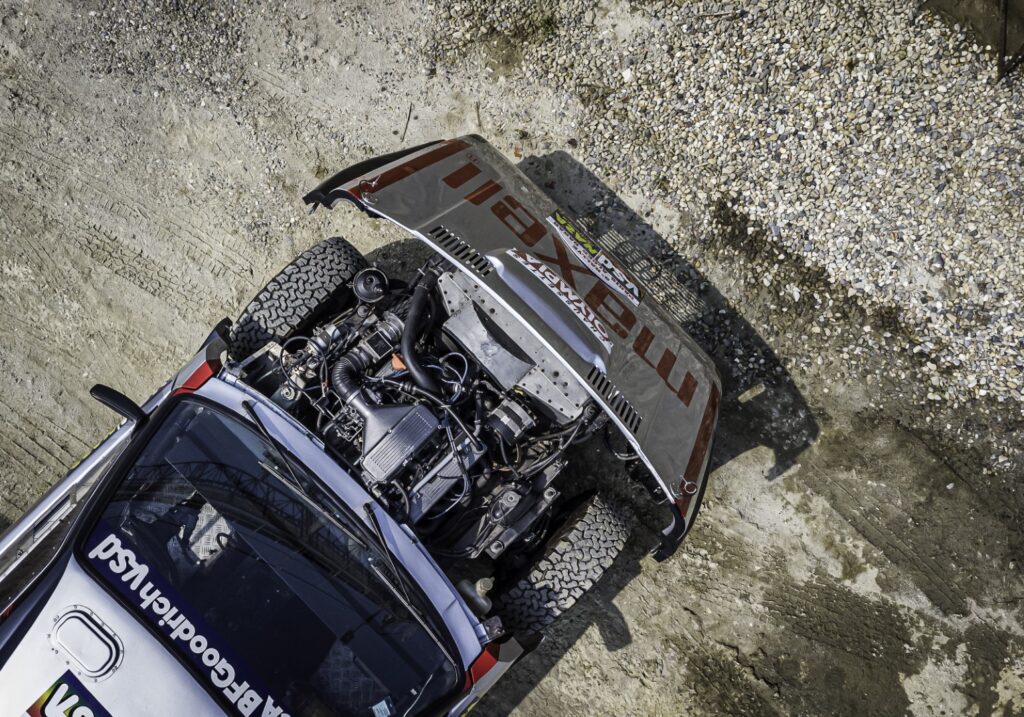
The engine was Rover’s. ‘I always stayed with the best possible unit, a Rover 3.5 paired with the later 3.9 EFI fuel injection and balanced to reach 230bhp at 5400rpm. The original Lucas injection always had several problems, while the later EFI one was a much better product. I moved the engine towards the firewall, achieving 50:50 weight distribution,’ he says.
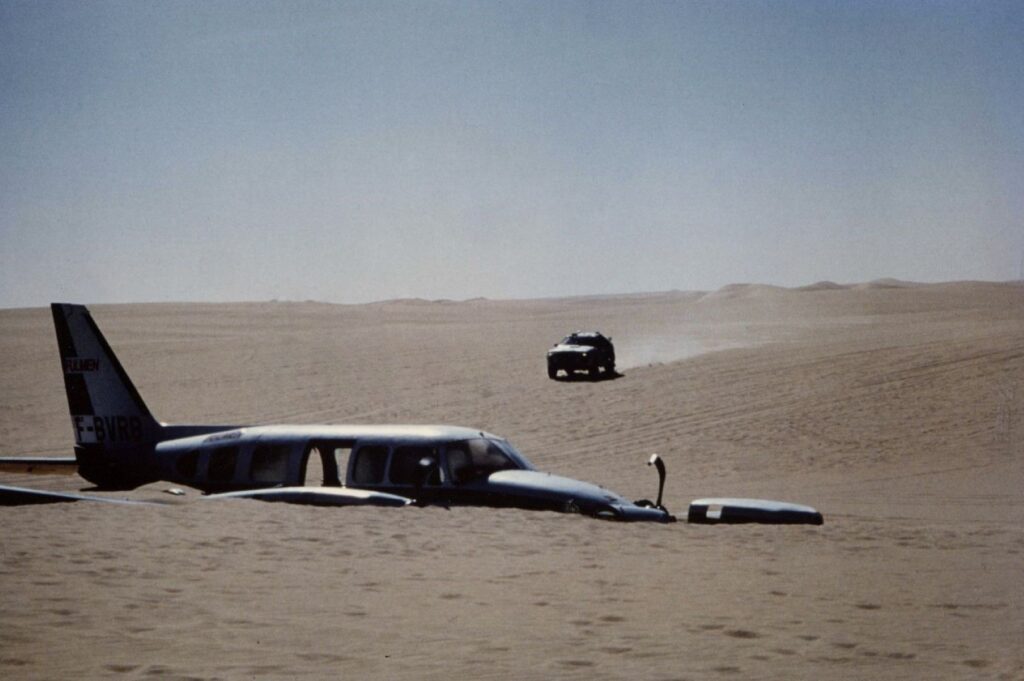
The final result is a car that, in 1986, was doing 200km/h (125mph) on dirt roads, was reliable (the gearbox and differentials were standard Range Rover), that never ran hot, thanks to a revised radiator, and had a range of 1000km thanks to a 450-litre fuel tank behind the seats. ‘I never had a problem with this car. The only time I was forced to withdraw during its 1986 running was because of the support truck I rented. At the beginning, everything was perfect but, as soon as we left Algeria and entered Niger, the truck disappeared. I was tenth overall, but I was left without dampers, air filters, oil, tyres… The final stage of the Ténéré, after the most amazing dunes ever, we got two flats. The tyres were really beyond the limit and, with my co-driver, we decided to make a U-turn to go back, to try to save the car, instead of risking losing her in the desert.
‘We later discovered that the truck driver had not made the usual “offer” to the customs guy at the border entering Niger and, after an argument, was asked to show the full load of spare parts to check if it was compliant with the documents. He had to unload everything and was forced to return to Algeria. When I tried to enter Algeria I discovered that my co-driver, from the Netherlands, did not have the correct visa. The only solution was for me to drive to Agadez, 700km of desert, and go to the consulate to get it. A logistical nightmare.’
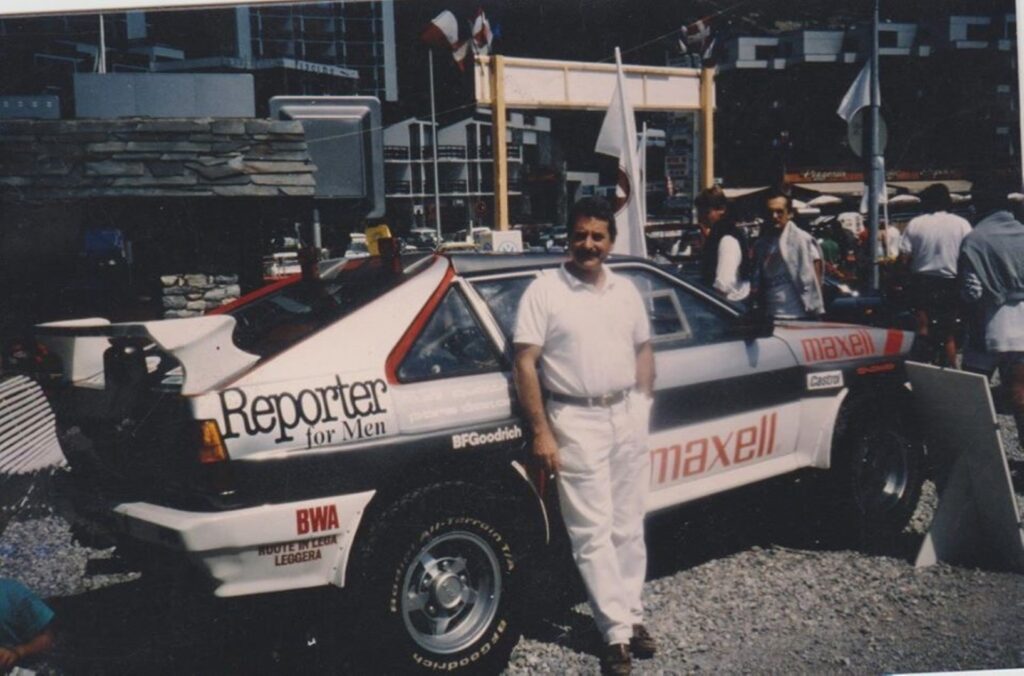
In those days, racing in Africa was very different, with no electronic aids. ‘The road book was handwritten in French and once it happened that “Laissez” (‘Leave’) was misread by many as “Passez” (‘Pass’), causing 35 teams to get lost for the next 100km. Africa without GPS was a place where a mistake could cost you a huge detour, without you even realising it. And a 100km mistake means you have to drive back the same distance again, so you don’t end up more lost or, as happened in that case, end up in the soft sand, where your car sinks and you lose five hours digging it out!’
Things are quite different today. ‘With GPS, you just need to be fast and, mentally, it’s little different from a European special stage. But it would be impossible for a privateer to do the Dakar now. It is not only a question of money. There are no cars capable of doing it. I miss the atmosphere of the camp at night, talking with the other competitors and enjoying the sky full of stars.’
After the 1986 Paris-Dakar, the Range Rover-Audi was modified, with glassfibre doors, a new dashboard and new front hood. It took part in the Rally de l’Atlas and the 1987 Paris-Dakar. It was then sold and re-discovered only in recent years, in France, with its third owner. Purchased by an Italian collector in August 2019, it was brought back to Franco De Paoli, now retired but with a private shop at home, to be restored as it was.
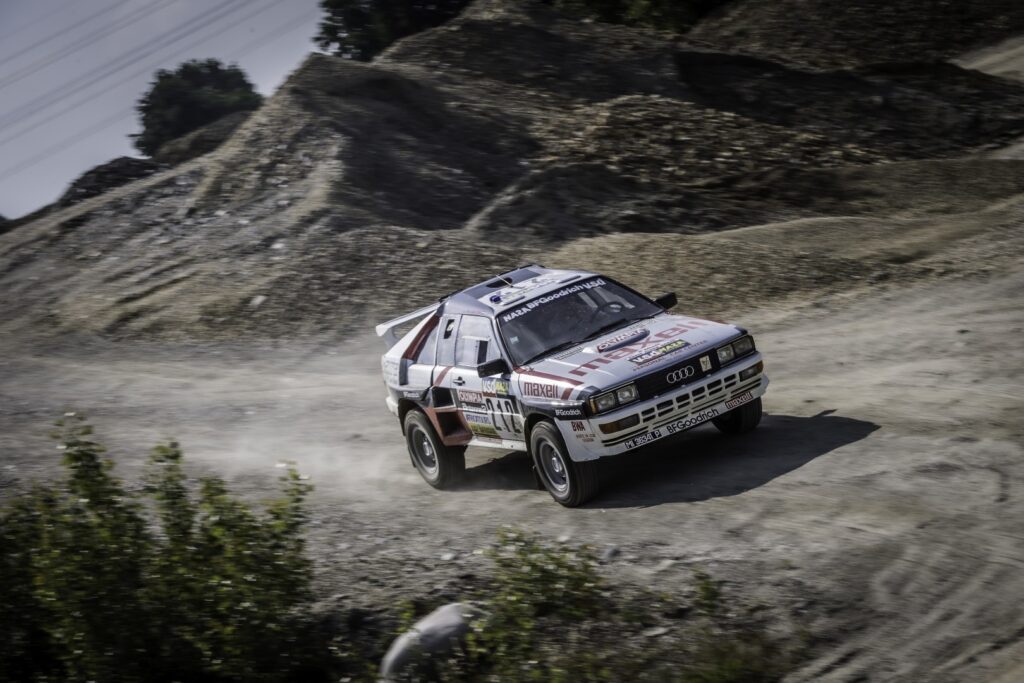
Back went the fuel injection, replaced at some point by carburettors, while the electrical system was checked and partly replaced, as was the worn-out front axle. Everything else, including the air suspension system, was inspected and serviced where needed, while the body was disassembled and the bonnet (partially destroyed by engine heat and the desert) was restored. The earlier headlights were re-installed, in memory of the ’86 Dakar. The car was then re-painted in its original Audi colours, replicating the livery used in 1986.
Driving it is something special, as it feels like a classic Range Rover on steroids, thanks to the lighter weight and extra power. The air suspension system is spectacular, feeling like a flying carpet. The V8 soundtrack is less prominent than you might expect but, as Marco underlines: ‘Keep calm and try to imagine spending 20 hours per day for a whole month in the cockpit. The last thing you dream of is a screaming engine inches away. Relax and take it easy. You are in Africa now.’
And I miss it already.