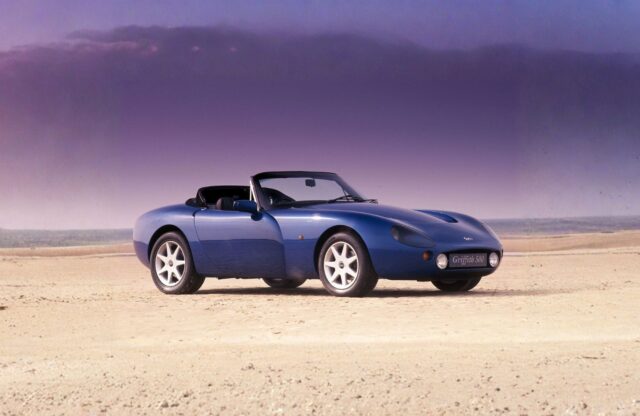
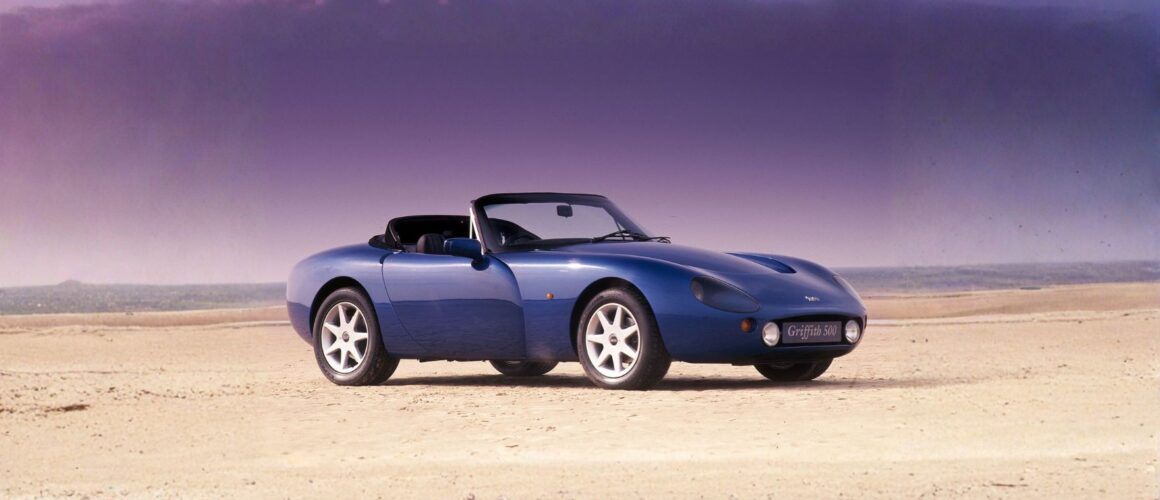
When the Griffith was unveiled at the 1990 British Motor Show, it marked the rebirth of a legend and a defining moment for TVR. The company’s new sports car combined the old-school charm of its 1960s namesake with modern styling, raw performance and unfiltered driver engagement. Amid a sea of increasingly sanitised machines, the Griffith stood apart – a back-to-basics British bruiser with the looks and firepower to worry supercars twice its price.
Production began in 1991, initially with Rover’s venerable 4.0-litre V8 producing 240bhp. Thanks to its low weight, it could dispatch 0–60mph in 4.7 seconds – as quick as a Ferrari 348. A 4.3-litre engine followed the next year with 280bhp, and an optional big-valve conversion raised that to 4.5 litres and over 300bhp. But the most famous version came in 1993: the Griffith 500, powered by a 340bhp, 5.0-litre V8 delivering thundering performance and a soundtrack to match.
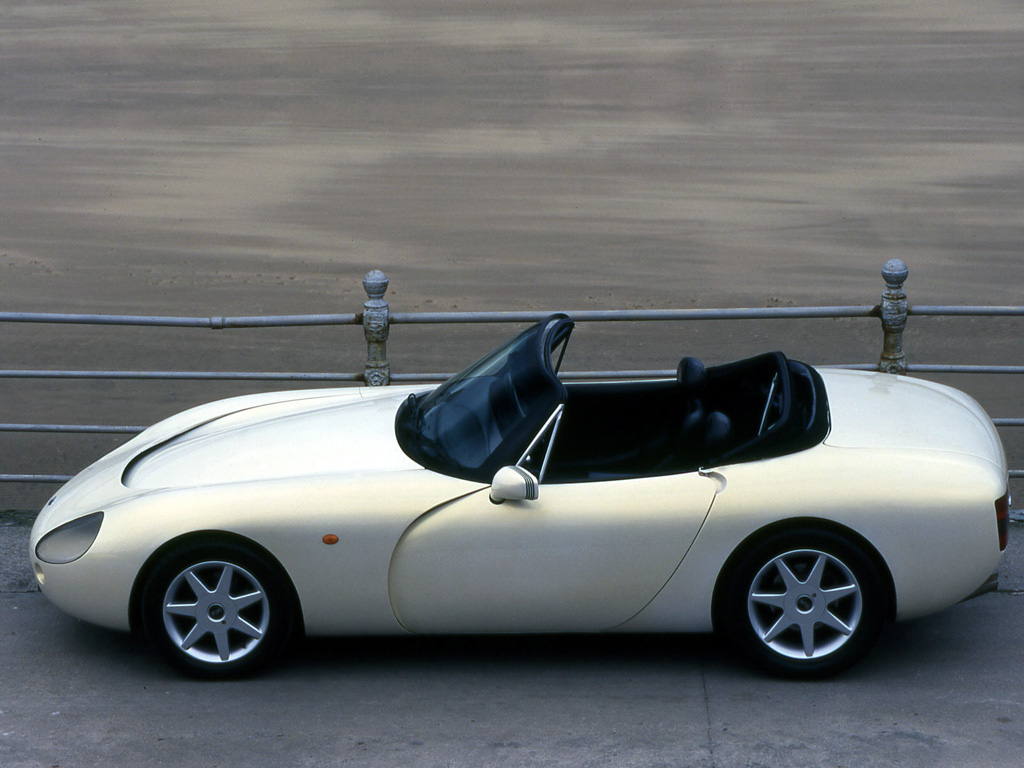
While the Griffith’s chassis traced its roots to the Tuscan racer, its design was thoroughly modern. Beneath its curvaceous glassfibre body sat a tubular steel backbone, fully independent suspension and rear-wheel drive via a limited-slip differential. The recipe was simple yet sensational – lightweight construction, a huge V8 up front, and absolutely no electronic interference.
Throughout the 1990s, the Griffith evolved subtly, gaining the Borg-Warner T5 gearbox, improved chassis rust protection and optional power steering. The final 500SE models, launched in 2002, marked the end of production with just 100 built. In total, around 2600 cars left the Blackpool factory.
Three decades on, the Griffith remains one of the most charismatic modern classics you can buy. Its combination of sculptural beauty, brutal performance and mechanical simplicity make it both exhilarating and surprisingly maintainable. A well-sorted example rewards with raw, unfiltered excitement that few modern cars can match.
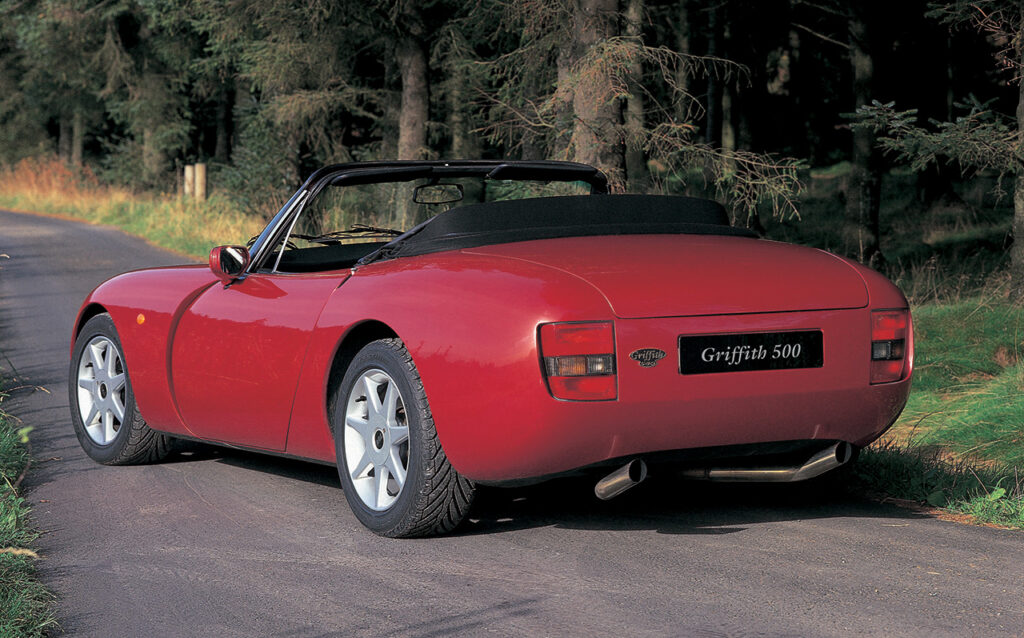
Common problems
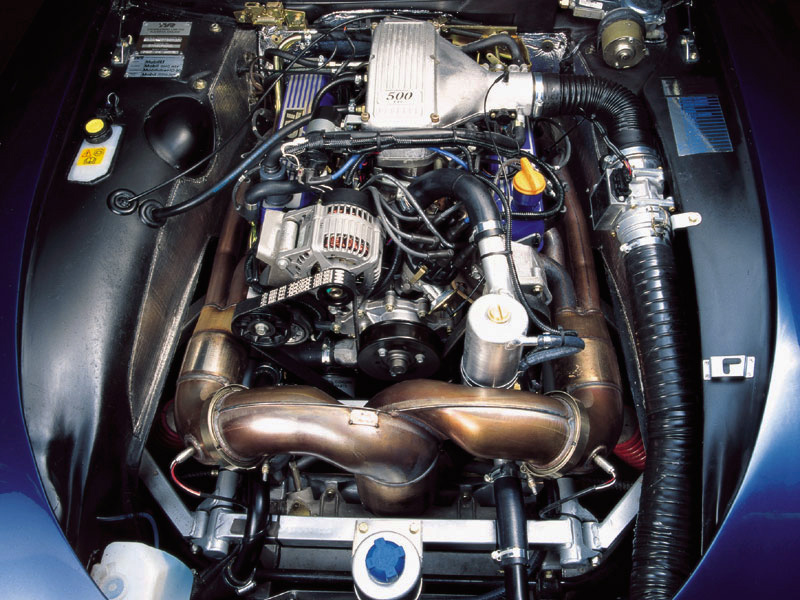
• The Rover V8 is tough but heat-sensitive. Overheating from failed fans or clogged radiators is the most common killer. Check that both fans cut in and that connectors haven’t corroded, as poor earthing can disable them.
• Oil leaks around the rocker covers and sump are typical. The former can be cured by retightening or resealing; the latter often requires a proper gasket, as the factory used silicone sealant.
• High under-bonnet temperatures mean starter motors and camshafts can suffer. Expect to replace the camshaft every 40,000-50,000 miles on a 5.0, and budget accordingly.
• Early cars used the Rover LT77 gearbox, replaced by the superior Borg-Warner T5 from 1994. Both are robust if fluids are changed regularly. A stiff or notchy change may suggest worn synchros or a failing clutch (life expectancy 40–60k miles).
• Suspension bushes, wishbones and outriggers can corrode, especially if the car has seen wet roads. The powder-coated steel chassis is strong but prone to rust from the inside out. Inspect thoroughly, particularly around the manifolds and lower rails.
• Check alignment and ride quality – tired dampers or degraded bushes will make the car feel loose. Later cars used Bilstein shocks, which are preferable to earlier Koni units.
• The glassfibre body doesn’t rust but can crack or craze. Poor accident repairs are common; look for uneven panel gaps and paint lines around corners where a new section may have been grafted in.
• The GKN limited-slip differential was replaced by a stronger BTR unit from 1994. Both are dependable but expensive to rebuild. Listen for whining or clunking under load.
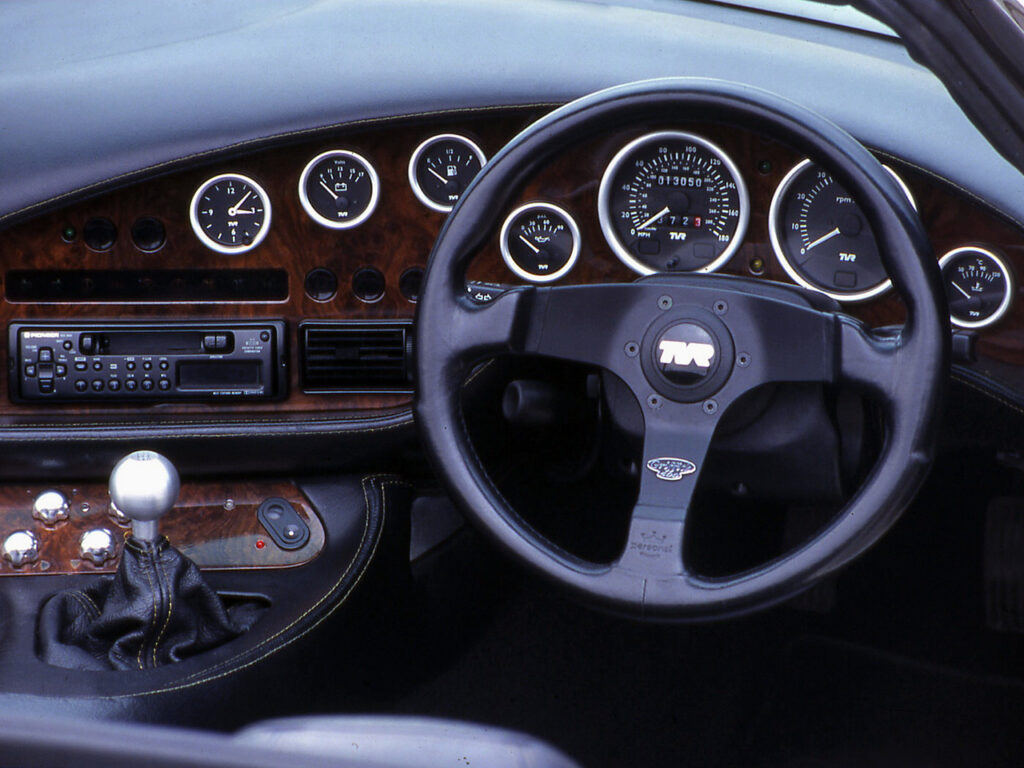
• The interior is beautifully designed but complex to retrim. Leather bolsters wear quickly, and water ingress can damage carpets. Check the hood and seals, as replacement can be costly.
• Electrics are typical 1990s TVR: mostly reliable but occasionally temperamental. Test every switch and function, including the heater system, which can jam on hot due to a failed stepper motor.
• Modified cars are common; avoid anything with unverified engine work. Upgrades from reputable specialists (ACT, Str8six, Powers Performance) are fine and can even enhance reliability.
• The Griffith’s chassis condition is more important than mileage. Many low-mile cars have been stored poorly and need expensive restoration. Always inspect underneath – if in doubt, walk away.
What to Pay
Values for the Griffith have risen steadily as enthusiasts appreciate its blend of rarity and performance. Early 4.0-litre cars start around £14,000 for usable examples, with well-kept cars closer to £20,000-£24,000. The most desirable 5.0-litre models command between £25,000 and £30,000, while exceptional late 500SEs or low-mileage show cars can exceed £35,000.
Condition and chassis integrity matter far more than model year or mileage. A seemingly cheap Griffith can become a money pit if chassis corrosion or poor repairs are uncovered. Cars restored by recognised specialists, or with documented chassis refurbishments, are worth paying a premium for.
With its mix of raw appeal, strong specialist support and steadily increasing demand, the Griffith is one of the smartest buys in the modern-classic market. Well maintained, it’s a thrilling and surprisingly robust way to enjoy the last of the true analogue V8 British sports cars.