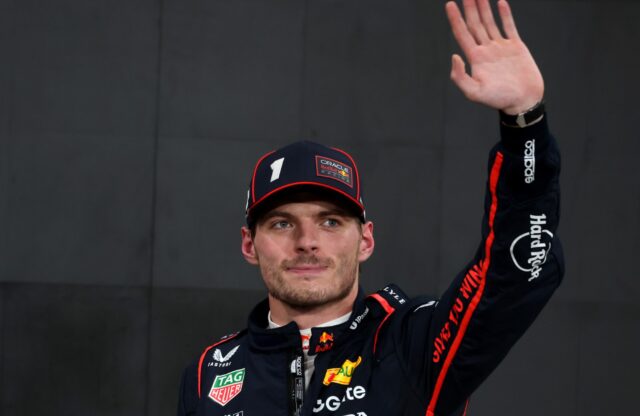
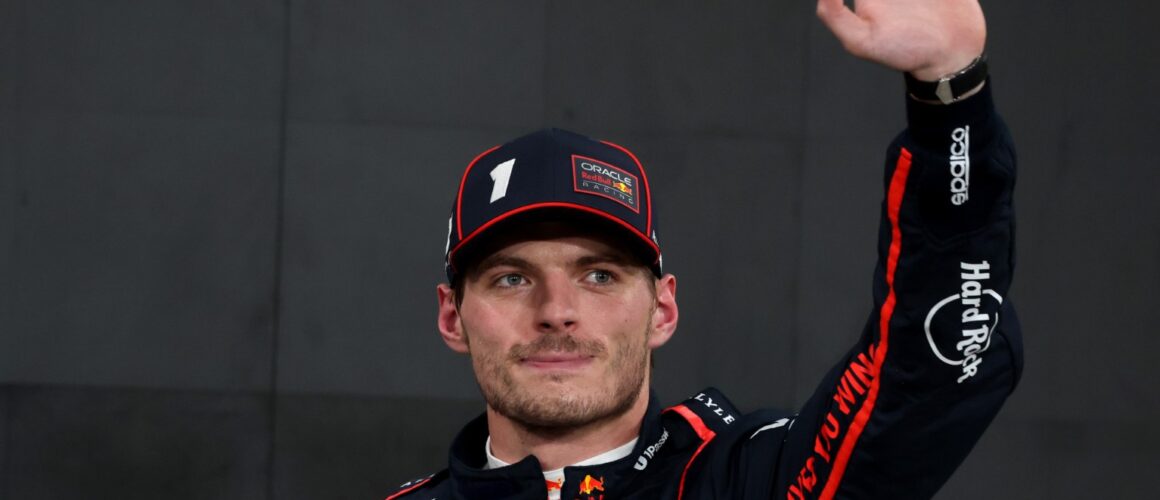
While on the motorway bound for Silverstone and a meeting with four-time Formula 1 champion Max Verstappen, one thought takes hold. An opportunity like this is rare for me, yet for him it’s just part of the endless round of interviews before a British Grand Prix. Removed from opinions so easily formed via memes, YouTube highlights, often-biased television commentary and Netflix, I wonder what he will be like in person. Dismissive? Surely he is too professional for that. Disinterested and bored? Possibly; I’m 100% sure he’d rather be doing something else. The words of Dr Alfred Lanning from 2004’s I, Robot come to mind: ‘My responses are limited. You must ask the right questions.’
This feature first appeared in Octane issue 270.
Just who is this Dutch trackmaster, and how did he reach such heights when so many other child prodigies either burn out in the pressure cooker of success, fail to reach their full potential, or fall out with everyone including the very people who aided their rapid rise? A little insight into Verstappen’s upbringing suggests that the potential for any one of those scenarios playing out is high. And yet he is a four-time Formula 1 World Champion who appears well-adjusted and (these days) well in control.
Max Emillian Verstappen, the first of two children born to former F1 driver Johannes ‘Jos’ Verstappen and former karting ace Sophie Kumpen, was driving karts at four years old and winning races at seven. National and European championships followed in-between his parents’ initially messy separation and eventual divorce – those close to the family say they’re on much better terms now. In the split, Max’s sister, Victoria, stayed with her mother while Max lived with his father, 30km away. As he’d be karting for a few hours nearly every day after school and the two were regularly travelling to races across Europe, it just made sense.
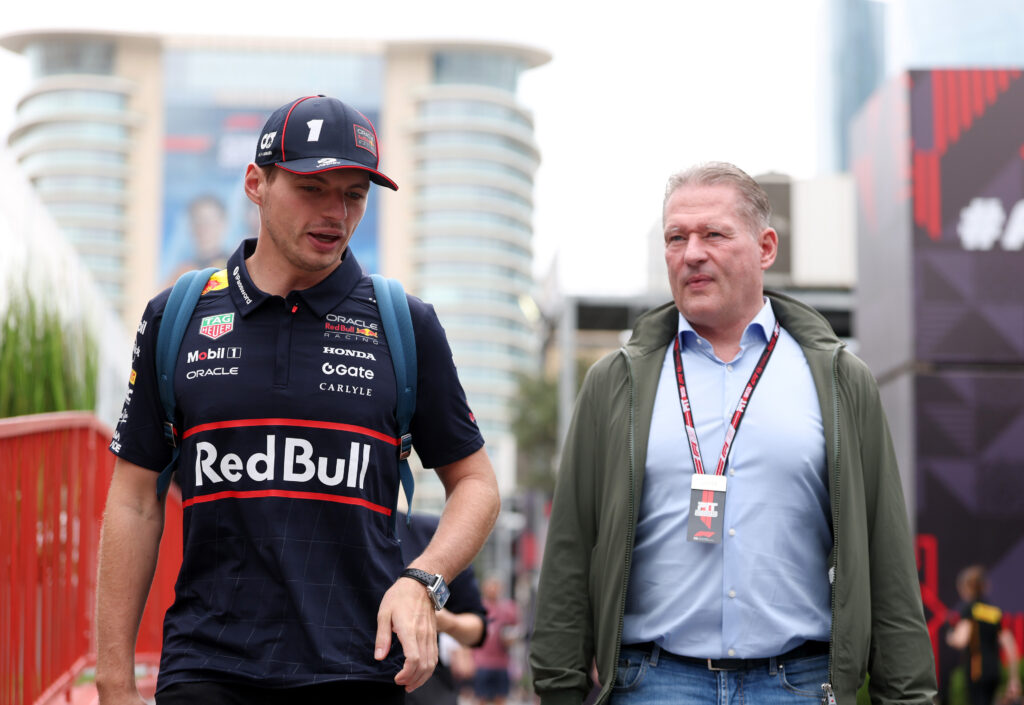
It’s no secret that Jos, stern and uncompromising, put a lot of pressure on Max, the type of pressure that can make – or more often break – a youngster. In this case, at least in terms of what the record books show, Jos’s approach – along with Max’s enthusiasm, natural talent and discipline – paid off.
In 2013, aged 15, Max won the World KZ championship, karting’s pinnacle. His manager, Raymond Vermeulen, organised a few tests in a Formula Ford and a Formula Renault as a potential next step, but feeling that they’d be a bit dull in comparison to the immediacy of karting, Max showed little enthusiasm for either. However, just five or six laps in a traditional old F3 car at Valencia with German outfit Team Motopark did the trick. Smiling broadly as he exited the car, he walked back to his father and said: ‘This is a car. This is what I want to drive.’
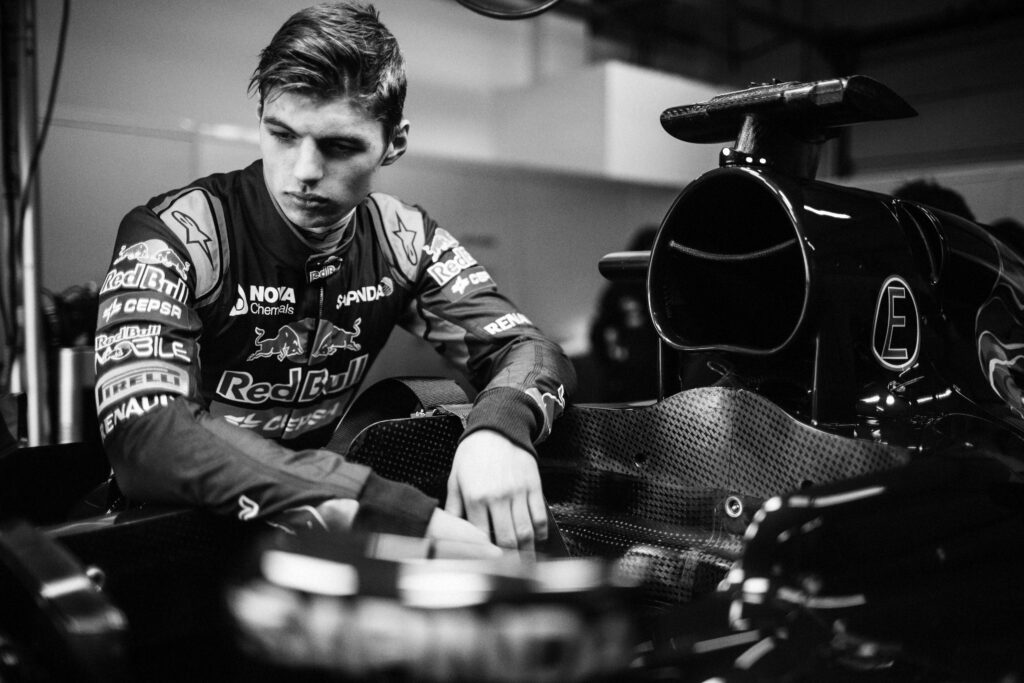
Very few have graduated successfully from karting straight into Formula 3. Jos and Raymond figured that, if anyone could do it, it was probably Max. They were right. Vital miles covered by racing a Formula Abarth car in the shortlived 2014 Florida Winter Series proved a decent warm-up to Max’s FIA Formula 3 European debut season. Driving for Van Amersfoort Racing, he finished the year in third overall, registering ten wins and suffering eight retirements (mostly technical DNFs). The following year he signed for Scuderia Toro Rosso, becoming the youngest ever F1 race-starter and, even more impressively, the youngest ever to win an F1 race (in 2016, with Red Bull). I know the history, the pretty much incomparable driving ability and the ruthless on-track persona, but, as I sit waiting in the Red Bull hospitality lounge, my hope is to steal a glimpse into the man behind the track star.
Max approaches, looking relaxed and glowing with health, his PR entourage in tow. Pleasantries exchanged, I dive in and ask what would make him walk away from F1. Apolitically, and without hesitation, he answers: ‘The day that I don’t enjoy it anymore. At the moment, all my goals have been achieved in F1. I will try to continue that momentum, to win more. But if I wake up one day and I don’t like this anymore, then that’s the time to stop.’
As he basically grew up behind the steering wheel, you’d expect Max to love driving, but when pressed to pin that passion down to one aspect – winning, close racing, or just going really fast – his answer reveals much about his laser focus on motor racing. ‘I think it’s just trying to maximise everything you can in the car, especially like in a qualifying lap when you come back into the garage perfectly satisfied. A perfect lap in perfect conditions is very rare, but that’s what you’re always aiming for.’
It’s clear he’s fuelled by a pursuit of perfection, a single-minded hunger to push for more. Max attributes ‘never being satisfied with what you’re doing; always wanting to become better’ as the one thing that has contributed most to his success. ‘That’s something I’ve had from when I was in go-karting. Even when you win races, you can’t accept that that’s enough, because there are always people who will work even harder, and you have to do the same.’
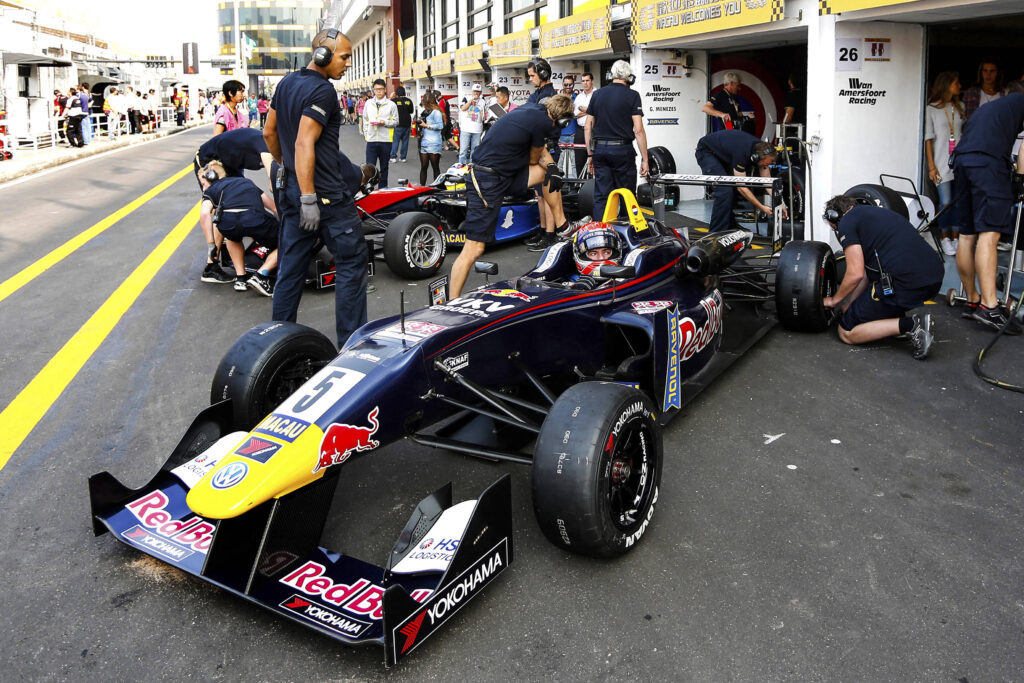
Like father, like son. Reports from those who were there in 2014 tell of a man who had the advantage of understanding motorsport at the highest level. He wasn’t hands-off like most. Apparently, the Van Amersfoort engineer who was working on Max’s car experienced end-of-season burn-out thanks to something that comes naturally to Jos: applying pressure, especially in pursuit of victory.
Off the track it’s probably fair to say that, character-wise, Max falls between Jos’s fireball intensity and Sophie’s reputed calmness, but on track he’s much more like his father. The bond between them is strong, stretching back to Max’s earliest memories. ‘I must have been three or four years old and I remember seeing my dad drive, travelling with him sometimes, watching him do straight-line testing at an airfield, and walking around in the paddock,’ says Max, thoughtfully. It’s a relationship that goes well beyond a respect for what came before. Although his racing career has reached radically greater heights, it seems Max is determined to take his father along with him. I ask who would be the best driver pairing ever: himself and who else? His answer is both unexpected and telling. Instead of Senna, Fangio or Clark, Max says: ‘I would have enjoyed driving together with my dad at a similar age. Obviously that’s not possible, but both of us in our twenties – that would really be something special.’
Even without the age-matching magic potion, there’s a strong possibility that they’ll team up for a run at Le Mans. It may ‘only’ be in an LMGT3 car, but that won’t matter one iota to the Verstappens, who by a few accounts ‘don’t care about the opinion of the world’. It’d be more about the experience of driving together than anything else. Rather than their relationship crumbling under all those years of pressure, it has instead been galvanised by it. For Max, family is at least as important as motor racing. So, what is his endgame? When all the red racing mist has finally dissipated, what does he hope to have achieved? ‘I think the most important is that I am happy. It doesn’t matter if I win 60 races, 70 races, four titles or zero titles. When I return home and have a great time with family and friends and feel loved and healthy, that’s the most important.’
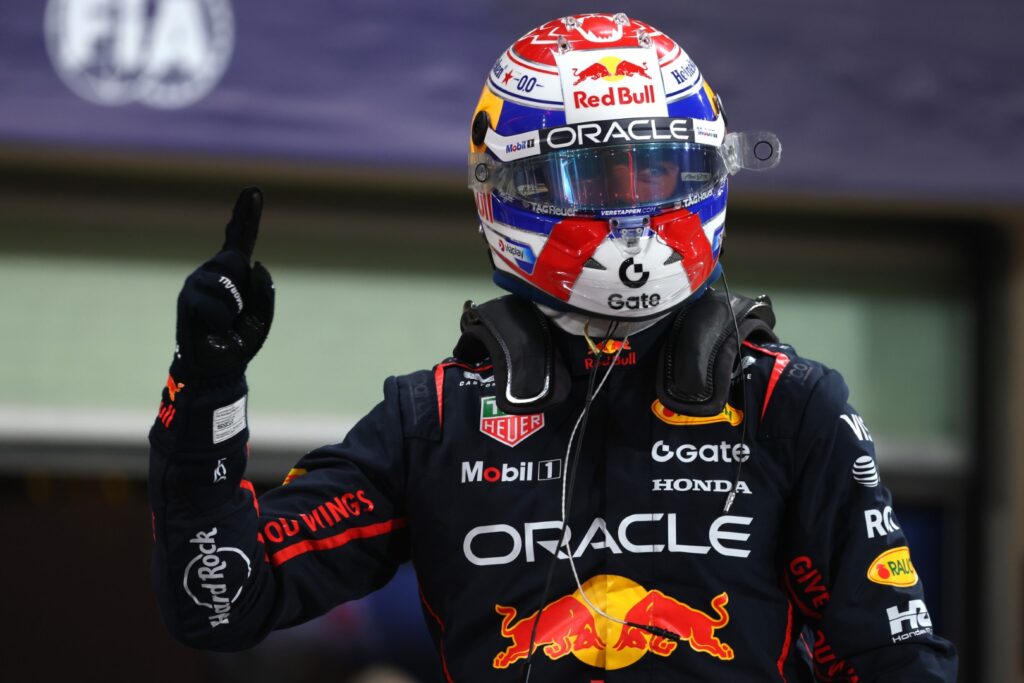
And there’s more feelgood stuff to come. With all the famous celebrities, sporting legends and highly influential friends that he’s interacted with over the years, it’s his parents he admires most for the impact they’ve had on his life. Listening to my questions intently, he looks straight at me with a genuine sincerity in his eyes that transfers to his voice when speaking: his are the answers of what my mother used to call ‘an old soul’. At 27 years of age he’s surely far too young to be considered a family man. Where is the ambitious, aggressive, self-indulgent, overly robust racer who drives an F1 car like it was a kart? He’s certainly not sitting on the couch across from me.
Switching strategies, I mention that it’s been said that ‘everybody collects something’ and ask what he collects, besides world titles, hoping for something weirdly eclectic. ‘Trophies,’ he says with a sneaky smile, before conceding that he doesn’t really collect anything specific. If he likes a car, he’ll buy it, but he’s not a collector in any sense, and he’ll certainly not be going in search of any Pebble Beach accolades any time soon either. ‘I will definitely not try and show it to others. I’ll buy it for myself, not to showboat.’ That’s my cue to show him that the classic and collector car crew speak F1, too.
Double diffusers, flexing wings, brake steer; how does he feel about innovations that exploit loopholes? ‘Smart! I mean, people reading the rules to the limit – yeah, F1 has always been about trying to find an edge over your competitors.’ As to whether the specific technology in question should be banned immediately or the rules tightened up post-season, Max is predictably pragmatic. ‘It depends if someone else finds it, then you want it banned. But if you find it, then you don’t. That’s just how competition works.’
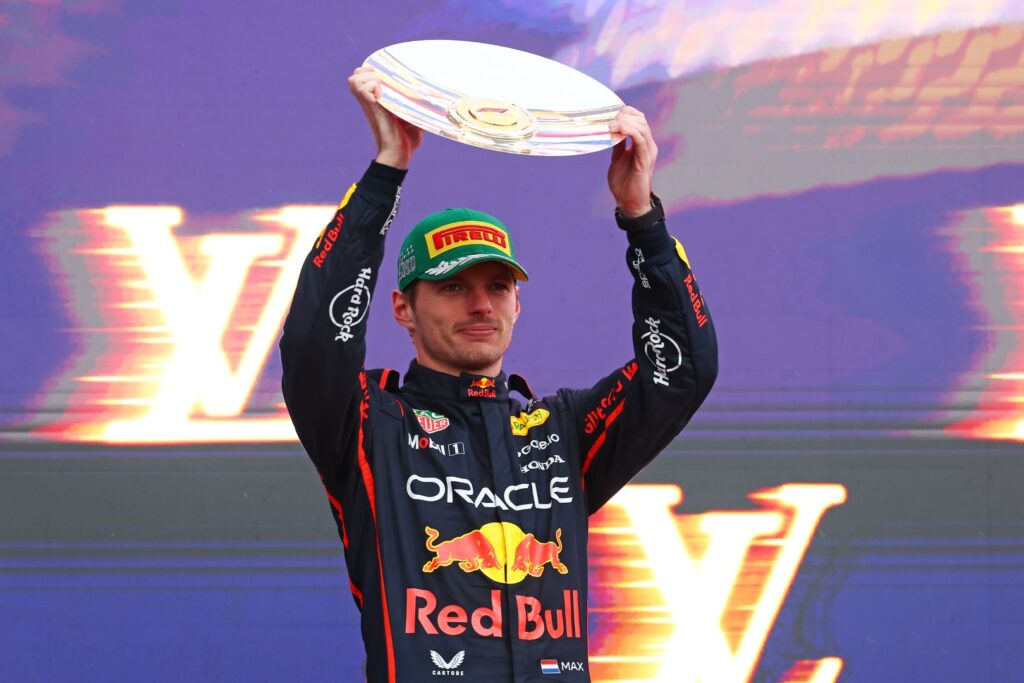
Unlike many fans, he is under no illusion about whether F1 is more business than sport. In Liberty Media’s hands, there appears to be a recurring call to ‘spice up the show’ – think sprint races and the Miami GP. Again, Max takes a pragmatic view: ‘It comes down to whether you want to make the most money as the rights holder, or you want to appease the purists. I get both sides. It’s hard to find the balance. Everyone has to make money, but at the same time we love the sport and want to keep it authentic as well.’
As a long-suffering fan of Formula 1 who has followed every race in some form or other since Piquet took his second title at Kyalami in 1983, I’m pretty firmly in the ‘keep it authentic’ camp, so I’m keen to know which era he reckons was Peak F1. ‘That’s a difficult one,’ says Max. ‘It depends on how you look at it. Right now, the sport itself is having a greater impact than ever before, but if you look at pure car emotion it probably was in the 2000s.’
And what of life outside of F1? Testing an IMSA-spec Acura ARX-06 ahead of the 2024 Las Vegas GP, a session at the ’Ring in a Ferrari 296 GT3 as ‘Franz Hermann’, overwhelming Chris Harris in an 815bhp Ford Mustang GTD, and making his VLN Nürburgring race debut in a Porsche Cayman GT4 RS Clubsport aside, Max loves his sim racing. He’s also passionate about managing Verstappen.com Racing, his Red Bull-powered motorsport outfit, which competes in GT3 Sprint and Endurance Racing, Rally and sim racing with a view to helping young drivers transfer from virtual to real-world racing. ‘My [Team Redline] sim driver [Chris Lulham] is now driving a real GT3 car full-time this year. So that’s like a real passion project for me, and one that I will definitely focus more on once I stop racing in Formula 1.’
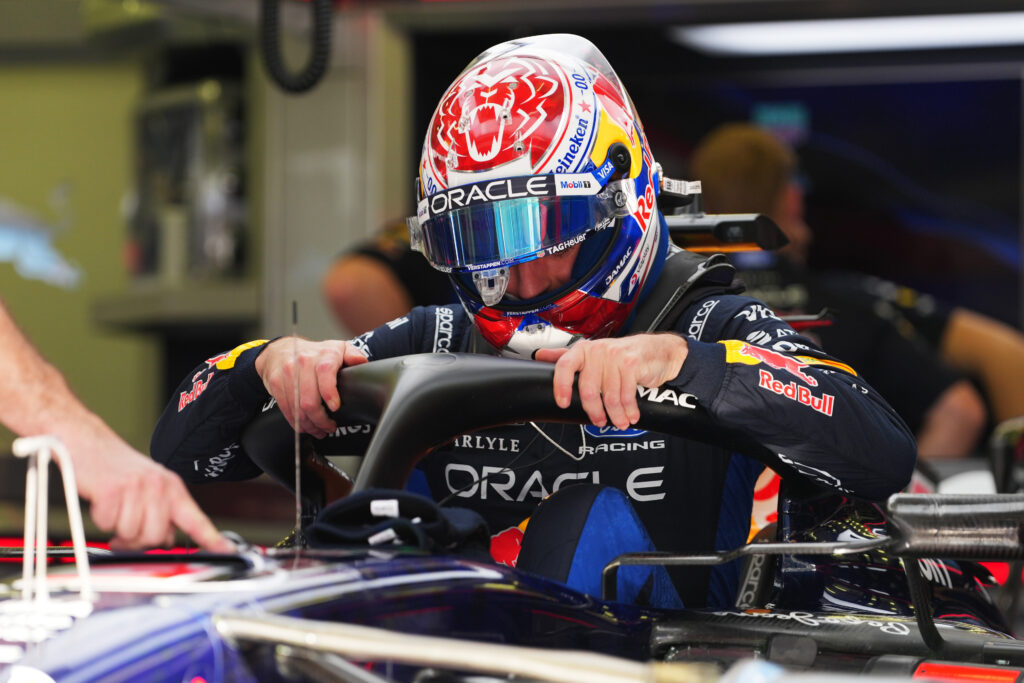
Given Max’s penchant for team management, it seems perfectly natural to assume he might one day be interested in running his own F1 team, but he is quick to shut that down: ‘No chance. Too many races, and it costs a lot of money to be involved as well.’
As the PR crew start looking at their watches, I make a final dig into the Verstappen psyche: if a complete outsider, someone who’d never heard of you before, asked who you were, what would you say? ‘I’d tell them I’m a taxi driver from Monaco, and then we’d just have a drink together.’
All that, and a sense of humour, too.
Thanks to TAG Heuer, Official Partner and Timekeeper of the Oracle Red Bull Racing Formula 1 team.