‘He was just the most fantastic boss. I think almost anybody here you talk to will say the same – he was hard, but very fair.’
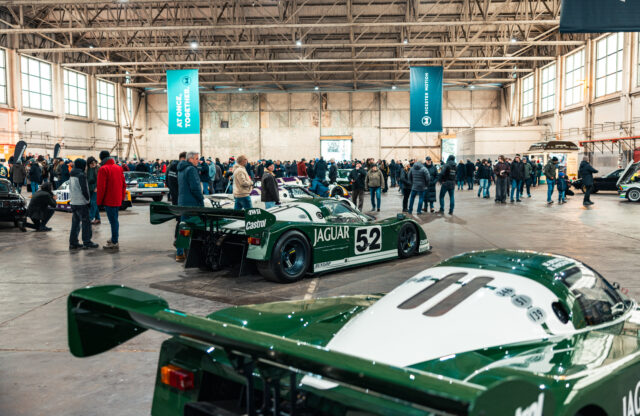
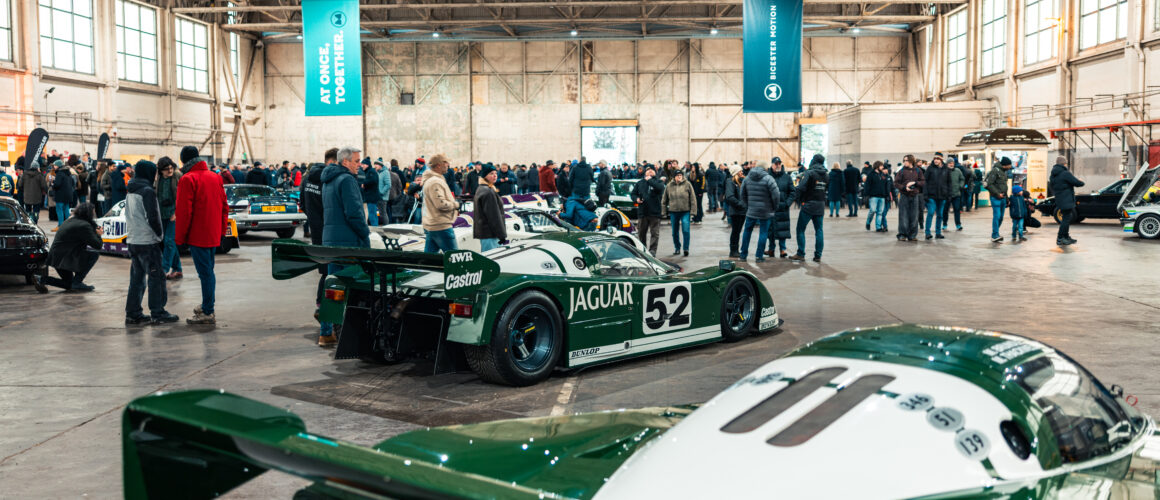
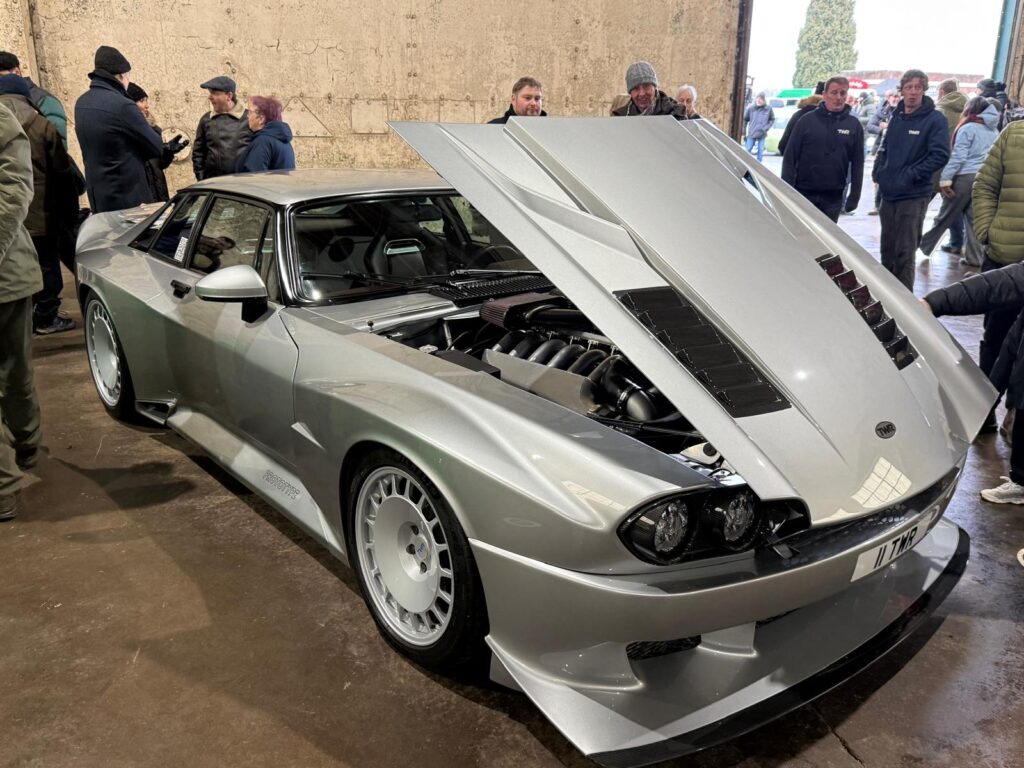
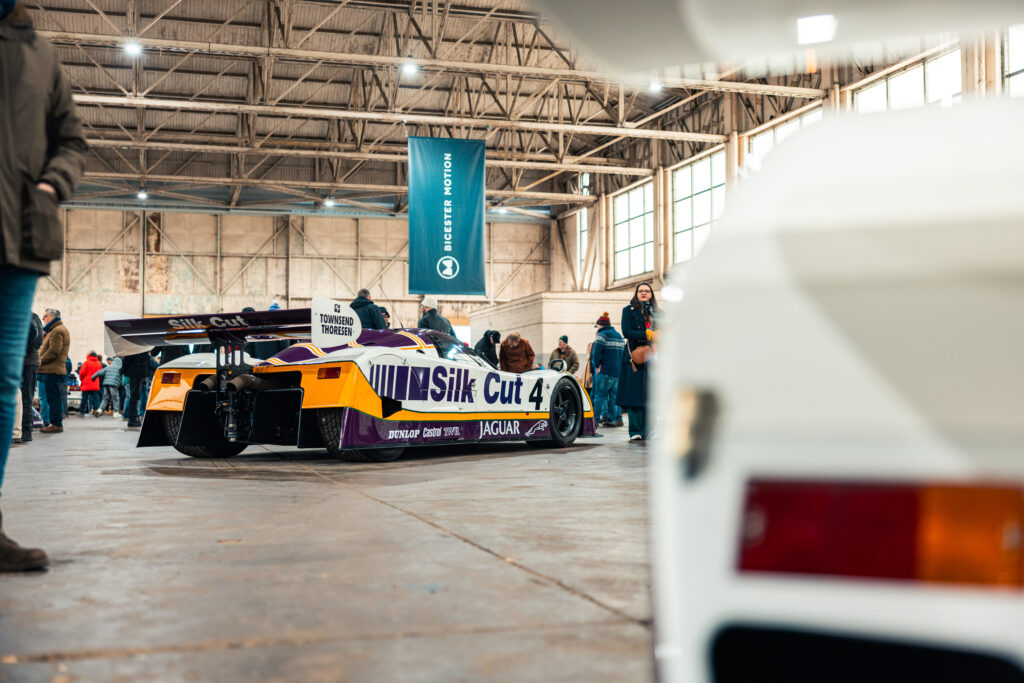
Standing among more than 200 former engineers, designers, mechanics, administrators and all facets of Tom Walkinshaw Racing in a chilly Bicester hangar, reunion organiser Paul Davis’s words ring true. Around us sit treasured gems from all realms of TWR’s operations over 40 years, from the early racing cars built for Tom Walkinshaw to the mega-budget works team Jaguar Group C cars, through to the road cars engineered for the likes of Holden, Saab, Ford and RenaultSport.
Paul joined TWR in 1979 after seeing an advert in the Oxford Mail, to work on the BMW County Championship. This was a race series that pitched BMW dealers with professional drivers across the UK, with some pretty big egos involved. ‘None of that mattered to me – I was just getting the cars built and running; I left Tom to deal with the egos,’ he chuckles.
Allan Scott was head of TWR engine development from the Jaguars until the Volvo programme, and remembers Tom fondly. ‘His self-confidence was what it was all about, and he’d worry about sorting it out once you were there. There wasn’t a lot of planning beforehand. It was just, ‘This is what we’d like to do,’ which is fine if you’re not the planning person…’
The true scale of TWR’s repertoire, and its achievements, has been somewhat forgotten – instead, the narrative tends to focus on Tom Walkinshaw’s… innovative… interpretation of the rulebook. However, according to Allan, TWR’s engine builder, the reality was never as is often portrayed. ‘People write rules in a language they’re use to, and every car has a weakness – you either use that as an excuse for not winning or you try to fix the weakness,’ he says. ‘If I were to find fault with Tom, he would never deny anything. He would be mysterious and make people think even more. I have constantly, over the years, been told things that we supposedly did that we never even thought about.’
Allan sees that as an intrinsic part of Tom’s character. ‘He was building something, he wasn’t the same as everybody else. He was quite happy for people to do and say things. And yes, there were some incredible things we were accused of doing that I was certainly not aware of,’ Allan recalls.

That doesn’t mean to say there weren’t some inspirational interpretations. Viv Cowley started at TWR in 1986 as a machinist, and after a time with the IMSA team in the USA became a mechanic on the 1990 World Sportscar Programme. ‘The best one we got away with was the door on the XJR-14,’ he laughs. ‘The rulebook said it had to have a side aperture of given dimensions. Was it a window or a door? Open to interpretation. The only requirement was that the driver could get out in five seconds. Warwick could do it in three and a half. It didn’t say anything about having a door. Sports cars traditionally have doors – the XJR-14 had a window, no door. That was pure interpretation of the rules.’
Peter Hodgkinson, who would later be the guiding force behind the build of some of Lewis Hamilton’s most dominant cars for Mercedes F1, says that the important thing was always finding the edge of the regulations. ‘Sometimes you cross it – and you accept that,’ he says. ‘I know people have a poor opinion of Tom, but I have nothing but good memories. I wouldn’t have had the career I’ve had without him. Working for Tom Walkinshaw was a launch pad.’
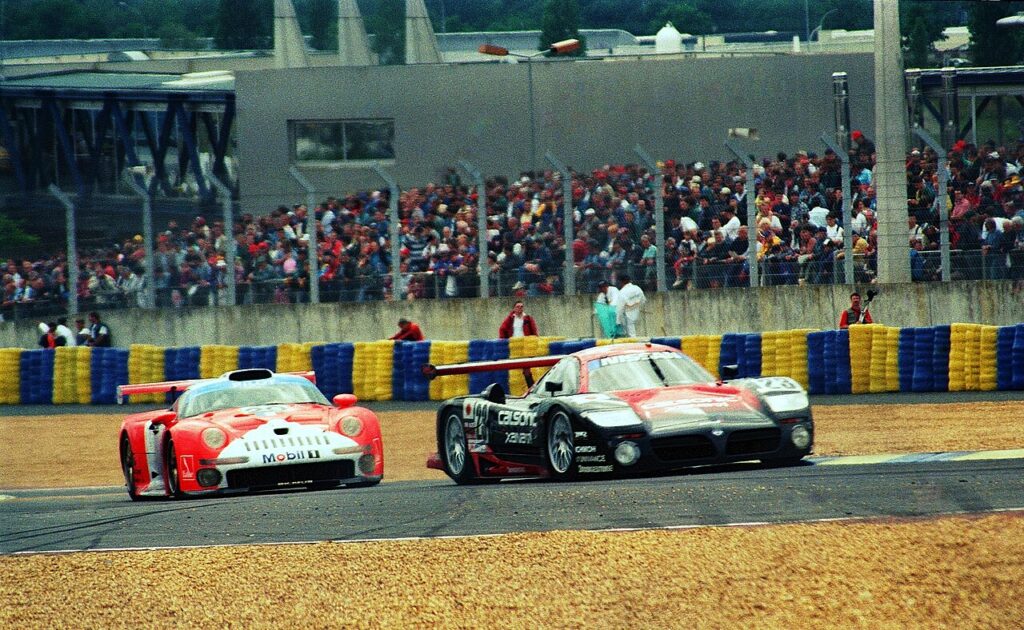
Peter’s strongest memories come from putting together Nissan’s GT1 effort in 1997. ‘I remember turning up to a barn on a farm at Enstone – empty barn, drawings on the wall and a chassis. I was meant to be chief mechanic. The plan? Build a road car and three race cars for Le Mans – that year,’ he recalls. ‘That was January 1997. By June, we were racing three cars and had built a road car. Le Mans was a disaster, but we got one car to the finish. It was the hardest thing I’ve ever done; it was so difficult you bonded together. Big nights out, too – because when you could let off steam, you did.’
That chimes with Viv’s experience. ‘Tom was hard but fair, and was a funny man; he worked hard but by God he played hard in the bar,’ he says. ‘He always looked after his people, even if he didn’t suffer fools.’
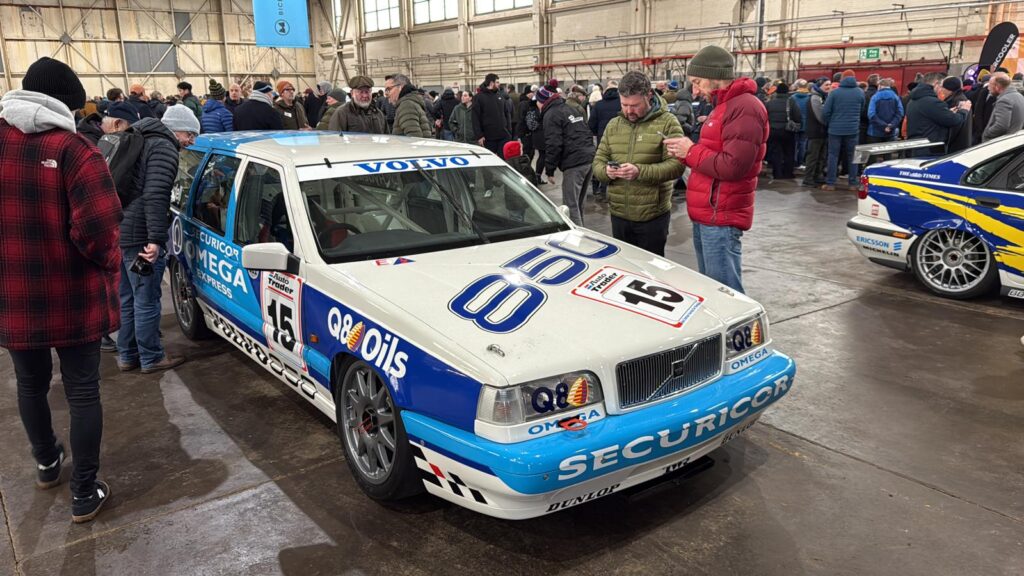
Both Viv and Peter put the blame on TWR’s demise on the F1 programme. ‘It was just a money pit. It robbed so much funding from other programmes within the group,’ Viv says. ‘I was working on the Volvo touring car programme at the time, and our test budget was cut overnight because the money went into the F1 pot.’
Peter concurs. ‘We on the Nissan programme felt it only existed to make money to keep other things going,’ he says. ‘It felt like we lost our way as an organisation. If it hadn’t been for F1, I think TWR would still be going today.’
The final thought goes to Peter. ‘It was an awesome place to work,’ he reflects. ‘It was 80 percent chaos, 20 percent planned. But because it was chaos, you could influence it. You were given freedom to thrive and make things happen. If it went wrong, you weren’t ridiculed – it was just, “Right, let’s go again.”‘