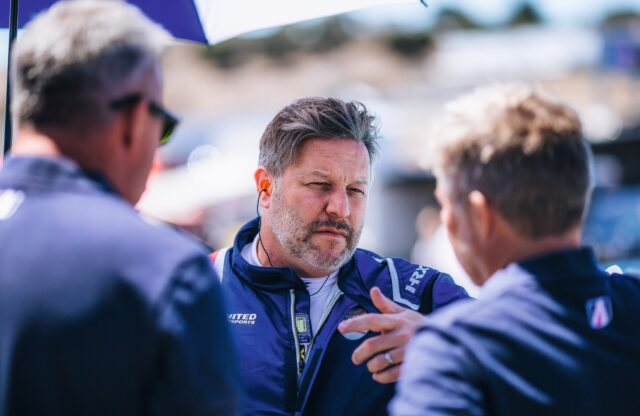

Modern Formula 1 is a full-time business. The 2022 season consisted of 22 Grands Prix stretching all the way from March to November, and 2023 is set to be even busier. The bigger teams can employ anywhere up to 1000 people and the pressure is relentless, so it’s no surprise that McLaren CEO Zak Brown likes to get away from it all by using what little spare time he has to… well, actually, he likes to go motor racing.
His collection covers everything from IndyCar and Formula 1 – including an ex-Ayrton Senna McLaren MP4/6 – to rallying, Can-Am and NASCAR. Then there’s his Jaguar XJR-10, which was restored by United Autosports, the race team that Brown and Richard Dean founded in 2009 and which now runs the Castrol-livered car in Historic events. ‘It’s definitely a form of stress relief,’ says Brown, a 51-year-old native of Los Angeles, ‘but it adds a different stress because you want to be competitive.’
Designed by Tony Southgate, the XJR-10 – as well as its Group C sibling, the XJR-11 – marked a new direction for the TWR Jaguar team when it was introduced in 1989. Up until that point, the British company had relied on its normally aspirated V12 to power its sports-prototypes, whereas its main rivals used turbocharged engines. In 1988, Jaguar had won at Le Mans and claimed the World Sportscar Championship, but it had done so in the face of stiff opposition from Sauber-Mercedes – and Nissan had dominated the North American IMSA series.
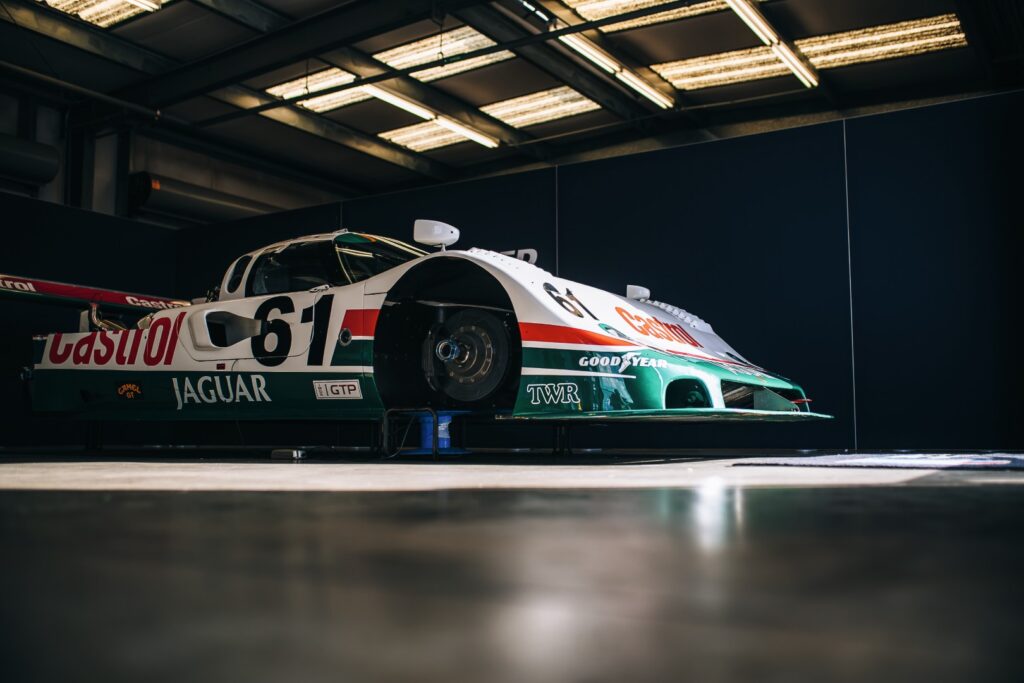
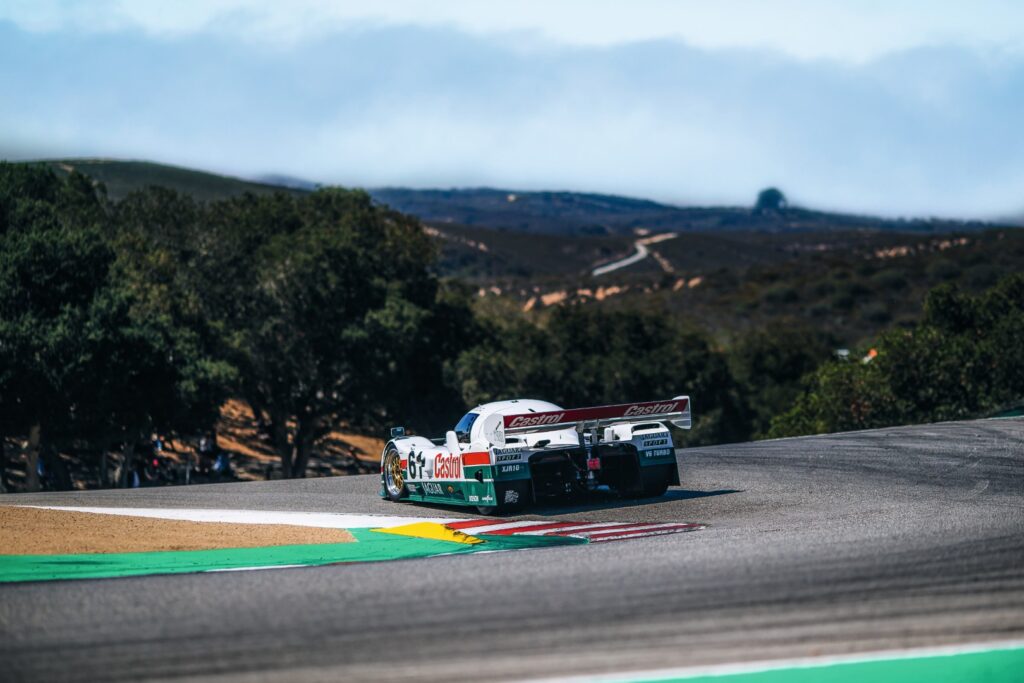
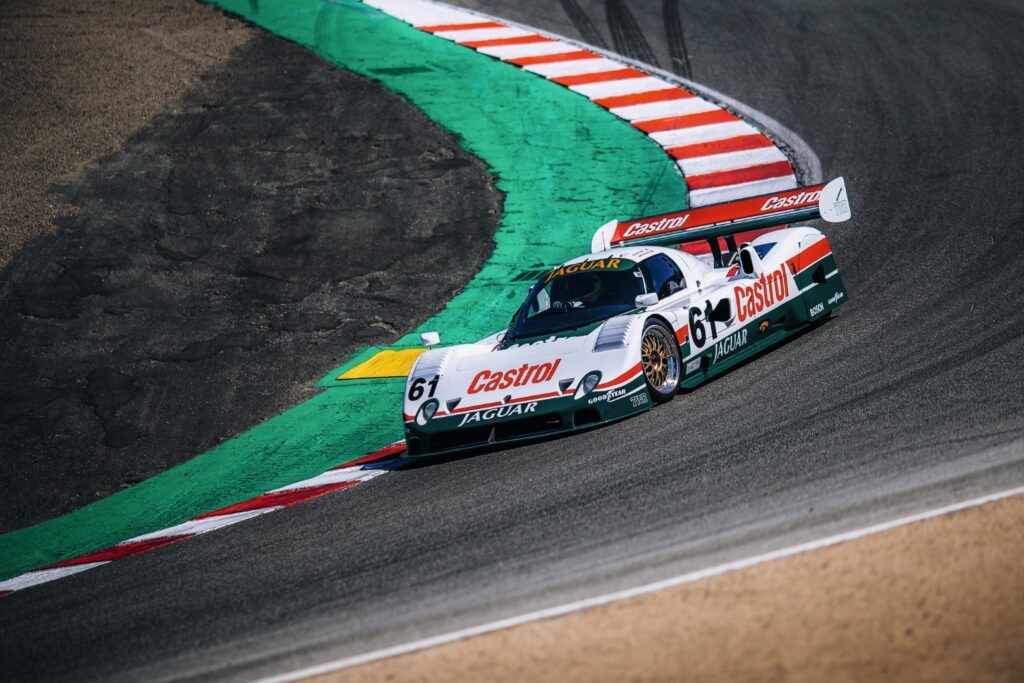
Hence the switch to forced induction for 1989, the compact V6 being wrapped in revised bodywork that was shrink-wrapped more closely around the major components. It was actually Zak Brown’s car, chassis 389, that gave the XJR-10 its debut at Lime Rock on 29 May. Jan Lammers finished second, ahead of Price Cobb and John Nielsen in the old XJR-9 but still behind the Nissan of Geoff Brabham. That was the beginning of a long frontline career for 389. It won twice that year – Cobb and Lammers at Portland; Lammers solo at Del Mar – then once more in 1990. It raced on into early 1991, with Raul Boesel taking it to victory in Miami on 7 April on what was its final period outing. By that point, it was in Bud Light colours rather than Castrol.
‘I bought it about two years ago,’ says Brown. ‘It needed everything. It was effectively a ground-up rebuild. We did it all, from an engine rebuild to changing the fuel cells, crack-checking everything… and United carried out all the work.’
Dean adds: ‘You have to be careful on the carbon tubs, as they get older, that you’re not getting delamination, but there are processes for that – you can X-ray the monocoques. Of everything else that we did in the restoration, the engine was the biggest challenge, getting it back to the right specification. The main problem when running the car is that it’s quite complex on the engine management side, so we take an engine management guy from AER with us to keep on top of it. Everything else is pretty straightforward.’ Since the restoration was completed, United Autosports has run the car in Historic events including the Estoril Classic, where in 2021 it was reunited with Martin Brundle, who had raced it at Del Mar 31 years earlier.
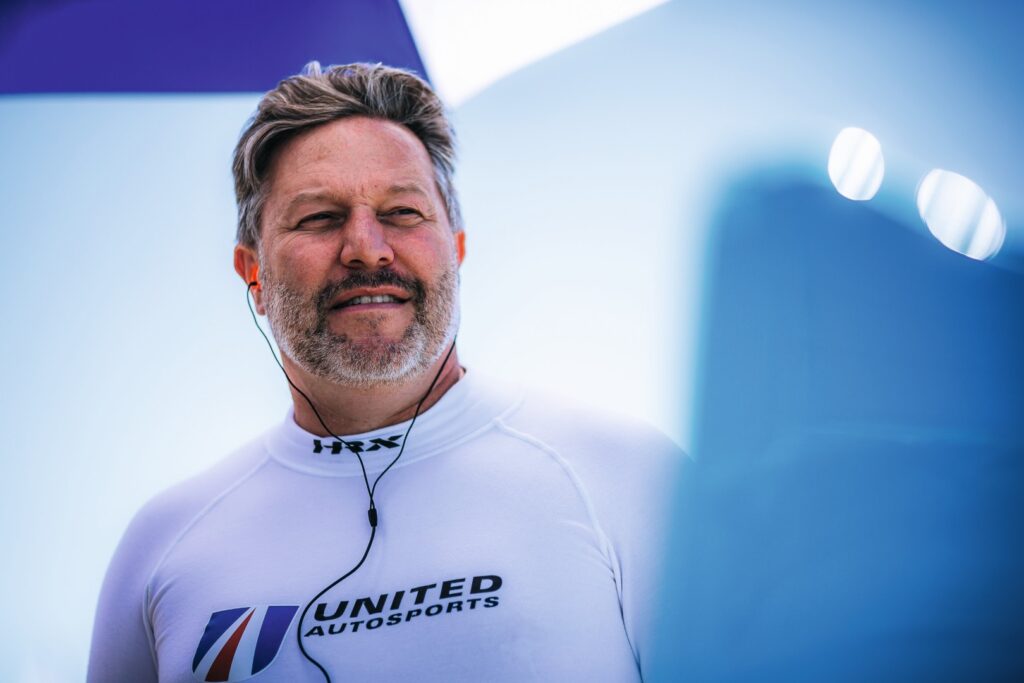
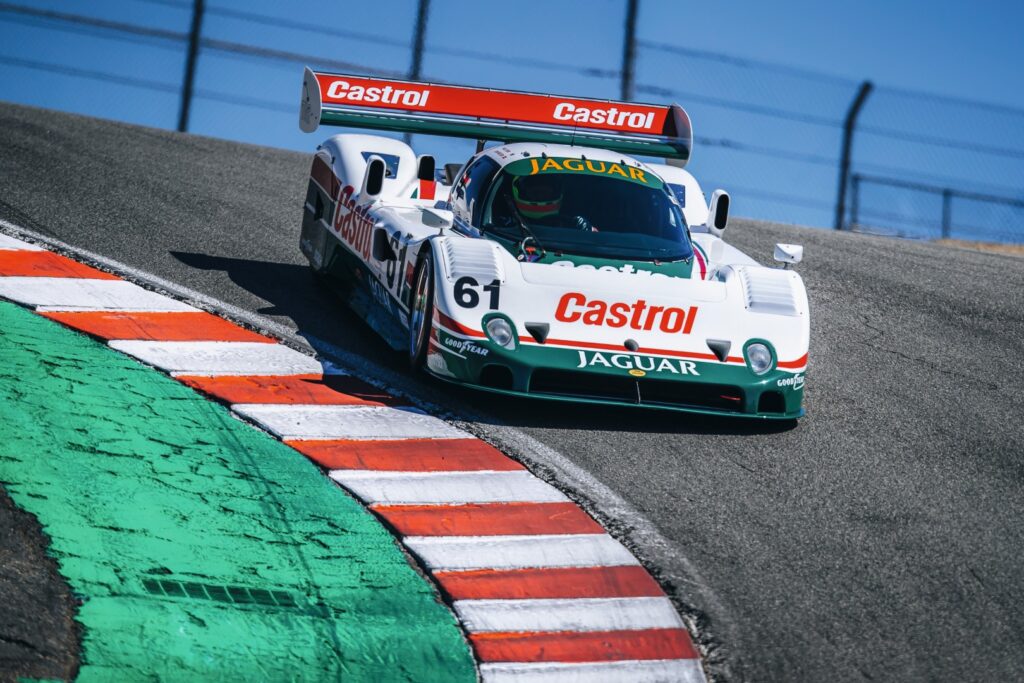
‘It’s always fun to be racing with Martin,’ says Brown. ‘He’s a pretty intense character and he takes his racing very seriously. It was great. I learned a lot from him and, you know, he still pedals fast.’ More recently, Brown raced the Jaguar at Laguna Seca in the Monterey Historics Pre-Reunion meeting, and then the Reunion itself the following week. ‘We won the first weekend, then finished third the second weekend. But I would actually say the second weekend I drove better, because that’s when you had all the big boys out and the pros. And so, while winning is nice, the competition was tougher in the second weekend. Lap times came down and ultimately I felt that I drove better – and we were really, really competitive.
‘It was a tonne of fun. It was a great track for us to go and pound around, and I love that car. It’s awesome. It’s uber-fast with lots of downforce, which then makes the steering pretty heavy. I have a Porsche 962, which has quite a bit of turbo lag. The Jaguar does not. I would say that, if you didn’t know it was a turbo, you wouldn’t feel it. It feels naturally aspirated as far as its drivability. It’s a big car, but it doesn’t feel it. The 962 feels big, you gotta shift slow. The Jaguar is definitely a good step forward in overall performance.’
Dean says that, even at the peak of his own racing career, he always imagined himself driving a prototype around Le Mans rather than a Formula 1 car around Monaco. He won his class at La Sarthe in 2006, but sadly he hasn’t yet had the chance to drive the XJR-10. ‘Unfortunately [Zak’s] been hogging it and there hasn’t been an opening for me! I’ve got my helmet and take it with me most days but I haven’t had a chance yet.’
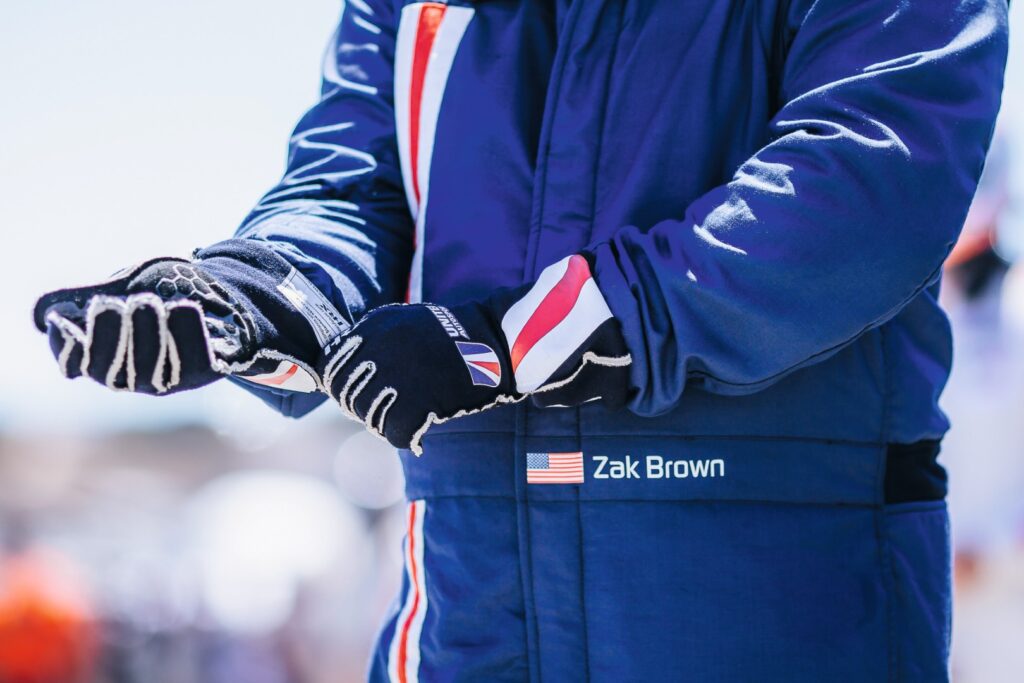
The two men have known each other since Brown came over to the UK from California – his way of pronouncing ‘Jag-whar’ is much cooler than any English accent can make it sound – as an ambitious young racer. By that time, Yorkshireman Dean already had considerable single-seater experience under his belt and had made it as far as Formula 3000. They hit it off straight away. ‘Richard was my instructor in 1991 at Donington Park,’ says Brown, ‘which pretty much explains my failed career as a racing driver.’
‘We were both trying to make it,’ says Dean. ‘We got to know each other at that week’s course at the Jim Russell School and sometimes you just make a connection with people. We appreciated the desire and passion we both had for motorsport and we helped each other out. We went our separate ways but always stayed in touch. I was busy trying to set teams up and racing in Japan. Zak came out to visit and then, when his business brought him to the UK, we got our heads together and decided it was a good idea to start a team.’
In the mid-1990s, Brown had founded what would become an extremely successful motorsport marketing agency. When he later sold a majority stake in it, he found himself with some money in his pocket. ‘And of course, what do you do?’ he says. ‘You go spend it on motor racing. But I’m happy to report all my investment in United Autosports from the early days has been returned to me! Ultimately, Richard and I wanted to do some racing, and we wanted to do it our way. We wanted to be around fun people. That’s why we started off as a one-car Audi team and now it’s turned into quite a racing entity.’
‘Zak was moving more into the UK,’ says Dean. ‘He’d been racing in the Ferrari Challenge in America, so he wanted to do something to keep his hand in while he was still focusing on his business. In our first-ever race as a team, Zak and I shared an Audi R8 in British GT3 at Oulton Park, and it pretty quickly escalated.’
You could say that. United Autosports now has a full-time staff of 55 and is racing in multiple contemporary series. In 2020, it won its class at Le Mans and topped the LMP2 standings in both the World Endurance Championship and the European Le Mans Series. It’s also won the ELMS LMP3 Championship three times and has run the likes of Fernando Alonso, Lando Norris, Paul di Resta and Juan Pablo Montoya.
It opened 2022 by winning the LMP2 class at Sebring with Paul di Resta, Oliver Jarvis and Josh Pierson, and shortly before speaking to Octane it had added another victory in the Spa round of the European Le Mans Series. Then there’s the recent appointment of Jakob Andreasen as United Autosport’s technical director – a serious statement of intent, given that Andreasen was the lead race engineer at Toyota and brings with him a wealth of experience, including Le Mans success. ‘We’re very competitive people and very ambitious,’ says Dean. ‘We believe we’ve proven ourselves in LMP3, and we’ve moved up to LMP2 and won in that. Th e obvious next step if we want to carry on that ambition is to win in the top class and try to compete overall for a world championship and for a Le Mans win overall. Everything we’re doing right now is trying to position ourselves to be the best we can be, and an obvious choice for a manufacturer to work with as the operating team.’
Along the way, the Historic motorsport side of the business has also grown. The first ground-up restoration that United Autosport tackled was an ex-Mario Andretti Formula 5000 car that Dean and Brown both subsequently raced and which won many plaudits for the standard of its preparation.
‘I think we’ve got 40 work bays,’ says Dean, ‘and maybe 25 of them are occupied by various Historic cars. Th e restoration side is increasing all the time so the number of dedicated people on that has grown. We’ve got two very, very experienced people in Paul Haigh and [Williams F1 stalwart] Dickie Stanford, and they head up the Historic restoration business. They’re great personalities and have the sort of invaluable knowledge you can’t buy. A lot of the younger guys are coming in and working under them and they’re the future of it. I don’t see it slowing down, to be honest – it gets bigger every year.’
Brown tries to get up to the Yorkshire workshop once a month and is in constant contact with the team. ‘We speak regularly,’ says Dean, ‘almost every day, or we’ll certainly message each other. He’ll be messaging me during a race if he’s not able to attend. He wants to know exactly what’s going on, and if we’re not winning, why not? Despite how busy he is, he keeps a very, very close eye on what we’ve got going on.’
Brown sums up their relationship more modestly: ‘Richard runs the race team, wins Le Mans; I go on the podium and spray the Champagne.’ Plans for the XJR-10 in 2023 include taking it back to Monterey, plus Spa and Estoril, but sadly we shouldn’t expect to see McLaren’s current Formula 1 aces behind the wheel any time soon. ‘They have an appreciation for the history,’ says Brown. ‘They respect it, they like it, but I wouldn’t say they’re history buffs.’
He and Dean would also love one day to run the Jaguar at Le Mans, where it would really be able to stretch its legs on a circuit that has meant so much to the British marque. There’s no doubt that the Group C and IMSA racers of that period have a particular hold over anyone who was lucky enough see them hammering around Daytona or Le Mans, lights ablaze. It’s little wonder they’ve been such a popular addition to Historic events in recent years and, as much as Brown and Dean have made motorsport their business, at heart they’re enthusiasts first and foremost.
‘When you look at the Jaguar,’ says Brown, ‘it does not look 30 years old. They’re high-horsepower, gorgeous cars. I used to be a stopwatch geek and, as fast as IndyCars were in period, I remember in Portland the IMSA cars were actually quicker because of their ultimate top speed. So I just think they were awesome, high-performing race cars that looked great and still do to this day.’
This feature first appeared in Octane issue 237.